
Timing exterior painting correctly can mean the difference between a paint job lasting 15 years and one failing within 3. Wellington's variable weather makes scheduling critical — paint in wrong conditions and you waste thousands of dollars on premature failure.

This guide explains exactly when to paint your Wellington home's exterior for optimal results.
Wellington's Climate and Painting Windows
Wellington experiences a temperate maritime climate with year-round moisture, strong winds, and moderate temperatures. Unlike Auckland's humid summers or Christchurch's freezing winters, Wellington offers relatively stable temperatures but unpredictable daily weather.
Average temperatures range from 12°C in winter to 18°C in summer — actually ideal for paint curing. The challenge is wind, rain, and humidity rather than temperature extremes.
Our 1,250mm annual rainfall distributes fairly evenly across months, though winter months (June-August) average 120-140mm while summer months (December-February) average 80-100mm. This 30-40% reduction in winter rainfall still leaves plenty of rainy days.
Wind is Wellington's defining weather feature. Average wind speeds of 22 km/h with frequent gusts exceeding 60 km/h affect paint application and drying. Exposed sites and coastal properties face even stronger winds.
Ideal Painting Conditions
Paint manufacturers specify environmental requirements for proper curing. These aren't suggestions — they're critical for paint performance.
Temperature Requirements
Most acrylic exterior paints require:
- Minimum application temperature: 10°C
- Maximum application temperature: 30°C
- Substrate temperature: 5-35°C
- Optimal range: 15-25°C
Wellington rarely exceeds 30°C, but winter mornings often drop below 10°C. Paint applied below minimum temperature forms poor film, leading to cracking, poor adhesion, and premature failure.
Humidity Considerations
Relative humidity should stay below 85% during application and initial drying (first 4-6 hours). Wellington frequently exceeds this threshold, particularly in winter and on south-facing walls.
High humidity slows solvent evaporation and water evaporation from acrylic paints. This extends drying times, increases dirt adhesion, and can cause surfactant leaching (brown streaks on fresh paint).
Rain-Free Windows
Fresh paint needs protection from rain:
- First 2 hours: absolutely critical — rain will wash paint off
- 2-6 hours: still vulnerable — rain causes streaking and uneven coverage
- 6-24 hours: rain affects finish quality and curing
- 24-48 hours: minimal impact on properly applied paint
Wellington's weather forecasts become crucial. A 20% rain chance in the next 48 hours is acceptable risk. A 60% chance means postponing.
Wind Limitations
Wind speeds above 30 km/h cause problems:
- Spray application becomes impossible
- Dust and debris stick to wet paint
- Paint dries too quickly, preventing proper flow
- Working safely on scaffolding becomes dangerous
Calm mornings suit painting better than windy afternoons. Wellington painters often start at 7am to maximize calm periods.

Best Months for Exterior Painting in Wellington
Based on 30 years of weather data and practical painting experience, here's Wellington's painting calendar.
November-December: Excellent (Grade A)
These months offer optimal painting conditions. Temperatures consistently exceed 15°C, rainfall decreases, humidity drops, and days lengthen to 14+ hours allowing extended work periods.
Spring growth has finished, so fewer insects stick to wet paint. Ground has dried from winter rain, improving site access.
Demand peaks during these months. Book painters 2-3 months ahead. Expect premium pricing but reliable scheduling.
January-February: Excellent (Grade A)
Peak painting season continues. Warmest temperatures of the year, lowest rainfall probability, longest days (up to 15 hours), and consistent conditions allow rapid project completion.
UV intensity peaks, so fresh paint cures quickly. Coastal properties benefit from more settled sea breezes.
School holidays mean some painters take leave. Book early December for January-February slots.
March: Very Good (Grade A-)
Autumn brings stable weather before winter storms. Temperatures remain suitable (15-20°C), rainfall increases slightly but remains manageable, and humidity stays reasonable.
Longer shadows appear as days shorten, which helps painters assess coverage quality. Less dust in the air compared to summer.
Demand decreases, creating pricing opportunities. Good month for bargain hunters.
April: Good (Grade B)
Transition month with increasing variability. Early April resembles March, late April shows winter patterns. Temperatures 12-18°C suit painting but approach lower limits on cold mornings.
Rain becomes more frequent — expect weather delays. Projects take longer due to rain interruptions. Shorter days (11 hours) reduce productive work time.
Experienced painters can execute quality work but expect flexible scheduling. Budget extra time for weather contingencies.
May: Fair (Grade C)
Wellington winter approaches. Cold mornings delay start times, frequent rain causes scheduling issues, short days (10 hours) limit productivity, and increasing humidity affects drying times.
Suitable for sheltered sites, north-facing walls, and small touch-up work. Not recommended for full house repaints unless urgent.
Discount pricing may apply but savings offset by extended project duration.
June-July-August: Poor (Grade D)
Winter months suit interior painting, not exterior work. Temperatures often below 10°C in mornings, highest rainfall months, shortest days (8-9 hours), and frequent storms make outdoor painting impractical.
Southern and eastern walls may not dry adequately. Frost risk exists in hill suburbs. Scaffolding becomes safety concern in strong winds.
Most professional painters focus on interior work during these months. Exterior painting scheduled only for emergencies or very sheltered sites.
September: Fair (Grade C)
Spring emergence brings improving conditions but considerable variability. Temperatures rise but mornings remain cold. Spring storms alternate with fine days.
Early September resembles winter. Late September approaches summer conditions. Flexible homeowners can capitalize on good weather windows.
Painters transition from interior to exterior work. Better availability than peak season.
October: Good (Grade B+)
Spring accelerates. Temperatures consistently reach 15°C+, rain decreases, days lengthen rapidly, and settled periods become more common.
Ground may still be wet from winter, affecting site access. Spring growth means insects and pollen can stick to wet paint.
Excellent month for painting if you can schedule around weather. Prices remain below summer peak.
Seasonal Cost Variations
Painting costs fluctuate with demand and conditions.
| Season | Cost Factor | Scheduling |
|---|---|---|
| Summer (Dec-Feb) | Premium (+10-15%) | Book 2-3 months ahead |
| Autumn (Mar-Apr) | Standard | Book 1-2 months ahead |
| Winter (May-Aug) | Discount (-10-20%) | Often available short notice |
| Spring (Sep-Nov) | Standard to Premium | Book 1-2 months ahead |
Winter discounts reflect risk — your project may take twice as long due to weather delays. Summer premium buys certainty and faster completion.
Special Timing Considerations
Beyond seasonal patterns, specific factors affect optimal painting times.
Coastal Properties
Coastal Wellington suburbs (Island Bay, Seatoun, Worser Bay, Miramar) face stronger winds and salt spray. Summer's prevailing northerlies are calmer than winter's southerlies. Autumn often provides best combination of calm conditions and moderate temperatures.
Avoid painting during onshore gales — salt spray contaminates fresh paint.
Heritage Homes
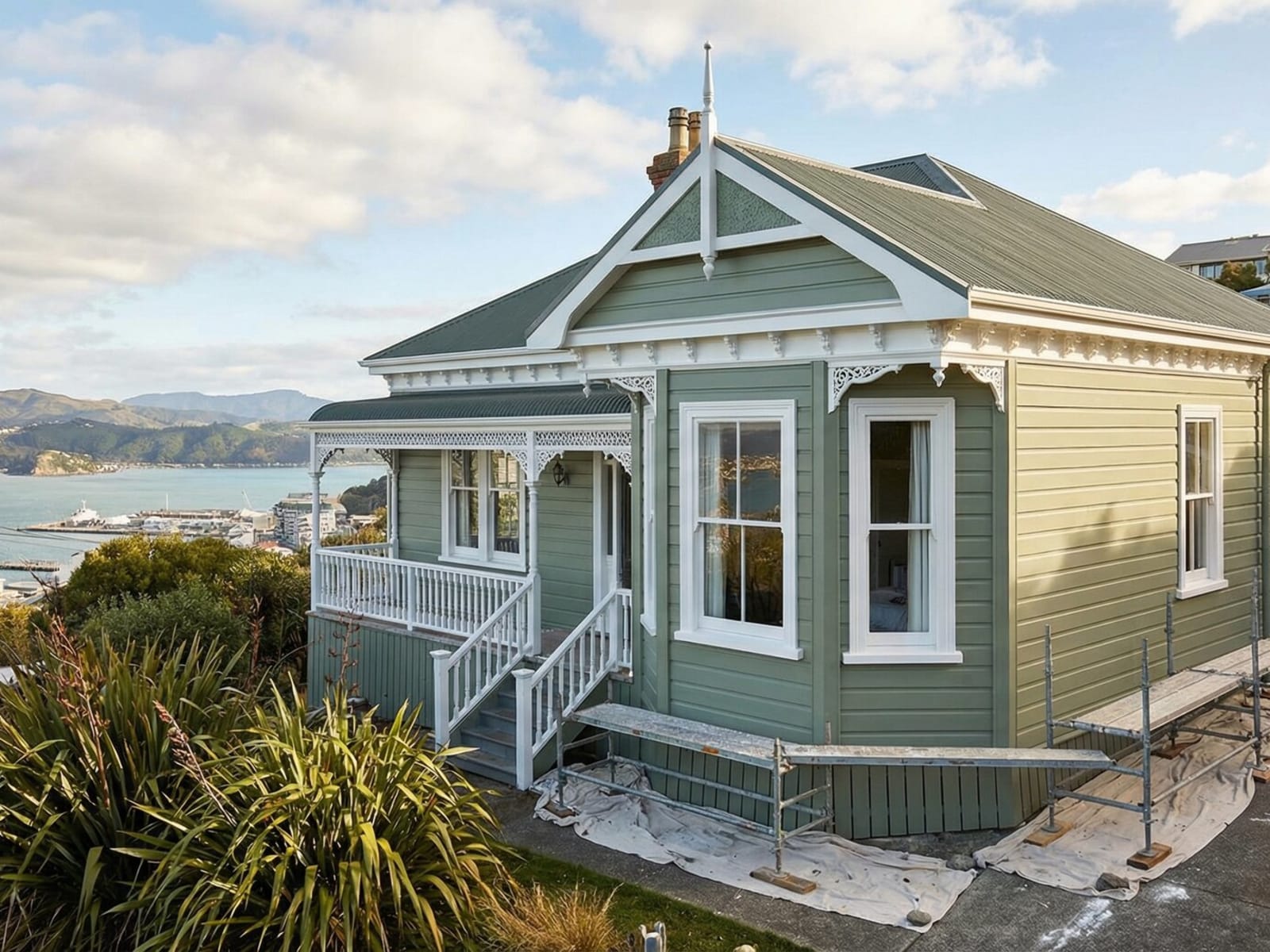
Villa restoration often requires extensive preparation — scraping, repairs, and multiple coats. These projects need longer weather windows. Target December-February when you can schedule 4-6 consecutive weeks without major rain.
Weatherboard Preparation
Houses needing water blasting must dry 3-5 days before painting. Wellington's humidity extends drying times. Summer's lower humidity reduces waiting periods. Winter washing may require 7-10 days drying time.
Moisture meters verify readiness — wood moisture content should be below 15%.
Multi-Storey Homes
Buildings requiring scaffolding need longer hire periods. Efficient scheduling becomes critical — scaffolding costs $150-300 per week. Summer months allow intensive work, minimizing hire duration.
Winter projects may need scaffolding for twice as long, increasing costs significantly.
Planning Your Painting Project
Successful exterior painting requires advance planning.
3-6 Months Before
Research contractors, get quotes from multiple Registered Master Painters, check references, and verify insurance coverage. Book preferred contractor for optimal months (November-February).
Address any repairs identified in quotes — replace rotten weatherboards, fix leaks, repair cracks.

1-3 Months Before
Finalize colour selection using large samples on actual house surfaces. Observe in different light conditions and times of day.
Confirm scheduling with contractor. Discuss contingency plans for weather delays.
Arrange site access, clear areas around house perimeter, trim vegetation touching walls, and notify neighbours.
1-2 Weeks Before
Monitor extended weather forecasts. Communicate any concerns to contractor.
Remove exterior items — outdoor furniture, planters, wall-mounted decorations. Protect gardens near work areas.
During Project
Trust your professional painters' weather judgement. If they postpone due to conditions, they're protecting your investment.
Avoid applying pressure to work in marginal weather. Poor conditions guarantee poor results.
What If You Must Paint in Winter?
Sometimes exterior painting can't wait for summer — urgent repairs, weather damage, or sale preparation force winter scheduling.
Winter Painting Requirements
Choose mild weather windows — consecutive fine days with temperatures above 12°C. Use faster-drying paint formulations designed for cooler conditions. Limit work to north and west-facing walls receiving sun.
Professional painters use additives and techniques to compensate for cold temperatures, but can't overcome fundamentally unsuitable conditions.
Reduced Expectations
Winter painting takes longer, costs more due to extended duration, risks delays from weather, and may not achieve summer quality levels.
Consider whether waiting 4-6 months for summer delivers better value despite urgency.
Ready to Get Started?
Painting your Wellington home's exterior at the right time ensures maximum durability and value from your investment.
Wellington Decorators monitors weather patterns carefully and schedules projects for optimal conditions. As Registered Master Painters with 20+ years of Wellington experience, we know when to paint and when to wait.
Contact us to discuss timing for your exterior painting project, or learn more about our exterior house painting services.
Wellington Decorators Limited — Registered Master Painters | Resene Eco Decorator
Exterior House Painting | Contact Us
Exterior Painting Services by Suburb
Looking for professional exterior painters in your Wellington suburb? Karori, Kilbirnie, Khandallah, Lyall Bay. Get a free quote for your project.
Related Articles


Need Help With Your Painting Project?
Wellington Decorators has been transforming homes across the Wellington region since 2023, led by a founder with 18+ years in the trade. As Registered Master Painters, we back every job with a 5-year workmanship guarantee.
Prefer to talk? Call us now 027 458 6465