
You can match paint to an existing wall closely enough that nobody notices, but only if you stop the new paint at a corner or another natural break in the surface. A matched patch dropped into the middle of a wall almost always shows, and what you end up seeing is sheen and film thickness rather than colour.
So the useful question is not whether the colour can be matched. It is where the new paint is allowed to stop.
Where do I find the original colour?
In order of reliability:
- The lid or label of the original tin, which carries the colour name and usually the tint formula.
- The painter's or builder's records. On a house built or repainted in the last decade there is often a specification sheet listing colours room by room.
- The property file, or the body corporate records for an apartment, where exterior and common area colours are normally recorded.
- A leftover tin in the garage, worth opening even if the paint itself is useless, because the code is on it.
An original code beats any scan, with one catch. It matches the paint as it was mixed, not as it is now. On a wall that has had ten years of sun on it, paint from the original formula will read noticeably fresher than the wall next to it.
Is a scanned colour match good enough?
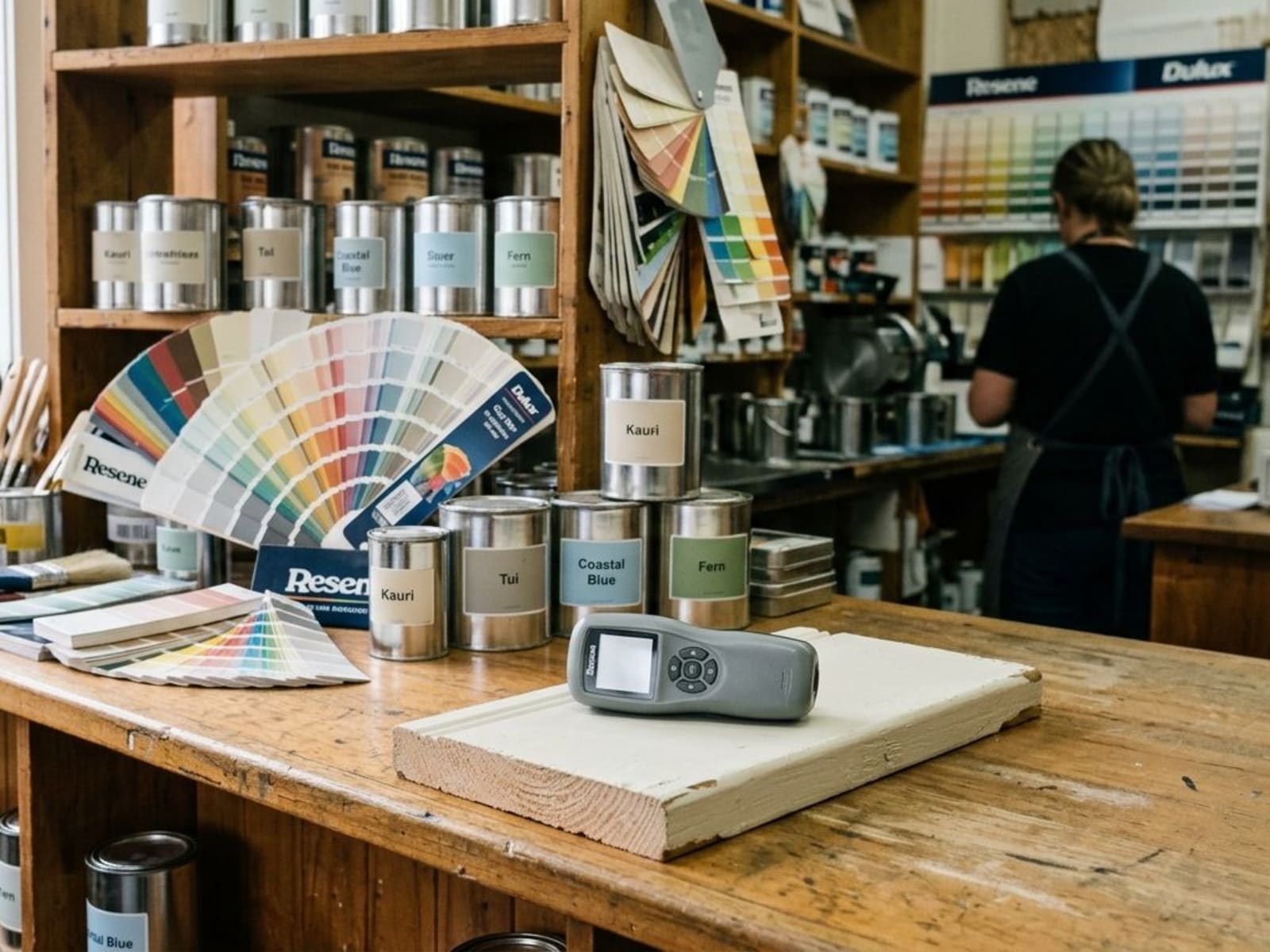
For colour, usually yes. Paint shops scan a sample with a spectrophotometer and mix to the reading. The limits are worth knowing.
The scanner reads exactly what is put in front of it, including dirt, kitchen grease, chalking and fade. Wash the area first with sugar soap, rinse it, and let it dry completely before taking a sample. If you can bring in a physical piece rather than asking for a scan on the wall, do it: a cut square from inside a wardrobe, an offcut of skirting, the back of a cupboard door, the surround from behind a switch plate. A flat, clean, matte sample reads far better than a glossy or textured one.
Scanners struggle with very dark and very saturated colours, with metallics, and with anything textured enough to throw its own shadows. On those, treat the match as a starting point and expect to test it.

Why does a perfect colour match still show?
Because colour is only one of four things your eye reads.
- Sheen. A low sheen patch on a flat wall, or the reverse, is visible from across the room in raking light even when the colour is exact. Sheen mismatch is the most common reason a touch-up fails.
- Film thickness. A patch is thicker than the wall around it, and where it feathers out the edge catches the light.
- Texture. A different roller nap leaves a different stipple. A brushed patch on a rolled wall is obvious from any angle.
- Age. Paint that has been on a wall for years has burnished, collected a film of dust and lost a little colour. Fresh paint from the same tin will not sit at the same sheen.
Will this touch-up disappear?
| Situation | Likely result | Better approach |
|---|---|---|
| Nail hole or small chip on a flat ceiling, paint left from the same tin | Invisible | Just do it |
| Scuff on a flat wall below eye level, original paint available | Usually acceptable | One thin coat, feathered out |
| Patch on a low sheen wall in a sunlit hallway | Shows in afternoon light | Coat the full wall |
| Patch on semi-gloss or gloss | Shows from any angle | Coat the whole door, frame or trim run |
| Filled crack or new plaster repair | Flashes through as a dull mark | Seal the repair, then coat the full wall |
| Section of a dark or strongly saturated colour | Shows badly | Corner to corner, no exceptions |
| Inside a wardrobe, garage or behind fixed furniture | Nobody will ever see it | Match roughly and move on |
What is the corner-to-corner rule?
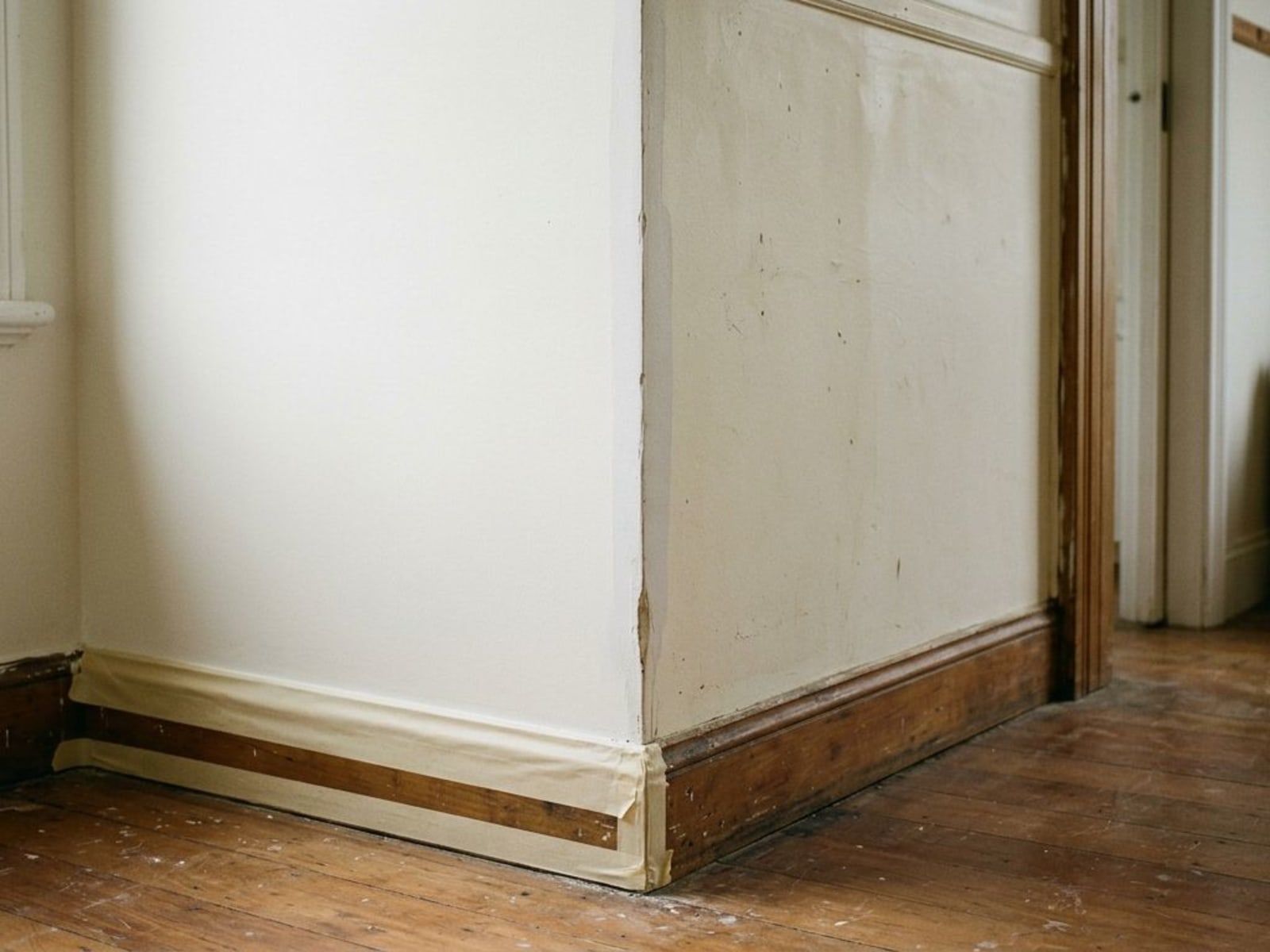
Paint to a break, never to an imaginary line. A break is anywhere the surface changes plane or is interrupted: an internal corner, an external corner, a door or window architrave, the ceiling line, a scribed junction with a bulkhead. Your eye treats each plane as its own surface, and it will forgive a small difference between two planes that it will not forgive in the middle of one.
That is why repainting one wall of a room usually works and repainting half a wall never does. If a room has four walls and only one is damaged, the honest quote is one wall, corner to corner, not a patch. It is also why a good interior repaint is priced by surface rather than by damaged area.
Can I match an exterior wall?
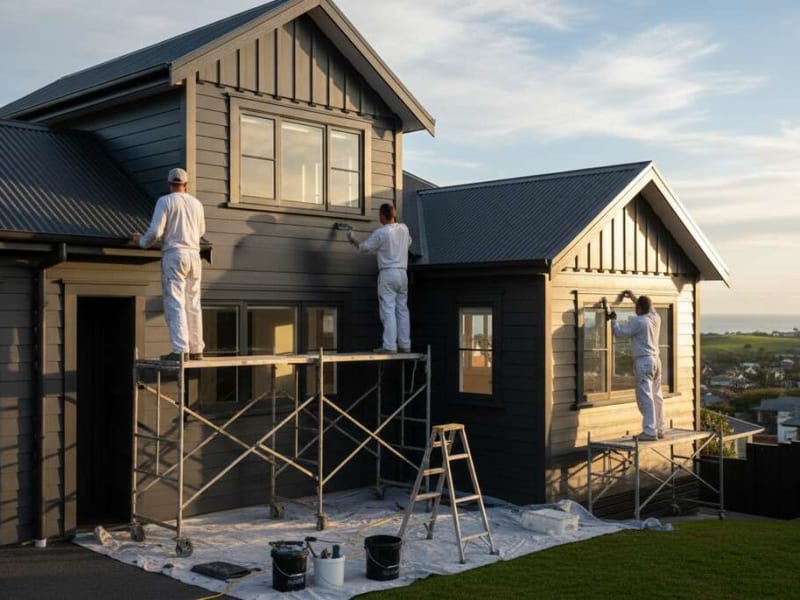
You can, but plan for drift. Cladding fades unevenly. North and west elevations take the most sun and lose colour fastest, while a sheltered south wall stays closer to where it started. Match to the wall you are actually blending into rather than to the original code, or the repair reads as a bright rectangle.
Weatherboard has one advantage: the laps are natural breaks. Repainting a full run of boards from one end of the elevation to the corner box looks far better than a patch in the middle of a board. If several boards are being replaced during an exterior repaint, price the whole elevation rather than the repair.
Accept as well that a fresh patch on a faded wall matches today and drifts apart over the next few years, because the new paint starts its own fade clock.
How should I test the match before committing?
Brush a test area at least a hand's width across, on the actual wall, and let it dry completely. Waterborne paint shifts as it dries and a wet match tells you nothing. Overnight is fair, a full day is better in winter.
Then look at it more than once. Wellington hands you two very different lights in the same day: flat cool overcast, and low direct sun late in the afternoon that rakes across a wall and exposes every difference in sheen and texture. A match that survives both is a real match. One that only passes under a ceiling light at night is not.
When is matching not worth it?
When the wall needs washing anyway, when there are several patches across one room, or when the existing colour is old enough that you would not choose it again. In those cases the cost of matching, testing and touching up two or three times gets close to just coating the room, and the result is worse. One coat across a whole wall beats three attempts at a patch, every time.
If you are not sure whether your room needs a touch-up or a repaint, we will tell you which. We would rather say touch it up yourself than sell you a job you do not need. Get in touch.
Related Articles


Need Help With Your Painting Project?
Wellington Decorators has been transforming homes across the Wellington region since 2023, led by a founder with 18+ years in the trade. As Registered Master Painters, we back every job with a 5-year workmanship guarantee.
Prefer to talk? Call us now 027 458 6465