
Your business operates Monday to Friday, 9am to 5pm. Your customers, clients, or tenants expect uninterrupted service. But your office, store, or building needs repainting.
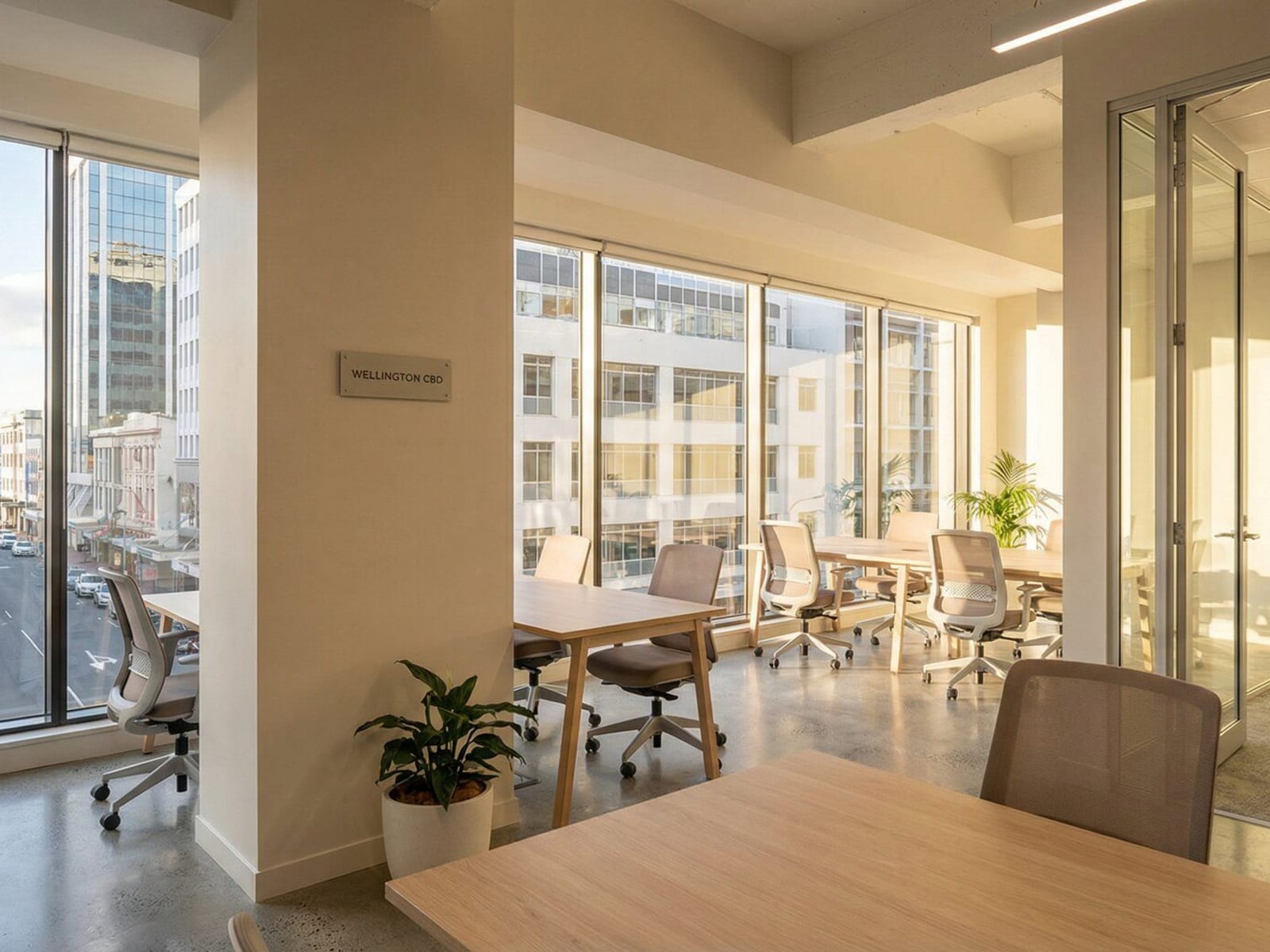
Solution? After-hours commercial painting that happens when you're closed.
Why After-Hours Painting
Standard business hours painting creates problems:
Lost Productivity – Employees can't focus with painters working around them
Lost Revenue – Retail stores lose trading days
Disruption – Noise, smell, and movement throughout work areas
Professional Image – Clients seeing half-painted offices damages credibility
Health Concerns – Paint fumes in occupied spaces affect staff
After-hours work eliminates all these issues. For Wellington businesses operating in competitive markets, the cost of disruption often far exceeds the modest premium for outside-hours painting.
When After-Hours Painting Works Best
Evening Work (6pm–11pm)
Ideal for:
- CBD office buildings
- Retail stores (paint after closing time)
- Restaurants and cafés (Sunday/Monday closures)
- Medical centres and dental practices
Work starts after you lock up, progresses through evening, areas ready for next-day use. Evening shifts are the most common and cost-effective after-hours option — the modest rate premium is easily justified by the absence of downtime.
Night Shifts (10pm–6am)
Suited for:
- 24-hour retail environments (work when traffic lowest)
- Office towers (complete floors overnight)
- Hospitals and aged care (minimal patient disruption)
- Industrial facilities (working around production schedules)
Crew works through the night, spaces ready when you open. Full-night shifts allow large areas — entire open-plan floors, long corridor runs, warehouse interiors — to be completed in a single unbroken session.
Weekend Projects
Best for:
- Multi-day scopes requiring uninterrupted time
- Offices closed Saturday–Sunday
- Retail stores with Sunday closures
- Schools and education facilities during term breaks
Complete entire projects without weekday disruption. A standard open-plan office floor of 400–600 sqm can typically be fully prepared, primed, and finished across a single Wellington weekend.
Public Holiday Availability
Long weekends and public holidays offer:
- Extended time blocks for larger scopes
- No business operations to work around
- Faster project completion
We work when you're closed — including public holidays. Wellington's calendar includes several long weekends that create useful painting windows: Waitangi Day, Easter, Queen's Birthday, and Labour Day are popular scheduling choices for facility managers.
Industries Suited to After-Hours Painting
Corporate Offices
CBD and suburban offices benefit most:
- Open plan floors painted over weekends
- Meeting rooms completed Friday evening to Monday morning
- Zero staff disruption or productivity loss
- Low-VOC paints ensure no residual fumes when staff return
Wellington's CBD office market — from Lambton Quay towers to Thorndon and Te Aro precincts — is well suited to after-hours scheduling. Building managers and body corporates consistently prefer this approach for common areas, lobbies, and tenanted floors.
Retail and Hospitality
Stores, restaurants, cafés:
- Paint after closing time (typically 6pm–11pm)
- Weekend work for larger scopes
- Maintain full trading schedules
- Fresh appearance without revenue loss
For Cuba Street, Courtenay Place, or Lambton Quay retailers, even a single lost trading day can represent $3,000–$8,000 in foregone revenue. After-hours painting is simply good business arithmetic.
Healthcare Facilities
Medical centres, dental practices, aged care:
- Weekend work when facilities closed or minimal patients
- Low-odour, fast-drying paints
- Hygienic coating systems
- Minimal disruption to patient care
Education
Schools, early childhood centres, training facilities:
- Weekend and school holiday painting
- Term break major projects
- Ready for students when term starts
Wellington schools typically schedule major interior refreshes during the July or December/January school holidays. Two-week breaks allow full interior repaints of medium-sized primary schools with time to spare.
Property Management
Apartment buildings and commercial properties:
- Common area painting during low-traffic periods
- Vacant unit turnarounds between tenants
- Stairwells and hallways (evenings/weekends)
Body corporates managing Wellington apartment blocks — particularly the older apartment stock in Mount Victoria, Thorndon, and Newtown — find after-hours scheduling essential for lobby and corridor refreshes that would otherwise create resident complaints.
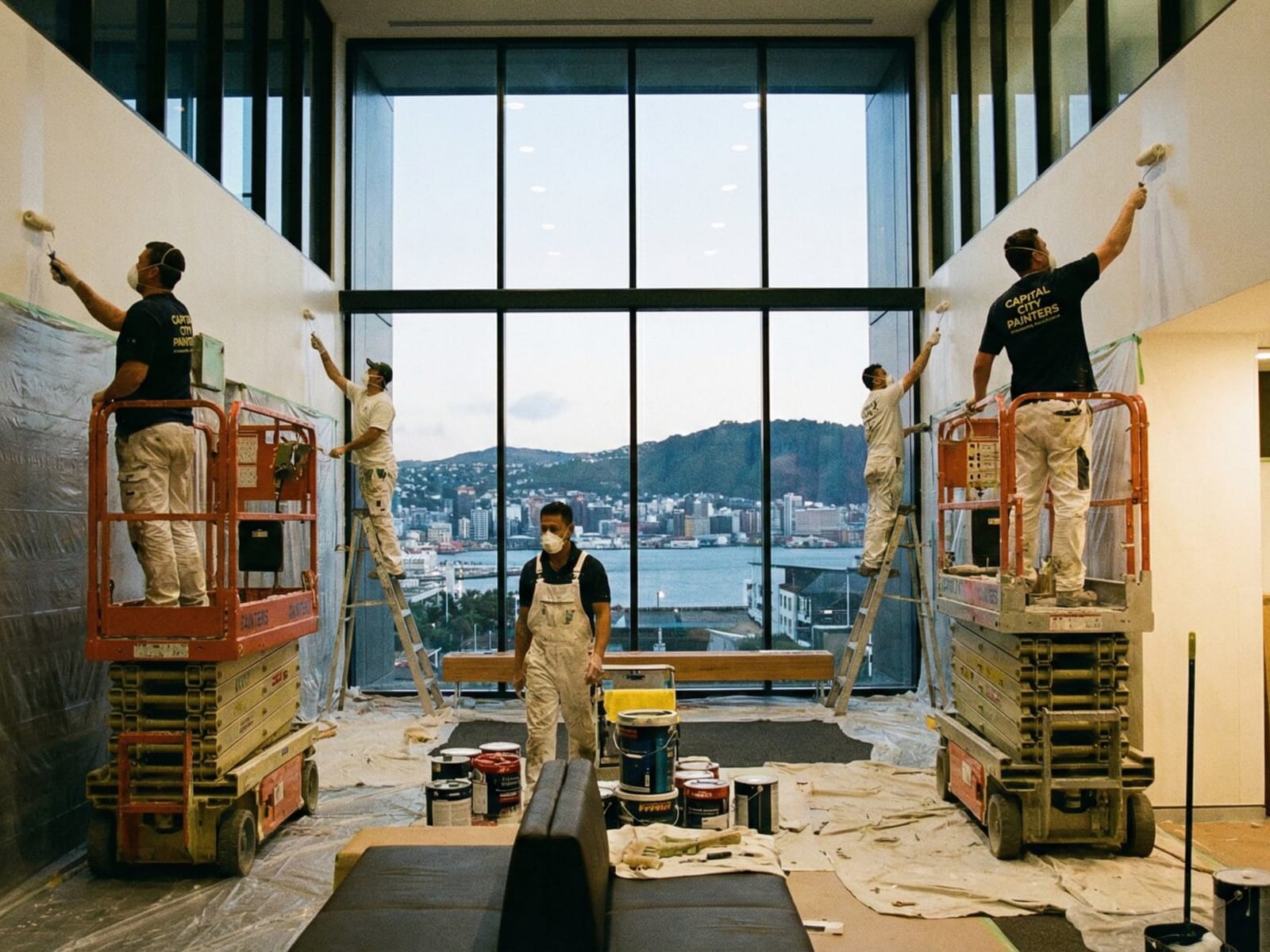
The After-Hours Process
1. Site Assessment
We visit during business hours to:
- Assess scope and surface conditions
- Identify access requirements
- Understand building security protocols
- Plan work sequencing
A thorough daytime assessment is critical. We identify issues — damaged plasterboard, efflorescence, previous moisture damage — that would be missed in a rushed evening walkthrough. Surface prep quality determines final result quality, regardless of when the painting happens.
2. Security and Access Coordination
Before work begins:
- Building Access – Codes, swipe cards, keys arranged
- Alarm Systems – Disarm/rearm procedures documented
- Security Patrols – Coordination with building security
- Emergency Contacts – After-hours contact details exchanged
We take security seriously. Our painters are trained in building security protocols, and we maintain a detailed access log for every after-hours project. All access credentials are handled by the lead painter only and returned or reset at project completion.
3. Evening/Night Execution
During actual painting:
- Check-In Protocols – Confirming arrival and departure
- Progress Updates – Photos or brief reports if requested
- Issue Management – After-hours contact for urgent matters
- Site Security – Ensuring building secured after completion
For multi-night projects, we provide a brief end-of-shift report — either a text message or email with photos — so you wake up knowing exactly what was completed and what's scheduled next. No surprises.
4. Morning Handover
When you return:
- Spaces clean and ready for use
- Paint smell minimal (low-VOC systems)
- Furniture replaced in original positions
- Brief report on progress (if multi-day project)
Low-VOC Paint Systems
After-hours work uses fast-drying, low-odour paints:
Resene Zylone Sheen – Premium low-VOC acrylic, minimal smell
Resene SpaceCote – Durable, washable, fast-curing
Quick-Dry Formulations – Touch-dry in 30–60 minutes
VOC levels in Resene's low-VOC range fall below 10 g/L, compared to 80–150 g/L in older solvent-based products. The practical result: your staff return to spaces that smell faintly of fresh paint at most, not the eye-watering fumes associated with traditional commercial painting. For Wellington buildings where HVAC systems recirculate air across floors, low-VOC products aren't just preferable — they're essential.
Your staff or customers return to fresh spaces, not chemical fumes.
Premium Rates for After-Hours Work
After-hours painting costs more than standard hours:
Evening Work (6pm–11pm) – Typically 20–25% premium
Night Work (10pm–6am) – Usually 30–40% premium
Weekend Work – 25–35% premium
Public Holidays – 50%+ premium
Premium rates reflect:
- Unsociable hours for painting crews
- Additional supervision and security requirements
- Limited work hours (shorter shifts mean more days)
- Coordination complexity
But compare premium painting rates against lost business revenue — after-hours work usually delivers better ROI.
To illustrate: A 400sqm open-plan office floor might cost $14,000–$18,000 to paint at standard rates, or $17,000–$22,000 after-hours (roughly a 25% premium). But if daytime painting would displace 30 staff for five days, and each employee contributes $500/day in productive output, the business disruption cost alone is $75,000. The premium suddenly looks very modest.
Safety and Compliance
After-hours work maintains same standards:
- Site Safe Certification – All painters hold current tickets
- Building Security – Working within your security protocols
- Health & Safety – SSSP and risk assessments
- Insurance – Full public liability and contract works coverage
Professional standards don't change after 5pm. Our Site-Specific Safety Plans (SSSP) are prepared for every commercial project, and our painters carry current Site Safe cards. Insurance coverage — public liability and contract works — remains in full effect for all after-hours work.
Coordinating with Building Management
Successful after-hours projects require:
Building Managers – Coordinating access, lifts, rubbish disposal
Security Teams – After-hours entry and patrol coordination
Facilities Teams – HVAC adjustments, lighting, utilities
Tenants (if multi-tenant) – Communication about work schedules
We handle coordination so you don't have to.
For multi-tenant Wellington CBD buildings, we prepare a simple one-page schedule that building managers can share with tenants. It covers which floors are affected each night, expected completion times, and who to contact with questions. Clear communication prevents the friction that derails after-hours projects.
Real After-Hours Example
A 4-level office building in Wellington CBD needed a complete interior refresh. We worked Friday 6pm through Sunday 8pm for 6 consecutive weekends, completing one floor per weekend. Staff arrived Monday mornings to completed spaces — new colour, clean edges, fresh ceilings. Zero weekday disruption, zero productivity loss, project completed in 6 weeks. The building manager later noted that several tenants asked if the building had been re-fitted, such was the transformation.

Planning Your After-Hours Project
The most common questions from Wellington facility managers and business owners:
How far in advance do I need to book?
For small scopes (single office, café, retail fit-out), 2–3 weeks is usually sufficient. For large commercial buildings — full floors, multi-level stairwells, whole-building repaints — 6–8 weeks allows proper planning and crew allocation. Weekends in summer book up quickly; contact us earlier for November through February work.
What preparation do I need to do?
Clear workspaces as much as practical. Desk items, wall art, and loose items should be removed or secured. We move larger furniture and protect items that can't be moved. For kitchens and break rooms, empty benchtops. Beyond that, we handle the rest — masking, protection, surface prep, and cleanup.
How do I handle access and keys?
We collect access credentials (keys, swipe cards, codes) in advance and document everything formally. All access information is held by the lead painter only and returned to you in person at project completion. We can also work with your facilities team or security company to manage a temporary after-hours access arrangement.
What if something goes wrong overnight?
Every after-hours project has a designated on-call contact — typically the project manager or lead painter — reachable throughout the shift. For building-related emergencies, we have your facilities or security contact on hand. In practice, issues are rare; but when they occur, you'll know within minutes.
Get Professional After-Hours Painting
Maintain business operations while getting professional painting results. After-hours work delivers convenience, minimal disruption, and quality outcomes.
Ready to discuss after-hours painting?
Wellington After-Hours Painting Specialists
Evening, Night & Weekend Service | Low-VOC Systems | Registered Master Painters
Paint your business without disrupting it.
Local Office Painting Services
Need office painting in your area? We provide professional office painting services across Wellington suburbs including Island Bay, Brooklyn, Wadestown, Johnsonville. Get a free quote for your project today.
Related Articles


Need Help With Your Painting Project?
Wellington Decorators has been transforming homes across the Wellington region since 2023, led by a founder with 18+ years in the trade. As Registered Master Painters, we back every job with a 5-year workmanship guarantee.
Prefer to talk? Call us now 027 458 6465