
Painters move furniture within the room. Sofas and beds go to the middle, sideboards come off the walls, everything gets covered and the floors get protected. That is normal and it is included.
What they do not do is pack up your house. Ornaments, books, wall art, electronics, wardrobe contents, valuables and anything fragile are yours to clear before day one, and a room that is not cleared on the morning the crew arrives costs you time you are paying for.
Where is the line drawn?
| Task | Normally the painter | Normally you |
|---|---|---|
| Move sofas, beds and large furniture within the room | Yes | |
| Cover furniture and protect floors | Yes | |
| Remove and refit switch plates and door hardware | Yes | |
| Take down curtain rods and blind brackets | Usually | Take the curtains and blinds down first |
| Take down pictures, mirrors and shelves | Yes | |
| Empty bookcases, cabinets and wardrobes | Yes | |
| Move valuables, documents and anything irreplaceable | Yes, out of the room entirely | |
| Unplug and move televisions and computers | Yes | |
| Remove a wall-mounted TV bracket | By arrangement | Usually you, or a separate trade |
| Disconnect appliances, or move a piano or a safe | No | Yes, and use the right trade for it |
| Remove and refit light fittings | No, that is electrical work | Arrange an electrician |
| Furniture to another room or off site | By arrangement, usually charged | Agree it in writing beforehand |
Nothing in that table is a rule of law. It is what most painters here assume, which is exactly why it should be confirmed rather than assumed. Ten minutes agreeing it in writing prevents the argument on day one.
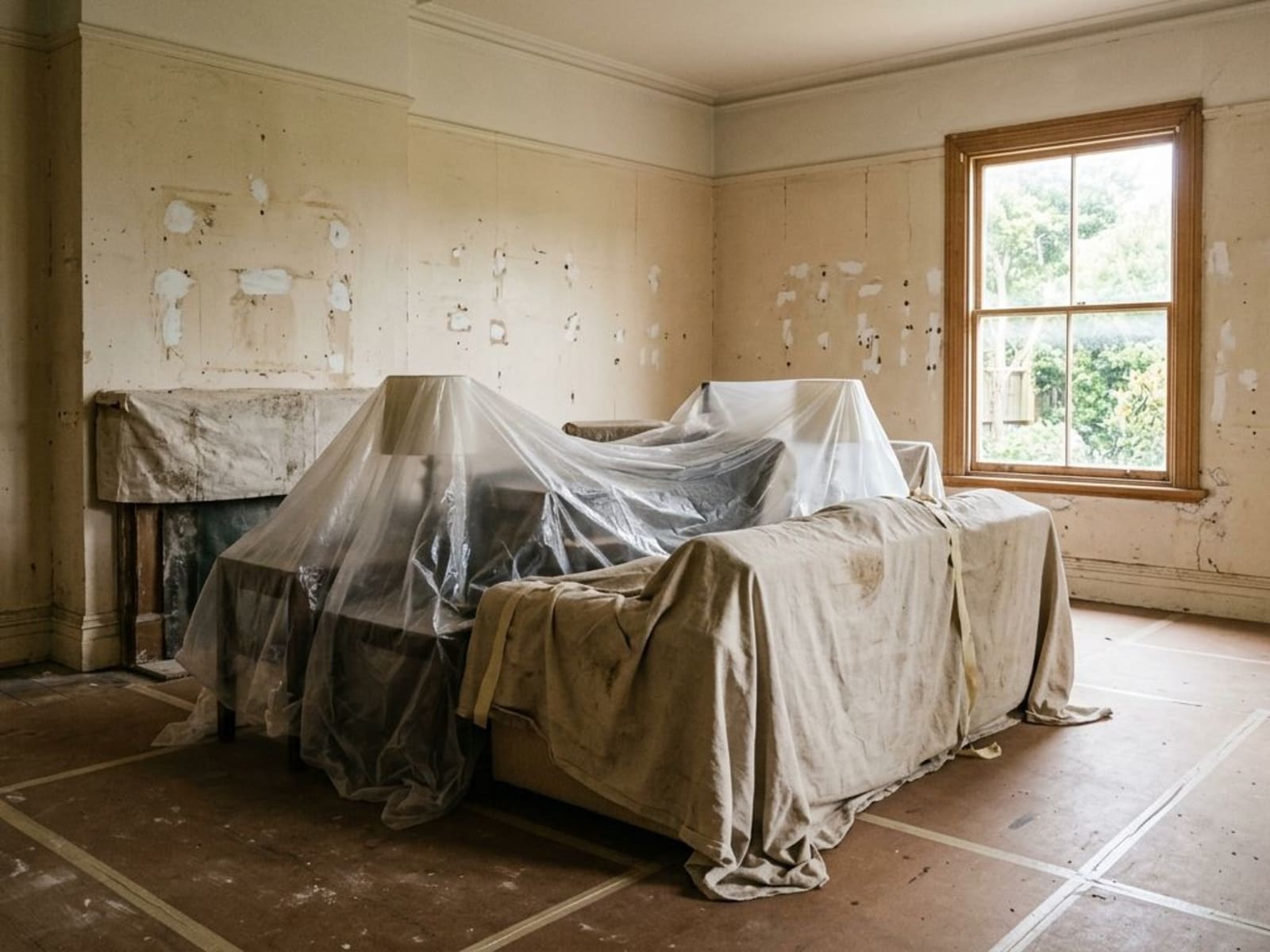
What should you clear before the crew arrives?
Work room by room the weekend before, not on the morning.
- Everything off the walls, including hooks and screws you want kept.
- Shelves, cabinets and mantelpieces emptied and the contents boxed.
- Curtains and blinds down. It is a good moment to wash them.
- Wardrobes emptied if the inside is being painted, and the doors off if you want the frames done properly.
- Electronics unplugged, cables labelled and coiled.
- Valuables, jewellery, documents and anything with sentimental value taken out of the working area entirely.
- Small furniture, lamps, plants and rugs into a room that is not being painted.
- A clear path from the front door to the room, and somewhere for the crew to set up.
The point of the last two is practical. Painters carry ladders and full tins through your house, and a hallway with a hall table and three pairs of shoes in it is where things get knocked.
What about outside?
Exterior work has its own list, and most of it needs doing a few weeks ahead rather than the night before.
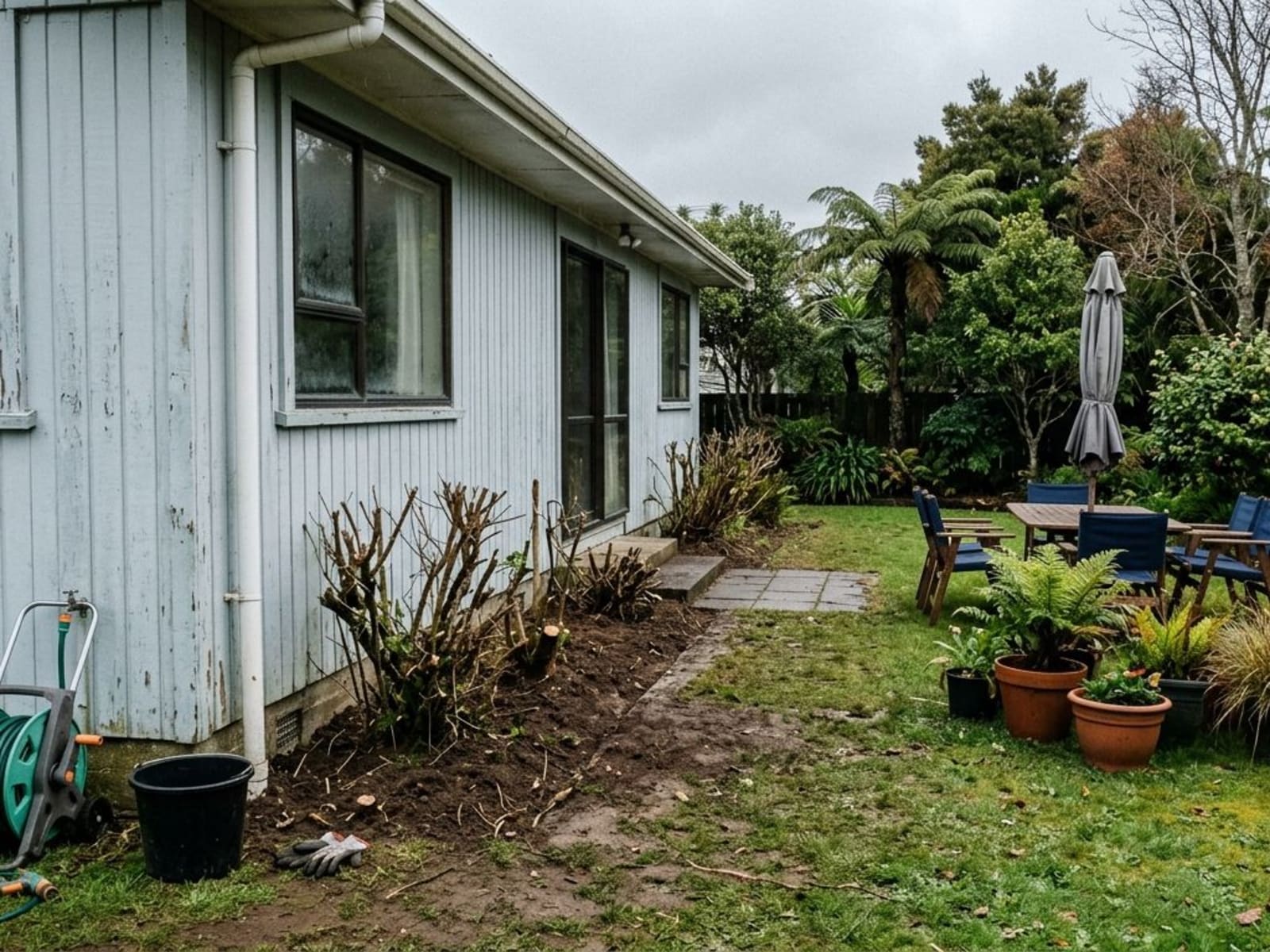
- Cut vegetation back to leave a clear working strip along the walls, roughly a metre. Climbing plants on a wall being painted have to come off it, and that is a decision better made in advance than by a painter with secateurs.
- Move outdoor furniture, barbecues, pot plants and bikes away from the house.
- Clear the driveway and agree where vehicles park. On a narrow Wellington street this is worth sorting out early.
- Turn off irrigation and sprinklers that throw water at the walls, for the duration and for a couple of days after.
- Leave side gates open, and tell the crew about the dog before, not after.
- Take down anything mounted on the walls: sensor lights, cameras, hose reels, letterboxes, clotheslines fixed to the wall.
- Plan to keep windows shut on days the walls near them are being sprayed or washed.
One extra item applies here more than in flatter cities. If your section is steep, or the house sits close to a boundary, the scaffold may need to stand on a neighbour's land or block a shared path. Ask the neighbours yourself, early. A friendly conversation weeks ahead is a different thing from a scaffolder knocking on their door at 7am.
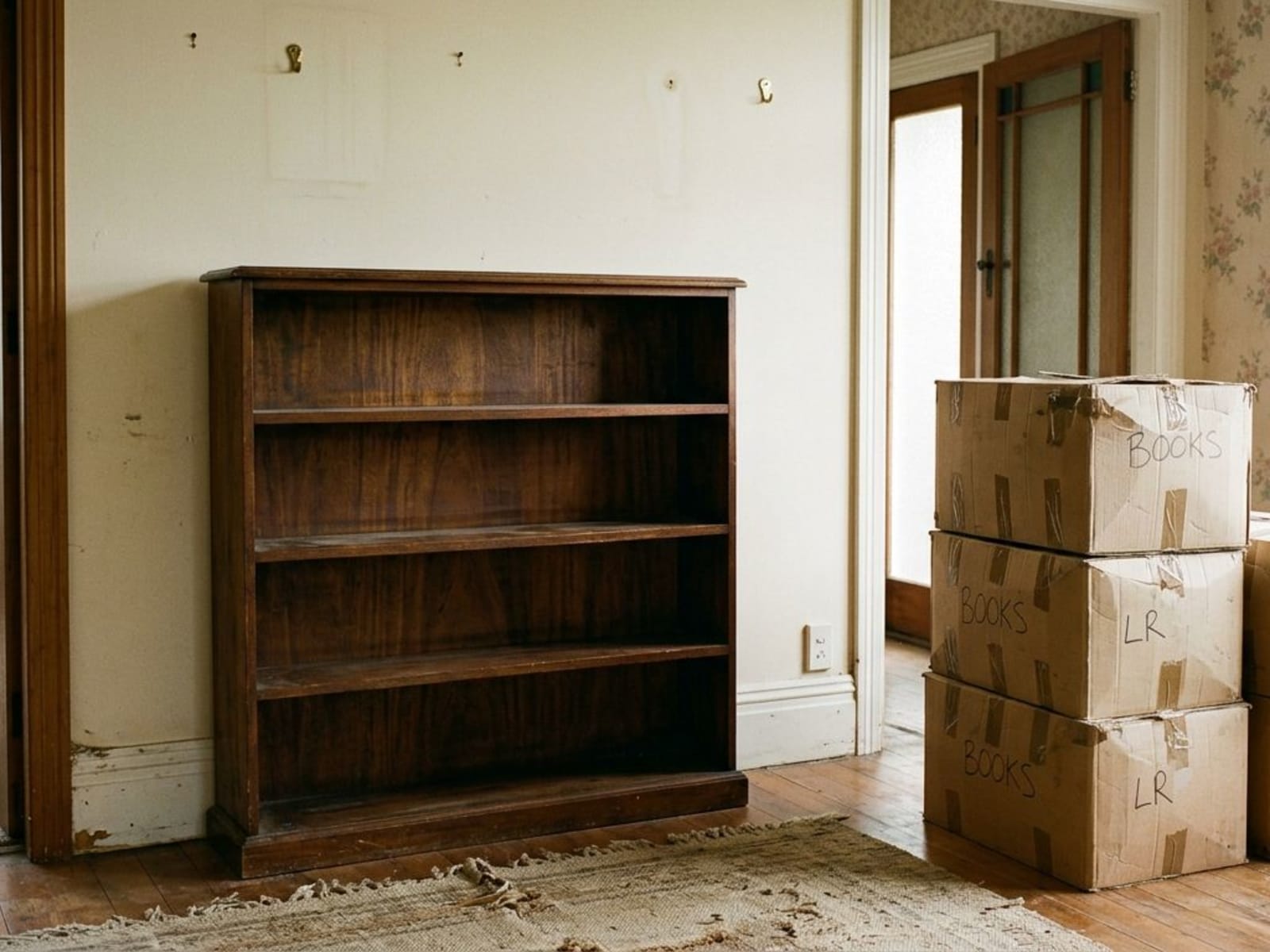
Who is responsible if something gets damaged?
A painting company should carry public liability insurance, and it is entirely reasonable to ask to see it. On a commercial site it will be asked for as a matter of course, and the same question is fair on a house.
The honest part of the answer, though, is that insurance replaces things and it does not restore them. A payout does not bring back your grandmother's vase. That is the real reason to move irreplaceable items out of the working area yourself rather than trusting anyone's care, however careful they are.
Take photos of each room before work starts. It takes two minutes and it settles any question about a mark on a floorboard later, in either direction.
Does clearing properly actually save you money?
On a fixed-price quote it protects the programme rather than the price. On charge-up work it directly saves money, because a crew shifting your belongings is a crew billing you at trade rates to do work you could have done with a box.
Either way it saves time, and time is the thing that turns a three-day room into a four-day room. Where it matters most is a house being lived in during the work, which is most houses. Rooms cleared and ready in the right order let the crew keep moving instead of waiting on you, and that is worth agreeing when the job is booked. It is a normal part of how we schedule interior work in an occupied house.
What to agree before anything starts
- Which rooms in which order, and roughly how many days each.
- Who takes the curtains and blinds down, and who puts them back.
- Where furniture goes, and whether anything leaves the room.
- Access, keys, alarm codes and parking.
- Where water is taken from and where wash water and waste go.
- What time the crew starts and finishes, particularly if anyone works from home.
- What happens to leftover paint, which you should keep, labelled by room.
None of that is complicated. It just needs saying once, before the drop sheets come out.
If you want a quote that spells out who is doing what rather than leaving it to the morning of day one, get in touch and we will walk through it with you. The same applies to occupied offices and shops, where the sequencing matters even more on commercial work.
Related Articles


Need Help With Your Painting Project?
Wellington Decorators has been transforming homes across the Wellington region since 2023, led by a founder with 18+ years in the trade. As Registered Master Painters, we back every job with a 5-year workmanship guarantee.
Prefer to talk? Call us now 027 458 6465