
Your home's exterior colour creates first impressions, affects resale value, and must work with Wellington's unique light conditions and architectural context. Choosing colours can feel overwhelming with thousands of options available.

This guide simplifies exterior colour selection with proven schemes, Resene recommendations, and practical Wellington-specific advice.
Understanding Wellington's Light and Colour
Wellington's latitude (41°S) and maritime climate create unique colour conditions that differ from Auckland or Christchurch.
Our light tends toward blue-grey rather than golden yellow. Overcast days dominate — Wellington averages 2,000 sunshine hours yearly compared to 2,200 in Auckland. This diffused light affects how colours appear.
Coastal suburbs see colours differently than hilltop properties. Sea reflection adds blue tones. Northern harbour-facing homes receive brighter light than southern hill suburbs.
Wind-driven rain and salt spray fade colours faster than in calmer climates. Durability matters as much as aesthetics.
Popular Wellington Colour Schemes
Classic schemes dominate Wellington suburbs for good reason — they work with our architecture, climate, and resale expectations.
Classic Neutrals
Scheme: White body + white trim
- Timeless and universally appealing
- Maximizes light reflection in overcast conditions
- Easy to maintain and touch up
- Strong resale value
Resene recommendations:
- Resene Black White: Crisp contemporary white
- Resene Double Sea Fog: Soft white with warmth
- Resene Pearl Lusta: Traditional white with slight cream
Works best on: Modern weatherboard, contemporary architecture, coastal properties
Soft Greys
Scheme: Light grey body + white or darker grey trim
- Contemporary yet sophisticated
- Hides Wellington dirt and mould better than pure white
- Complements native bush surroundings
- Excellent with aluminium joinery
Resene recommendations:
- Resene Half Rakaia: Warm light grey (popular choice)
- Resene Quarter Stonehenge: Subtle greige tone
- Resene Half Tea: Contemporary grey-beige
- Resene Grey Friars: Medium grey for trim
Works best on: Modern homes, townhouses, homes in bush settings
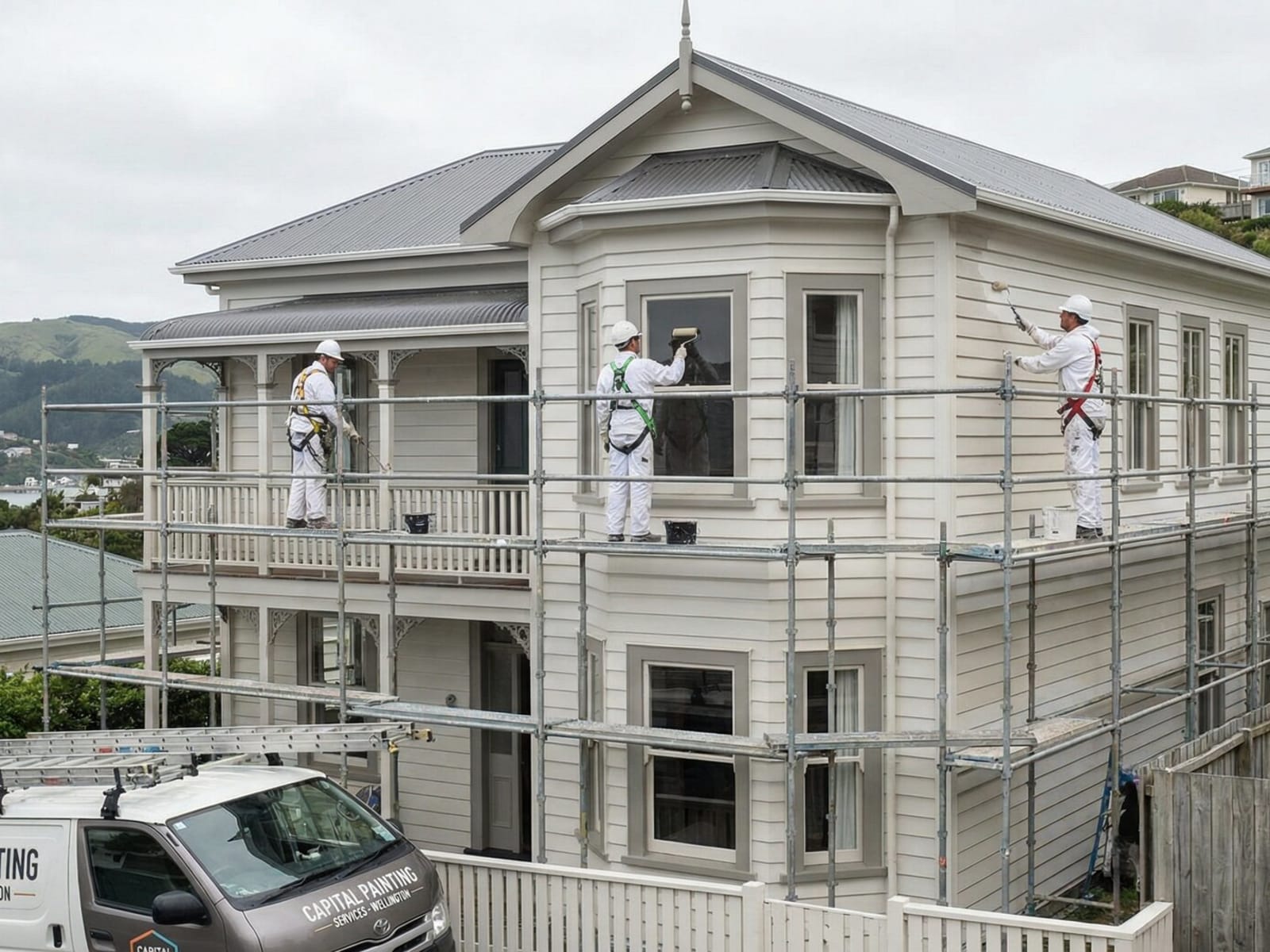
Heritage Villa Schemes
Scheme: Neutral body + contrasting trim + accent details
- Celebrates period architecture
- Enhances decorative features
- Historically appropriate
- Common in Thorndon, Mt Victoria, Kelburn
Classic combinations:
- Cream body + white trim + dark green details
- Light grey body + white trim + burgundy accents
- Soft yellow body + white trim + dark brown features
Resene heritage recommendations:
- Resene Half Spanish White: Traditional cream
- Resene Eighth Bison Hide: Soft heritage grey
- Resene Karaka: Deep green for details
- Resene Lumbersider tinted to The Range colours: Heritage collection
Works best on: Victorian villas, Edwardian cottages, heritage-protected homes
Contemporary Contrasts
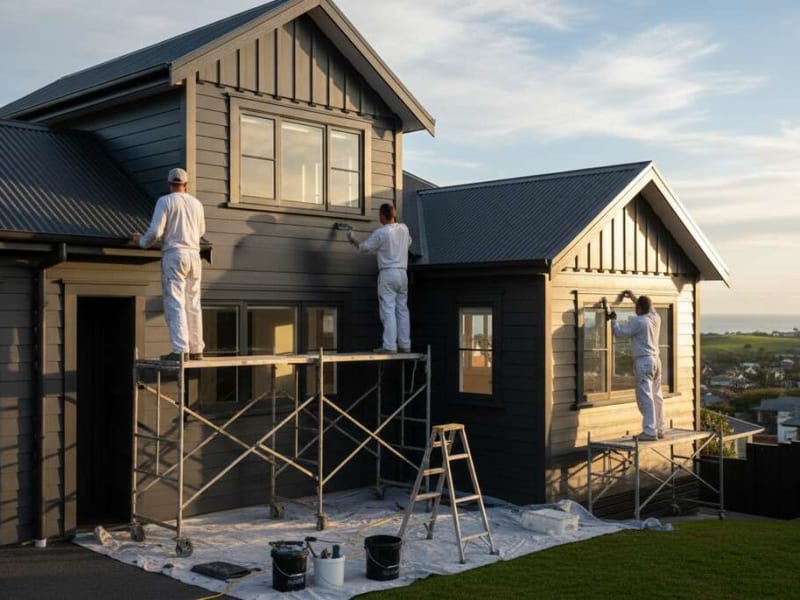
Scheme: Bold dark + crisp white
- Striking modern aesthetic
- Defines architectural features
- Popular in newer developments
- Higher maintenance on horizontal surfaces
Combinations:
- Charcoal weatherboards + white trim
- Deep navy + white joinery
- Black stained cedar + white details
Resene recommendations:
- Resene Ironsand: Popular charcoal (requires 3 coats)
- Resene Midnight Express: Deep navy blue
- Resene Foundry: Industrial charcoal grey
- Resene Black White: Clean white contrast
Works best on: Modern architecture, vertical weatherboards, well-detailed homes
Important: Dark colours require extra coats, show imperfections clearly, and absorb more heat potentially affecting paint longevity.
Natural Earthy Tones
Scheme: Greens, browns, ochres blending with landscape
- Suits bush or rural settings
- Low visual impact
- Complements native vegetation
- Timeless appeal
Resene recommendations:
- Resene Talisman: Sophisticated olive green
- Resene Sandstone: Warm neutral tan
- Resene Half Bison Hide: Natural mid-brown
- Resene Soya Bean: Soft green-beige
Works best on: Bush properties, rural lifestyle blocks, homes surrounded by native bush
Resene Colour Collections for Wellington
Resene offers curated collections that simplify selection while ensuring quality results.
Karen Walker Paints
Contemporary NZ designer palette with sophisticated neutrals:
- Walk-In Wardrobe: Warm greige (extremely popular)
- Perfect Taupe: Elegant mid-tone
- Stonewashed: Soft blue-grey
- First Light: Warm white
These colours photograph beautifully and work across architectural styles.
The Range Heritage Collection
Period-appropriate colours for heritage homes:
- Historically researched tones
- Authentic Victorian and Edwardian schemes
- Council heritage guidelines often reference these
- Available in Resene Lumbersider for durability
Essential for character home restoration in older Wellington suburbs.
Resene Whites & Neutrals
Comprehensive white and neutral selection:
- Cool whites vs warm whites clearly differentiated
- Multiple grey and greige families
- Test pots essential — whites vary dramatically
- Most popular exterior colours overall
Start here for classic, safe choices.
Resene Exterior Collection
Colours specifically designed for exterior durability:
- Higher pigment quality for UV resistance
- Proven longevity in harsh conditions
- Full spectrum from whites to deep tones
Choosing Colours for Different Architectural Styles
Your home's architecture guides appropriate colour selection.
Weatherboard Villas (1890-1920)
Traditional schemes work best:
- 2-3 colours typical (body, trim, details)
- Cream, white, light grey bodies
- White or contrasting trim
- Feature colours on brackets, finials, fretwork

Avoid: Contemporary dark schemes look incongruous on period architecture.
Bungalows (1920-1940)
More restrained than villas:
- Earthy tones common (browns, greens, tans)
- 2 colour schemes typical
- Less contrast than Victorian schemes
Natural palette suits the style.
Mid-Century (1950-1970)
Clean simple schemes:
- Single colour often sufficient
- Soft pastels popular
- Minimal trim contrast
- Feature walls in accent colours
Keep it simple to suit architectural restraint.
Contemporary (1990-present)
Wide flexibility:
- Bold contrasts acceptable
- Dark colours suit modern materials
- Multiple material transitions (weatherboard, plaster, cedar)
- Different colours for different materials
Ensure scheme has coherent logic rather than random variety.
Practical Colour Considerations
Beyond aesthetics, practical factors affect colour success.
Durability and Maintenance
Light colours (whites, creams, light greys):
- Show dirt and mould quickly in Wellington
- May need annual water blast
- Touch-ups blend easily
- Cool houses by reflecting heat
Medium colours (mid-greys, soft colours):
- Hide dirt better between washes
- Good balance of aesthetics and practicality
- Touch-ups reasonably forgiving
Dark colours (charcoals, navies, deep greens):
- Show dust, salt deposits, and water marks
- Require frequent cleaning
- Touch-ups difficult — colour matching critical
- Absorb heat, potentially reducing paint lifespan
- Require 3 coats for solid coverage (+30% cost)
Neighbourhood Harmony
Wellington suburbs have colour cultures. Observe surrounding homes:
Heritage suburbs: Traditional schemes maintain character and support property values.
Modern developments: Contemporary colours fit better in newer areas.
Mixed areas: Moderate schemes work across contexts.
Avoid being the controversial standout unless intentional.
Council Considerations
Heritage-listed properties require council approval for colour changes:
- Wellington City Council heritage team reviews proposals
- Restrict schemes to historically appropriate palettes
- The Range heritage colours often acceptable
- Non-heritage changes to heritage homes may be declined
Check your property's heritage status before committing to colours.
Resale Impact
Neutral schemes maximize resale appeal:
- Whites, light greys, and soft creams suit widest buyer preferences
- Distinctive colours may attract some buyers while deterring others
- If planning to sell within 5 years, choose conservatively
- Personal bold choices acceptable for long-term ownership
Testing Colours Before Committing
Never choose colours from small paint chips alone. Light, context, and scale dramatically affect appearance.

Proper Testing Process
- Narrow to 3-4 options using online visualizers and colour cards
- Purchase test pots (250ml sufficient)
- Paint large samples — minimum 1m x 1m on actual house surface
- Paint multiple walls — north, south, east, west all look different
- Observe for 5-7 days in different weather and light conditions
- View morning, midday, and evening — colours shift throughout day
- Consider surrounding elements — roof, paths, landscaping
- Test trim colours simultaneously to verify combinations work
Investing $100-150 in test pots prevents expensive mistakes.
Digital Tools
Resene offers helpful digital resources:
- ColourSmart app: Upload house photos and try colours virtually
- Colour Palette Generator: Create schemes from inspiration images
- Online visualizer: See colours on example homes
These tools narrow options but don't replace physical testing.
Common Colour Mistakes to Avoid
Mistake 1: Choosing from Small Chips
Tiny colour samples look entirely different at house scale. Always test on actual surfaces.
Mistake 2: Ignoring Fixed Elements
Your roof colour, concrete paths, and brick chimney aren't changing. Colours must work with existing fixed elements.
Mistake 3: Too Many Colours
More than 3-4 colours looks busy. Classic schemes use 2-3 maximum:
- Body colour
- Trim colour
- Optional accent for details
Mistake 4: Matching Neighbours Too Closely
Blending in completely makes your home disappear. Subtle distinction maintains individuality.
Mistake 5: Following Temporary Trends
Instagram-worthy colours may date quickly. Timeless schemes maintain value longer.
Mistake 6: Neglecting Heritage Context
Inappropriate colours on character homes harm the streetscape and may affect resale.
Working with Colour Consultants
Struggling with colour decisions? Professional help ensures confidence.
Wellington Decorators offers colour consultation as part of our service. As Resene Eco Decorators, we understand their full colour range and what works in Wellington conditions.
We consider your architecture, surrounding properties, personal preferences, and practical requirements to develop appropriate schemes.
Ready to Get Started?
Choosing exterior colours combines aesthetics, practicality, and context. The right scheme enhances your home's architecture, suits Wellington's climate, and maintains value.
Wellington Decorators brings 20+ years of Wellington colour experience. As Resene Eco Decorators, we help homeowners navigate colour selection and execute beautiful, durable results.
Contact us to discuss colour options for your home, or learn more about our exterior house painting services.
Visit our Resene Eco Decorator page to learn about our partnership with New Zealand's leading paint manufacturer.
Wellington Decorators Limited — Registered Master Painters | Resene Eco Decorator
Exterior House Painting | Resene Eco Decorator
Local Exterior Painting Services
Need exterior painting in your area? We provide professional exterior painting services across Wellington suburbs including Tawa, Miramar, Thorndon, Newlands. Get a free quote for your project today.
Related Articles


Need Help With Your Painting Project?
Wellington Decorators has been transforming homes across the Wellington region since 2023, led by a founder with 18+ years in the trade. As Registered Master Painters, we back every job with a 5-year workmanship guarantee.
Prefer to talk? Call us now 027 458 6465