
Walk into a paint store and you'll face hundreds of exterior paint options. Understanding paint types, formulations, and performance characteristics helps you choose systems that perform in Wellington's challenging climate. This guide cuts through marketing terminology to explain what actually matters for Wellington homes.

Paint Formulation Types
Water-Based Acrylic Paints (Recommended)
Modern acrylic paints dominate exterior painting for good reasons.
Technology: Acrylic resin suspended in water carrier. As water evaporates, acrylic particles fuse into flexible, durable film.
Advantages: Superior flexibility accommodating timber movement, excellent UV resistance maintaining colour, allows moisture vapour transmission (timber breathes), low VOC emissions, easy water cleanup, quick drying in Wellington conditions, maintains flexibility in cold weather.
Disadvantages: Slightly lower initial gloss than oil-based, requires good surface preparation for adhesion, sensitive to application temperature (minimum 10°C).
Best for: Weatherboards, plaster, previously painted timber, most Wellington exterior applications. Wellington performance: 10-15 year lifespan with premium products like Resene Sonyx 101.
Oil-Based (Alkyd) Paints
Traditional paint technology still available but declining in use.
Technology: Alkyd resin in solvent carrier. Dries through oxidation process.
Advantages: Extremely hard finish when fully cured, high initial gloss, good adhesion to chalky surfaces, traditional appearance for heritage work.
Disadvantages: Becomes brittle with age cracking as substrates move, poor UV stability — yellows over time (especially whites), doesn't allow moisture vapour transmission, high VOC emissions, requires solvent cleanup, slow drying (12-24 hours between coats), cracks in Wellington's temperature variations.
Best for: Metal surfaces, traditional high-gloss heritage finishes, matching existing oil-based systems. Wellington performance: 6-8 years before cracking and yellowing become problematic.
Water-Based Enamels
Modern compromise between acrylic and oil-based characteristics. Products: Resene Hi-Glo, Resene Lustacryl.
Characteristics: High gloss like oil-based, flexibility of acrylics, hard-wearing finish, water cleanup.
Best for: Doors, window frames, trim, fascias — areas needing hard glossy finish. Wellington performance: 8-12 years on trim work.
Resene Paint Systems for Wellington
As Resene Eco Decorators, we recommend their proven products for Wellington conditions.
Premium Option: Resene Sonyx 101
Type: Advanced self-priming acrylic | Gloss: Low sheen (10-20%) | Coverage: 12-16m²/litre
Features: Self-priming on previously painted surfaces, excellent hide and coverage, superior durability in harsh climates, advanced moisture handling technology, outstanding UV resistance.
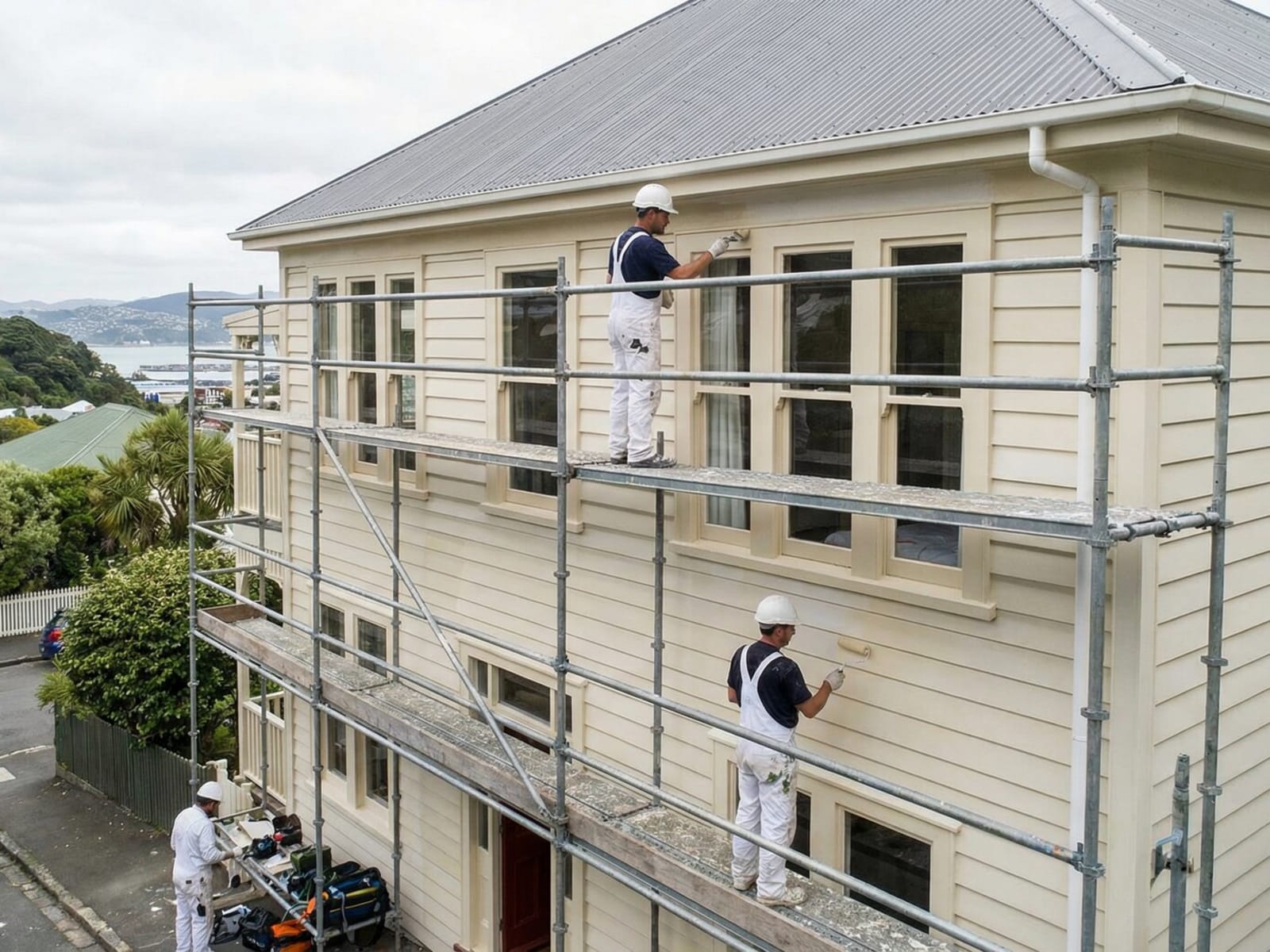
Best applications: Weatherboard bodies, main exterior surfaces, properties in exposed locations. Cost: $60-75/litre. Wellington lifespan: 12-15 years with proper application.
Mid-Range Option: Resene Lumbersider
Type: Water-based low sheen | Gloss: Low sheen (15-25%) | Coverage: 11-14m²/litre
Features: Proven track record (decades on Wellington homes), good durability and weather resistance, easy application, wide colour range, good value for performance.
Best applications: Standard weatherboard repaints, budget-conscious projects. Cost: $45-60/litre. Wellington lifespan: 8-12 years with proper preparation.
Trim and Detail: Resene Hi-Glo
Type: Water-based high gloss enamel | Gloss: 60-80% | Coverage: 14-16m²/litre on smooth surfaces
Features: Hard glossy finish, excellent durability for high-wear areas, easy to clean, traditional appearance, good flow and leveling.
Best applications: Doors, window frames, fascias, trim work, architectural details. Cost: $55-70/litre. Wellington lifespan: 8-10 years on exposed trim.
Specialty: Resene X-200 Weathertight Membrane
Type: Waterborne elastomeric coating | Gloss: Low sheen | Coverage: 6-8m²/litre (thick application)
Features: Waterproofing properties, bridges hairline cracks, flexible membrane, excellent weather protection.
Best applications: Horizontal surfaces (window sills, deck rails), areas prone to water pooling, problem areas with previous leakage. Cost: $80-100/litre. Wellington lifespan: 10-12 years on horizontal surfaces.
Understanding Gloss Levels
Flat/Matte (0-10% gloss)
Rarely used on exteriors — absorbs dirt, difficult to clean, limited durability. Interior ceilings only.
Low Sheen (10-25% gloss)
Slight sheen, good imperfection hiding, practical maintenance. Best for weatherboard bodies, main exterior surfaces. Products: Resene Sonyx 101, Resene Lumbersider. Wellington suitability: Excellent — hides weatherboard texture variations, doesn't highlight every dent.
Semi-Gloss (30-40% gloss)
Noticeable sheen, easier cleaning, moderate durability. Best for trim work on modern homes. Less common in Wellington — between low-sheen and high-gloss without strong advantages of either.
Gloss/High-Gloss (60-80% gloss)
Reflective finish, maximum durability, easiest cleaning, traditional appearance. Best for doors, window frames, trim, fascias, heritage homes. Products: Resene Hi-Glo, Resene Enamacryl.
Wellington suitability: Excellent for trim — shows craftsmanship, easy to maintain, traditional aesthetic. Caution: Shows every surface imperfection. Requires excellent preparation.

Paint Quality Factors
Resin Content
Higher quality paints contain more resin relative to pigment and fillers. Premium paints: 40-50% resin by volume. Budget paints: 25-35% resin by volume. This difference explains why premium paints cost more but last twice as long.
Pigment Quality
Titanium dioxide provides opacity and UV protection. Higher TiO2 content means better hiding, colour retention, and durability. Premium paints use high-grade TiO2. Budget paints substitute cheaper fillers reducing performance.
Additives Package
Modern paints contain additives for mildew resistance (essential in Wellington), UV stabilizers (prevents chalking and fading), flow and leveling agents (smooth finish), and anti-settling compounds. Premium paints have comprehensive additive packages.
How Many Coats?
Standard repaint (similar colour): 2 topcoats on previously painted surface in good condition. Spot prime bare areas first.
Colour change (light to dark): Tinted primer (1 coat) + 3 topcoats for solid coverage. Skipping third coat leaves patchy appearance.
Colour change (dark to light): Stain-blocking primer (1 coat) + 2-3 topcoats. Very dark to white may need 3 topcoats.
Bare timber: Primer (1 coat, stain-blocking if needed) + 2-3 topcoats. Critical for long-term protection.
Wellington-Specific Paint Considerations
Wellington's environment creates challenges that aren't relevant in calmer cities like Christchurch or Hamilton. Here's what to factor in when selecting exterior paint:
Wind-driven rain penetration: Wellington's northerlies and southerlies drive rain horizontally into surfaces that would stay dry in still conditions. Paint systems need genuine water-repellency, not just surface weather resistance. Resene Sonyx 101's advanced moisture barrier technology was designed for exactly this kind of exposure.
Coastal salt spray: Properties in Seatoun, Eastbourne, Island Bay, and Oriental Bay face constant salt-laden air. Salt is corrosive and hygroscopic — it draws moisture into paint films. Coastal homes need premium paint with strong adhesion and alkali resistance. Budget an extra repainting cycle every 10-12 years compared to inland properties.
Heritage home considerations: Many Wellington homes in Mt Victoria, Thorndon, and Kelburn date to the 1880s-1920s. These homes often have layers of old oil-based paint over bare kauri or rimu weatherboards. Switching to modern acrylic over well-adhered oil-based is fine; switching over poorly-adhered oil requires complete strip-back first. Getting this wrong results in widespread peeling within 2 years.
Timber movement: Wellington's temperature range — from cold damp winters to warm dry summers — causes significant timber expansion and contraction. Only flexible acrylic systems can accommodate this movement. Rigid coatings crack and allow moisture penetration, leading to rot behind what looks like intact paint.
Choosing the Right Paint for Your Project
Surface type:
- Timber weatherboards: Resene Sonyx 101 or Lumbersider
- Trim and doors: Resene Hi-Glo
- Metal: Resene Galvo-Prime then acrylic topcoat
- Brick/plaster: Breathable acrylic like Resene Sonyx 101
Exposure level: Coastal properties need premium systems (Sonyx 101). Sheltered inland properties can use mid-range (Lumbersider). Extreme exposure warrants waterproofing systems.
Budget: Long-term value favours premium paints — they cost less annually despite higher upfront price. Never compromise to budget paints — it's a false economy.
Frequently Asked Questions
Can I paint over oil-based paint with acrylic?
Yes, if the oil-based paint is well-adhered and in good condition. Clean thoroughly, lightly sand to create a key, apply an oil-based primer or adhesion primer first, then topcoat with acrylic. Never apply acrylic over peeling or chalky oil-based paint — strip it back first.
What's the minimum temperature for exterior painting in Wellington?
Most acrylic paints require a minimum of 10°C, with surface and air temperatures above this threshold. In Wellington, this rules out most of June-August for exterior work. Always check manufacturer data sheets — some products specify higher minimums.
How long does exterior paint take to dry in Wellington?
Touch-dry: 1-2 hours in summer, 3-4 hours in cooler weather. Recoat time: 2-4 hours (water-based). Full cure: 7-14 days. Wellington's wind helps drying but can carry dust onto wet paint. Always check the extended forecast before starting.
Is low-sheen or gloss better for Wellington exteriors?
Low-sheen for main body surfaces — it hides imperfections, looks refined, and performs well in Wellington's UV. Gloss for all trim, doors, and architectural details — it withstands washing, looks crisp, and defines edges beautifully. The contrast between low-sheen body and gloss trim is a classic combination that suits Wellington's character homes perfectly.
Environmental Considerations
Low-VOC requirements: Choose water-based acrylics with Environmental Choice certification. Resene offers an extensive low-VOC range.

Eco-friendly: Resene paints meet strict environmental standards. As Resene Eco Decorators, we prioritize sustainable products.
Proper disposal: Never pour paint down drains. Return unused paint to Resene PaintWise recycling program.
Ready to Get Started?
Choosing the right exterior paint ensures your Wellington home stays protected and beautiful for years. Wellington Decorators uses premium Resene paint systems matched to your specific conditions and requirements. As Resene Eco Decorators, we provide expert product selection ensuring optimal performance.
Contact us for paint system recommendations and professional application, or learn more about our exterior house painting services. Visit our Resene Eco Decorator page to learn about our partnership with New Zealand's leading paint manufacturer.
Wellington Decorators Limited — Registered Master Painters | Resene Eco Decorator
Exterior House Painting | Resene Eco Decorator
Local Exterior Painting Services
Need exterior painting in your area? We provide professional exterior painting services across Wellington suburbs including Island Bay, Brooklyn, Wadestown, Johnsonville. Get a free quote for your project today.
Related Articles


Need Help With Your Painting Project?
Wellington Decorators has been transforming homes across the Wellington region since 2023, led by a founder with 18+ years in the trade. As Registered Master Painters, we back every job with a 5-year workmanship guarantee.
Prefer to talk? Call us now 027 458 6465