
Wellington's heritage homes — Victorian villas, Edwardian cottages, and Art Deco residences — require specialized painting knowledge. These properties combine historical significance, architectural detail, and often challenging condition requiring expertise beyond standard house painting.

This guide covers heritage exterior painting specific to Wellington's character homes.
Understanding Wellington Heritage Properties
Heritage Classifications
Heritage New Zealand Listed: Nationally significant buildings. Changes require Heritage NZ approval. Strict requirements for materials and colours.
Wellington City Council Heritage List: Locally significant properties. Exterior changes need resource consent. Council heritage team reviews proposals.
Character areas: Properties in heritage precincts (Thorndon, Mt Victoria, Oriental Bay). Less restrictive but guidelines encourage sympathetic treatment.
Non-listed character homes: No formal protection but still deserving appropriate restoration approaches.
Check your property status with Wellington City Council before planning work. Non-compliance can require expensive remediation.
Common Wellington Heritage Styles
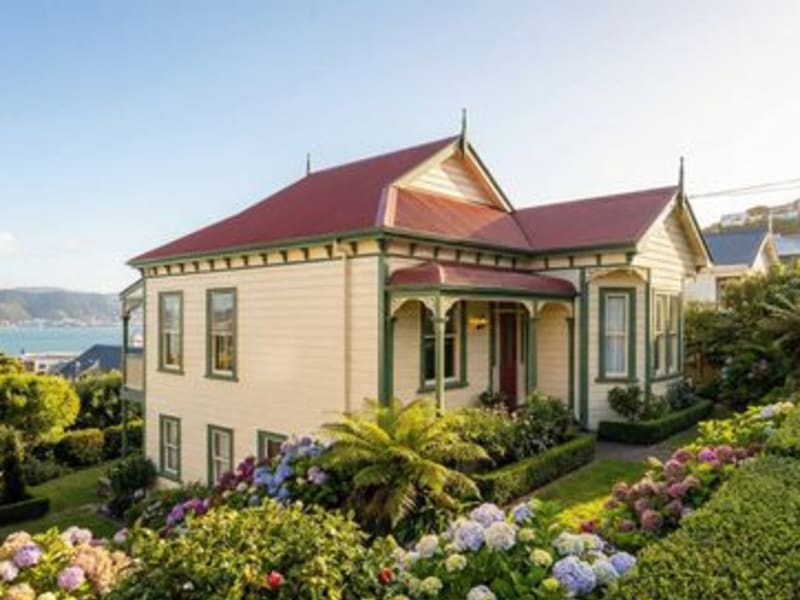
Victorian villas (1870-1900):
- Ornate fretwork and brackets
- Decorative verandah details
- Bay windows and finials
- Multiple-colour schemes typical
- Rimu, matai, or kauri weatherboards
Edwardian cottages (1900-1920):
- Simpler than Victorian
- Less ornate detailing
- 2-3 colour schemes
- More restrained aesthetic
California bungalows (1920-1940):
- Low-pitched roofs
- Broad eaves
- Tapered columns
- Natural colour schemes
- Often features shingles or stucco
Art Deco (1930-1950):
- Geometric detailing
- Horizontal emphasis
- Simplified ornament
- Often rendered/plastered
- Light colour schemes
Each style has appropriate colour palettes and detailing approaches.
Heritage Colour Selection
Period-appropriate colours maintain architectural integrity.
Victorian Villa Colours
Traditional schemes used 3-5 colours creating visual interest:
Body colours: Cream, soft yellow, light grey, pale green. Never stark white (not historically accurate).
Trim colours: White, cream, or light contrasts. Window frames and fascias.
Feature colours: Dark green, burgundy, deep brown, navy. Fretwork, brackets, finials.
Accent colours: Sometimes additional colours for small details.
Resene The Range Heritage Collection: Historically researched Victorian colours. Safe choices for heritage consents. Popular options include:
- Resene Half Spanish White (cream body)
- Resene Eighth Bison Hide (soft heritage grey)
- Resene Karaka (deep green details)
- Resene Pohutukawa (heritage red-brown)
Edwardian Colours
More restrained than Victorian:
2-3 colour schemes typical:
- Neutral body (cream, grey, soft green)
- White or cream trim
- Optional dark accent for details
Resene recommendations:
- Resene Quarter Pearl Lusta (soft white)
- Resene Half Gravel (warm grey)
- Resene Ironsand (dark detailing)
Bungalow Colours
Natural earthy tones:
- Greens, browns, tans
- Cream or white trim
- Minimal contrast
- Resene Talisman, Half Bison Hide, Sandstone

Art Deco Colours
Light sophisticated schemes:
- Whites, creams, pastels
- Often monochromatic
- Metallic accents occasionally
- Resene Black White, Double Sea Fog
Council Approval for Colours
Heritage-listed properties may need council approval for colour changes:
Approval process:
- Submit photos and colour samples to heritage team
- Demonstrate historical appropriateness
- Allow 2-4 weeks processing
- Approval typically granted for Resene The Range colours
- Non-compliant colours may be declined
Work with painters experienced in heritage consents. We assist with documentation and council liaison.
Lead Paint Considerations
Pre-1980s Wellington homes often contain lead paint. Heritage homes almost certainly do.
Health Risks
Lead is toxic causing neurological damage, particularly dangerous for children. Ingestion or inhalation causes serious health effects.
DIY paint removal on lead-painted homes risks significant exposure.
Testing for Lead
Test all pre-1980 homes before work:
- Lead test kits available at hardware stores ($20-40)
- Test multiple colours (different paints may have varying lead content)
- Professional testing more accurate ($150-300)
Assume lead presence on pre-1960 homes unless testing proves otherwise.
Safe Lead Paint Management
Three approaches:
Encapsulation (painting over):
- Safest if existing paint intact
- Doesn't remove lead but seals it
- Requires stable substrate
- Standard approach for weatherboards in good condition
- We use this method frequently on heritage homes
Chemical stripping:
- Removes paint with chemical strippers
- Less dust than sanding
- Time-consuming and expensive
- See our paint stripping services
Full removal:
- Licensed lead removal practitioners only
- Containment systems prevent contamination
- Proper disposal required
- Most expensive but removes hazard
- Sometimes required for badly deteriorated paint
Lead-Safe Work Practices
Professional painters follow strict protocols:
- Containment systems to control dust
- HEPA vacuum equipment
- Protective equipment for workers
- Proper waste disposal
- Site cleaning verification
Never:
- Dry sand lead paint (creates toxic dust)
- High-pressure water blast (spreads contaminated debris)
- Burn off paint (releases toxic fumes)
- Allow DIY work without proper protection
Wellington Decorators holds lead-safe work certifications and follows best practices on all heritage properties.
Heritage Preparation Challenges
Heritage homes present unique preparation issues.
Ornate Details
Fretwork, brackets, finials, and decorative elements require careful preparation:
Cleaning: Intricate profiles trap dirt. Hand cleaning with brushes necessary. Water blasting risks damage.
Scraping: Detailed profiles difficult to scrape. May require heat guns, chemical strippers, or specialist tools.

Priming: All surfaces must receive primer. Complex profiles need careful brush work.
Painting: Detail work time-consuming. Brush application essential. Spray creates overspray challenges.
Budget extra time for ornate heritage details. Victorian villas with extensive fretwork take 30-50% longer than simple weatherboard homes.
Timber Condition
Heritage timbers (rimu, matai, totara) more durable than modern pine but 100+ year old weatherboards often show:
Weathering: South-facing boards may be degraded. Surface restoration required before painting.
Rot: Particularly at board ends, window sills, ground level. Requires careful repair or replacement matching original profiles.
Tannin bleed: Native timbers contain high tannin levels. Stain-blocking primer essential to prevent brown streaks.
Movement: Old timber has stabilized but gaps may have opened. Flexible gap fillers required.
Matching Original Profiles
Replacing damaged weatherboards on heritage homes requires matching original profiles:
Profiling options:
- Specialist millwork companies reproduce historic profiles
- Custom milling expensive ($80-150 per metre vs $15-25 for standard)
- May need minimum quantities
- Lead times 2-4 weeks
Timber species:
- Original rimu/matai no longer available in weatherboard lengths
- Substitutes: macrocarpa, cedar, treated pine
- Different woods accept paint differently
- Requires adjustment to priming approach
Heritage Paint Systems
Heritage homes need durable systems suited to old timber.
Recommended Approaches
Traditional oil-based (period-accurate):
- Authentic heritage finish
- High-gloss traditional appearance
- Better suited to rimu/matai than modern acrylics
- Longer lasting on old-growth timber
- Disadvantages: yellowing, brittleness, environmental concerns
Modern premium acrylics (recommended):
- Resene Sonyx 101 performs excellently on heritage timber
- Superior longevity (12-15 years)
- Better UV resistance than oil-based
- Maintains flexibility
- Lower environmental impact
Hybrid approach (best of both):
- Acrylic for body and trim
- Oil-based high-gloss for doors and featured joinery
- Combines modern durability with traditional aesthetics
Primer Requirements
Heritage timber demands proper priming:
Stain-blocking primer essential:
- Resene Quick Dry or equivalent
- Prevents tannin bleed from rimu/matai
- Seals resinous areas
- Apply to all bare timber before topcoats
Lead paint compatibility:
- Modern primers bond well to stable lead paint
- No special primers needed for encapsulation approach
Heritage Painting Costs
Heritage painting costs 20-50% more than standard homes due to:
| Factor | Cost Impact |
|---|---|
| Detailed preparation | +15-25% |
| Ornate detailing work | +20-30% |
| Lead-safe work practices | +10-15% |
| Custom weatherboard replacement | +$3,000-$12,000 |
| Paint stripping (if required) | +$8,000-$25,000 |
| Multiple colours (4-5 colours) | +$3,000-$8,000 |
| Council consent assistance | +$500-$1,500 |
Typical costs:

| Villa Size | Basic Condition | Restoration Level |
|---|---|---|
| Small villa (120m²) | $18,000-$25,000 | $28,000-$40,000 |
| Medium villa (150m²) | $24,000-$35,000 | $35,000-$55,000 |
| Large villa (200m²+) | $35,000-$50,000 | $50,000-$80,000+ |
Basic condition: Sound weatherboards, minimal rot, 2-3 colours, no stripping required.
Restoration level: Significant repairs, paint stripping, 4-5 colours, extensive detailing.
Heritage Detailing Techniques
Proper technique highlights architectural features.
Multi-Colour Application
Traditional schemes use multiple colours creating visual depth:
Systematic approach:
- Paint largest area (body colour) first
- Paint secondary areas (trim, fascias)
- Paint feature colours (fretwork, brackets)
- Paint smallest details (finials, small accents)
Masking requirements:
- Precise masking between colours essential
- Quality masking tape prevents bleed
- Remove tape while paint still wet for clean edges
- Touch up minor bleeds immediately
Highlighting Details
Victorian villas intended ornament to stand out:
Contrast techniques:
- Dark features against light body
- Light trim separating body from dark features
- Multiple tones creating depth
- Consistent logic throughout (avoid random variety)
Period-Appropriate Gloss Levels
Traditional schemes used varying gloss:
High gloss: Doors, window frames, sills — showcased craftsmanship
Semi-gloss: Trim, fascias, weatherboards sometimes
Modern low-sheen: Not historically accurate but acceptable compromise on body colours if details remain glossy
Full high-gloss heritage schemes require excellent surface preparation — gloss shows every imperfection.
Working with Heritage Advisors
Heritage-listed properties benefit from professional heritage advice:
Heritage architects: Provide colour schedules and restoration guidance. Valuable for major projects.
Council heritage team: Offer advice on consent requirements. Free pre-application meetings available.
Heritage painters: Specialists understanding period requirements and techniques.
Wellington Decorators works regularly with heritage consultants and council heritage team. We understand consent processes and appropriate period approaches.
Maintenance of Heritage Painted Homes
Heritage homes require ongoing care:
Annual Inspection
Focus on vulnerable areas:
- Window sills and frames (common rot points)
- Weatherboard ends at corners
- Ground-level boards
- Ornate details holding moisture
Prompt Repairs
Address small issues immediately:
- Touch up damaged paint preventing moisture penetration
- Replace failing weatherboards before rot spreads
- Maintain caulking and gaps sealed
Cleaning
Regular cleaning extends paint life:
- Annual gentle wash removes salt and dirt
- Hand cleaning of detailed areas
- Avoid aggressive techniques damaging old timber
Repainting Timeline
Heritage homes with quality systems: 12-15 years between full repaints
Spot repairs and maintenance painting extend this significantly.
Ready to Get Started?
Heritage home painting requires specialized knowledge, appropriate materials, and respect for architectural significance. Wellington's character homes deserve expert care preserving them for future generations.
Wellington Decorators specializes in heritage villa and character home painting. We understand period-appropriate colours, council consent processes, and lead-safe work practices. As Registered Master Painters, we deliver quality honoring your home's history.
Contact us for heritage painting consultation and quote, or learn more about our exterior house painting services and paint stripping services.
Wellington Decorators Limited — Registered Master Painters | Resene Eco Decorator
Exterior House Painting | Paint Stripping
Local Exterior Painting Services
Need exterior painting in your area? We provide professional exterior painting services across Wellington suburbs including Tawa, Miramar, Thorndon, Newlands. Get a free quote for your project today.
Related Articles


Need Help With Your Painting Project?
Wellington Decorators has been transforming homes across the Wellington region since 2023, led by a founder with 18+ years in the trade. As Registered Master Painters, we back every job with a 5-year workmanship guarantee.
Prefer to talk? Call us now 027 458 6465