
Managing painting across a property investment portfolio requires strategic thinking beyond single-property decisions. Professional investors treat painting as systematic capital protection — standardising finishes, scheduling maintenance proactively, and leveraging volume for better value while protecting long-term asset values.
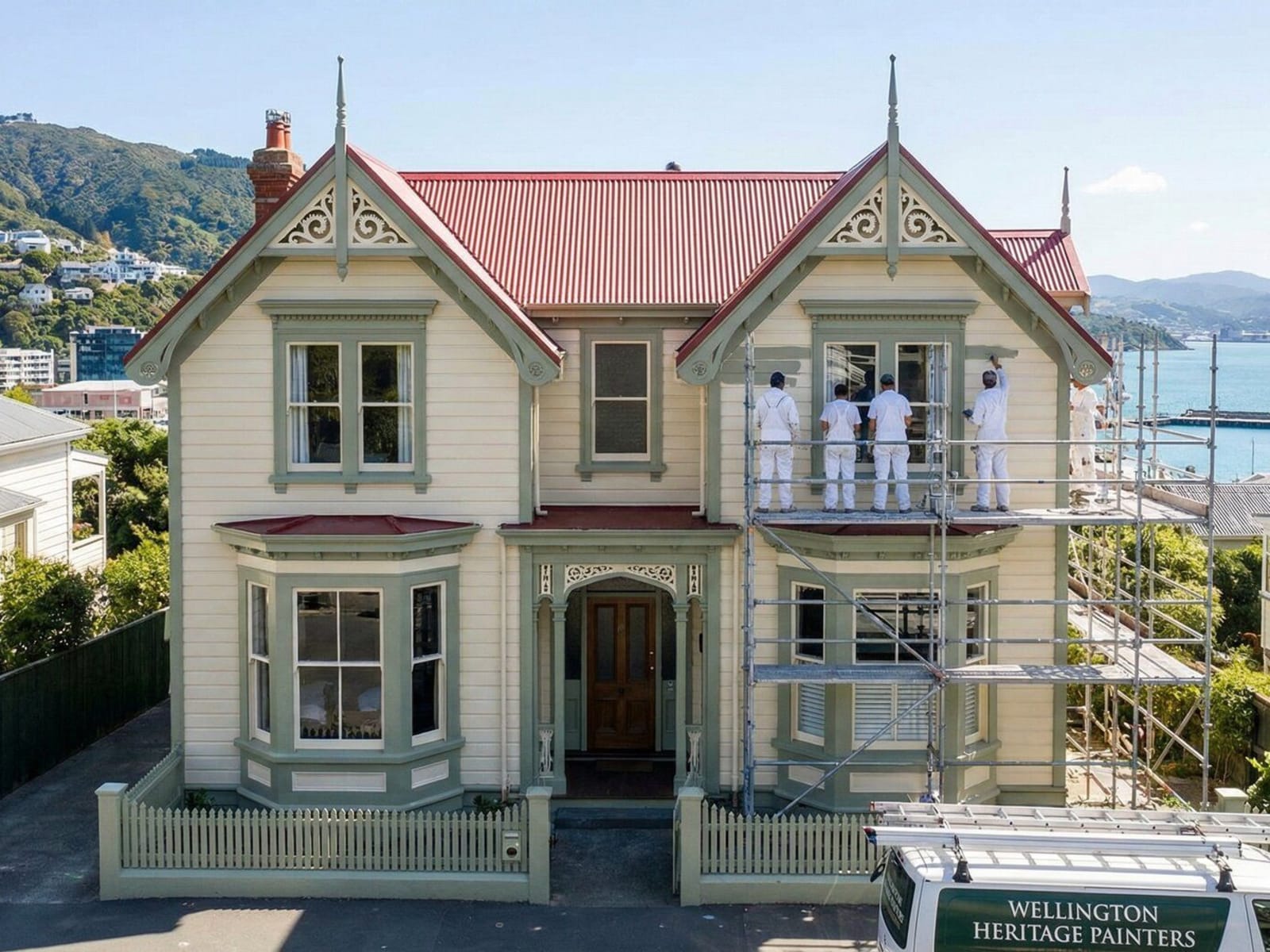
Portfolio Approach to Property Painting
Systematic vs Reactive Management
Reactive approach (common mistake): Wait until tenants complain or the property looks tired. Emergency painting between tenants. Different painters each time. Inconsistent colours and quality. Higher costs and more stress.
Strategic portfolio approach: Scheduled maintenance calendar, proactive painting before issues arise, preferred contractor relationship, standardised colour palette, predictable costs and less stress.
Strategic management reduces annual painting costs by 20-30% while maintaining higher property values and tenant satisfaction. The savings come from bulk pricing, reduced vacancy time, and avoiding the emergency premium that reactive landlords pay.
Creating Your Portfolio Painting Schedule
Step 1 — Inventory current status: Document when each property was last painted. Assess current condition with photos. Note any immediate issues. Prioritise properties needing work.
Step 2 — Create a 5-year rolling schedule: Spread work across years to avoid lumpy costs. Schedule exterior painting before interior ages out. Plan around natural vacancy points. Budget annual allocation versus surprise expenses.
Step 3 — Implement and track: Maintain a central spreadsheet. Record paint date, colours used, products, costs, and next scheduled date for each property. Set reminders for future maintenance. Adjust the schedule based on actual wear rates.
Example 8-property portfolio: Year 1 — properties 1, 2 exterior. Year 2 — properties 3, 4 interior. Year 3 — properties 5, 6 exterior. Year 4 — properties 1, 2 interior touch-up. Year 5 — properties 7, 8 full repaint. Then the cycle continues.
Budget smoothing turns $48,000 over 5 years into a predictable $9,600 annual allocation rather than a $48,000 lump expense in a single year.
Standardisation Benefits
Consistent Colour Palette
Developing a standard colour scheme across your portfolio delivers multiple advantages. A simple interior palette — Resene Half Rice Cake in living areas and bedrooms, Resene Black White in kitchens and bathrooms, Resene Ceiling Paint throughout, and Resene White semi-gloss trim — covers every property without decisions each time. For exteriors, Resene Half Truffle or Alabaster with Resene Black White trim provides a consistent, modern presentation.
Standardisation allows bulk paint purchasing at 15-25% savings, central touch-up inventory usable across properties, simplified ordering, consistent photos for listings, faster tenant turnaround with no colour decisions, and the ability to use leftover paint from one property as touch-up at another.
For an 8-property portfolio, buying in 100L batches at trade pricing versus retail 10L cans saves $2,000-$3,000 annually.
Standard Specifications
Beyond colours, standardise your full specification: Resene SpaceCote Low Sheen on all interior walls, Resene Ceiling Paint flat on all ceilings, Resene Enamacryl semi-gloss on all trim, and Resene Sonyx 101 or Lumbersider on all exteriors (as appropriate to cladding type). Document this as a one-page spec sheet. Give it to any painter and receive consistent quotes and consistent work quality.

Multi-Property Contractor Relationships
Benefits of a Preferred Painter
A preferred contractor relationship delivers real advantages on both sides. For the investor: 10-20% volume discount across the portfolio, priority scheduling to minimise vacancy, consistent quality you can rely on, simplified management through one relationship, and a contractor who understands your standards without re-briefing each time. For the painter: guaranteed ongoing work, efficient planning and material ordering, portfolio knowledge that reduces quoting time, and the ability to offer better pricing because of volume certainty.
Structuring the Arrangement
Annual agreement: Commit to a number of properties or a dollar amount of annual spend. Receive a portfolio discount (typically 15%). Get priority scheduling for tenant turnovers. Benefit from standardised pricing that eliminates delay for repeated quotes.
Retainer approach for larger portfolios (15+ properties): Monthly retainer for priority access, agreed hourly and daily rates for work, touch-up service included, and immediate response for urgent needs.
Long-Term Maintenance Planning
Forecasting Portfolio Paint Needs
Track the key data for each property: last interior painted, expected next interior (typically 6-8 years later), last exterior painted, expected next exterior (typically 7-10 years later). This gives you a rolling forecast of when costs land.
Factor in Wellington-specific wear: coastal-facing exteriors at Seatoun, Miramar, or Lyall Bay may need exterior repainting 2-3 years earlier than the standard cycle. Properties on exposed ridgelines in Karori, Brooklyn, or Kelburn experience higher wind-driven rain that accelerates paint deterioration on south and west-facing walls.
Capital Improvement vs Maintenance
Maintenance painting (tax deductible as operating expense): Regular repainting on a maintenance schedule, same or similar colours, maintaining current condition, tenant changeover painting.
Capital improvement (may require depreciation): First-time painting of new additions, major colour or finish upgrades as part of renovation, painting that adds value rather than maintains it.
Structure work as maintenance where possible for immediate tax deductibility. Consult your accountant for significant projects where the line between maintenance and improvement is unclear.
Maximising Rental Returns Through Painting
Rent Premium from Fresh Paint
Freshly painted Wellington rentals command 5-10% rent premium over identical unpainted properties. For a 3-bedroom rental: tired paint might achieve $580/week, fresh paint $620/week — a $40/week difference. Over a year that is $2,080. The $6,000 painting cost pays back in 2.9 years, then generates $2,080 annually in extra rent. Over ten years: $20,800 extra rent minus $6,000 cost equals $14,800 profit from one painting decision.

The strategic move: paint properties 6-12 months before a tenancy ends, then use fresh presentation to achieve the rent increase with the next tenant. Existing tenants are less likely to accept a rent increase framed around painting than new tenants choosing the property at market rate.
Tenant Quality and Retention
Fresh, well-maintained properties attract professional tenants who seek clean presentation, evidence of good maintenance, move-in ready condition, and pride-of-ownership landlords. Quality tenants stay longer, care better for the property, pay reliably, and generate fewer complaints.
The value of a quality tenant who stays four years versus a two-year turnover cycle: one avoided vacancy period ($3,000+ at current Wellington rents) plus one avoided repaint ($6,000) equals $9,000 in saved costs from a single better tenancy. The $6,000 painting investment that attracted that quality tenant has paid for itself many times over.
Property Value Protection
Painting as Capital Protection
On a $650,000 Wellington rental property, the mathematics of maintenance versus deferral are stark:
Well-maintained (exterior every 8 years at $14,000, interior every 6 years at $6,500): 15-year maintenance cost $34,750. Property value maintained at market growth rate.
Deferred maintenance (skip painting for 15 years): Weatherboard rot develops costing $50,000 to repair. Interior deteriorates requiring $12,000 restoration. Market perception reduces achieved sale price by $40,000 versus comparable maintained properties. 15-year total cost: $62,000 in repairs plus $40,000 value loss.
Net penalty for deferral: $102,000 in combined costs and lost value versus $34,750 for proactive maintenance. The gap is $67,250.
Sale Preparation Efficiency
Well-maintained paint means a minor touch-up of $800-$1,500 when you decide to sell, listing within 2-3 weeks of decision, strong buyer appeal immediately, and premium pricing achieved. Deferred paint means a full repaint of $18,000-$25,000, a 6-8 week delay to listing, higher costs with less time to recoup through rent, and sometimes rushed work that shows in the final result.
Proactive maintenance creates a sell-ready portfolio at any time — a significant advantage if you need to move quickly on a sale.
Technology and Systems
Portfolio Management Tools
A spreadsheet works well for 1-10 properties: property address, last interior painted (date, cost, colour), last exterior painted (date, cost, colour), next scheduled painting, touch-up paint storage location, contractor used. For larger portfolios, property management software with maintenance tracking modules provides automatic reminders, photo documentation, and cost reporting that prevents anything slipping through the gaps.
Photo Documentation
Photograph each property before a tenant moves in, immediately after painting, before the tenant moves out, and after the tenant vacates. Uses include Tenancy Tribunal evidence for damage claims, contractor quality verification, portfolio marketing materials for listings, planning future maintenance based on actual wear patterns, and insurance claims if needed.
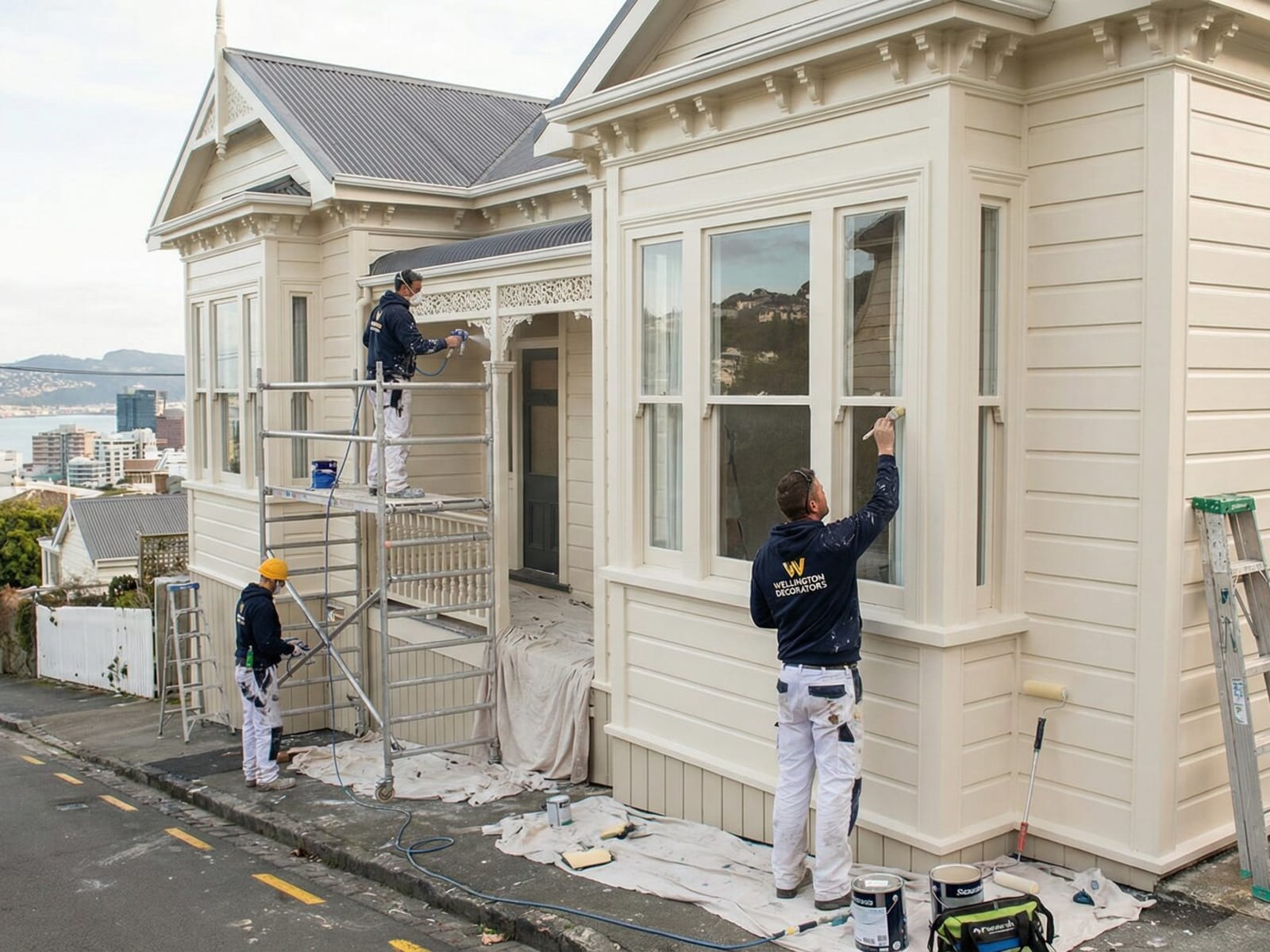
Tax Optimisation Strategies
Spread painting across financial years for consistent deductions rather than lumpy expenses that spike in one year. Schedule expensive painting in higher-income years to maximise deduction value. Consult your accountant on the maintenance expense versus capital improvement treatment for significant projects.
Essential documentation: Detailed invoices with property address, scope, and dates. Paint product specifications. Before and after photos. Clear link to the specific rental property and tenancy context.
Portfolio Growth Considerations
1-3 properties: DIY management and individual painter relationships work fine.
4-10 properties: Systematise with standard colours and a preferred painter. Implement a scheduling system. Negotiate portfolio discounts.
10-20 properties: A dedicated contractor relationship is essential. Consider bulk paint purchasing arrangements. Robust tracking systems prevent anything being missed.
20+ properties: Property management may handle day-to-day coordination, but maintain strategic oversight of standards and pricing. Multiple painters for different geographic clusters may be more efficient than one contractor for the whole portfolio.
Geographic Considerations
Wellington investors with properties spread across the region may find one painter handles a tight cluster efficiently, while properties scattered from Porirua to Lower Hutt benefit from two or three painters with local knowledge. For multiple cities, use local painters in each area but maintain the same standard specifications for consistent quality regardless of who applies the paint.
Frequently Asked Questions
How much should I budget annually per rental property for painting?
A useful rule of thumb is 1-1.5% of property value per year for all maintenance including painting. For a $500,000 property that is $5,000-$7,500 per year across all maintenance. For painting specifically, budget $1,000-$1,500 per property per year into a reserve fund and draw from it when the full repaint cycle comes around.
Should I paint between every tenancy?
Not necessarily. Assess condition honestly. A good tenant who has maintained the property well over 2-3 years may only need touch-ups. A full repaint is warranted after significant wear or damage, or every 5-7 years on the planned maintenance cycle regardless of tenant history.
Can I deduct the cost of painting all my rentals in one year?
Generally yes, as routine maintenance. However, a very large single-year deduction may prompt IRD scrutiny. Spreading work across financial years creates cleaner, more consistent deduction patterns. Always keep detailed records and discuss large expenditure with your accountant.
Ready to Optimise Your Portfolio?
Strategic painting management protects your investment portfolio while maximising returns. Our Registered Master Painters work extensively with Wellington property investors, providing portfolio discount pricing (15-20% for multiple properties), consistent quality across your properties, standardised specifications and colours, and flexible scheduling around tenancies.
Whether you own two rentals or twenty, we will help you implement systematic maintenance that protects value and maximises returns.
Get your portfolio painting quote | Interior painting services | Exterior painting services
Wellington Decorators Limited — Registered Master Painters | Resene Eco Decorator
Interior Painting | Exterior Painting
Commercial Painting Across Wellington
We provide commercial painting services across Wellington suburbs including Karori, Kilbirnie, Khandallah, Lyall Bay. Get a free quote for your project.
Related Articles


Need Help With Your Painting Project?
Wellington Decorators has been transforming homes across the Wellington region since 2023, led by a founder with 18+ years in the trade. As Registered Master Painters, we back every job with a 5-year workmanship guarantee.
Prefer to talk? Call us now 027 458 6465