
Low-VOC paint mostly changes the first few days. Less smell while it dries, less headache for anyone sensitive, and a bedroom you can sleep in that night rather than at the weekend.
What it does not do is make a meaningful difference three months later. Once a normal waterborne wall paint has cured, its ongoing emissions are very low, and a low-VOC product is not going to give you measurably cleaner air in year two.
What is a VOC and why is it in paint at all?
Volatile organic compounds are the solvents that evaporate as a coating dries. In solventborne enamel they are the carrier the whole product is dissolved in, which is why the smell is so strong and lasts so long. In waterborne paint the carrier is mostly water, but there are still small amounts of coalescing solvent whose job is to help the resin particles fuse into a continuous film as the water leaves.
That is the honest reason zero is hard. Something has to make the film knit together. Modern resin chemistry has largely solved it, but the starting point matters: Resene reports that the average per-litre VOC level of its decorative paint sales has fallen by more than 90 percent since 1980. The tin you buy off the shelf today is already an enormous improvement on what went on these walls in the past.

What difference will you actually notice?
| Type | Smell | Room usable again | Where it still makes sense |
|---|---|---|---|
| Solventborne enamel | Strong, lingers for days | Several days, longer in a closed room | Rare now. Specific metal and heritage substrates |
| Standard waterborne wall paint | Mild, mostly gone overnight | Same evening in a ventilated room | Most walls and ceilings in most houses |
| Low-VOC waterborne | Faint | Same evening, more comfortably | Bedrooms, small rooms, occupied houses |
| Zero added VOC waterborne | Barely detectable | Within hours | Nurseries, asthma and chemical sensitivity, rentals turning over immediately |
The gap between the bottom two rows is smaller than the marketing suggests. The gap between the top row and everything below it is large, and that is where the actual decision usually sits.
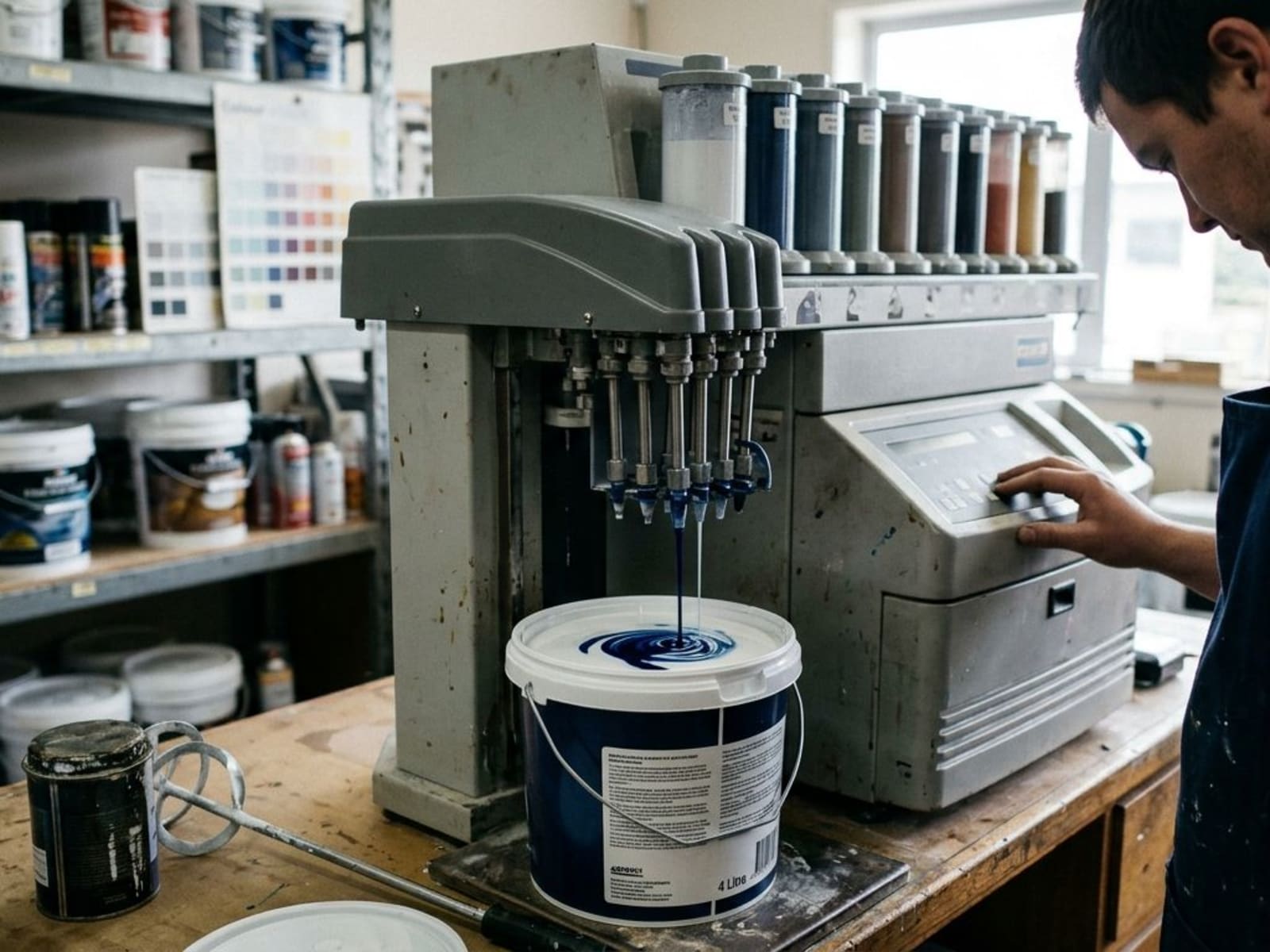
Does the tinter undo it?
It can, and this is the part almost nobody is told. A base that is genuinely zero added VOC stops being zero the moment it is tinted with a conventional tinter, and deep colours take far more tinter than pale ones. If low emissions are the reason you are paying more, ask specifically for low or no VOC tinters as well as the base. Buying a premium base and having it tinted the standard way gets you most of the cost and not all of the benefit.
Does low-VOC paint perform worse?
It used to. Fifteen years ago the low emission products were noticeably softer, slower to harden and harder to touch up. On walls and ceilings that argument is largely over, and a good low-VOC wall paint today will hide, scrub and wear as well as the standard product beside it on the shelf.
Where a difference still shows is on trim and joinery taking real physical abuse, where the film needs to reach genuine hardness. Waterborne enamels have closed most of that gap, but they typically want longer before they are fully cured, and being impatient with them is what causes doors to stick to their stops. That is a curing schedule problem rather than a product quality problem, and it is worth planning around on an interior repaint where the house stays occupied.
Does Wellington change the answer?
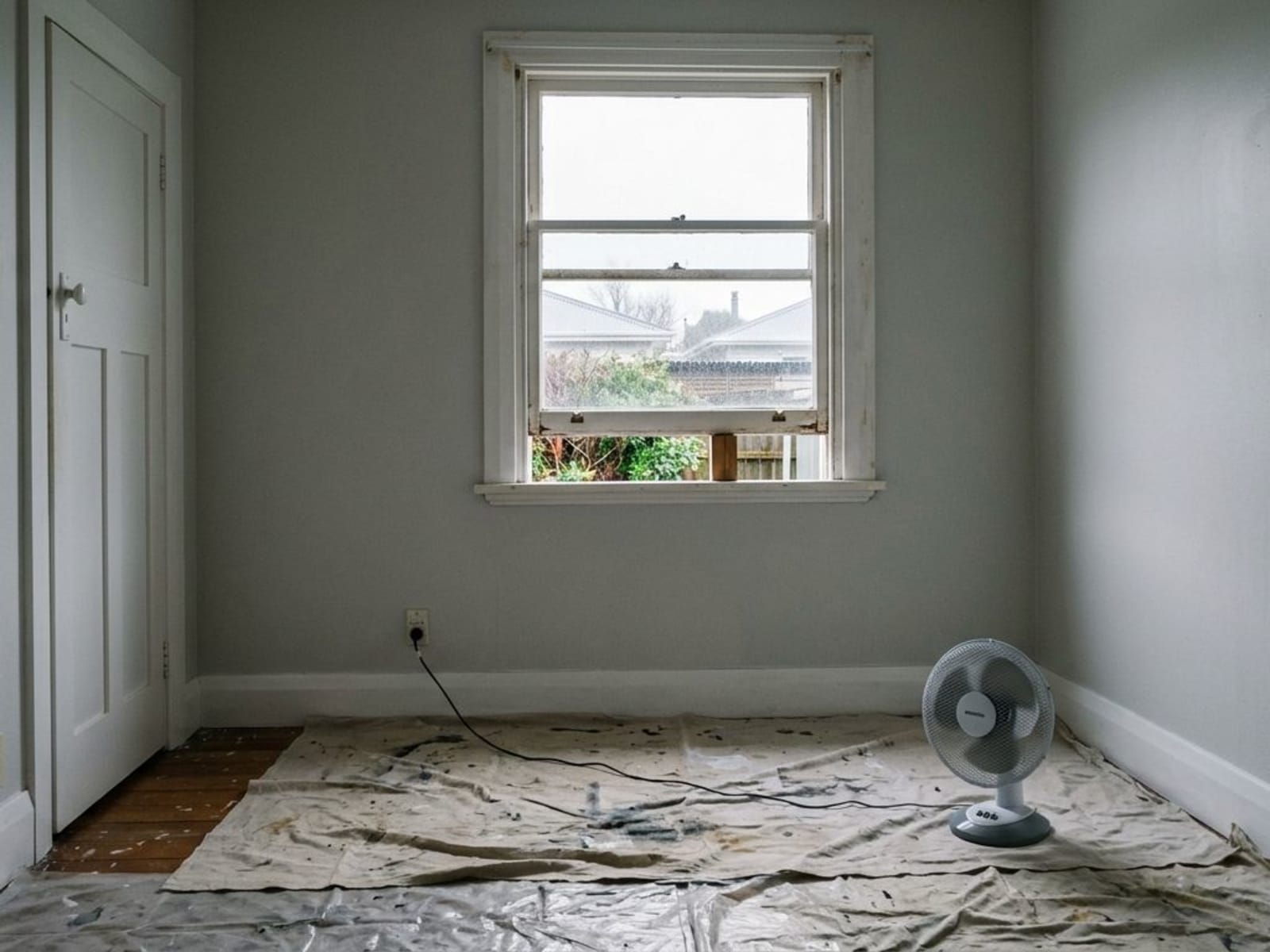
It changes the ventilation, which is the whole variable. The standard advice for any freshly painted room is to open it up and get air through. In a Wellington winter that assumes weather you may not get. Three days of driving southerly rain means the windows stay shut, and whatever came out of the tin sits in the room with you. High winter humidity also stretches drying times, so the odour period runs longer than the label implies.
That is a genuine reason to specify a lower emission product for winter interior work in this city, particularly in small closed-up rooms, in bedrooms on the cold south side of a house, and in any job where someone is moving back in the same day. In February with the windows open, the same job is a non-issue.
When is it not worth the extra?
- Exteriors. The ventilation is infinite. Choose exterior products on durability, not emissions.
- Garages, sheds and workshops. Rarely occupied, easily aired out.
- An empty house. If nobody is sleeping there for a week, standard waterborne paint has finished off-gassing long before anyone moves in.
- If it comes out of the preparation budget. A premium low emission topcoat over unwashed, unsanded, unprimed walls is a bad trade. Preparation decides how long the job lasts. Emissions decide how the first week smells.
What should you actually ask for?
Ask for the product data sheet and look at the stated VOC content in grams per litre. That is a number you can compare between products. The words "low VOC" on the front of a tin are a marketing description rather than a defined threshold, so they do not compare reliably from one brand to the next.
The other useful shortcut is an independent ecolabel. Eco Choice Aotearoa, still widely called Environmental Choice, licenses paints against a published specification, and its paint criteria are recognised by the New Zealand Green Building Council. A licensed product has been assessed against something, which is more than a phrase on a label tells you.
Then ask the painter what they actually intend to use, including the primer and the undercoat. Those often get chosen out of habit, and a low emission topcoat over a high emission undercoat gives you very little. We are a Resene Eco Decorator, which means the low emission and environmentally approved range is what we work with by default rather than as an upcharge, and we will tell you plainly when the standard product is the sensible choice.
If you want a specification written around a house that stays occupied through the job, we can do that. Get in touch.
Related Articles


Need Help With Your Painting Project?
Wellington Decorators has been transforming homes across the Wellington region since 2023, led by a founder with 18+ years in the trade. As Registered Master Painters, we back every job with a 5-year workmanship guarantee.
Prefer to talk? Call us now 027 458 6465