
For painting purposes there is no useful difference between the two: mildew is the name people give to early surface mould, and both are living growth that has to be killed and washed off before any paint goes on. Painting over either one seals the growth in, and it comes back through the new coat.
The question that actually matters is not what to call it, but whether it is only sitting on the surface or whether something is keeping that wall wet. Paint fixes the first. It does nothing at all about the second.
Is it mould, or just a dirty mark?
Not every dark patch is growth. Soot from candles and gas heaters, dirt tracking around a furniture leg, and tannin staining bleeding through from timber all look similar at a glance. The test takes a minute: put a drop of diluted household bleach on the mark and wait a couple of minutes. If it lightens or disappears, it is mould. If it sits there unchanged, it is dirt or a stain and needs a different approach, usually washing followed by a stain-blocking sealer.
Where you find it is also a clue. Mould turns up in the cold corners of rooms, on the ceiling above a shower, along the top of skirtings on an external wall, inside wardrobes built against an outside wall, and around window reveals where condensation runs down. Dirt turns up where people and furniture are.

Why can I not just paint over it?
Three reasons, and they all cost you money later. Mould is alive, so covering it gives it a dark, undisturbed surface and a food source in the new coating. The growth also holds moisture against the wall, which is exactly what the new film does not want behind it. And the staining bleeds through, so a patch that looked clean on the day comes back as a grey shadow within months.
There is a fourth reason that is less about the wall. Disturbing and covering a large area of growth in a closed room puts spores into the air of a house someone is living in. If anyone in the household has asthma or a respiratory condition, that alone is a reason to do it properly rather than quickly.
What actually kills it?
Use a purpose-made moss and mould killer rather than a quick wipe with bleach. Bleach is good at removing the colour from the stain, which makes it look like it worked, but it does not penetrate porous surfaces well, so the growth in the pores of the plasterboard, the timber or the sealant survives and returns. A dedicated product is formulated to soak in and stay wet long enough to do the job.
- Ventilate the room and wear gloves and eye protection. Never mix bleach-based products with ammonia-based cleaners.
- Apply the mould killer at the dilution on the label and give it the dwell time it asks for. This is the step people skip.
- Wash the area down with sugar soap to remove the residue, because leftover chemical residue is itself a bond breaker for the new paint.
- Rinse with clean water and let it dry completely. In a Wellington winter that takes longer than you expect, so use heat and airflow rather than guessing.
- Only then prime and paint.
Does mould-resistant paint solve the problem?
It helps and it is worth using in bathrooms, laundries and kitchens, but it is a delaying tactic rather than a cure. Those paints slow regrowth on a surface that is clean, dry and reasonably ventilated. On a cold wall that runs with condensation every winter morning, they buy you a season or two and then lose. Nobody has yet made a paint that outperforms an extractor fan.

Where is it coming from?
| Where you see it | Most likely cause | Fix before painting? |
|---|---|---|
| Bathroom ceiling and above the shower | No extractor, or one venting into the ceiling space | Treat and paint, but sort the ventilation or it returns |
| Cold corners of external walls, behind furniture | Condensation on an uninsulated wall with no air movement | Treat and paint, move furniture off the wall, consider insulation |
| Around single-glazed window reveals and sills | Condensation running off cold glass | Treat and paint. Wipe sills through winter. |
| Inside wardrobes on an outside wall | Still air against a cold surface | Treat and paint, leave doors ajar, add vents |
| A returning patch low on one wall, with a musty smell | Water getting in, not condensation | Stop. Find the leak first. Paint is the last step, not the first. |
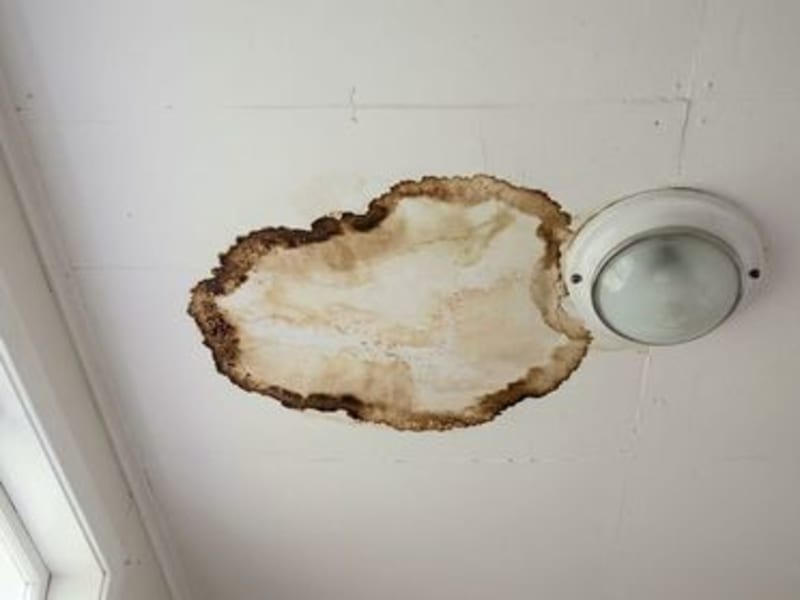
| A brown-edged stain on a ceiling that keeps reappearing | Roof, flashing or plumbing leak | Fix the leak, dry the lining, seal the stain, then paint |
Why is this so common in older Wellington houses?
Because a lot of the housing stock here is 1900s to 1930s weatherboard with single glazing, limited wall insulation and no mechanical ventilation, and because winter humidity outside stays high enough that opening a window does not always dry a room out. Add drying laundry indoors, unflued gas heating, and a household that closes everything up against the southerly, and you have condensation running down cold surfaces most mornings from May to September.
None of that is a painting problem, which is the honest thing to say about it. Extraction, drying laundry outside or in a vented dryer, and heating the house rather than one room will do more for your walls than any product on a shelf. Painting after that is what makes it last.
When is it beyond a paint job?
Stop and get advice if the growth covers a large area of a room, if it comes back within weeks of proper treatment, if the lining feels soft or bulges, if there is a persistent damp smell with no visible source, or if the same patch has returned three times. Growth inside the wall cavity or in a saturated lining is not treatable from the face, and the lining may need cutting out and replacing before anything else happens. That is a plasterboard and stopping job first and a painting job second.

What you can genuinely do yourself
A patch of mould on a bathroom ceiling, a corner of a bedroom, a window reveal: treat it, wash it, dry it, and paint it. That is a straightforward afternoon and there is no reason to pay someone for it. Buy the mould killer rather than improvising, give it the dwell time, and let the wall dry properly before you open the paint.
If it covers whole walls, keeps returning, or you want the whole room done properly at the same time, that is when it becomes an interior repaint with the preparation done correctly. Get in touch and we will look at it and tell you what is actually causing it.
Related Articles


Need Help With Your Painting Project?
Wellington Decorators has been transforming homes across the Wellington region since 2023, led by a founder with 18+ years in the trade. As Registered Master Painters, we back every job with a 5-year workmanship guarantee.
Prefer to talk? Call us now 027 458 6465