
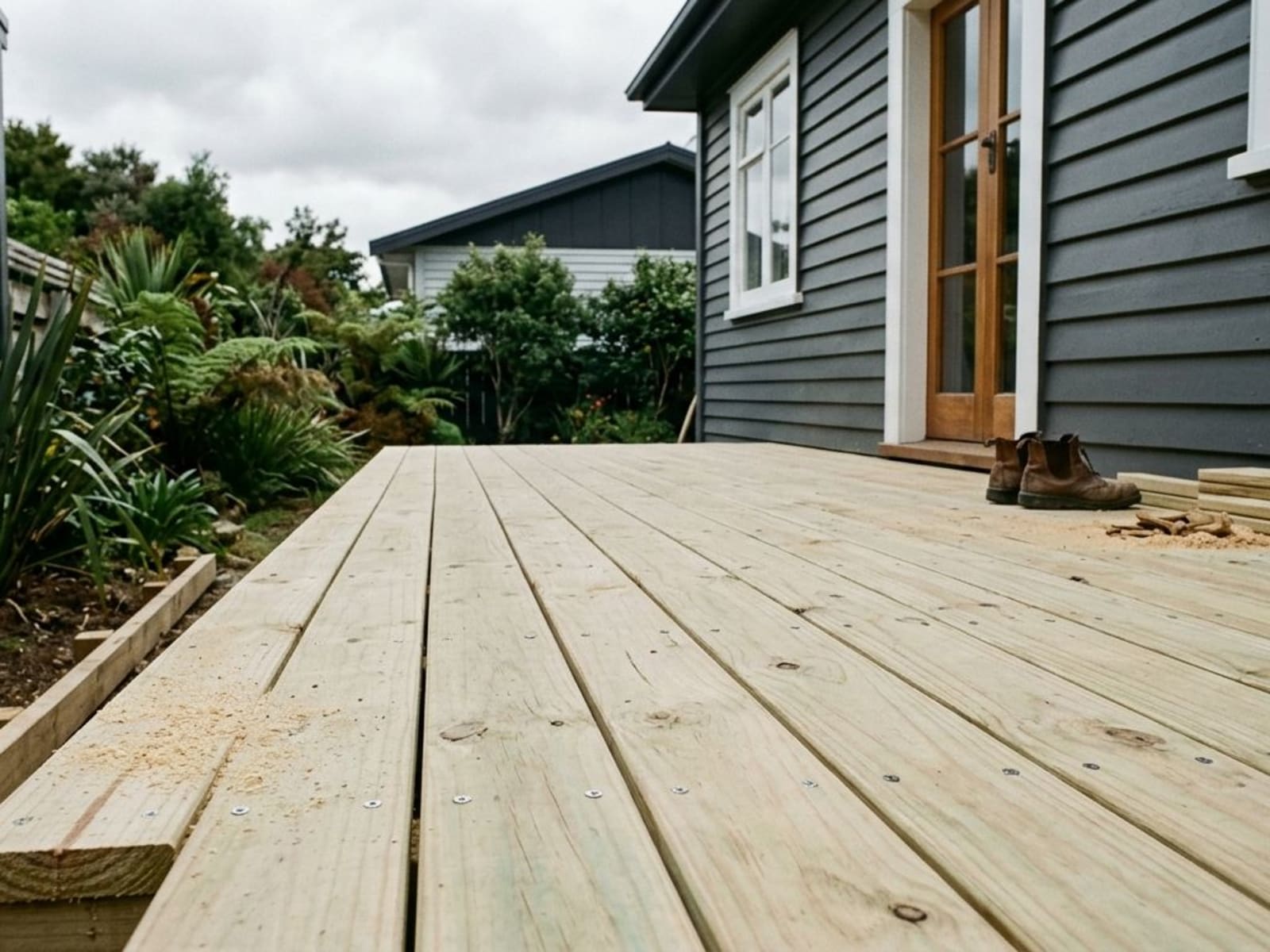
Usually not long at all: treated pine does not need the weeks of weathering that kwila does, and Resene and Dryden both say new pine decking can be coated straight away, or as soon as practical, once it has been cleaned. The wait that matters is for the boards to be genuinely dry, so if they are damp from storage or recent rain, hold off until a simple water test says the timber will absorb stain.
Some product sheets still quote a 4-6 week weathering period for all new timber, but Resene and Dryden both say pine does not need that wait; it needs a clean first, and it needs to be dry.
Why do people say to wait six weeks?
New timber carries surface oils, extractives and sometimes a compressed, shiny layer from the planing process, often called mill glaze. All of these get in the way of a penetrating stain. Weathering, meaning letting the deck get rained on and dry out a few times, slowly removes them. That is the reason behind the traditional wait.
The trouble is that the manufacturers do not agree on how long, or whether pine needs it at all:
| Source | What it says about new timber |
|---|---|
| Resene decking guide | For new pine and macrocarpa decking: wash with a timber and deck wash to open the fibres, then finish. No weathering period is given for pine. |
| Resene exterior woodcare notes | Unlike hardwood decking, it is preferable to stain pine as soon as is practical. |
| Dryden pine deck guide | You can start oiling or staining a pine deck straight away; unlike kwila, pine does not need to weather for six weeks. |
| Cabot's oil-based deck stain data sheet | Refers to a 4-6 week weathering process for new timber, which its new timber prep product lets you skip. |
| Intergrain preparation advice | Natural weathering generally takes 4-6 weeks but is not reliable, and it is hard to tell when it is finished; recommends a prep product instead. |
Read together, the practical position is this: pine does not need to sit for weeks, but it does need a proper clean to remove surface contaminants and mill glaze before the first coat. A timber and deck wash, or the prep product that belongs to the stain system you are using, does in an afternoon what weathering does slowly and unevenly.
What actually needs to happen before the first coat?
The boards need to be clean and dry. Dryness is where people go wrong, because treated pine can hold a lot of water after being stored outside at the yard or rained on during the build. Timber finishes company CUTEK puts it simply: if the timber is too wet, oil will not absorb properly, and after recent rain you should allow several days for the timber to dry before coating.
Shaded decks, undercover decks and decks close to the ground dry more slowly than open, sunny ones. A deck that looks dry on top can still be damp underneath and at the ends, so judge it on the worst board, not the best one.
How do you test whether it is ready?
You do not need a moisture meter for this. A splash of water tells you most of what you need to know. Resene uses a water splash test to judge whether old decks are ready for stain, and the same logic works as a rough check on new boards:
- Pick three or four boards, including one in the shadiest spot and one near the edge where water collects.
- Sprinkle a few drops of water on each.
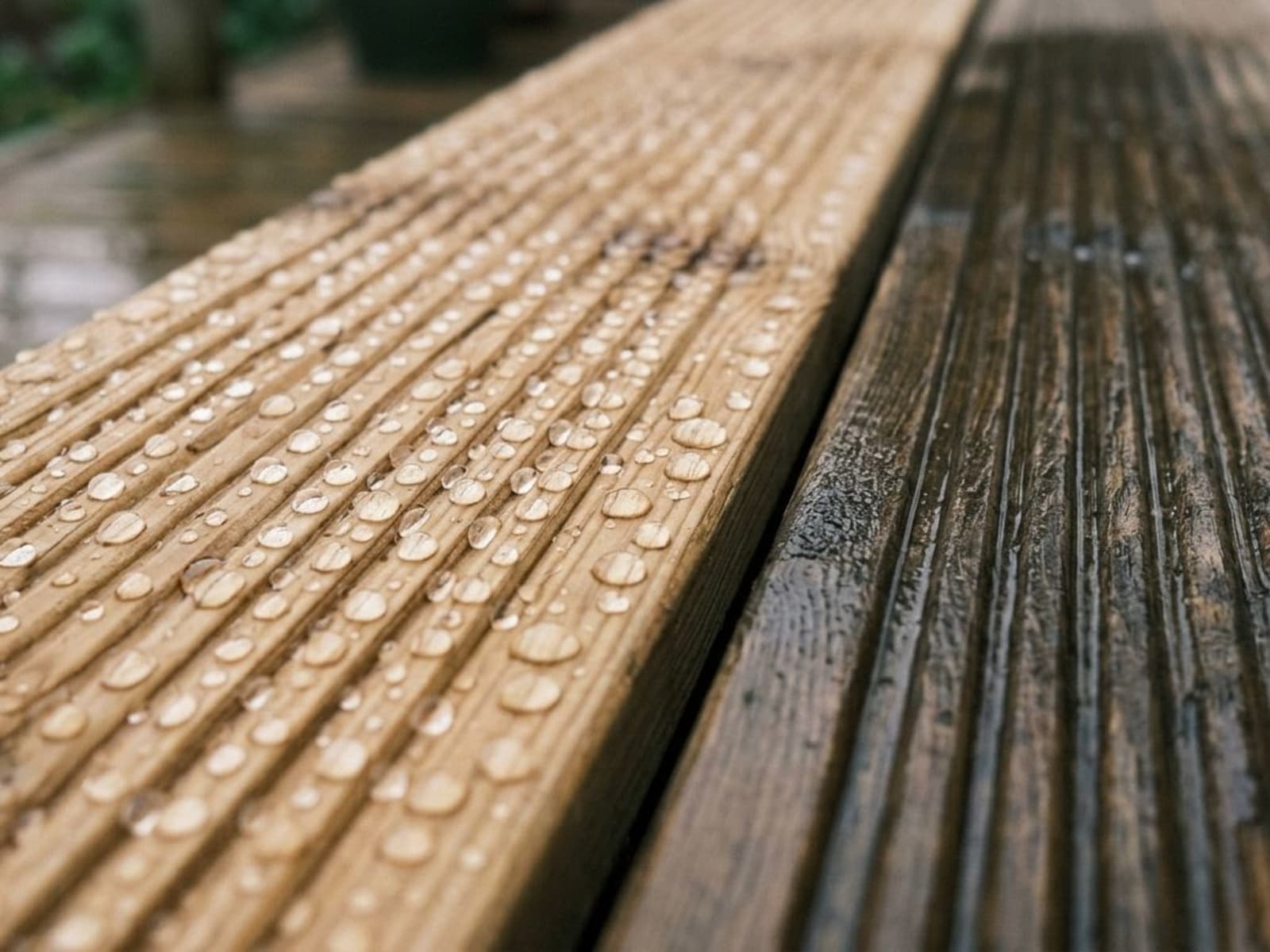
- If the water soaks in and darkens the timber quickly, the surface is open and dry enough to take stain.
- If the water beads up and sits there, something on the surface is repelling it, usually mill glaze or surface oils. Wash the deck with a timber and deck wash, let it dry, and test again.
- If the water sits for a while and then slowly disappears, the timber is probably still holding moisture. Wait a few more dry days.
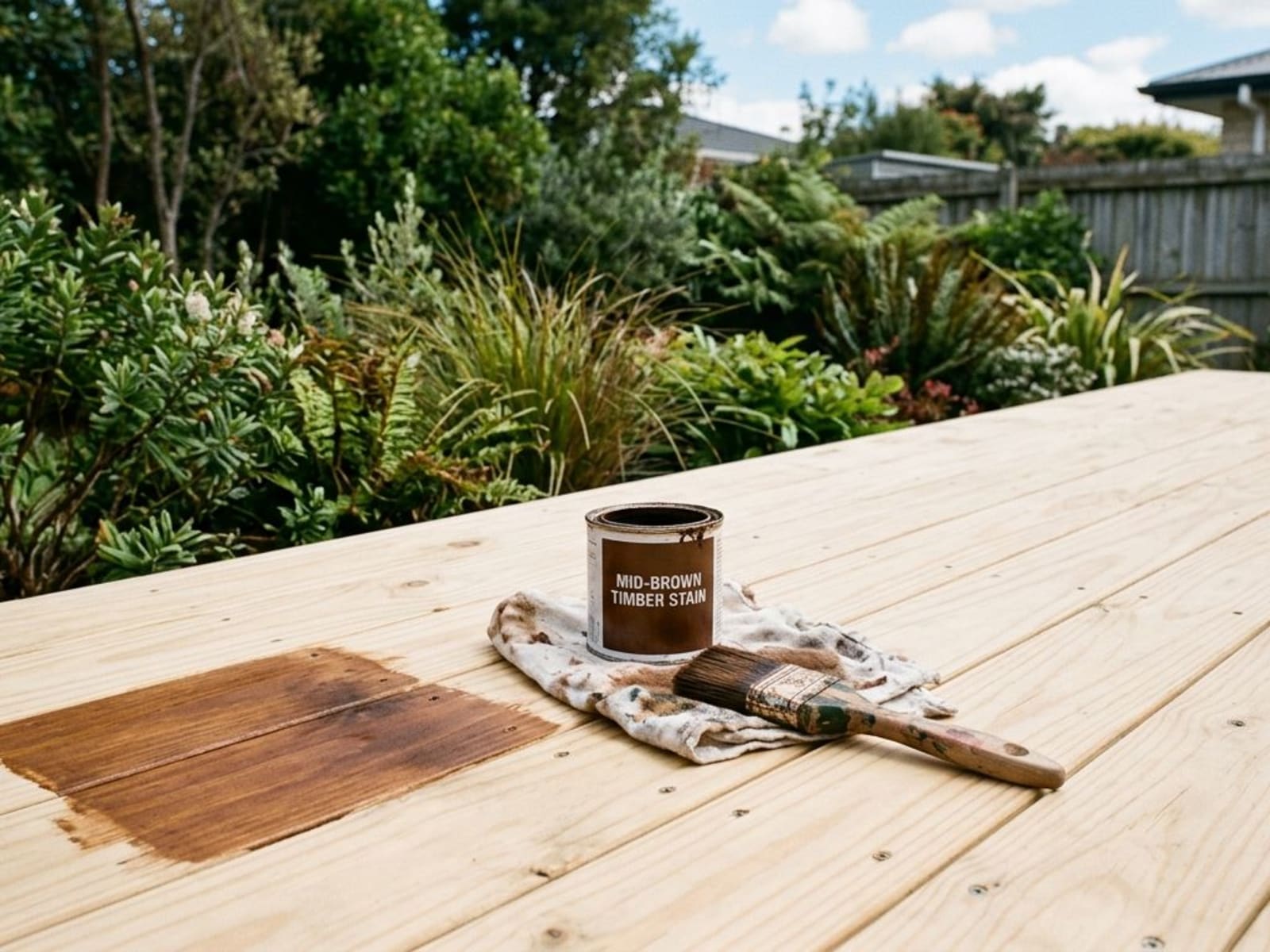
Then do what CUTEK recommends and try the stain on a small area first. If it absorbs and looks the colour you expected, carry on. If it looks darker or patchier than the sample, stop and give the timber a few more days.
What happens if you stain too early?
A penetrating stain applied over wet or glazed timber has nowhere to go. It sits on the surface instead of soaking in, dries slowly or stays tacky, and wears off unevenly under foot traffic. You tend to end up with a blotchy deck that has shiny patches where the stain pooled and pale patches where it never got in. Intergrain's advice is blunt about the cause: surface tannin and oils on new timber repel coatings and stop them adhering.
If you have already coated too early and the stain is sitting tacky on the surface, wipe off what you can while it is wet and let the deck dry out. If it has already cured into a patchy layer, ask the stain supplier what their system needs before recoating. Some stains can be refreshed with another coat once the timber has dried; a film sitting on top may need to come off first.
Which stain suits new pine?
Check the product is intended for pine decking before you buy. Two details from Resene's decking guide are worth knowing: its waterborne Woodsman stain is not suitable for pine decks, and its kwila stain is designed for hardwoods and is not suitable for pine either. For new pine decking, Resene lists two coats of its solventborne Woodsman, a clear decking oil, or a paint-type finish as options. The clear oil gives the least protection of these and needs an annual application.
Check the weather on the tin as well as the timber. Cabot's oil-based deck stain data sheet, for example, says not to apply it below 10 degrees or above 35 degrees Celsius, or when rain or heavy dew is expected during drying. Spring mornings can meet the temperature and still fail the dew test.
Should you just do it yourself?
For a new single-level pine deck, yes. Wash it, let it dry, test it, and stain it along the length of the boards in a dry spell. It is one of the most forgiving exterior jobs there is, and paying someone to wait for timber to dry is not good value.
It is worth getting help when the deck is large, high off the ground or joined to painted cladding and balustrades that need protecting, or when you are not sure what the builder has already put on the boards. For ongoing care once the first coats are on, our deck maintenance and staining tips cover recoating and cleaning, and our wood staining team can do the lot if you would rather not. Ask for a quote and we will tell you honestly whether the deck is ready yet.
Related Articles


Need Help With Your Painting Project?
Wellington Decorators has been transforming homes across the Wellington region since 2023, led by a founder with 18+ years in the trade. As Registered Master Painters, we back every job with a 5-year workmanship guarantee.
Prefer to talk? Call us now 027 458 6465