
No, not with a standard waterborne paint. Resene's guide to checking the weather before painting gives the general rule as applying waterborne paints at temperatures above 10 degrees, so 8 degrees is under spec, and the film you get will be weaker than the one described on the tin.
There is a genuine exception. Resene's wintergrade range of topcoats and primers is made to go on well under the standard minimum, and if you truly need to paint through a Wellington July that is the product category to ask your supplier about rather than pressing on with a summer paint. Read the data sheet for the product you are actually buying, because the minimum belongs to the product.
Ten degrees of what, exactly?
The rule is written as a temperature, and most people read that off a forecast. The forecast describes air in the open at head height. It does not describe the weatherboard you are about to coat.
A south-facing wall that has sat in shade all day is below air temperature. A north wall in late afternoon sun is above it. The reading that matters is the wall itself, and a cheap infrared thermometer settles it in a second.
Resene's guide also gives a test that needs no thermometer at all: put a thin coat of water on the substrate, and if it has not evaporated in fifteen minutes, leave the painting until it does. The same logic covers the washing on the line and water spilt on a concrete path. If those are not drying, neither will your paint.
The second thing one reading does not tell you is direction of travel. Ten degrees at three in the afternoon in July is a falling number, and the coat you applied at three is still forming its film hours later. Waterborne paint dries in two stages: the water leaves, then the polymer particles fuse into a continuous film. Resene calls that second stage coalescence, and describes it as needing both time and a certain softness in the binder particles. Cold takes away the softness.

What actually goes wrong if you push it?
Nothing dramatic on the day, which is the trap. A coat applied at 8 degrees usually looks acceptable when you pack up. The problems arrive later.
- The film never forms. Resene's description is blunt: in the cold the plastic particles that make up the waterborne binder harden to the point that they cannot fuse together, which can leave cracks or a paint film that dries to a powder.
- Weathering resistance drops. Where a film does form but forms badly, its ability to withstand even mild weathering is compromised.
- Surfactant leaching and blistering. Both are listed outcomes when a fresh coat is caught by falling temperature and rising humidity.
- Sheen flattening off. Heavily tinted solventborne paints can lose gloss if a sudden rise in humidity catches them mid-dry.
- Drying times stretching. The lower the temperature, the longer the paint takes to dry. Work off the recoat times on the data sheet rather than the ones you are used to in February.
None of that is fixable by adding another coat on top. The weak layer is underneath.
What about humidity and dew point?
Dew point is the temperature at which moisture condenses out of the air onto a surface. Paint over a film of water, visible or not, and it will not stick.
Resene's guide puts a clearance figure on one part of this: solventborne and industrial paints go on when the temperature is at least 5 degrees above the dew point. For waterborne paint the guide gives the plain 10 degree minimum instead, so the dew point judgement has to be a practical one. The guide does explain why the margin is thinner than it looks. The air's ability to hold water vapour falls away sharply as temperature drops, and evaporation out of a paint film can cease altogether on a temperature change of only 5 degrees.
Its specific warning is about calm, still afternoons under blue skies, when humidity problems are more likely than the weather appears to suggest. If temperature drops at sunset while humidity rises, the paint stops losing water, and a further drop puts dew on it. In the worst case the paint does not coalesce at all and is washed off.
So the ideal is not the hottest day available. Resene puts it at 15 to 20 degrees, humidity of 70 to 80 per cent, and a very gentle breeze, and calls cloudy or overcast conditions ideal provided rain is neither falling nor expected. Breeze helps, right up until it is strong enough to dry the paint too fast, at which point the advice is to move to a more sheltered side of the building. Working around a house that way, chasing shelter and staying ahead of the sun, is most of the craft in scheduling an exterior repaint here.
What do the conditions look like on a real day?
| Conditions | What that means | Verdict |
|---|---|---|
| Wall at 8 degrees, dry, climbing well into the teens by midday | under the rule now, over it later | wait, start once it is up |
| Wall at 8 degrees mid-afternoon and falling | the film has to form through a falling night | do not start |
| Wall over 10 but the air still and damp, washing not drying | no room in the air for the water to go | do not start |
| Water on the substrate still there after fifteen minutes | the surface itself is not ready | do not start |
| 15 to 20 degrees, humidity 70 to 80 per cent, light breeze, overcast, no rain due | Resene's description of the ideal day | go |
| Cold wall, wintergrade product | check that product's own stated minimum | go if the wall is above it and no rain, snow or ice is due |
| Dark roof in the middle of a hot summer day | water leaves the paint faster than you can spread it | stop until it cools |
The hot rows matter as much as the cold ones. The example Resene reaches for is a corrugated iron roof painted dark brown in the middle of a hot summer day, and the advice there is simply to cease painting: the paint thickens, the wet edge is impossible to hold, brush and roller marks will not flow out, and the can skins over. Timing a roof repaint is as much about dodging that as about dodging the cold.

Are cold-weather paints real, or marketing?
Real. Resene's wintergrade topcoats and primers are made to be used at temperatures under the standard minimum, which is why they go on in conditions that would ruin a summer paint. The exact figure belongs to the product, so read its data sheet or ask the supplier rather than trusting a number off a blog.
What they do not do is suspend the other rules. Resene's own instruction is not to use them when rain, snow or ice is expected, and not to use them in warm weather either, because the wet edge time becomes too short to get a good finish. They extend the season. They do not remove the constraints.
Does any of this apply indoors?
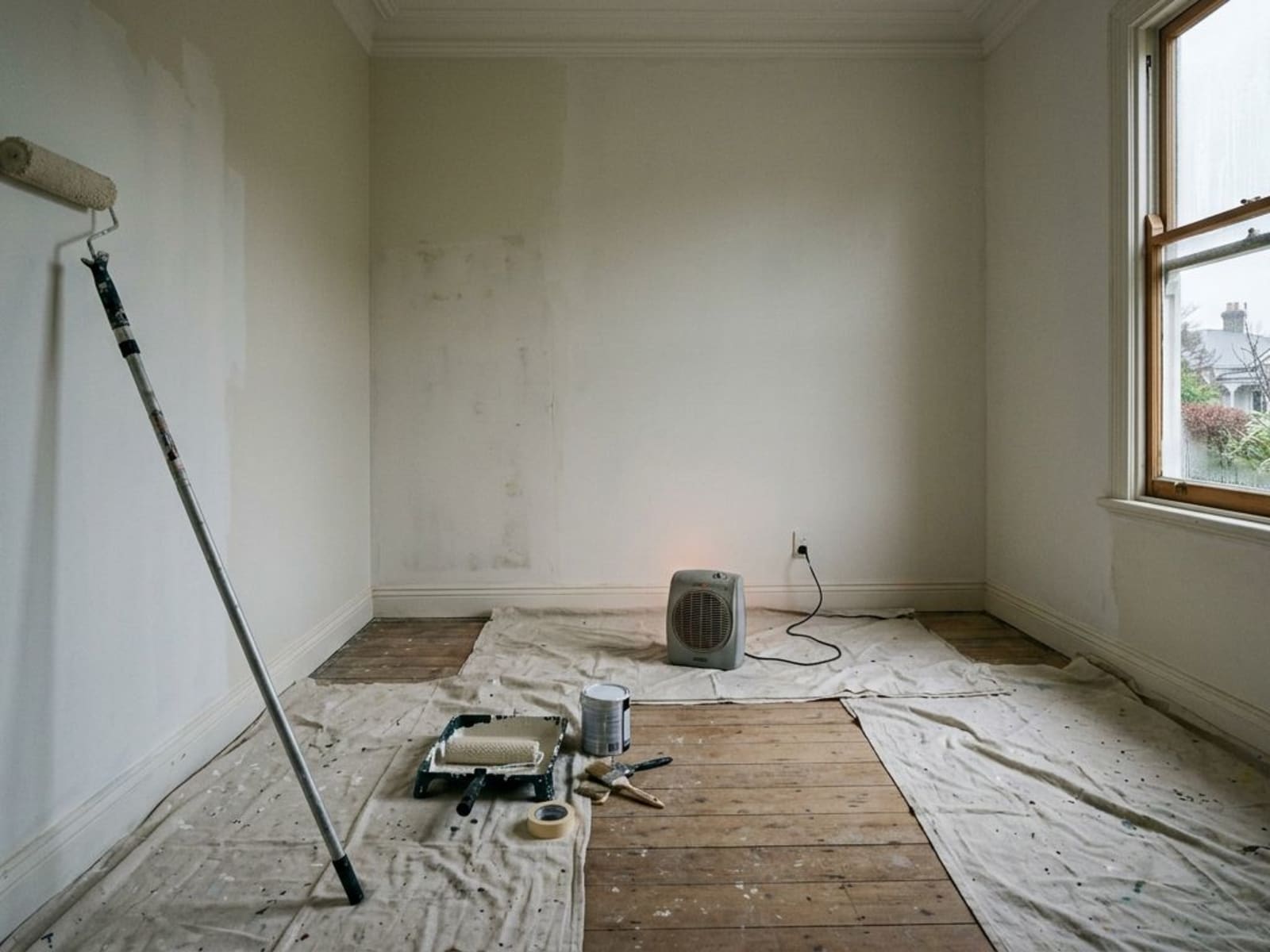
Yes. Resene's guide is explicit that the same temperature and humidity rules apply inside, and that what you are avoiding is high humidity and both low and high temperatures. An unheated room with the door shut through July is colder than the rest of the house, so measure it rather than assuming the indoor job is exempt.
Warm the room before and during, and keep air moving. Ventilation indoors matters twice over: it helps the paint cure correctly, and it lets any solvents released during drying disperse.
Do not overcorrect either. Forcing paint to dry too quickly makes a good durable film impossible even when the result looks fine on the day, and drying rapidly from the top is how wrinkling on recoat starts. Gentle background warmth with ventilation beats a heater aimed at the wall. Winter is still a good season for interior painting in Wellington, precisely because the exterior season is closed.
So what do you do with a cold week and a house that needs painting?
Take the temperature off the wall you are about to paint rather than off the forecast, and take it again mid-afternoon to see which way it is heading. If it is under 10 and falling, that elevation is finished for the day whatever else the day looks like.
If the house genuinely cannot wait, the specification changes rather than the rules: a wintergrade product used inside its own stated limits, the elevations that get sun first, an early finish each day, and an acceptance that a two-day job may take longer. The last line of Resene's own checklist is the least glamorous and the most useful one here, which is to read the label on the container and follow what it recommends.
If you are working out whether a repaint should go ahead this month or wait for the season, get in touch and we will give you a straight answer, including if that answer is to wait.
Related Articles


Need Help With Your Painting Project?
Wellington Decorators has been transforming homes across the Wellington region since 2023, led by a founder with 18+ years in the trade. As Registered Master Painters, we back every job with a 5-year workmanship guarantee.
Prefer to talk? Call us now 027 458 6465