
One of the most common mistakes homeowners make before a painting project is buying the wrong amount of paint. Too little means a frustrating mid-project run to the shop, risking a colour batch mismatch. Too much wastes money and leaves you with litres of paint to store or dispose of.
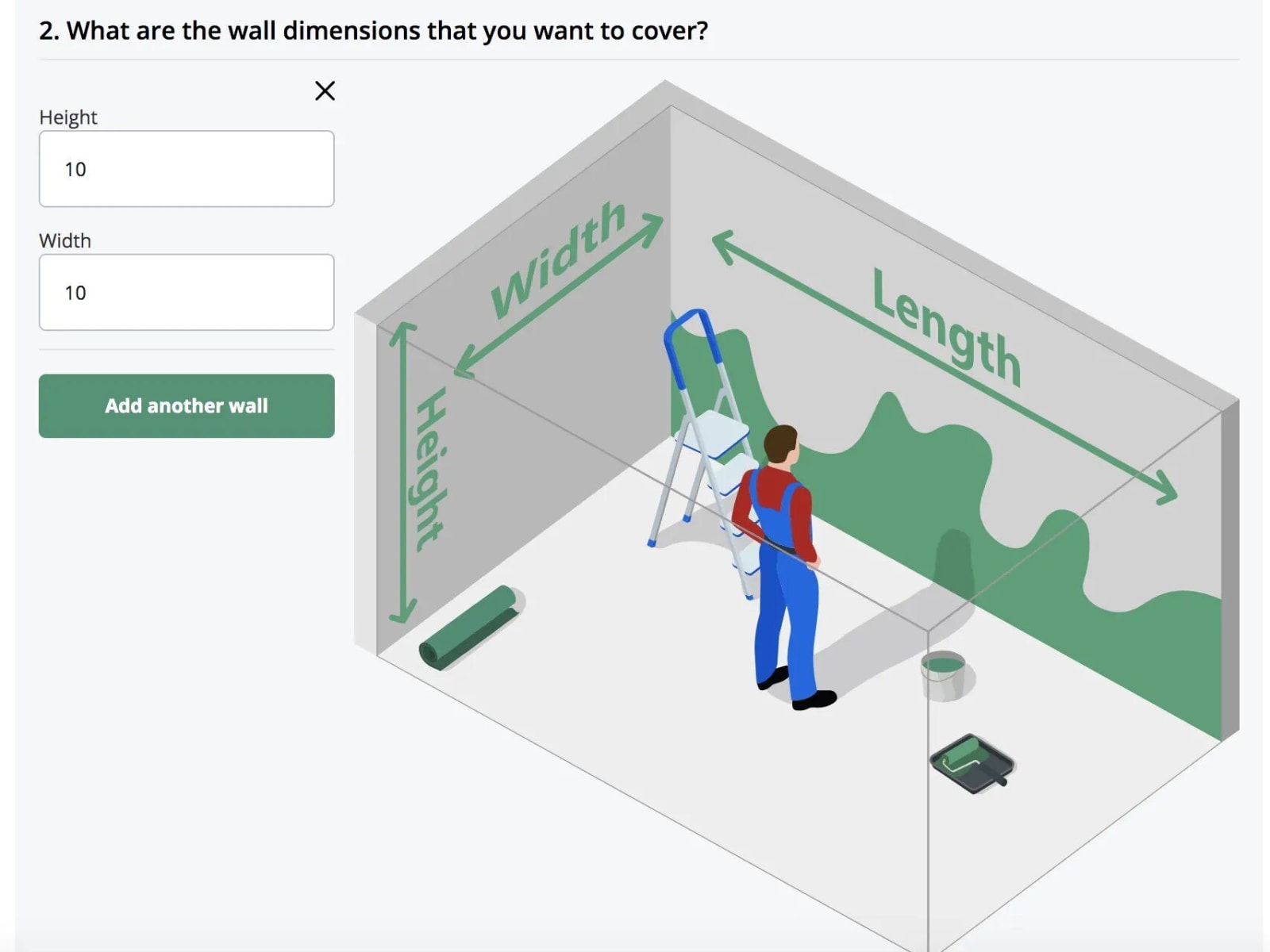
This guide walks you through exactly how to calculate paint quantities for any room or exterior in New Zealand homes — including Wellington's specific conditions that affect coverage.
The Core Formula: How Much Paint Do You Need?
Paint quantity comes down to three variables:
- Surface area to be painted (in square metres)
- Paint coverage rate (square metres per litre)
- Number of coats required
The formula:
Litres needed = (Surface area ÷ Coverage rate) × Number of coats
Add 10% for wastage, cutting-in, and touch-ups.
How Many Square Metres Does 1 Litre of Paint Cover?
This is the question most homeowners ask first. The honest answer: it depends on the paint and the surface.
| Paint Type | Coverage Rate (per litre) | Notes |
|---|---|---|
| Premium interior (e.g. Resene SpaceCote Low Sheen) | 12–16 m² | Smooth plasterboard walls |
| Mid-range interior | 10–13 m² | Standard walls in good condition |
| Budget interior | 8–11 m² | More coats usually needed |
| Exterior weatherboard (e.g. Resene Lumbersider) | 10–13 m² | Smooth painted weatherboards |
| Exterior masonry (e.g. Resene Sonyx 101) | 8–11 m² | Rough texture absorbs more paint |
| Ceiling paint | 12–15 m² | Flat finish, minimal texture |
| Primer/undercoat | 10–12 m² | Varies by substrate porosity |
The takeaway: For planning purposes, use 12 m² per litre as a starting point for interior walls, then adjust based on surface condition. Rough, porous, or heavily textured surfaces can drop coverage to 8 m² per litre or below.
Step-by-Step: How to Measure Your Room
Step 1: Measure Wall Area
For a rectangular room:
- Measure the perimeter (add all four wall lengths together)
- Multiply by the ceiling height
- This gives your gross wall area
Example: Room is 4m × 5m with 2.4m ceilings
Perimeter = (4 + 5) × 2 = 18m
Wall area = 18 × 2.4 = 43.2 m²
Step 2: Subtract Doors and Windows
Deduct areas you won't paint:
- Standard interior door: approx. 1.8 m²
- Standard window: approx. 1.0–1.5 m²
- Sliding glass door: approx. 3.5–4.0 m²
Example continued: One door (1.8 m²) + one window (1.2 m²) = 3.0 m² deducted
Net wall area = 43.2 − 3.0 = 40.2 m²
Step 3: Add Ceiling (If Painting)
Ceiling area = room length × room width
Example: 4 × 5 = 20 m²
Step 4: Calculate Litres Needed
Using 12 m² per litre coverage for walls, 14 m² per litre for ceiling:
- Walls (2 coats): (40.2 ÷ 12) × 2 = 6.7 litres
- Ceiling (2 coats): (20 ÷ 14) × 2 = 2.9 litres
Add 10% wastage: Walls = 7.4L, Ceiling = 3.2L
Buy: One 10L can of wall colour, one 4L of ceiling white — with some left over for touch-ups.
Common Room Paint Quantity Guide
Use these estimates as starting points. Actual needs vary based on wall condition and colour change.
| Room | Dimensions | Litres (2 coats, walls only) | Include Ceiling (add) |
|---|---|---|---|
| Small bedroom | 3m × 3m, 2.4m high | 5–6L | +1.5L |
| Standard bedroom | 3.5m × 4m, 2.4m high | 7–8L | +2L |
| Master bedroom | 4m × 5m, 2.4m high | 9–11L | +3L |
| Living room | 5m × 6m, 2.4m high | 12–14L | +4.5L |
| Open-plan living/dining | 6m × 8m, 2.7m high | 18–22L | +7L |
| Kitchen | 3.5m × 4m, 2.4m high | 7–8L | +2L |
| Bathroom | 2.5m × 3m, 2.4m high | 5–6L | +1L |
| Hallway (standard) | 1.2m × 6m, 2.4m high | 5–6L | +1.5L |
Factors That Increase Paint Consumption
The quantities above assume walls in good condition with an existing similar colour. Several factors increase how much paint you actually need:
Dark to Light Colour Changes
Covering a dark wall (navy, charcoal, deep green) with a light colour is one of the most paint-intensive jobs. Dark pigments bleed through light topcoats. You'll often need a coat of stain-blocking primer plus 3 coats of the new colour to achieve a clean result. Budget 50–70% more paint than standard calculations suggest.
New Plaster and Raw Surfaces
Fresh plaster is highly porous and thirsty. The first coat soaks in rather than forming a film — coverage can drop to 6–8 m² per litre. A sealer coat (Resene Broadwall Surface Prep or similar) before painting dramatically improves efficiency. Without it, plan for 3 coats instead of 2.
Rough or Textured Surfaces
Roughcast plaster, brick, or textured walls have far greater surface area than they appear. A wall that looks 20 m² flat has far more actual surface. Coverage on textured walls can be 30–40% lower than smooth surfaces.
Wellington's Weatherboards
Weatherboard exteriors are particularly paint-hungry. Bare or thirsty weatherboards in poor condition may use 50% more paint than specifications suggest for the first coat. Proper primer application before topcoating is essential for efficient coverage and good adhesion.
How Many Coats Do You Actually Need?
Two coats is the professional standard for most jobs — but not always. Here's when to deviate:
When One Coat Is Enough
- Applying the same colour over existing same colour (e.g. touch-up maintenance coat)
- Using a self-priming paint in ideal conditions
- Light sheen refresh over a sound, clean surface
When Three Coats Are Needed
- Dark to light colour change (especially whites over reds or greens)
- New plaster or raw substrate without sealer
- Covering water stains or smoke damage
- Very porous or uneven surfaces
- Deep or vibrant colours requiring full saturation
Exterior Paint Quantities: Wellington Homes
Exterior calculation follows the same principle but with different measurement approach:
Calculating Exterior Wall Area
- Measure house perimeter (all sides)
- Multiply by wall height (eaves height, not ridge)
- Add gable triangles (base × height ÷ 2 for each)
- Subtract large openings (garage doors, large windows)
Typical Wellington Home Estimates
| Home Type | Wall Area | Litres (2 coats) |
|---|---|---|
| Small villa / bungalow | 180–220 m² | 28–35L |
| Standard 3-bedroom home | 240–300 m² | 38–50L |
| Large character home | 320–420 m² | 50–70L |
Note: Paint is typically sold in 10L and 15L cans. Always round up to the next can size — running out and needing a new batch risks colour variation.
Professional Tips for Accurate Calculation
Measure Everything, Estimate Nothing
Even experienced painters measure rather than guess. A tape measure takes two minutes per room and saves significant money. Measurements off by even 10% across a whole-house project adds up to litres of unnecessary paint.
Check the Paint Technical Data Sheet
Every Resene and Dulux product has a freely downloadable technical data sheet (TDS) specifying coverage rate, recoat time, and number of coats. Coverage figures on the TDS reflect ideal conditions — adjust downward 10–20% for real-world surfaces.
Buy Slightly More Than You Calculate
Plan for 10–15% more paint than your calculations suggest. The excess:
- Covers cutting-in waste (brush application uses more than roller)
- Accounts for drops and spills
- Leaves touch-up paint for future scuffs
- Protects against running out mid-batch (same-batch colour consistency)
Store leftover paint sealed in the original can, upside down, in a cool dry place. Resene paint stored correctly lasts 3–5 years for touch-ups.
Get a Professional Assessment
For large or complex projects — whole-house interiors, heritage homes, exteriors with multiple surfaces — a professional painter's quote will include accurate paint quantities. This costs nothing (quotes are free) and saves the guesswork.
Frequently Asked Questions
How many litres of paint do I need for a 20 m² room?
For a 20 m² room with standard 2.4m ceilings (total wall area approximately 22–25 m² after accounting for a door and window), you'll need approximately 4–5 litres for two coats using a premium paint at 12 m² per litre coverage. One 5L can is usually sufficient, with a small amount left over.
Does the type of paint affect coverage?
Yes, significantly. Premium paints with higher pigment loads and quality binders cover better per litre than budget paints. Resene SpaceCote Low Sheen covers 12–16 m² per litre in ideal conditions. A cheap budget paint may cover only 8–10 m² per litre, meaning you use more litres and potentially need more coats to achieve the same result.
Should I use a paint calculator online?
Online calculators are useful for ballpark estimates. Most ask for room dimensions and return a paint quantity — handy for initial budgeting. However, they can't account for surface condition, existing colour, texture, or the specific product coverage rate. Always treat online calculator outputs as a starting estimate, then verify against the actual product data sheet.
How much extra should I keep for touch-ups?
Keep at least 500ml–1L of each colour used for touch-ups. For heavily trafficked areas like hallways and children's rooms, keep a full litre. Label the can clearly with room name, colour, product, and date of purchase to ensure you can match it perfectly when needed.
Can I use a Resene calculator specifically?
Yes. Resene's website includes a paint calculator that uses actual product coverage rates for their range. Select your product and input your dimensions for product-specific estimates. This is more accurate than generic calculators that use average coverage figures.
Ready to Start Your Project?
Accurate paint calculation takes ten minutes and saves hours of frustration. Measure your surfaces, check the product data sheet, add 10% for wastage, and buy complete cans rather than partial amounts.
For Wellington homes specifically, always account for our conditions: moisture-prone bathrooms and kitchens need moisture-resistant products, exteriors need coastal-rated paints, and Wellington's changeable light means testing colours before committing to a full room.
If you're unsure, our team provides free in-home consultations where we assess your surfaces, recommend appropriate products, calculate exact quantities, and provide a transparent quote — no guesswork required.
Request your free painting consultation →
Related reading:
- How Much Does Exterior House Painting Cost in New Zealand?
- How Much Does Roof Painting Cost in Wellington NZ?
- Interior Painting Cost Calculator Wellington 2026
Wellington Decorators — Registered Master Painters. Expert painting advice and service throughout Wellington.
Professional Colour Consultation in Your Area
Need help choosing the right colours? We offer free colour consultations across Wellington: Paint Colour Visualiser · Paint Cost Calculator · Exterior Painting · Interior Painting. Get a free quote today.
Related Articles


Need Help With Your Painting Project?
Wellington Decorators has been transforming homes across the Wellington region since 2023, led by a founder with 18+ years in the trade. As Registered Master Painters, we back every job with a 5-year workmanship guarantee.
Prefer to talk? Call us now 027 458 6465