
Yes, aluminium window joinery can be painted, and it holds up well provided it is degreased, abraded and primed with an adhesion primer made for non-ferrous metal. What it will not do is match the factory finish for longevity, and it will usually end whatever is left of the powder-coat warranty, so read the documentation that came with your windows before you start.
So the question worth answering is not whether it can be done. It is whether painting is the right answer for your joinery, or whether it needs washing, refinishing or replacing instead.
Is yours powder-coated or anodised?
Work this out first, because it changes the preparation.
- Powder coated. A colour, usually satin or matte, sitting on the metal as a distinct layer. It chalks, fades and occasionally chips, and a chip shows bright metal underneath. Most New Zealand joinery from the 1990s onwards is powder coated.
- Anodised. A metallic silver, bronze or champagne finish that is part of the metal rather than a layer on top of it. Very hard, does not chip, but goes streaky and patchy with age. Common on joinery from the 1970s and 1980s.
- Mill finish. Raw aluminium, dull grey, oxidising to a chalky surface. Uncommon on windows, more common on flashings and trims.
All three can be painted. Anodised is the most work, because the surface is dense and slick and needs thorough abrasion before a primer will bite into it.
What preparation does it actually need?
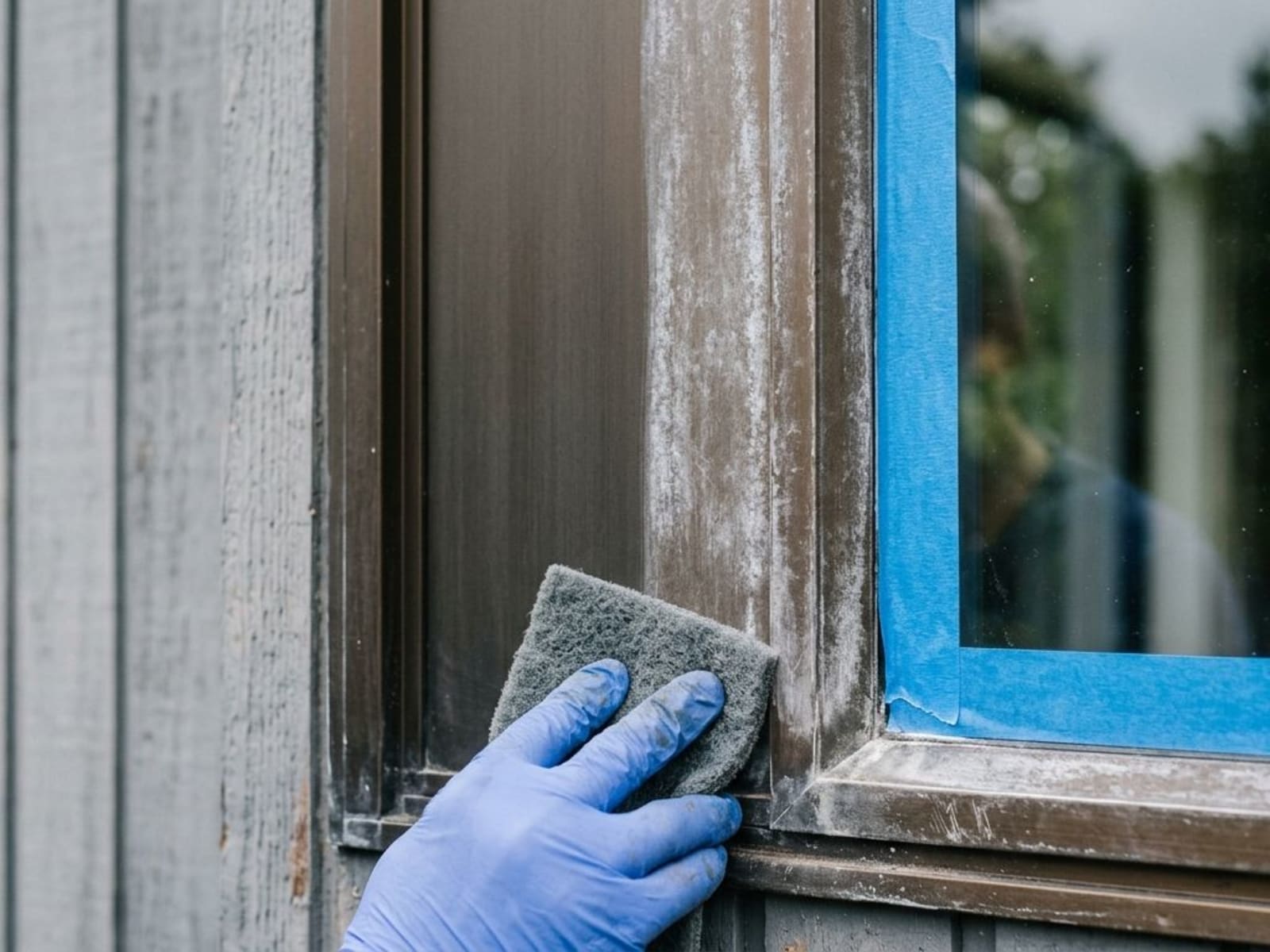
- Wash. Detergent and water first, then a wax and grease remover. Joinery collects silicone from sealants, release residues, road film and, near the coast, salt. Any of those defeats a primer.
- Abrade. A fine non-woven pad over every surface that will be painted, until the whole face is uniformly dull. On chalked powder coat, keep going until the pad stops loading up with powder.
- Clean again. Remove the dust you just made with a clean cloth and a solvent wipe.
- Mask. Glass, rubber gaskets, weatherpile seals, sliding tracks, drainage slots and hardware. None of those get painted.
- Prime. An etch or adhesion primer that names aluminium or non-ferrous metal on the label.
- Coat. Two thin finish coats of a durable waterborne enamel rather than one heavy one. Heavy films on joinery stay soft and block against the seals.
The masking list matters more than it looks. Paint on a gasket stiffens it and it stops sealing. Paint in the drainage slots at the bottom of a frame stops water getting out of the sill, and that water then goes looking for the timber behind the frame. Both are avoidable, and both are common on rushed jobs.
What can and cannot be painted?
| Finish or component | Paintable | Preparation | Realistic outcome |
|---|---|---|---|
| Powder coat, sound | Yes | Wash, degrease, abrade, adhesion primer | Good, lasts a normal repaint interval |
| Powder coat, chalked | Yes | Remove all the chalk, then as above | Good, but the abrading is most of the labour |
| Anodised, sound | Yes | Heavy abrasion, solvent clean, etch primer | Good, though the preparation is the whole job |
| Mill finish aluminium | Yes | Degrease, abrade, etch primer the same day | Good if primed promptly, poor if left overnight |
| Aluminium with white pitting corrosion | Not really | Corrosion has to come back to sound metal first | Paint hides it briefly and it comes back through |
| Rubber gaskets and weatherpile | No | Mask them | Painting them destroys the seal |
| Tracks, rollers, stays and catches | No | Mask or remove | Paint fouls the mechanism |
| Glass | No | Mask properly | Scraping it off later scratches both glass and coating |
How long will painted joinery last?
Less than the factory finish. Powder coat is applied electrostatically and baked in an oven, which cannot be reproduced on the side of a house. A site-applied system on well-prepared aluminium behaves like any other good exterior coating: it needs attention again on a normal repaint cycle, and sooner on the elevations that take the weather.
The alternatives, roughly in order of cost and disruption: paint it in place, have it refinished on site with a spray-applied industrial system, or take the sashes and frames out and have them re-powdercoated. The last gives the longest life and causes the most upheaval, and it only makes sense on joinery that is otherwise sound.

Does salt air change the answer?
Substantially. On the south coast, along the harbour edge, and anywhere that takes salt-laden wind, aluminium corrodes from the surface inwards, showing first as a white bloom and then as small pits. Washing the frames down with fresh water is the standard maintenance in a coastal setting, and the care and maintenance paperwork that came with your windows will tell you how often yours should be done and what the maker expects of you.
Two consequences follow. If the frames have already pitted, painting them is cosmetic and short-lived, because the corrosion carries on underneath the film. And painted joinery in salt air needs the same regular fresh water washing as unpainted joinery, arguably more, because a site-applied film is softer than the finish it replaced. If you are having exterior painting done on a coastal house, ask for the joinery to be washed down as part of the work whether or not it is being coated.
What about the inside faces?
Easier in every respect. The interior face of aluminium joinery sees no sun, no rain and no salt, so a painted finish there lasts far longer than the same system outside. The preparation is identical, the masking is fussier because you are working over finished floors and curtains, and the job is usually small. If the outside of your joinery is fine and only the inside colour bothers you, that is a modest piece of interior work rather than a whole-house decision.

When should you not paint it?
Three cases.
- The joinery is on the way out. If the windows are single-glazed and replacement is on the plan within a few years, put the money into the replacement rather than into painting what is leaving.
- The frames are corroding. Pitting and white bloom need treating. If it is widespread, the answer is refinishing or replacement, not paint.
- The finish is sound and the colour is fine. Powder coat that has chalked can often be brought back a long way with a wash and a cut, at a fraction of the cost of coating it.
Painting aluminium is an honest, sensible job when the frames are sound and the colour is simply wrong, which usually happens because the house is being repainted around them and the 1990s bronze or mid-grey no longer suits. That is a good reason to do it. Fixing a corrosion problem is not.
If you are repainting the house and are not sure whether the joinery should be included, we will look at the condition of the frames and tell you which of the three options fits. Ask for a quote.
Related Articles

Need Help With Your Painting Project?
Wellington Decorators has been transforming homes across the Wellington region since 2023, led by a founder with 18+ years in the trade. As Registered Master Painters, we back every job with a 5-year workmanship guarantee.
Prefer to talk? Call us now 027 458 6465