
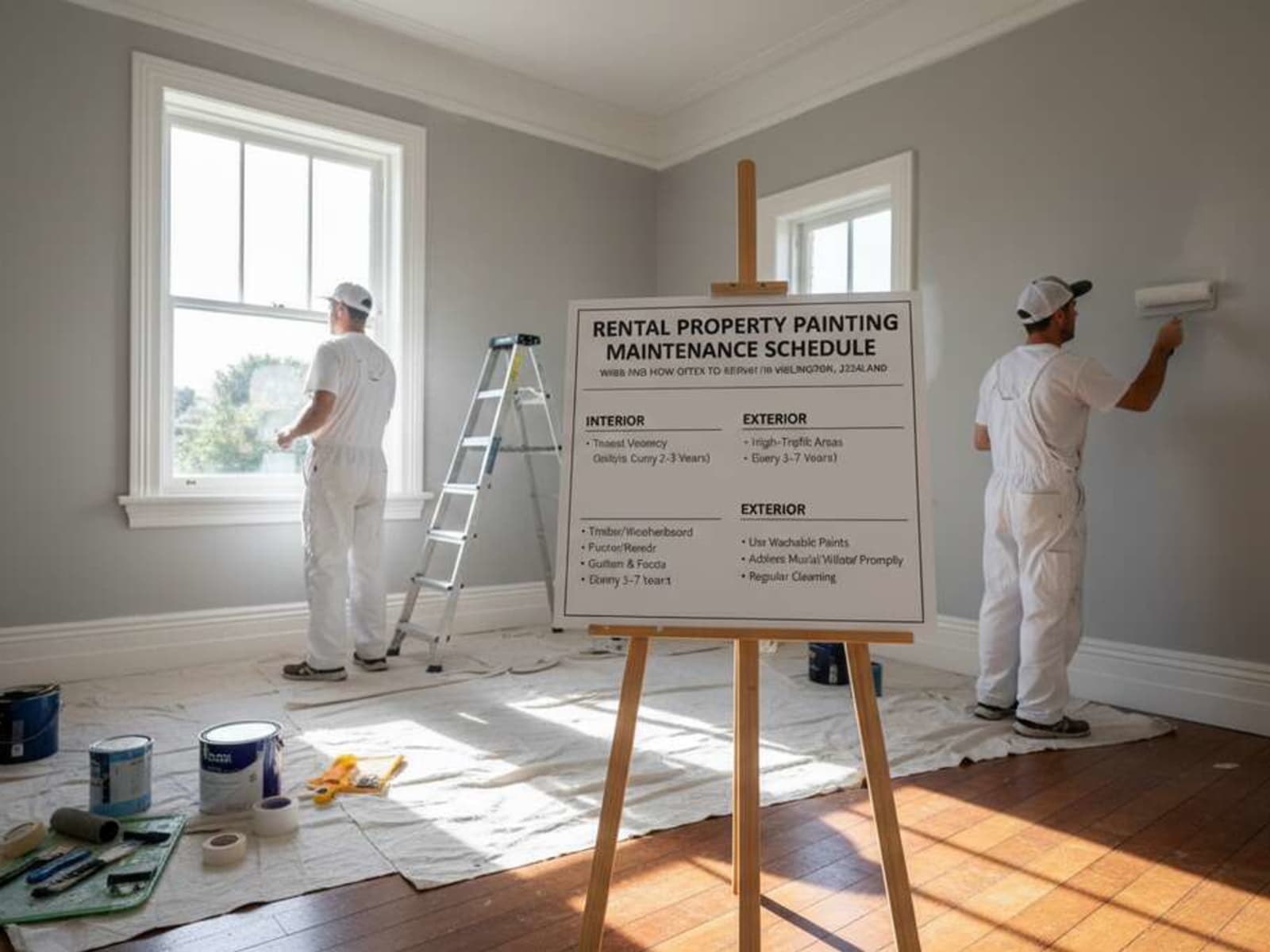
Creating a systematic painting maintenance schedule for Wellington rental properties protects your investment, keeps tenants satisfied, ensures legal compliance, and prevents costly emergency repairs. Understanding repainting frequency, fair wear and tear, and strategic timing helps landlords budget effectively.
Legal Framework: Fair Wear and Tear
What is Fair Wear and Tear?
New Zealand's Residential Tenancies Act recognizes "fair wear and tear"—deterioration from normal use over time that landlords cannot charge tenants for. Paint naturally degrades through: UV exposure and fading, minor scuffs from furniture and daily living, age-related colour changes, gradual loss of sheen, and normal cleaning wear.
Not fair wear and tear: Large holes in walls from removed fixtures, drawing/writing on walls (especially permanent marker), pet damage beyond minor scratches, deliberate damage or vandalism, and excessive dirtiness preventing cleaning.
Bond Deduction Considerations
Tenancy Tribunal rulings provide guidance on paint-related bond deductions:
Cannot deduct for: Paint fading over multi-year tenancy, minor scuffs and marks from furniture, picture hook holes (reasonable number), wear in high-traffic areas (hallways, doorways), and paint aging requiring general refresh.
Can deduct for: Large unrepaired holes, deliberate damage to surfaces, excessive filth preventing cleaning, unauthorized paint colour changes, and pet damage beyond normal wear.
Documentation essential: Before/after photos with dates prove damage vs fair wear. Without photographic evidence, Tribunal typically sides with tenant.
Standard Repainting Frequency
Interior Painting Schedule
Every 5-7 years: Full interior repaint for properties in normal condition with reasonable tenant care.
Every 3-5 years: High-traffic rentals (student accommodation, high-turnover properties, families with young children).
Every 7-10 years: Well-maintained properties with long-term quality tenants, low-traffic bedrooms in good condition.
Immediate/as-needed: Water damage or mould issues, unauthorized tenant painting requiring correction, significant damage beyond fair wear.
Exterior Painting Schedule
Wellington's weather accelerates exterior deterioration requiring consistent maintenance:
Every 7-10 years: Weatherboard homes in typical Wellington conditions, properties with north/west exposure, coastal properties with salt exposure.
Every 10-12 years: Rendered/plastered exteriors with quality original paint, modern cladding systems (James Hardie), sheltered properties (hills, valleys).
Every 5-7 years: Older weatherboards showing weathering, properties in extreme exposure (hilltops, waterfront), poor-quality previous paint requiring earlier replacement.
Immediate: Peeling paint compromising weatherproofing, water ingress issues, visible rot or deterioration, Healthy Homes compliance failures.
Tenancy Length Impact on Painting
Short Tenancies (Under 2 Years)
Expected condition: Minimal wear if tenant care was reasonable, perhaps minor scuffs in high-traffic areas, picture hooks and minor holes.
Typical action: Touch-up painting only in affected areas, spot-paint marks and scuffs, fill and touch-up picture hooks, full room repaints only if necessary.
Cost: $300-$800 for touch-ups

Bond considerations: Charge only for damage beyond fair wear—not normal marks from 1-2 year occupancy.
Medium Tenancies (2-4 Years)
Expected condition: Noticeable wear in high-traffic areas (hallways, living rooms), fading in sun-exposed rooms, minor marks and scuffs throughout, potential for some deeper scratches or damage.
Typical action: Repaint high-traffic areas (living, hallways, kitchen), touch-up bedrooms if reasonable condition, full repaint if preparing for premium tenants.
Cost: $2,500-$4,500 for strategic refresh
Bond considerations: Normal 3-year wear is fair wear and tear. Only charge for specific damage (large holes, writing, excessive marks).
Long Tenancies (5+ Years)
Expected condition: Significant fading and wear throughout, accumulated marks and scuffs, paint potentially outdated in colour/finish, general "tired" appearance.
Typical action: Full interior repaint is standard and expected, cannot reasonably charge long-term tenant for this, treat as investment maintenance, not damage.
Cost: $5,000-$8,000 full interior
Bond considerations: After 5+ years, repainting is landlord's responsibility. Charging tenant for normal wear is unreasonable and likely to fail at Tribunal.
Strategic Painting Between Tenants
Assessment Criteria
When tenant gives notice, assess painting needs systematically:
Market conditions: Tight rental market = less painting needed (rents quickly anyway). Competitive market = fresh paint helps secure quality tenants.
Rent level: Higher-rent properties need better presentation. Budget rentals can tolerate more wear.
Tenant quality you're seeking: Families with stable income expect quality presentation. Students more accepting of tired paint.
Time since last paint: Under 3 years = touch-up likely sufficient. Over 5 years = full repaint probably needed.
Property age: Newer properties (under 10 years) show wear more obviously. Older character properties more forgiving.
Painting vs Rent Trade-Off
Scenario: 3-bedroom rental, last painted 4 years ago, moderate wear
Option A - Touch-up only: Cost: $600, rent: $580/week, time to rent: 2-3 weeks, tenant quality: Budget-conscious renters
Option B - Full repaint: Cost: $5,500, rent: $620/week, time to rent: 1 week, tenant quality: Professional families
5-year comparison:
- Option A: $580/week × 260 weeks = $150,800 revenue
- Option B: $620/week × 260 weeks = $161,200 revenue
- Difference: $10,400 extra revenue minus $4,900 extra painting cost = $5,500 net benefit
Plus: Better tenants typically mean better property care and fewer issues.
High-Traffic Area Focus
Priority Painting Zones
Not all areas wear equally. Strategic focus maximizes value:
Hallways and entries (repaint most frequently):
- First impression for viewers
- Highest traffic and contact
- Shows wear most obviously
- Repaint: Every 3-4 years
Living areas (high priority):
- Where tenants spend most time
- Visible in property photos
- Impacts rental appeal significantly
- Repaint: Every 4-6 years
Kitchen (high priority):
- Grease, cooking stains accumulate
- Fresh kitchen commands higher rent
- Relatively small area, high impact
- Repaint: Every 4-5 years
Bathrooms (medium-high priority):
- Moisture damage, mould concerns
- Clean white essential for presentation
- Healthy Homes compliance factor
- Repaint: Every 5-7 years or when mould/damage appears
Master bedroom (medium priority):
- Quality tenants notice master condition
- Usually lower wear than living areas
- Repaint: Every 5-7 years
Secondary bedrooms (lower priority):
- Less critical for rental appeal
- Often light use
- Repaint: Every 6-8 years or as needed
Laundry (low priority):
- Tenants most forgiving of laundry condition
- Repaint: Only when significantly damaged or during full-house repaint
Preventive Maintenance Between Paints
Extending Paint Life
Simple maintenance extends time between full repaints:
Annual inspection: Check for water damage, mould, significant wear. Address issues early before major damage.
Tenant move-out cleaning: Require professional cleaning including walls. Clean walls last longer, look better.
Touch-ups between tenants: Fix picture hooks, spot-clean marks, address minor damage. Prevents accumulation.
Washable paint products: Use Resene SpaceCote Low Sheen or semi-gloss in rentals—cleans easily.
Prompt repairs: Fix leaks immediately (prevent water damage), address ventilation issues (prevent mould), repair damage rather than deferring.
Tenant Education
Include in tenancy agreement or house rules:
Acceptable: Picture hooks (reasonable number), bluetack/removable adhesive (limited), normal furniture contact, regular cleaning
Requiring repair: Large nails/screws, unauthorized painting, wall-mounted fixtures without approval, damage beyond hooks/adhesive
Reporting requirements: Water leaks or dampness, mould growth, significant damage
Setting expectations prevents issues and protects your paint investment.
Budgeting for Rental Painting
Annual Allocation Model
Rather than lumpy costs every 5-7 years, budget annually:
Example: 3-bedroom rental, full repaint costs $6,000 every 6 years
Annual budget: $6,000 ÷ 6 = $1,000/year
Advantage: Predictable cashflow, builds reserve for painting when needed, can paint opportunistically when vacant, reduces financial stress.
Multi-Property Portfolio
Manage painting across multiple properties systematically:
Stagger schedules: Don't have all properties needing repainting same year. Spread over 3-5 year cycle.

Track painting dates: Maintain spreadsheet with last painted, next scheduled, paint colours used.
Negotiate painter relationship: Regular work = better rates. One painter across portfolio = consistency.
Bulk ordering: Order paint for multiple properties = better pricing.
Seasonal Timing Considerations
Best Times to Paint Rentals
Autumn (March-May):
- Excellent painting weather
- Lower rental demand = acceptable vacancy
- Prepare properties for winter lettings
Spring (September-November):
- Good weather conditions
- High rental demand = minimize vacancy time
- Paint quickly between tenants
Summer (December-February):
- Interior painting fine despite heat
- Peak rental demand = costly vacancy
- Fast turnaround essential
Winter (June-August):
- Avoid exterior painting (too wet/cold)
- Interior painting acceptable
- Lower rental demand = acceptable timing
Documentation and Records
Essential Record Keeping
Maintain comprehensive painting records:
Property file contents:
- Dates of all painting work (interior and exterior)
- Paint colours and products used (Resene codes)
- Contractor invoices and quotes
- Before/after photos
- Next scheduled painting date
- Touch-up paint storage location
Benefits:
- Plan budgets accurately
- Prove maintenance to Tenancy Tribunal
- Quick reordering of correct colours
- Support tax deduction claims
- Track which tenancies caused excess wear
Ready to Implement Systematic Maintenance?
Professional painting on a proper maintenance schedule protects your rental investment and keeps tenants satisfied. Our Registered Master Painters work extensively with Wellington landlords, understanding the unique requirements of rental properties.
We provide durable product recommendations for rental properties, fast tenant-changeover turnaround, consistent quality you can rely on, and flexible scheduling around tenancies.
Get your free rental painting quote | Interior painting services
Wellington Decorators Limited — Registered Master Painters | Resene Eco Decorator
Interior Painting
Our Painting Services Across Wellington
Wellington Decorators serves all Wellington suburbs. Find painting services in your area: Island Bay, Brooklyn, Wadestown, Johnsonville. Get a free quote for your project.
Related Articles


Need Help With Your Painting Project?
Wellington Decorators has been transforming homes across the Wellington region since 2023, led by a founder with 18+ years in the trade. As Registered Master Painters, we back every job with a 5-year workmanship guarantee.
Prefer to talk? Call us now 027 458 6465