
Choosing between Resene and Dulux is one of the most common questions we hear from Wellington homeowners. Both are premium brands made in New Zealand, and the differences that matter are usually the specific product, colour and service.

As Registered Master Painters who use both brands, here's our even-handed comparison, based on each maker's own current product information.
Quality & Performance
Resene
Strengths:
- NZ family-owned since 1946, with paint made in Naenae, Lower Hutt, for local conditions
- Extensive technical data sheets and published Q&A
- CoolColour versions of darker exterior colours that absorb less heat
- Its own ColorShop network for tinting, testpots and advice
Our experience: Resene products perform predictably when applied to the data sheet.
Dulux
Strengths:
- Made in New Zealand at Gracefield, Lower Hutt, where Dulux has manufactured since 1939
- Part of DuluxGroup, with access to its wider research and development
- Weathershield carries a published guarantee against peeling, flaking and blistering
- Strong interior range, including Wash&Wear for washable walls
Our experience: Dulux's premium lines perform well when applied to the data sheet.
Verdict: Both make quality paint in the Hutt Valley for NZ conditions. Compare the specific products for your job rather than the brand names.
Price Comparison
Typical Retail Pricing (October 2026)
Resene:
- SpaceCote Low Sheen (interior enamel): about $220 for 4L full price at Mitre 10
- Lumbersider Low Sheen (exterior): about $246–328 for 10L depending on tint base
- Zylone Sheen (interior walls): about $246 for 10L full price, often discounted
Dulux:
- Wash&Wear Low Sheen (interior): about $240 for 10L, deep bases around $289 (Bunnings NZ)
- Weathershield (exterior): about $239–275 for 10L (PlaceMakers, Bunnings deep base)
- Both brands: promotions of 20–25% off are common
Price difference: For comparable products the list prices are close, and a promotion on either brand usually moves the price more than the brand does.
But consider:
- Coverage: both makers specify two topcoats for most repaints
- Durability: depends far more on preparation and exposure than on the badge
- Trade pricing (we buy both brands at trade rates)
Verdict: Price is rarely the deciding factor between these two.
Colour Range & Matching
Resene
Colour selection:
- Very large range across its Total Colour System and current charts
- Half, quarter and eighth strengths of many colours, useful for tonal schemes
- Heritage colours for NZ period homes
- Online colour tools and in-store colour advice
Colour accuracy:
- Computer tinting in ColorShops and stockists
- Most colours available across interior and exterior products
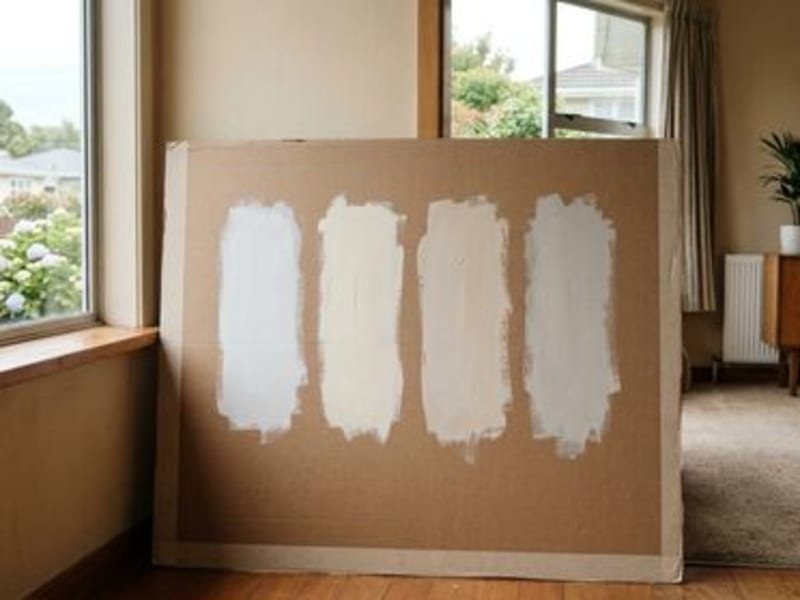
- Testpots let you check the colour in your own light
Our experience: Colour consistency is good when ordered by name and product.
Dulux
Colour selection:
- Large range, including its NZ-named colour collections
- Seasonal trend collections
- Popular whites and neutrals such as Vivid White
- Online colour tools and visualiser
Colour accuracy:
- Computer tinting at Dulux Trade Centres and stockists
- Most colours available across interior and exterior products
- Testpots available for checking in your own light
Our experience: Consistent tinting when the same product and base are reordered.
Verdict: Both offer large, reliable colour ranges. If you already know the colour you want, use the brand that makes it.
Environmental Credentials
Resene
Certifications:
- Many products licensed under Eco Choice Aotearoa (formerly Environmental Choice New Zealand)
- Waterborne, low-VOC formulations across most decorative ranges
- Resene Eco.Decorator programme for painters (we're a Resene Eco Decorator)
- VOC content published in product data

Sustainability:
- NZ family-owned company with local manufacturing
- PaintWise take-back service for unwanted paint and containers
Health:
- Low-VOC options suitable for sensitive individuals
- Low odour during application and drying
- Good ventilation still recommended during and after painting
Dulux
Certifications:
- Many products licensed under Eco Choice Aotearoa, including Wash&Wear Matt
- Low-VOC interior ranges
- envirO2 range for specifiers
Sustainability:
- Part of DuluxGroup, owned by Japan's Nippon Paint since 2019
- Made in New Zealand at Gracefield, Lower Hutt
- Paint Take Back service at Dulux Trade Centres for Dulux paint and packaging, running since 2009
Health:
- Low-odour, low-VOC options available
- Good ventilation still recommended during and after painting
Verdict: Both have Eco Choice Aotearoa licensed products and a take-back scheme; check the licence on the specific product.
Availability & Support in Wellington
Resene
Access:
- Resene ColorShops across the Wellington region
- Also sold through stockists such as Mitre 10
- Same-day tinting available
- Trade accounts for painters
Support:
- In-store colour and product advice
- Technical support for specific applications
- Trade representatives
- Extensive online resources and guides
Our experience: Technical queries are answered quickly.
Dulux
Access:
- Dulux Trade Centres in the Wellington region
- Also sold through merchants such as Bunnings and PlaceMakers
- Same-day tinting at most locations
Support:
- Trade Centre staff and trade representatives
- Technical helpline available
- Online data sheets and specification resources
Our experience: Availability and Trade Centre support are good; hardware-store advice varies for either brand.
Verdict: Both have good Wellington coverage.
Product Range Comparison
Interior Walls
Resene:
- SpaceCote Low Sheen — washable low sheen enamel for most interiors
- SpaceCote Flat — ceilings and low-traffic walls
- Zylone Sheen — contract-grade low sheen for walls
Dulux:
- Wash&Wear Low Sheen — washable walls
- Wash&Wear Matt — flatter finish with Eco Choice licence
- Wash&Wear Kitchen & Bathroom — wet-area option
Performance: Both perform well. SpaceCote Low Sheen and Wash&Wear are direct competitors for washable living-area walls.
Exteriors
Resene:
- Lumbersider Low Sheen — widely used on weatherboards
- Sonyx 101 — semi-gloss for weatherboards, trim and masonry
- Hi-Glo — when a gloss finish is required
Dulux:
- Weathershield — matt, low sheen, semi gloss and gloss, with a published guarantee
- AcraTex — textured masonry coatings
Performance: Both have proven exterior systems for Wellington's wind, rain and salt.
Specialty Applications
Resene strengths:
- CoolColour technology (reduces heat absorption in dark colours)
- Roof and metal systems such as Summit Roof
- Primers and sealers for difficult substrates
Dulux strengths:
- Weathershield ColourGuard for fade resistance in strong colours
- AcraTex textured and membrane coatings

Verdict: Both cover the specialist jobs a house usually needs.
Application Tips: Getting the Best from Each Brand
Brand choice is only half the equation. How you apply paint determines the final result.
Resene Application Tips
Surface preparation: Resene products perform best on clean, well-prepared surfaces. Sand glossy areas to dull the sheen, or use Resene Waterborne Smooth Surface Sealer over glossy existing finishes. Seal porous or chalky surfaces with Resene Sureseal, and plasterboard with a Resene Broadwall sealer, to avoid uneven absorption and a blotchy finish.
Temperature and conditions: Resene's standard waterborne paints should not be applied below 10°C. In Wellington's cooler months, late morning to early afternoon is usually the best window.
Stirring: Always stir thoroughly, especially tinted colours, to avoid colour variation across a wall.
Coats and drying: Follow the recoat time on the SpaceCote Low Sheen data sheet, and allow longer in cold, damp conditions. Rushing recoat times is a common cause of poor finish — the second coat drags on a first coat that has not dried enough.
Dulux Application Tips
Priming: Use the primer or sealer Dulux specifies for Weathershield and Wash&Wear. Mixing brands between primer and topcoat means neither maker's system or guarantee clearly applies.
Thinning: Dulux paints are generally formulated ready to use. Avoid thinning unless specifically directed on the data sheet — over-thinned paint reduces hiding power and film build.
Interior coverage: Dulux Wash&Wear applies well with a 12mm nap roller on smooth surfaces. For textured walls, move to an 18-20mm nap to ensure paint reaches into recesses.
Universal Application Principles
- Two coats at the right film build beat one heavy coat — better adhesion, fewer runs, more even sheen
- Cut in before rolling — brush edges first, roll while wet for seamless blending
- Maintain wet edge — work in sections without stopping mid-wall
- Quality applicators matter — cheap rollers leave stipple marks regardless of paint brand
Which Should You Choose?
Choose Resene if:
- The colour you want is a Resene colour
- You want CoolColour for a dark exterior or roof
- You value ColorShop colour advice and testpots
- Your house already has Resene paint and you are touching up
Choose Dulux if:
- You want Weathershield's published guarantee
- The colour you want is a Dulux colour
- Your house already has Dulux paint and you are touching up
- A Dulux product suits the job or is on promotion
Our Professional Recommendation
We use both brands, and we choose by product and job rather than by badge:
Exteriors: Either brand's premium exterior system over proper preparation.
Interiors: SpaceCote Low Sheen or Wash&Wear for living areas; the matching kitchen and bathroom products for wet areas.
Heritage homes: Whichever brand makes the colour scheme you choose, with the primers that brand specifies.
Rentals/pre-sale: Either brand works. Record the product and colour so touch-ups match later.
The Real Cost Difference
Example: Standard 3-bedroom Wellington villa interior (120m² walls/ceiling), 2026:
Labour and total:
- Interior repaints: about $20–55/m² by tier and prep
- For 120m²: roughly $2,400–6,600 all up
- Labour is the same whichever brand
- Lifespan: driven by preparation and wear
Paint:
- Roughly 25–30 litres for two coats
- A few hundred dollars to around $800 retail
- Brand difference: usually smaller than a promotion
- Product choice matters more
Difference: The brand typically changes the total by a small percentage at most.
Pick the product and colour that suit the room.
What About Other Brands?
Wattyl: Australian-origin brand with a smaller NZ footprint than Resene or Dulux.
Haymes: Australian family-owned brand with limited NZ availability.
British Paints: A DuluxGroup brand aimed at value, sold mainly through large retailers.
Farrow & Ball: Premium UK brand with a distinctive colour library, available through a small number of NZ stockists at a much higher price per litre.
For most NZ homes, Resene and Dulux remain the practical choices.
Frequently Asked Questions: Resene vs Dulux
Can painters match Resene colours in Dulux and vice versa?
Colour matching between brands is possible but never perfect. Computer matching gets close, but slight differences in pigment base and sheen levels mean matched colours rarely look identical side by side. If you're extending existing paint, always use the same brand and product.
Does the brand of paint affect the labour cost?
Not directly. Labour is set by the scope of work, preparation and access, not the brand.
Which brand is better for a rental property?
Either. A washable low sheen such as Resene SpaceCote Low Sheen or Dulux Wash&Wear stands up to cleaning between tenancies. Keep a record of the brand, product and colour so touch-ups match.
Which brand do professional painters prefer?
Both are widely used by NZ painters. We use both and choose by product, colour and the client's preference.
How do I know if I'm buying genuine Resene or Dulux products?
Buy from authorised stockists only. Resene ColorShops and Resene stockists, and Dulux Trade Centres and Dulux stockists, have current tinting systems. Avoid marketplace listings of pre-tinted leftover paint — colour accuracy and product freshness cannot be guaranteed.
How long does each brand last on Wellington exteriors?
There is no reliable head-to-head figure. Dulux guarantees Weathershield won't peel, flake or blister for as long as you live in your home when applied as directed. Resene's technical team puts the typical repaint interval for exterior acrylics at around 10–15 years, depending heavily on exposure. Exposure and preparation shorten or extend that for both brands.
Bottom Line
Both Resene and Dulux are quality paint brands, both made in Lower Hutt and suitable for NZ homes. We use both.
Resene's ColorShops and CoolColour are real advantages; so are Dulux's Weathershield guarantee and wide availability.
The "best" choice depends on your specific priorities: the colour, the product, the guarantee, or the store you prefer.
Related Services:
- Interior House Painting — Professional interior painting with premium products
- Exterior House Painting — Weather-resistant exterior coating
- Resene Eco Decorator — Certified eco-friendly Resene application
Contact us for expert advice on the best paint choice for your Wellington home. We'll recommend a suitable brand and product for your specific situation.

Professional Colour Consultation in Your Area
Need help choosing the right colours? Every painting job we quote includes a free colour consultation ($250 value) with a Resene or Dulux colour expert, and these free online tools can help you narrow down colours and quantities: Paint Colour Visualiser · Paint Cost Calculator · Exterior Painting · Interior Painting. Get a free quote today.
Related Articles


Need Help With Your Painting Project?
Wellington Decorators has been transforming homes across the Wellington region since 2023, led by a founder with 18+ years in the trade. As Registered Master Painters, we back every job with a 5-year workmanship guarantee.
Prefer to talk? Call us now 027 458 6465