
Victorian homes (1880s-1900s) represent Wellington's richest architectural period. These elaborate houses featured decorative details, complex colour schemes, and craftsmanship rarely seen in modern construction. Restoring them authentically requires understanding Victorian aesthetic principles and building methods.
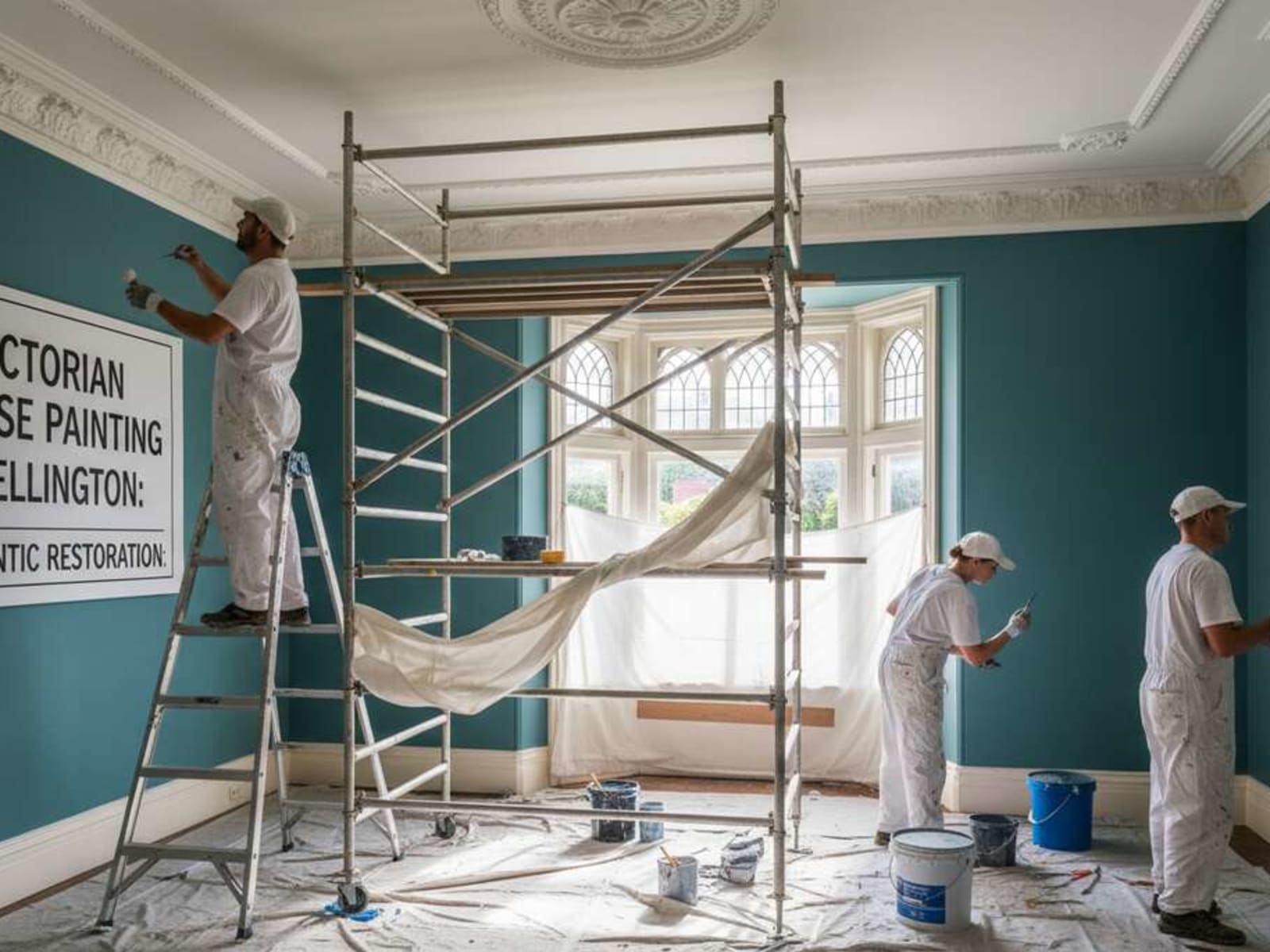
Here's our expert guide to Victorian house painting in Wellington.
Victorian Architecture in Wellington
Key Features
Italianate Villas:
- Classical proportions and symmetry
- Ornate plasterwork and mouldings
- Bay windows with bracketed hoods
- Rendered or weatherboard construction
- Often two-storey
Bay Villas:
- Prominent projecting bay window
- Elaborate fretwork and brackets
- Turned veranda posts
- Decorative bargeboards
- Single-storey with attic
Victorian Cottages:
- Simpler worker's housing
- Similar details but scaled down
- Weatherboard construction
- Front veranda
- Modest ornamentation
All share Victorian commitment to decorative detail and visual richness.
Authentic Victorian Colour Schemes
Victorian colour theory differs dramatically from modern minimalism.
Multi-Colour Philosophy
Victorians used colour to emphasize architectural features:
Typical 4-5 colour scheme:
- Body colour (main wall surface)
- Trim colour (fascia, barge boards, window frames)
- Sash colour (actual window sashes, different from frames)
- Door colour (front door, feature element)
- Detail colour (fretwork, brackets, finials)
Modern simplified approach: 3 colours acceptable (body, trim, feature).
Victorian Colour Palette
Body Colours (Light-Medium Tones):
- Resene Stonewashed (stone-like neutral)
- Resene Eighth Fossil (pale grey-beige)
- Resene Double Sea Fog (soft grey-blue)
- Resene Rice Cake (heritage cream)
- Resene Half Ash (soft neutral)
Trim Colours (Lighter than Body):
- Resene Alabaster (warm white)
- Resene Rice Cake (cream)
- Resene Half Spanish White (soft white)
Feature Colours (Dark, Rich Tones):
- Resene Deep Brunswick Green (classic Victorian green)
- Resene Claret (deep burgundy-red)
- Resene Aubergine (purple-brown)
- Resene Oregon (terracotta-brown)
- Resene Mahogany (rich brown)
- Resene Karaka (black, for minimal accent)
Authentic Victorian Schemes
Scheme 1: Italianate Villa
- Body: Resene Stonewashed
- Trim: Resene Alabaster
- Window sashes: Resene Deep Brunswick Green
- Door: Resene Mahogany
- Fretwork/brackets: Resene Deep Brunswick Green
Scheme 2: Bay Villa
- Body: Resene Rice Cake
- Trim: Resene Alabaster
- Window sashes: Resene Claret
- Door: Resene Claret
- Veranda details: Resene Oregon
Scheme 3: Victorian Cottage
- Body: Resene Half Spanish White
- Trim: Resene Alabaster
- Feature (door, windows): Resene Deep Brunswick Green
Scheme 4: Bold Victorian
- Body: Resene Double Sea Fog
- Trim: Resene Rice Cake
- Sashes: Resene Aubergine
- Door: Resene Aubergine
- Details: Resene Ironsand
Victorian Architectural Details
Fretwork
What it is: Decorative sawn timber panels, often under eaves or on veranda

Painting approach:
- Remove if possible (paint all surfaces including back)
- If can't remove: careful brushwork, all angles
- Often painted contrasting colour to body
- Traditionally same colour as brackets/structural details
Challenge: Intricate patterns require time and small brushes
Brackets
What they are: Decorative supports under eaves, bay windows
Painting approach:
- Prime all surfaces (moisture gets in from above)
- Multiple angles needed for coverage
- Often feature colour (deep green, burgundy)
- Must paint undersides (visible from ground)
Bargeboards and Finials
Bargeboards: Decorative boards following gable roofline
Finials: Pointed decorative elements at gable peaks
Painting approach:
- Access challenging (high points)
- Often feature intricate cutout patterns
- Traditionally trim colour or feature colour
- Weather exposure high (extra coats needed)
Veranda Elements
Turned posts:
- Round posts with decorative turning
- Require careful technique (all surfaces visible)
- Traditionally body colour or trim colour
Fretwork frieze:
- Decorative panel between posts
- Feature colour common
- Intricate detail demands patience
Veranda floor:
- Specialist decking product (Resene Decking Oil Stain)
- Not standard house paint
Veranda ceiling:
- Traditional sky blue (Resene Half Sky Blue)
- Or match trim colour
- Prevents wasps nesting (traditional belief)
Windows
Sash windows:
- Complex to paint properly
- Ideally remove sashes, paint separately
- Different colour from frame traditional
- Must not paint sash runs (windows won't function)
Bay windows:
- Multiple angles and surfaces
- Often bracketed hood above
- Sills critical for water shedding
- Feature of facade (quality matters)
Victorian Paint Systems
Exterior
Product: Resene Lumbersider (weatherboard), Resene Sonyx 101 (rendered masonry)
System:
- Preparation: Strip failing paint, repair damage, prime bare timber
- Prime: Resene Quick Dry Primer (bare timber)
- Undercoat: First coat Lumbersider
- Topcoat: Second coat Lumbersider
- Details: Often three coats on intricate elements
Why two coats minimum: Victorian timber 140+ years old, very porous. Needs full system for protection.
Interior
Victorian interiors featured rich decoration:
Walls:
- Picture rails dividing wall (different colours above/below traditional)
- Dado (lower wall panelling) often darker
- Upper walls lighter
- Deep colours acceptable (Resene Aubergine, deep reds, heritage greens)
Ceilings:
- Ornate plasterwork common (roses, cornices, decorative panels)
- Traditionally picked out in detail (gold, contrasting colours)
- Modern approach: single colour (Resene Alabaster)
- Authentic restoration: multiple colours highlighting detail

Timber joinery:
- Often native timber (rimu, kauri)
- Stripped and stained reveals beautiful grain
- Or painted period colours
- Dark stains common in formal rooms
Victorian-Specific Challenges
Lead Paint
All Victorian homes have lead paint (pre-1970s construction):
Management:
- Test first (assume present if Victorian)
- Licensed removal for extensive work
- Wet methods only (no dry sanding)
- Proper containment and disposal
- We're licensed for lead paint work
Multiple Paint Layers
140+ years = many paint layers:
Issues:
- Obscures architectural detail
- Creates thick, inflexible coating (cracks, fails)
- May contain incompatible systems
Solution:
- Chemical stripping of detailed elements
- Careful scraping and filling of flat areas
- Sometimes full strip necessary
Rot and Deterioration
Victorian timber 140+ years old:
Common issues:
- Bottom weatherboards (ground contact, splash-back)
- Window sills (water pooling)
- Veranda posts (base decay)
- Barge boards (weather exposure)
Solution: Repair before painting. Painting won't fix rot.
Ornamental Detail Damage
Fretwork, brackets brittle with age:
Common damage:
- Broken fretwork panels
- Missing finials
- Cracked brackets
Solution:
- Craft replacements matching originals
- Source from demolition yards
- Commission custom milling if necessary
Colour Research for Your Victorian Home
Investigation Methods
Paint scraping:
- Carefully scrape protected areas (under eaves, behind downpipes)
- Reveals colour layer sequence
- Send to Resene for analysis/matching
- Most accurate method
Photographic evidence:
- Historical photos (often black/white, limited usefulness)
- Colour photos rare before 1960s
- Neighbouring houses of same era/builder
Architectural records:
- Wellington City Archives may have building records
- Rarely specify colours unfortunately
Professional assessment:
- We've painted hundreds of Victorian homes
- Can identify likely original schemes from construction details
- Understand what's period-appropriate
Heritage Approval
Listed buildings:
- Require resource consent for colour changes
- Must submit colour proposal with historical justification
- Approval before painting
- We handle this process regularly
Heritage areas (non-listed):
- Guidelines recommend sympathetic colours
- Usually no formal approval needed
- Following guidelines prevents future issues
Modern Living in Victorian Homes
Balancing Authenticity and Livability
Exteriors:
- Authentic colours maintain character and value
- Simplified palette acceptable (3 colours vs historical 5)
- Quality modern paint products (better than historical)
Interiors:
- Period colours in formal areas (entrance, living, dining)
- Contemporary colours acceptable in private areas (bedrooms, bathrooms)
- Modern kitchens don't compromise Victorian character
Contemporary Victorian
Use Victorian principles with modern restraint:
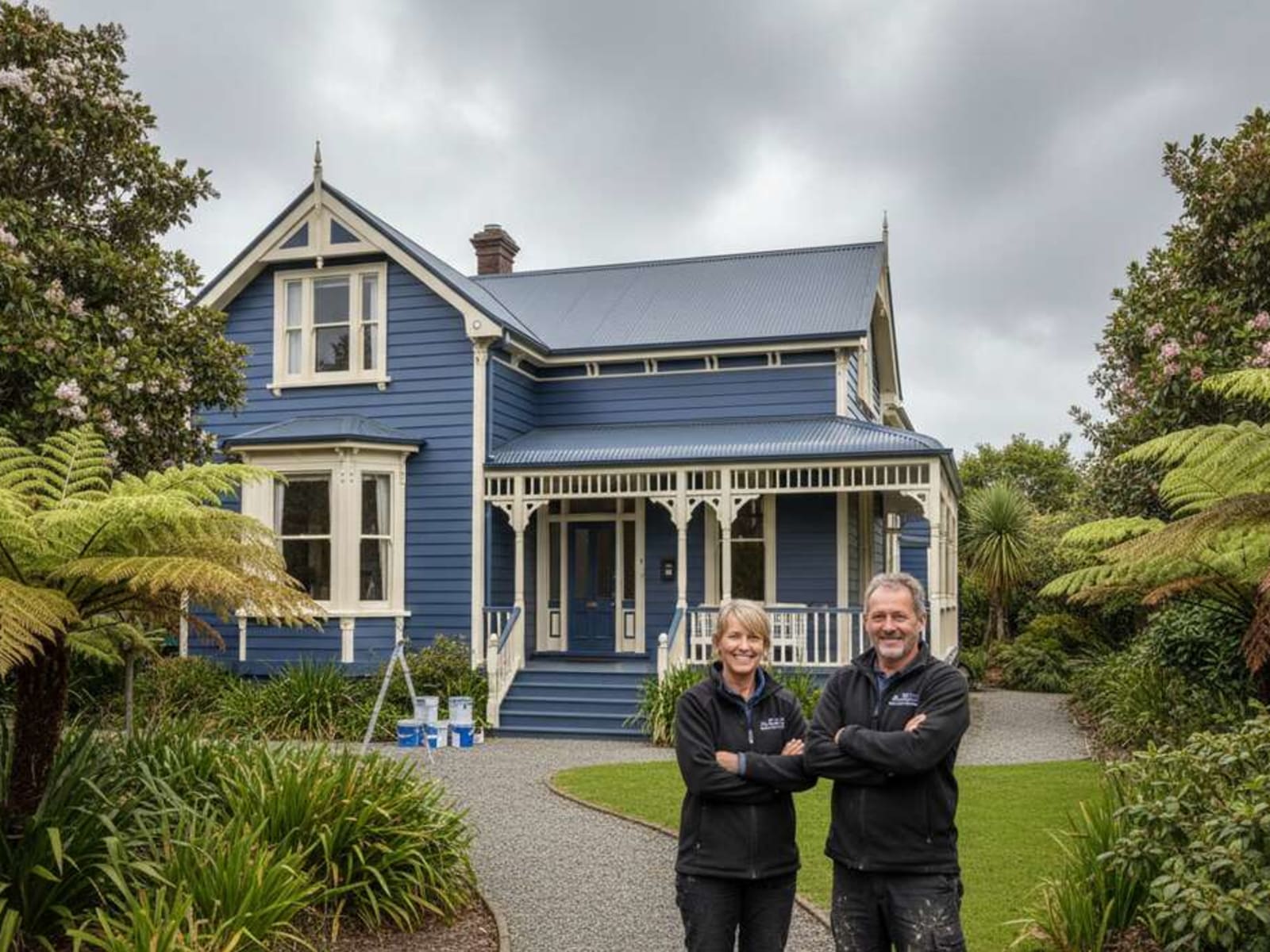
Colour: Period palette, simplified application
Details: Emphasize with colour contrast
Quality: Modern Resene products, traditional techniques
Result: Authentic feel, contemporary livability
Cost Expectations
Victorian painting costs more than standard homes:
Complexity factors:
- Extensive detail work time-consuming
- Access challenges (height, complex forms)
- Preparation intensive (lead paint, repairs)
- Specialist skills required
Typical Wellington Victorian villa exterior:
- $20,000-35,000 depending on size, condition, detail level
- Includes proper preparation, repairs, lead management, scaffolding
- Multi-colour schemes add cost (masking, detail work)
Value return:
- Proper restoration adds significant property value
- Prevents deterioration (cheaper than deferred maintenance)
- Wellington's Victorian homes highly valued when well-maintained
Maintenance for Victorian Homes
Annual inspection:
- Check paint condition, especially south/west exposures
- Inspect gutters and downpipes (water damage prevention)
- Look for rot, especially ground level and sills
Immediate repairs:
- Don't defer small issues (escalate quickly)
- Water ingress especially damaging to old timber
Repainting cycle:
- 10-15 years with proper system and maintenance
- Touch-ups as needed (damaged areas)
- Weather-exposed faces may need earlier attention
Frequently Asked Questions: Victorian House Painting Wellington
How much does it cost to paint a Victorian villa in Wellington?
A full exterior repaint of a Wellington Victorian villa typically costs $20,000-$35,000. This wide range reflects variation in home size (two-storey Italianate villas cost more than single-storey cottages), condition of existing paintwork, extent of repairs needed, and the number of colours in the scheme. Always get a detailed written quote that specifies prep work, lead paint management, and coating system.
Do I need council approval to change my Victorian home's paint colours?
For heritage-listed buildings, yes — you'll need to submit a colour proposal for resource consent approval before painting. For homes in heritage overlay areas but not individually listed, approval is usually not required, though guidelines strongly recommend period-appropriate colours. We regularly prepare colour submissions and can advise on what's likely to be approved.
How long does painting a Victorian house take?
A full exterior restoration of a Victorian villa typically takes 10-20 working days, depending on complexity, number of detail elements, condition of existing paint, and weather delays. Victorian homes take significantly longer than equivalent-sized modern homes due to the ornamental detail requiring hand brushwork.
Can I use modern paint on my Victorian home?
Yes, and modern Resene products are actually superior to historical paints in every measurable way — better coverage, UV resistance, flexibility, and environmental credentials. The key is selecting period-appropriate colours rather than historical paint types. Modern waterborne acrylics applied correctly will outlast oil-based paints historically used on Victorian homes.
Related Services:
- Heritage Villa Painting — Specialist Victorian home restoration
- Weatherboard Painting — Expert timber exterior painting
- Lead Paint Removal — Licensed safe removal
Own a Victorian home? Contact us for heritage-specialist assessment. We'll create authentic colour schemes and restore your home's Victorian character.
Exterior Painting Services by Suburb
Looking for professional exterior painters in your Wellington suburb? Newlands, Ngaio, Hataitai, Island Bay. Get a free quote for your project.
Related Articles


Need Help With Your Painting Project?
Wellington Decorators has been transforming homes across the Wellington region since 2023, led by a founder with 18+ years in the trade. As Registered Master Painters, we back every job with a 5-year workmanship guarantee.
Prefer to talk? Call us now 027 458 6465