
Two coats means two full coats of the named finish paint, each applied at the spread rate the manufacturer publishes, over a surface that has already been prepared and primed. Primer, sealer and undercoat are not one of the two.
That distinction is where most disputes about a paint job start. A quote reading "two coats" that turns out to mean one coat of sealer and one topcoat has delivered half the finish system, and the wall will show it well before the paint should have needed touching.
What should the quote actually say?
Enough that a different painter could pick up the job and produce the same result. That means:
- The product name for each coat, not just "quality paint". Products differ enormously inside one brand.
- The number of coats of each product, listed separately: primer or sealer, then finish coats.
- The finish level for each surface. Walls, ceilings, trim and doors are rarely the same.
- What preparation is included, and what is treated as an extra if it is found once work starts.
- Which surfaces are included. Soffits, the inside of window reveals, the back of the garage and the top of a wardrobe wall are the usual omissions.
If those five things are on the page, the number of coats stops being ambiguous. If the quote is one line and a price, the number of coats is whatever the painter decides on the day.
How many coats does the job actually need?
| Situation | Correct build-up | Total coats |
|---|---|---|
| Sound existing paint, same or similar colour | Wash, spot prime repairs, two finish coats | 2 finish |
| Sound existing paint, dark colour going light | Wash, tinted sealer, two finish coats, sometimes three | 3 or more |
| New plasterboard interior | Sealer, then two finish coats | 3 |
| Bare exterior timber | Primer, then two finish coats | 3 |
| Cedar or other tannin-rich timber | Stain-blocking primer, occasionally two of them, then two finish coats | 3 or 4 |
| Galvanised steel or aluminium | Etch or specialist primer, then two finish coats | 3 |
| Strong reds, yellows and oranges | Tinted primer, then three finish coats | 4 |
The last row surprises people. Some pigments simply do not hide well, and a strong red over a pale wall will take three finish coats however good the paint is. A quote for two coats in a colour like that is either optimistic or is quietly planning to leave it patchy.
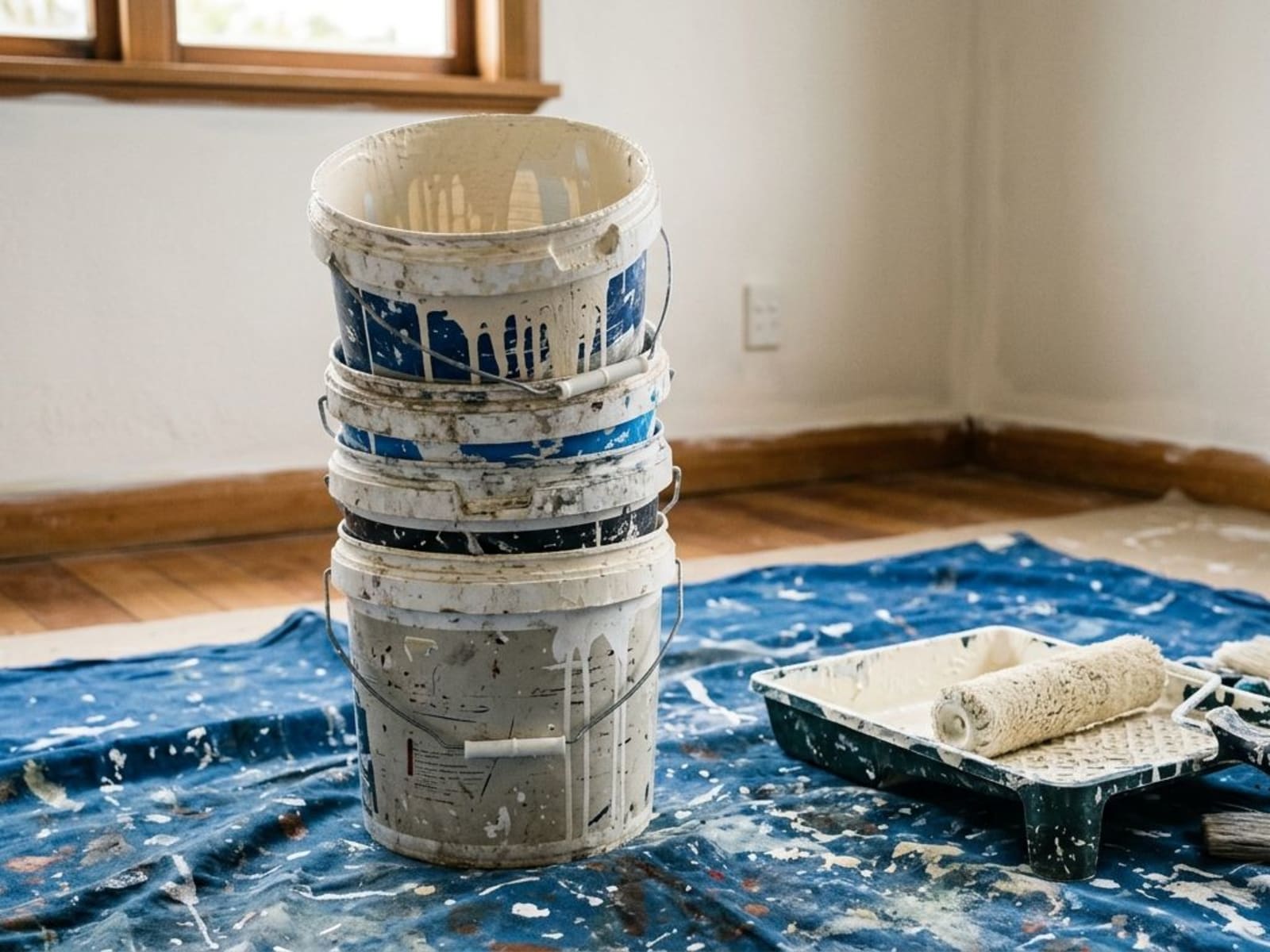
How can you check two coats actually went on?
With arithmetic, which is the only method that does not rely on trusting anyone.
Every paint publishes a spread rate in square metres per litre per coat, and it is printed on the tin and on the manufacturer's data sheet for that exact product. The figures differ enough between a thin interior wall paint and a heavy-bodied exterior low sheen that guessing will throw the sum out, so read the number for the product actually used on your job rather than working from a rule of thumb.
Two things to keep in mind when you use it. A published spread rate assumes a smooth, sealed, previously painted surface, so bare timber, rough plaster and open-texture block all drink more than the tin suggests and the first coat on those will not go as far. And it is a theoretical figure measured under ideal conditions, so a real job on a real house should land near it rather than exactly on it.
Then do this. Take the wall area, divide by the spread rate, and multiply by two.
Take a room with 150 square metres of wall and ceiling, painted with something rated at 12 square metres per litre. That is about 12.5 litres a coat, so about 25 litres for two. If four ten-litre pails came onto site and two and a half of them are empty, the numbers work. If one and a half pails covered the whole job, that is 15 litres against the 25 the job needed, which is a bit over one coat rather than two.
Three cheaper checks, all of which take a minute:
- Look along the wall with a light at a shallow angle. Thin coverage shows as patchiness and as the old colour ghosting through, particularly over filled areas.
- Check the cut-in lines at ceilings and corners. A brushed edge that got one pass while the roller got two shows as a visibly different depth of colour along the top of the wall.
- Ask for the empty tins to be left on site until you have looked at them. A painter doing the job properly has no reason to object.
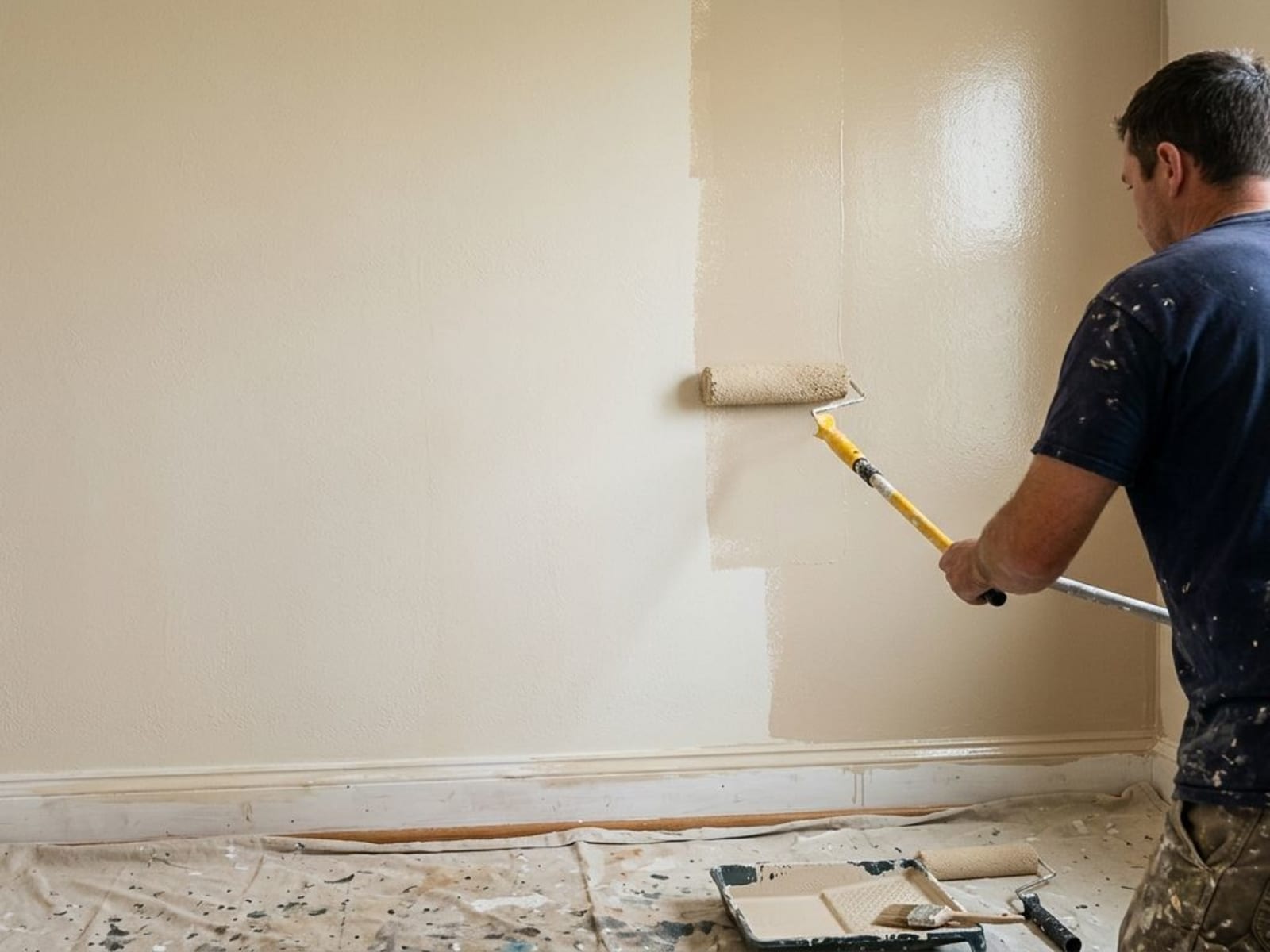
Why does the second coat get shaved?
Because it is the easiest thing on a job to remove without it being visible on handover day.
Materials are not the saving. Quality exterior paint runs about $100 to $200 per 10 litres as at 2026, so half a coat on a house is a couple of hundred dollars of paint. The real saving is the day of labour that goes with it, and that is a far larger number.
The other version of the same shortcut is thinning. Paint thinned beyond what the manufacturer allows spreads further, looks acceptable while wet, and leaves a film too thin to do its job. On an exterior that shortens the life of the system by years, and it is invisible until the south wall starts chalking early. It is one of the reasons a quote thousands below the others is not usually a bargain, and it is worth understanding what drives the cost of exterior work before comparing prices.
Does a spray job change what a coat means?
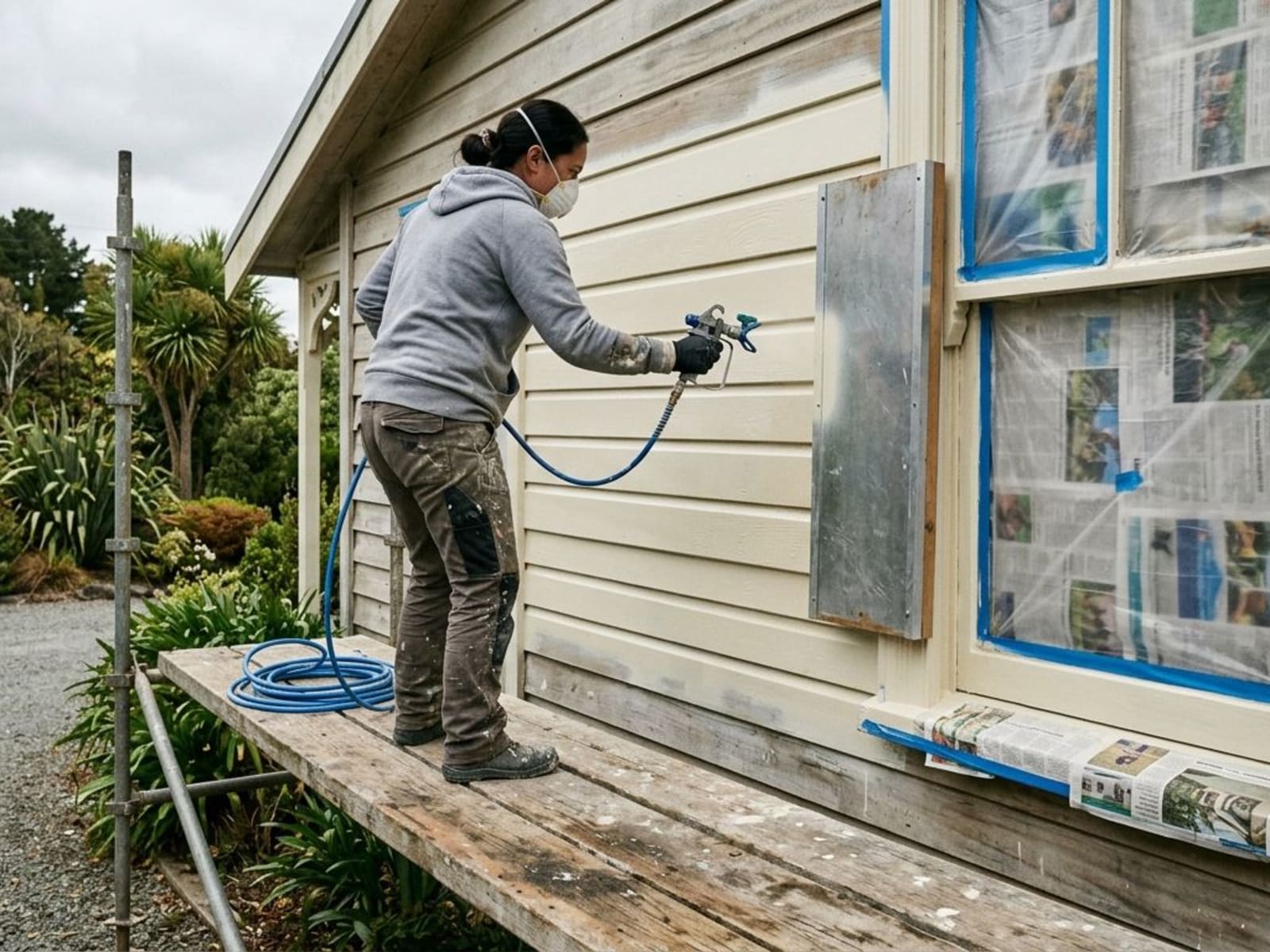
Not the definition, but it changes how you judge it. A coat is a film thickness, not a number of passes. A sprayer can cover a wall in one pass and leave less paint on it than a roller does, or build a heavy even film in two.
What matters on sprayed work is that the same total volume goes on. The arithmetic above still applies, and on exterior work spraying is often back-rolled or back-brushed on the first coat so the paint is worked into the timber rather than sitting on top of it. If a quote specifies spraying, ask whether the first coat is back-rolled.
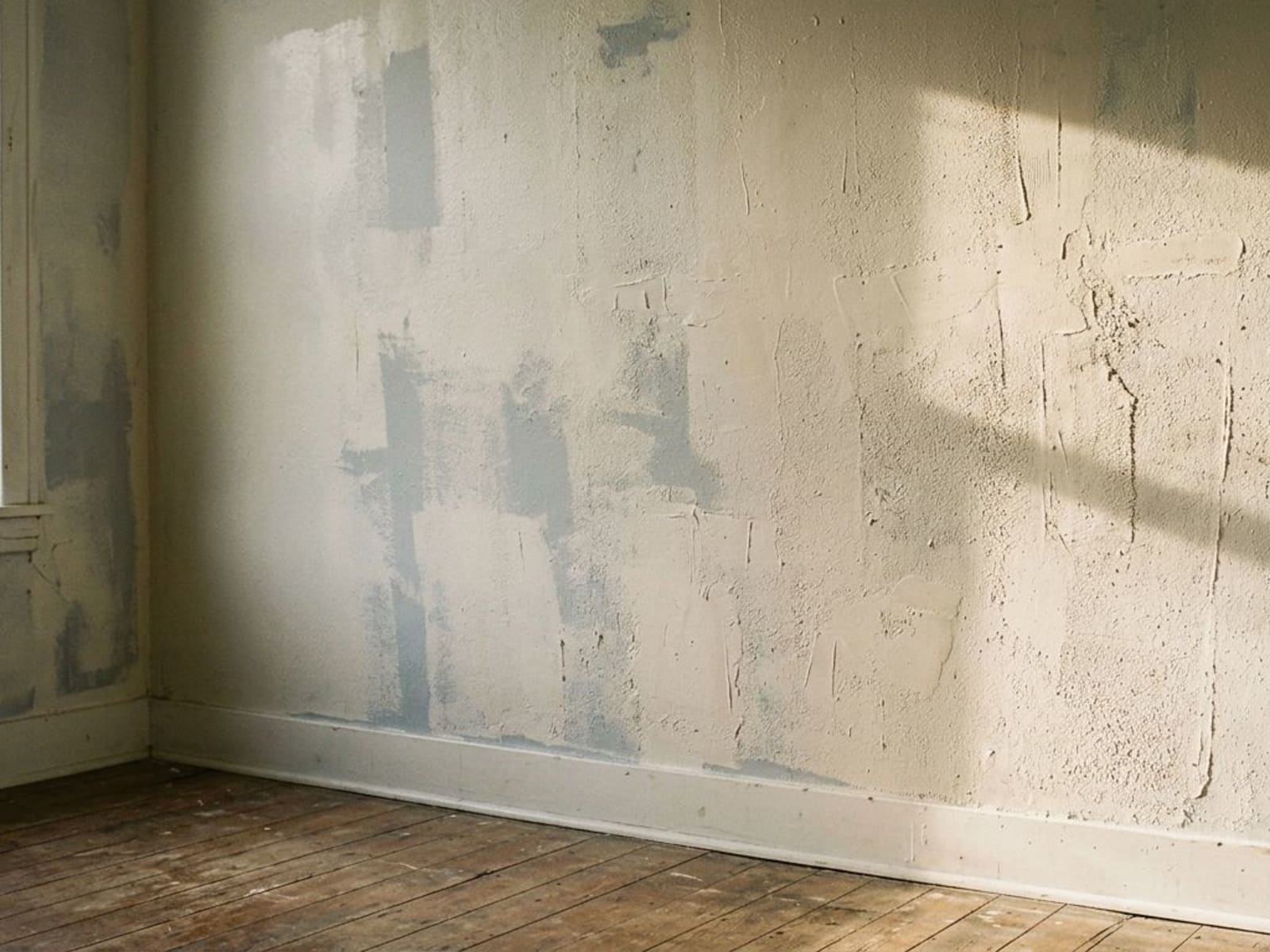
When is one coat genuinely enough?
Sometimes, and it is worth saying so.
A ceiling in good condition being refreshed in the same white will often cover in one coat. A wall painted two or three years ago, in sound condition, going back in exactly the same colour, will frequently look perfect after one. If a painter tells you a room only needs one coat and prices it that way, that is a painter being straight with you, not cutting corners.
What is never enough is one coat over bare substrate, one coat over a colour change, or one coat outside. Exterior paint is a system in which each coat has a job, and removing one of them removes a function rather than just some thickness.
The one line to add to your quote
Ask for this wording, or something like it: two full coats of the named finish coat applied at the manufacturer's stated spread rate, over primed and prepared surfaces, with primer and sealer listed separately.
A painter who intends to do that will add it without hesitating. If you would like a quote itemised that way from the start, ask us for one.
Related Articles

Need Help With Your Painting Project?
Wellington Decorators has been transforming homes across the Wellington region since 2023, led by a founder with 18+ years in the trade. As Registered Master Painters, we back every job with a 5-year workmanship guarantee.
Prefer to talk? Call us now 027 458 6465