
Paint can stop water soaking in through the face of sound stucco or plaster, and a proper crack-filling and waterproof coating system can seal fine cracks in that face. Paint cannot fix a leak that gets in around windows, flashings, parapets, balconies or at the base of the wall, and on a monolithic-clad house those junctions are common entry points.
So the honest answer is: sometimes, for one kind of problem, and never for the other. The job is working out which one you have before anyone spends money on paint.
What can paint actually do on a plaster-clad wall?
On a solid, sound plaster or stucco surface, a good coating system does real weatherproofing work. It sheds rain from the face, it bridges and seals very fine cracks, and it slows the plaster from absorbing water in a long wet spell.
Resene's preparation guide for cracked or leaking cementitious surfaces lays out the approach. Treat moss and mould, wash, and remove any flaking paint. Fill cracks under 1mm with a brushable crack filler, and cracks over 1mm with an exterior-grade flexible filler. Then, if waterproofing is an issue, apply two to three coats of Resene X-200 rather than going straight to an ordinary topcoat system.
That is a legitimate repair for a wall where water is coming through the face of the plaster: damp patches in the middle of a wall, a spider web of fine cracks, a surface that darkens and stays dark long after rain stops. The broader process is covered in our guide to stucco and plaster exterior painting.

What can paint not do?
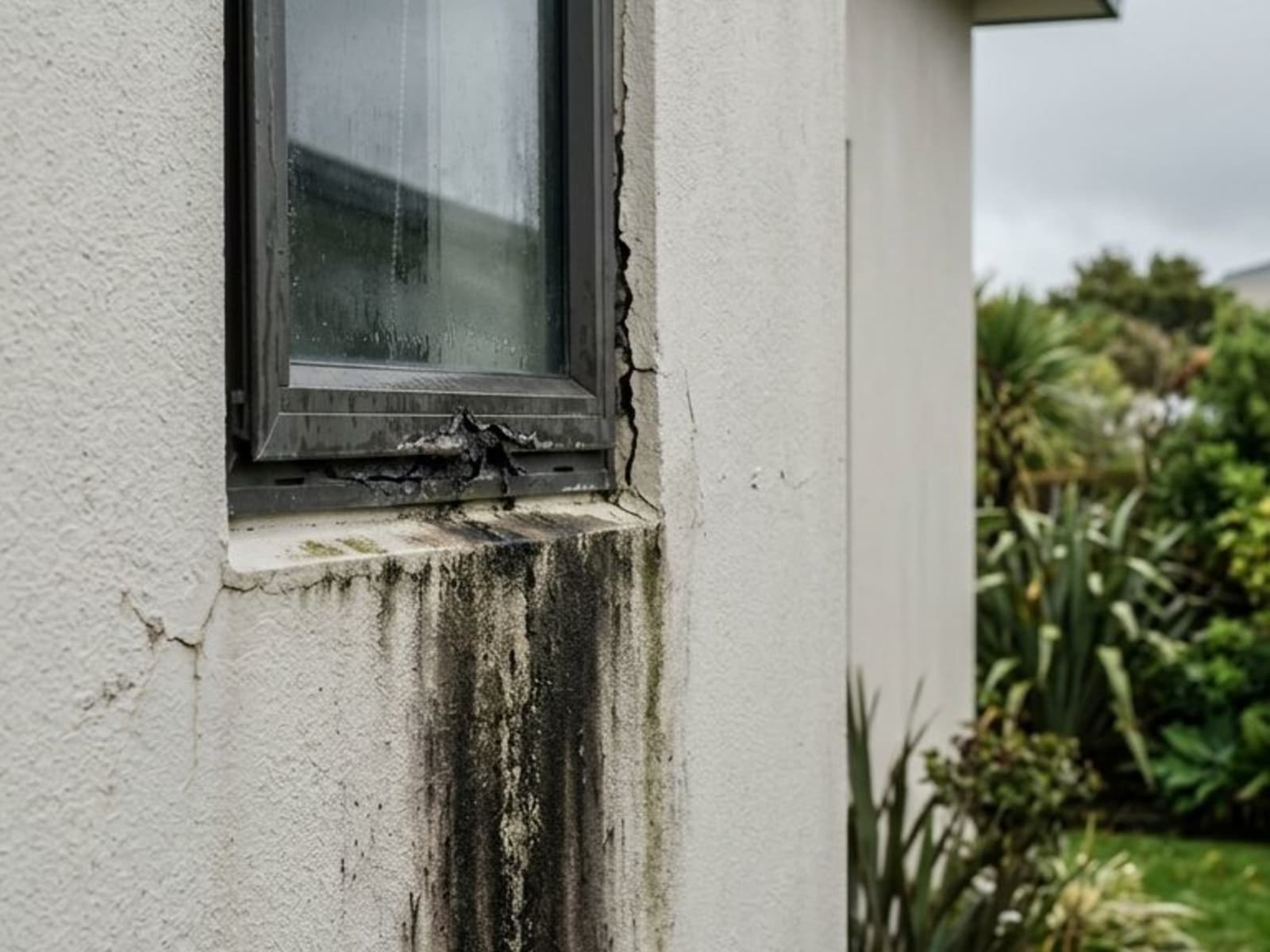
It cannot fix anything that is not the face of the wall. Water that runs in behind a window flange, under a parapet cap, through a balcony junction, down a meter box or up from cladding that runs into the ground is not coming through the paint. Painting the wall does nothing to that water except hide where it is getting in.
| The problem | Can paint fix it? | What actually does |
|---|---|---|
| Fine cracks in the face of sound plaster | Yes, with crack filler and a waterproofing coating system | Proper filling, then the right coating |
| Plaster face absorbing water, dark after rain | Yes, if the plaster is sound | A waterproof coating system, maintained |
| Wider or moving cracks | Only after the cause is known | Finding why it moves, then a flexible filler or repair |
| Leaks around windows, doors and penetrations | No | Flashing and junction repairs by a builder |
| Parapets, balconies, internal gutters | No | Assessment by a weathertightness specialist |
| Wet or rotten framing behind the cladding | No | Invasive investigation and remediation |
There is also a trap here. Fresh paint and filled cracks make a house look sound. If a leak is active behind the cladding, a new coat can hide the staining and cracking that an inspector would use to find it, while the framing keeps getting wetter.
Which plaster houses carry the most risk?
The government's home buying site, settled.govt.nz, says buildings with a high risk of leaking were mostly built between the late 1980s and the mid-2000s, and identifies monolithic cladding systems, including plaster over polystyrene or fibre-cement sheet, as high risk, particularly on Mediterranean-style houses with flat roofs and no eaves.
Older solid stucco houses are a different construction and a different risk, but they are not immune. Cracks from settlement or earthquakes, failed flashings and blocked weep points all let water in. They also bring a separate hazard: Health New Zealand advises presuming that homes built in the 1980s or earlier were painted with lead-based paint, so have it tested before sanding, scraping or waterblasting.
Wellington adds wind-driven rain to all of this. Water pushed sideways and upwards finds gaps at junctions that gentle rain would never reach, which is covered in why Wellington paint fails from the edges in.
What signs mean you need a building surveyor, not a painter?
Settled.govt.nz lists warning signs worth taking seriously. Outside:
- cracks in the cladding where rainwater could enter
- rust or other unusual staining on exterior walls
- dampness and rot around windows and doors
- broken sealant
And inside:
- stains on ceilings
- spongy floors or walls
- mould spots on interior walls
- musty smells
Its advice is to get an independent building inspection or a weathertightness expert, and it notes that inspectors can use moisture meters to find problems without damaging the walls. If you see any of the inside signs, or staining that runs down from a window corner, call that person before you call a painter.
A good painter should say the same. Our first question on a plaster-clad house with any of those signs is whether it has been looked at by someone who can test the framing. If it has not, we would rather you did that first than paid us to paint over a problem.
What is the right order of work?
- Diagnose. If there is any sign of water inside, get a building surveyor or weathertightness specialist to check moisture levels and junctions.
- Repair the building. Flashings, sealant joints, window junctions, cladding clearances and any damaged framing are builder's work.
- Repair the plaster. Cracks and damaged areas made good by someone who knows the cladding system.
- Coat it properly. Crack filling and a coating system suited to the substrate, with enough coats to do the waterproofing job, not a single cosmetic coat.
- Maintain it. Wash it, check it, and touch up cracks and sealant before they become entry points.

Is there anything you should not spend money on?
Do not pay for a full repaint to solve a leak nobody has diagnosed. Do not buy a special coating on the promise that it will stop a leak coming in at a window or balcony, because it cannot. And if the house is being bought or sold, the questions about disclosure and what an inspection report means are for your lawyer, not your painter.
If your plaster is sound and the problem really is the face of the wall, a proper coating system is money well spent. If you want a straight answer on which situation you are in, contact us for a free quote and we will tell you if you need someone else first.
Related Articles


Need Help With Your Painting Project?
Wellington Decorators has been transforming homes across the Wellington region since 2023, led by a founder with 18+ years in the trade. As Registered Master Painters, we back every job with a 5-year workmanship guarantee.
Prefer to talk? Call us now 027 458 6465