
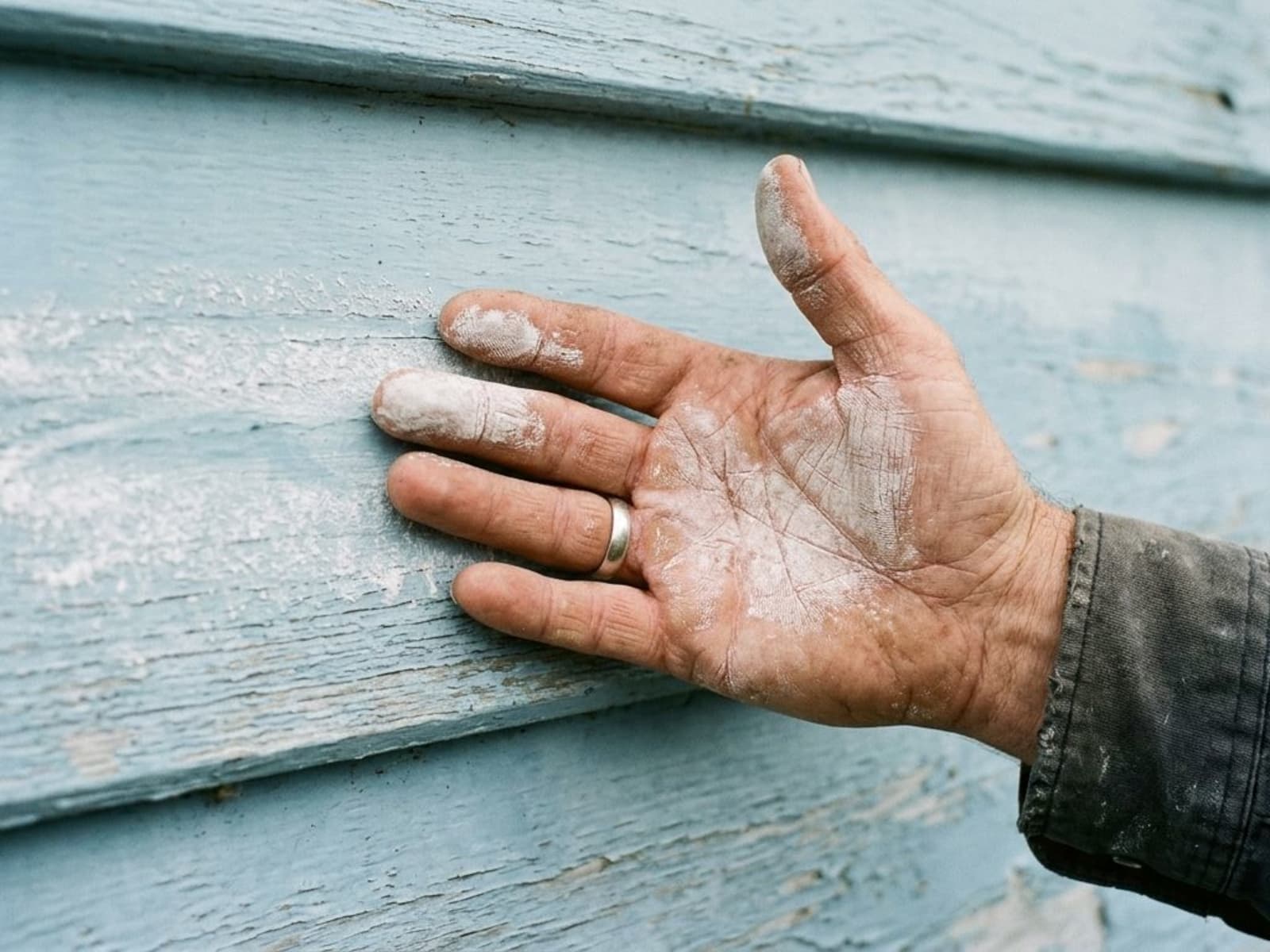
That white powder is the paint binder breaking down under ultraviolet light and releasing its grip on the pigment. It is ordinary weathering rather than a defect, but it does mean you cannot paint the wall as it stands, because a new coat will bond to loose powder instead of to the paint beneath it.
How urgent it is depends entirely on how much comes off. A faint dusting on a ten-year-old wall is normal. A palm that comes away solid white, on a wall whose colour has visibly gone pale, is a coating close to the end of its working life.
Why does exterior paint go chalky?
Paint is pigment held in a binder. Sunlight and moisture slowly degrade the binder at the surface, and once the binder lets go, the pigment particles sit loose on top as a fine powder. Resene describes it exactly that way, and treats the resulting chalk as being in the same category as dust and dirt for preparation purposes.
Some paints chalk sooner than others. Flat and low-sheen finishes chalk more readily than gloss. Whites and very pale colours, which carry a lot of titanium dioxide, tend to show it first and most obviously. Premature chalking, meaning heavy powder on a coating only a few years old, usually points back to the job rather than the product: a coat applied too thin, a primer skipped on a porous surface, or paint over-thinned to spread further.
How much chalking is actually a problem?
Do the wipe test on a dry wall on a dry day. Rub a clean dark cloth firmly over a patch you have not touched and look at what comes off.
| What the cloth picks up | What it means | What to do |
|---|---|---|
| A faint grey smudge | Normal weathering on a coating with life left | Nothing urgent. Wash the house down and leave it. |
| A clear white mark, colour still good | Moderate chalk, film still sound | Wash annually. Plan a repaint on your own timetable, not the paint's. |
| Heavy white on the cloth, colour visibly faded | Binder well degraded, film thinning | Wash and repaint. Do not coat over the chalk. |
| Chalk plus a rough, open, thirsty-looking surface | Coating worn back toward the substrate | Full preparation, sealer over the chalky substrate, then two coats |
| Chalk plus cracking or lifting edges | Chalk is not your main problem | Deal with the adhesion failure first |
Which walls chalk first?
The sunny ones, for the reasons set out in our piece on why north-facing walls fade faster.
What matters here is the practical consequence. One elevation of a house can be powdery and pale while another is still sound, so wipe-test each wall separately rather than judging the house from whichever side you park on. Chalk on the sunny wall is not a verdict on the whole house, and blanket advice about repainting intervals is not much use on a house whose elevations are in different condition.
Can I just wash it off?
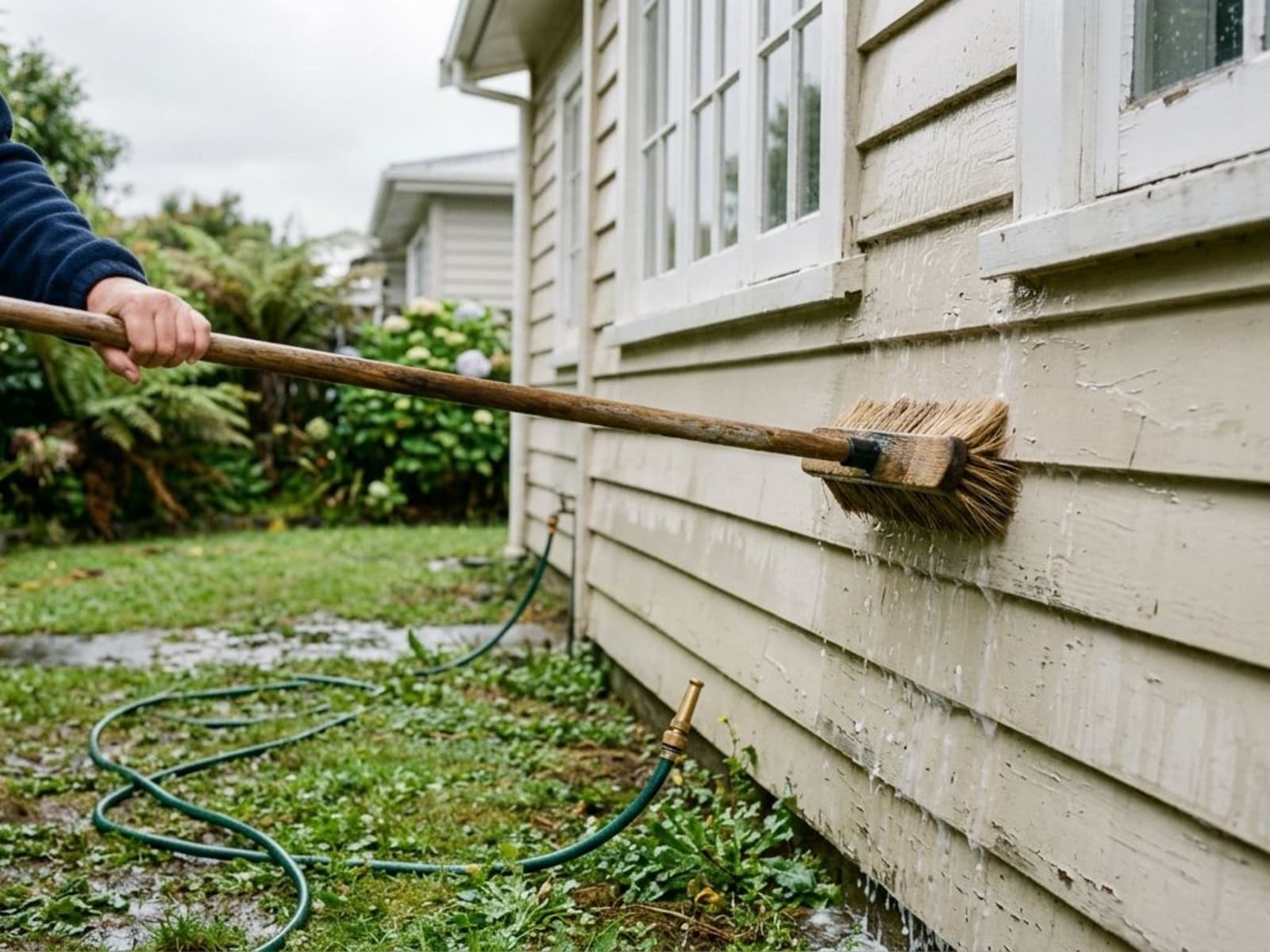
Yes, and this is a genuinely worthwhile job to do yourself. Dampen the surface with clean water, scrub with a soft bristled brush or a soft broom on a pole using a purpose-made paint preparation and house wash, and rinse thoroughly from the top down. Work in the shade or on an overcast day so nothing dries before you rinse it. Chalk, dirt, salt and mould all come off together.
Two cautions. Do not attack an older weatherboard house with a high-pressure washer at close range: you drive water up under the board laps and behind the cladding, and on a 1920s bungalow that water has nowhere good to go. And do not do this at height off a ladder on a steep section if you are not confident. Falling off is the expensive outcome here.
Does washing buy me more time before repainting?
It buys some. Removing chalk, grime and salt stops those things holding moisture against the film and lets you actually see the condition of the coating underneath. What washing cannot do is put binder back, so a badly degraded film is still a badly degraded film after it is clean.
The useful habit is a wash every year or two, which is cheap, safe and slows the whole decline. If you do that, a sound coating on the sheltered elevations will comfortably outlast the exposed ones, and you may only need the weather sides done when the time comes.
Can I use a sealer instead of washing?
No. Sealers made for chalky surfaces exist and they are the right product for a wall that stays slightly powdery after cleaning, but they go on after washing, not instead of it. Nothing sticks reliably to loose powder, and a sealer applied over unwashed chalk simply glues the powder to itself. That is the most common reason a repaint on a chalky wall peels off in sheets three winters later.
What about the chalk on my roof?
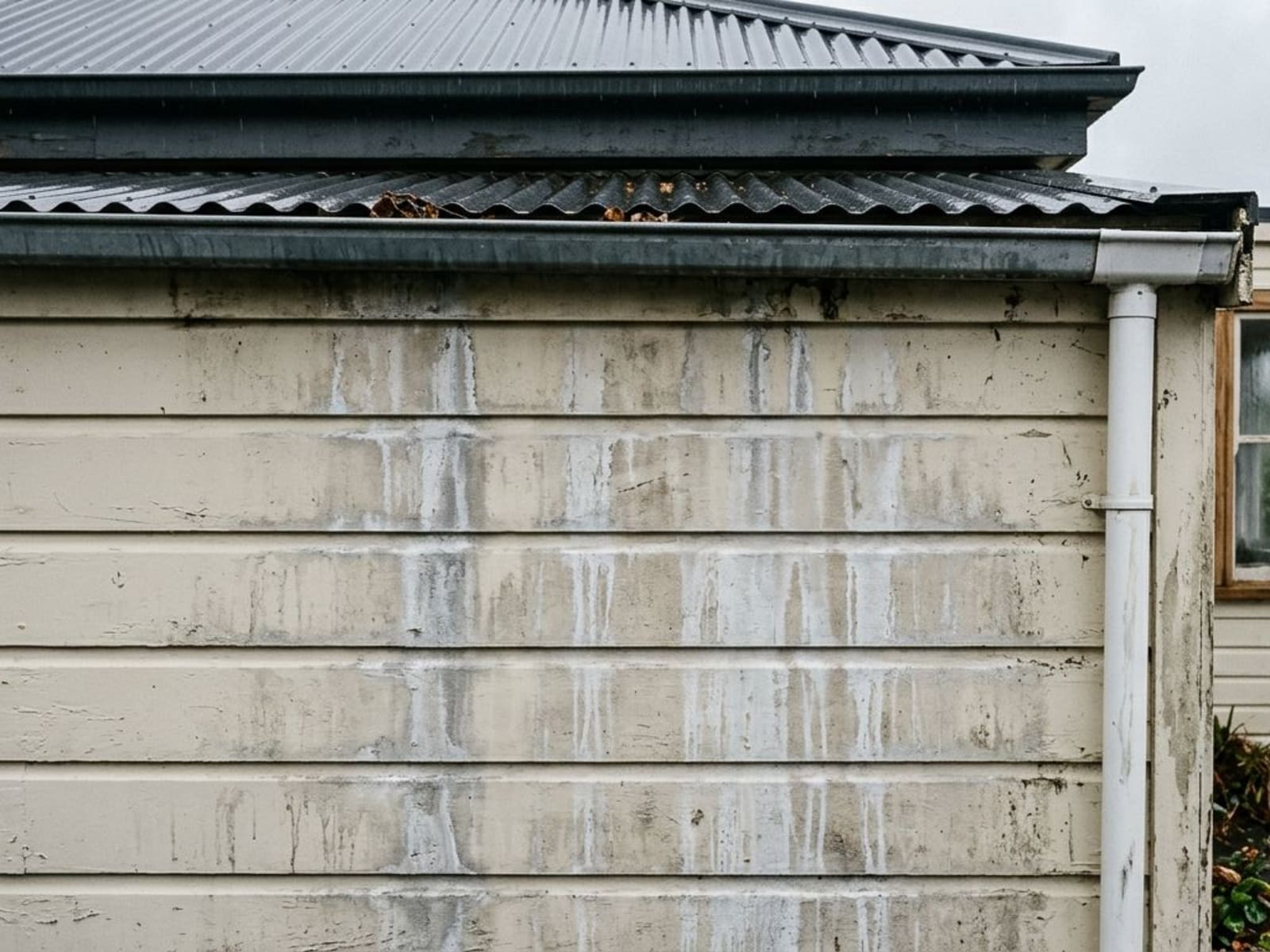
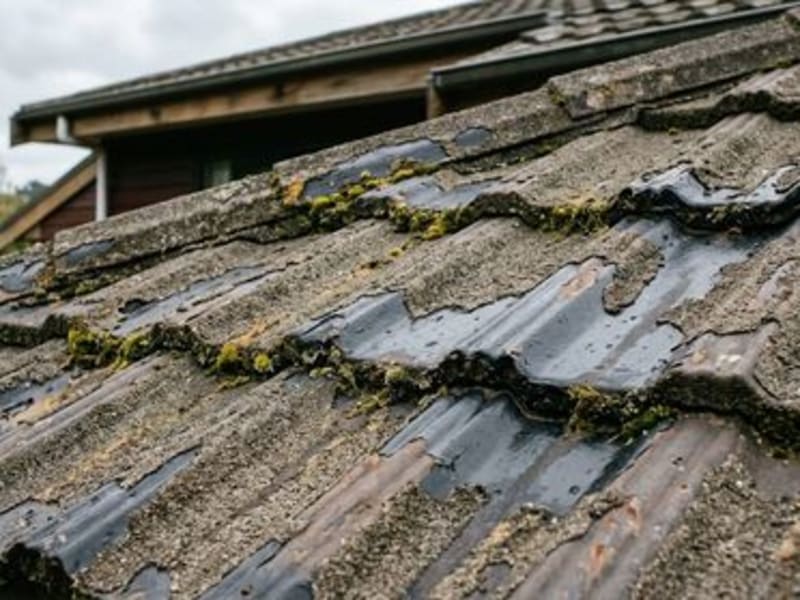
Roof coatings chalk harder than walls because they face straight up at the sky with nothing shading them. The first sign is often not the roof at all: it is white streaking down the walls below the gutter overflow points, or a chalky wash across the path after rain. A chalking roof coating is usually still repaintable, so long as the steel underneath is sound, and it needs the same wash-first treatment before any roof coating goes on.
When is repainting a waste of money?
If chalking is the only thing wrong, the film is still thick, and there is no cracking, peeling or exposed substrate, then chalking on its own is not a reason to repaint. Wash it and get on with your life. The point at which it becomes a repaint is when the chalk arrives with company: fading, a thin worn film, cracking at the board edges, or bare timber showing through on the exposed corners.
If you are not sure which of those you are looking at, we will look at each elevation and tell you honestly whether it is a wash or an exterior repaint. Get in touch and we will come and check it.
Related Articles


Need Help With Your Painting Project?
Wellington Decorators has been transforming homes across the Wellington region since 2023, led by a founder with 18+ years in the trade. As Registered Master Painters, we back every job with a 5-year workmanship guarantee.
Prefer to talk? Call us now 027 458 6465