
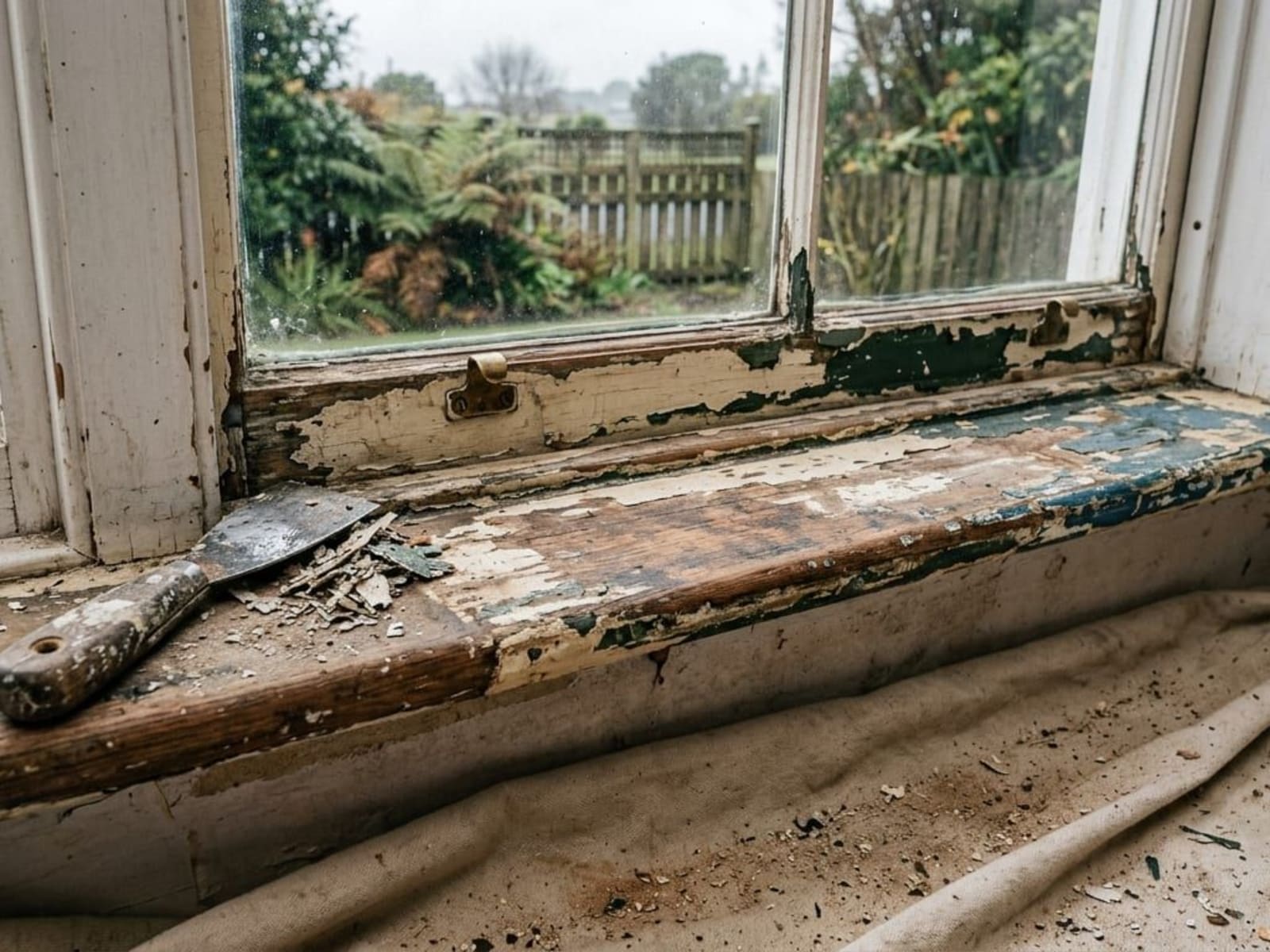
New paint peels off old paint because it never properly bonded to it: the old surface was too glossy, chalky, dirty or greasy for the new coat to grip, or the old paint itself was already losing its hold. Resene's problem solver puts it bluntly: peeling is nearly always the result of poor surface preparation, often by the previous painter.
The good news is that you can find out before you paint, with a knife and a strip of tape.
What is actually failing when paint peels?
Resene separates peeling into two types, and it helps to know which one you have:
- Intercoat failure. One or more coats separate from the coat below. You see the old colour underneath, still stuck firmly to the wall or timber. The new paint is fine as paint. It just never held on to what was underneath it.
- Total film failure. All coats peel back to the bare surface. The problem is at the bottom of the stack, between the first coat and the timber, plaster or metal.
This article is about the first one: fresh paint lifting off an older coat. Peeling to bare timber is usually a moisture or substrate problem, and the difference is covered in blistering vs peeling paint.
Why won't the new coat stick?
The causes Resene lists all come back to the surface the new paint landed on.
Gloss that was not sanded
Old enamel, especially on joinery, doors and kitchen walls, dries to a hard, smooth, shiny film. A new coat of acrylic has almost nothing to key into. Resene lists insufficient sanding of old paint surfaces as a cause of peeling. It can look fine for weeks, then comes off in sheets at the first knock or when masking tape is pulled. Whether you can get away with less sanding depends on the primer, which is the subject of painting over gloss without sanding.
Chalk
Weathered exterior paint breaks down into a fine powder. Resene describes chalk as the powder, other than dirt, that comes off on your finger when you rub it over old paint. New paint applied over it sticks to the powder rather than to the paint underneath. Resene's advice is to dampen the surface and scrub it off before repainting. More on that in chalky residue on exterior paint.
Dirt, grease and mould
Kitchen walls, around light switches, window sills and bathroom ceilings all carry a film you cannot see: cooking grease, hand oils, soap, mould. Resene lists failure to remove grease, dust, mould and chalk as a cause of peeling. The fix is a proper wash with a paint preparation cleaner and a rinse before any paint goes on.
The old paint was already failing
Sometimes the new paint did everything right. Resene's page on delamination explains that old enamel paints become hard and brittle as they age, and as layers build up over the years the stress on the lower coats increases. The old coats can look sound, and it is not until the surface is painted that the instability shows. A change from a pale colour to a much darker one adds heat, and Resene describes that as a common tipping point. When that happens the new coat pulls the old layers off with it.
Weather, and old paint with too many layers
Painting in very cold weather, or in hot or windy weather that makes the paint dry too quickly, is also on Resene's list. Resene also warns that where there are already many coats (more than three or four) or old solventborne paint, repainting can make the old paint lose adhesion.

How do you test an old surface with tape before painting?
This is Resene's tape test, and it takes a minute.
- With a sharp razor blade or putty knife, cut a small X through the paint in the area you want to test.
- Press half of a clean 4cm strip of tape over the cut, and rub it down firmly with your thumbnail.
- Hold the free end at a right angle to the surface and yank it off with a sharp pull.
- If paint comes away easily, Resene says the adhesion of that coating must be considered suspect.
Test in several places, not just one. Try the weathered side of the house, a sill, a door near the handle and anywhere that looked slightly lifted. A surface can hold well in one spot and fail in another.

What does the tape tell you?
| What is on the tape | What it means | What to do |
|---|---|---|
| Nothing, or a few flecks from the cut edge | Old paint well bonded | Clean, sand any gloss, prime as the product requires, paint |
| Powder, but no film | Chalky surface | Scrub off and rinse, retest once dry |
| Top coat only, lower coat still on the wall | Intercoat adhesion is poor | Remove the loose coat before repainting |
| Several layers, or back to bare surface | Old paint system is failing | Remove to a sound edge or to bare substrate |
What is the fix once it has started peeling?
You cannot glue paint back down. Every loose edge has to come off, back to paint that passes the tape test, and the edges need sanding smooth so they do not show through. Then the surface gets cleaned, primed where bare or glossy, and repainted.
If the tape pulls off several layers across large areas, Resene's advice for delamination is to fully remove the old coatings back to a sound substrate. That is a much bigger job, and on older houses it comes with a warning. Homes painted before the 1980s may contain lead-based paint, so have it tested before sanding or stripping.
Resene's point is the one to remember: new paint will not improve an unstable old coating. Spending on premium topcoat over a surface that fails the tape test is money wasted.
Is this a DIY job?
The test is. Anyone can do it, and you should do it before buying paint for anything older than a few years. Scraping and recoating a small area, a sill or a door is reasonable DIY. Large areas of intercoat failure on a whole elevation, or anything that might involve old lead paint, are where a painter earns their money.
If your tape test came back ugly and you want a second opinion, get in touch and we will come and have a look.
Related Articles


Need Help With Your Painting Project?
Wellington Decorators has been transforming homes across the Wellington region since 2023, led by a founder with 18+ years in the trade. As Registered Master Painters, we back every job with a 5-year workmanship guarantee.
Prefer to talk? Call us now 027 458 6465