
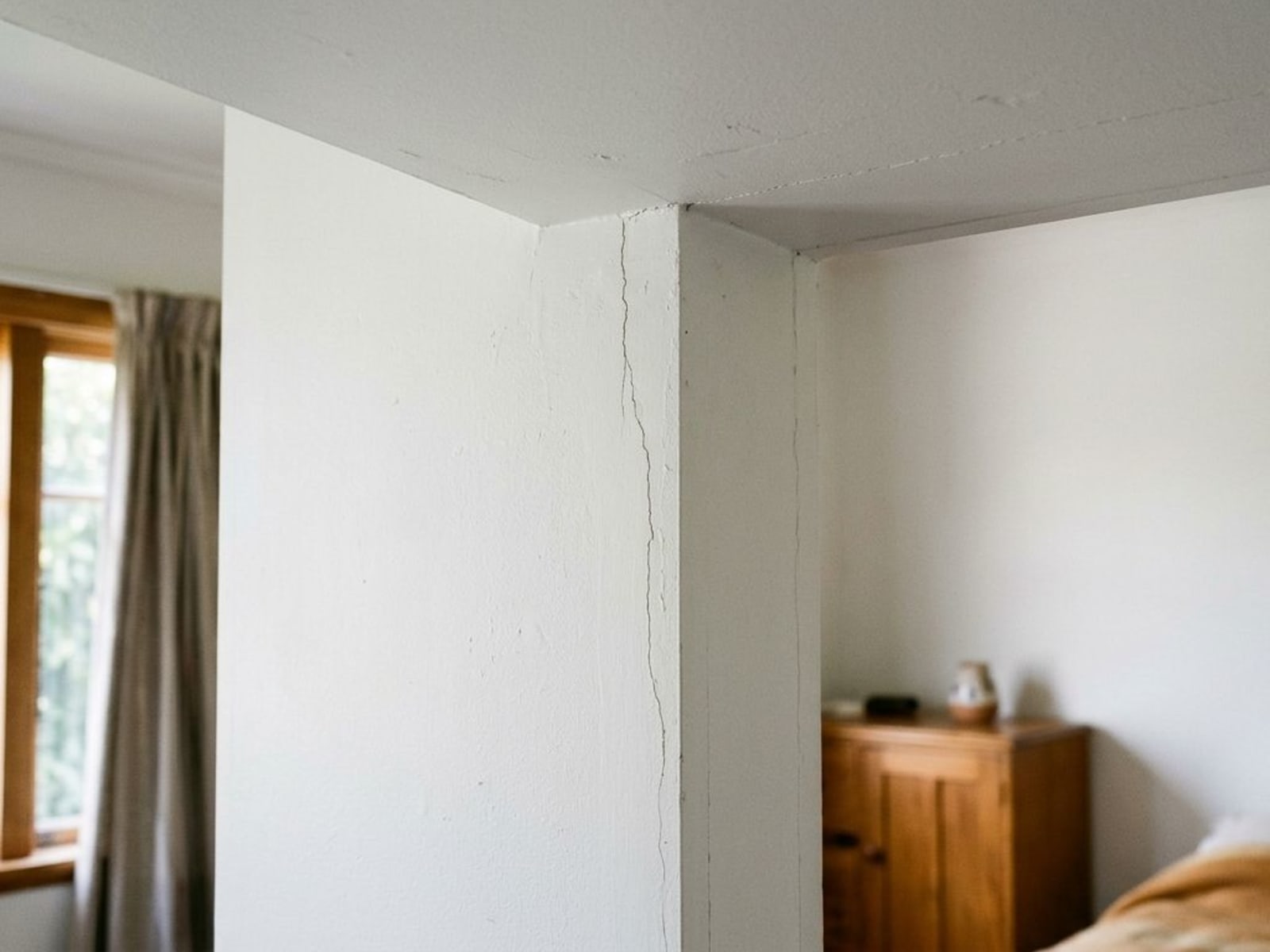
A crack that keeps reopening along the line where the wall meets the ceiling is almost always seasonal movement: the ceiling framing and the wall framing swell and shrink by different amounts as the humidity changes, and that corner is where the two meet. Filler fails there because it is rigid, so the fix is to stop treating it as a crack and start treating it as a joint that moves.
That is the short answer. The rest of this page is about telling a moving joint from something that needs a builder, and the three ways a painter can deal with it.
Why does it always open in the same place?
Because the internal corner is the weakest point in a lined room. The wall linings are fixed to the studs, the ceiling linings are fixed to the ceiling joists or truss bottom chords, and the corner joint ties two separately moving surfaces together with a thin line of stopping compound or a glued cornice.
Timber moves with moisture. The GIB technical paper on movement in building materials puts it plainly: most cracking of interior linings is not structurally significant but may be aesthetically offensive, and the research it summarises found that humidity, not temperature, drives most of the movement, because timber framing responds to humidity changes far more than plasterboard does. The ceiling framing sits against a roof space that gets hot and dry in summer and cold and damp in winter. The walls below live in the room's own air. So the two surfaces drift slightly apart and back again through the year, and the corner joint takes all of it.
In a Wellington house that cycle is real. A roof space that is dry through a hot February and damp through a wet July is exactly the kind of change that opens a corner crack at one time of year and partly closes it again at another.
Why does filler keep failing?
Ordinary filler and plaster stopping compounds set hard. They are designed to fill a gap that stays the same size. Push them into a joint that opens and closes every season and they either crack down the middle again or let go along one edge, often by the next change of season. The new paint over the top cracks with them.
That is why a corner that has been "fixed" three times looks worse than it did the first time. Each round adds a slightly thicker ridge of filler, and each round cracks again in the same line.
What actually works?
There are three honest painting options, plus a fourth that is really a plastering job, and which one suits you depends on how wide the movement is and how much you care about the look.
| Option | How it works | Good for | Trade-off |
|---|---|---|---|
| Rake out and refill with hard filler | Fills the gap as it is today | A one-off crack from initial shrinkage in a newer house that has since stopped moving | Will crack again if the joint is still moving seasonally |
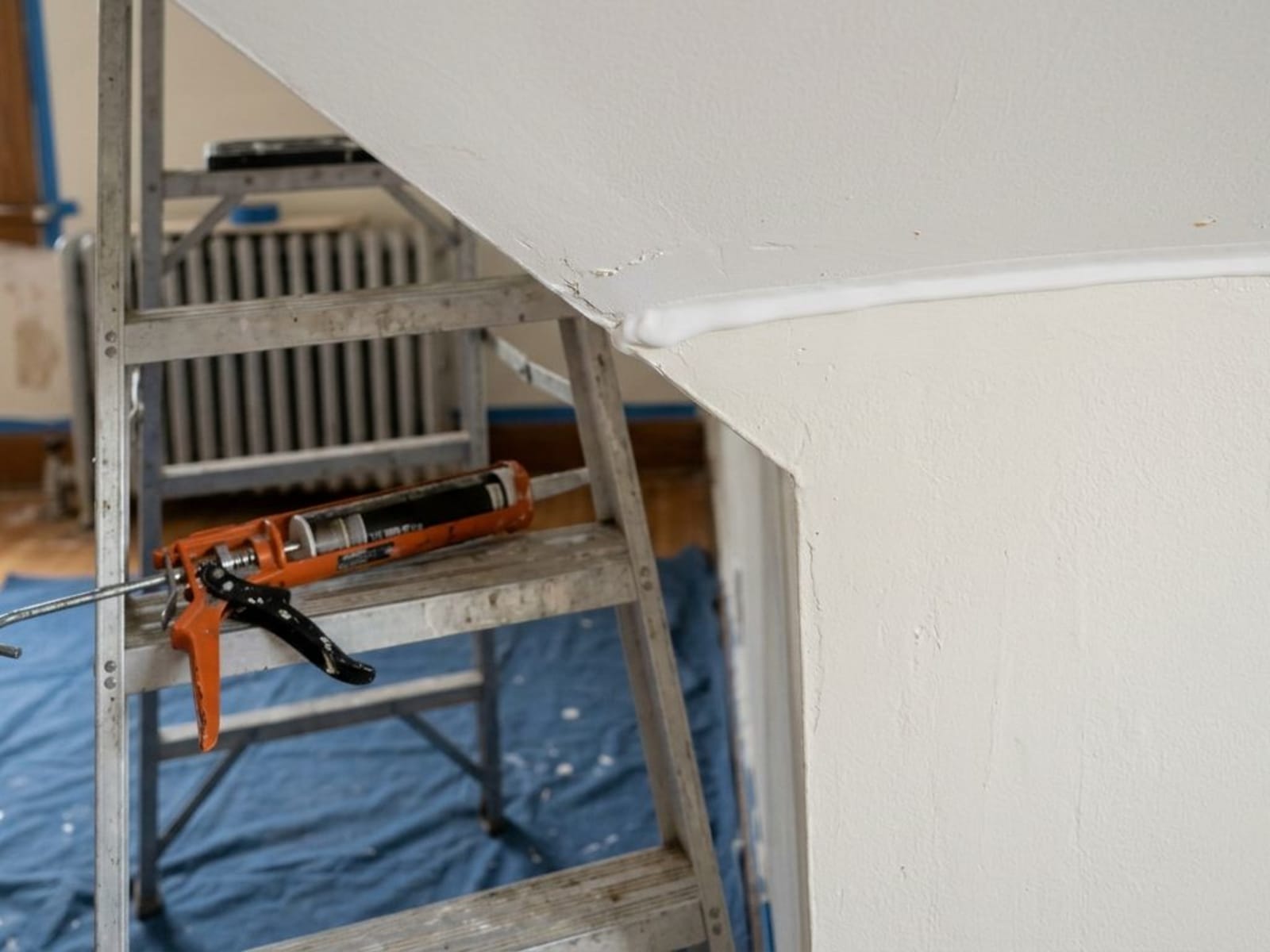
| Paintable flexible sealant in the corner | A bead of flexible acrylic sealant stretches and compresses with the joint | Most square-set corners with a fine, recurring crack | Leaves a slightly softer line; needs a steady hand and paint that suits the sealant |
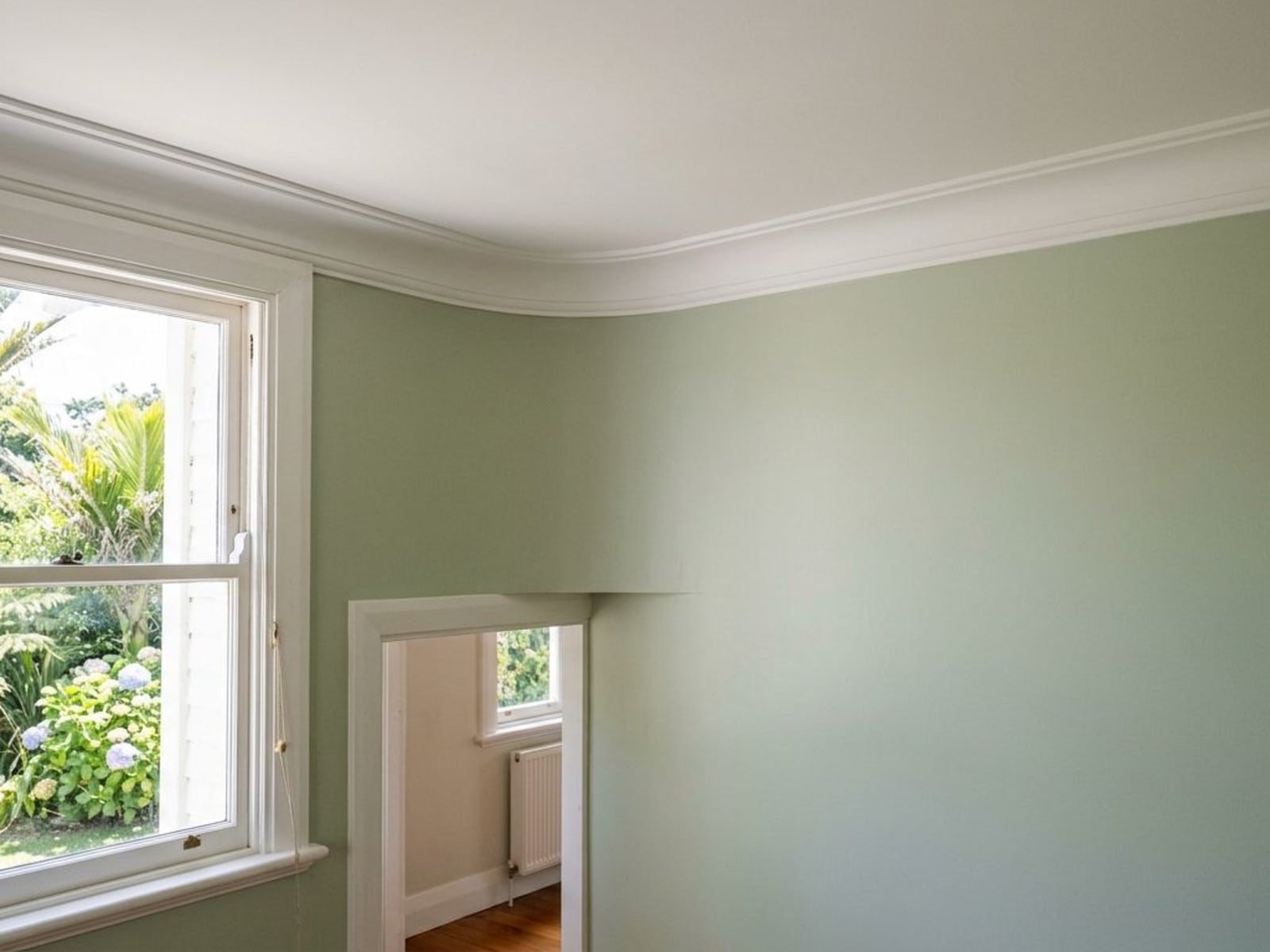
| Cornice or moulding across the joint | Covers the junction so movement happens behind it | Corners that open noticeably, or rooms where the crack line is visible from the door | Changes the look of the room; if the movement is large, the cornice edges can crack in turn |
| Re-sheet or re-stop the corner properly | Rebuilds the joint with reinforcing where it was missing or poorly done | Corners where the paper tape has lifted or the stopping has come loose in lengths | A plastering job, not a painting touch-up |
For most homes the flexible sealant route is the right first step. The old compound along the crack is raked out until it is sound, the dust is cleaned off, a bead of paintable flexible sealant is tooled into the corner, and the whole wall or ceiling is repainted so the line does not stand out. Check the sealant tube for when it can be painted and whether it suits the paint you are using, because some sealants reject waterborne paint or crack it if painted too soon.
Should I put a cornice up to hide it?
If the crack is wide enough to see from across the room, or keeps returning even through sealant, a cornice or timber moulding is often the tidier answer. It turns an awkward joint into a detail.
The catch is that a cornice bridging a joint that moves a lot can crack along its own edges in time. Installers deal with this in different ways, and the right method depends on the product and the framing, so ask whoever is fitting it how they intend to allow for movement before you commit. In an older villa with a run of original plaster cornice, the conversation is different again: repairing and keeping the original is usually better than covering it.
When is it more than seasonal movement?
A fine crack that runs straight along the corner, opens and closes with the seasons and has not changed character in years is almost certainly harmless. These signs call for a builder or engineer to have a look before anyone paints over it:
- Cracks that step or run diagonally away from the corners of doors and windows.
- Doors that have started sticking or will no longer latch.
- A gap that is getting steadily wider each year rather than opening and closing.
- A ceiling that has visibly sagged, or a crack with one side lower than the other.
- New cracking after an earthquake, which we cover separately in ceiling cracks after a quake.
The broader question of which plaster cracks are cosmetic and which point to something structural has its own guide: hairline cracks in plaster, cosmetic or not. This page covers only the wall-to-ceiling line.
Can I fix it myself?
Yes, for the common case. Raking out a fine corner crack, running a bead of flexible sealant and repainting the ceiling is a reasonable weekend job for someone comfortable on a stepladder. Two things are worth doing properly. First, rake out all the loose and cracked compound, because sealant over a loose edge fails with it. Second, repaint the whole ceiling or wall rather than dabbing the corner, or you will see a patch.
If the house was built in the 1980s or earlier, Health NZ advises presuming it has been painted with lead-based paint, and that includes ceilings. Have it tested before sanding or scraping.
When is it worth paying someone?
When the corner tape has lifted, the stopping is coming away in lengths, or several rooms show the same problem. That is a stopping and plastering job before it is a painting job, and doing it once properly costs less than repainting the same corners over and over. Our plastering and GIB stopping work covers exactly this kind of corner repair.
If you want someone to look at a corner that keeps cracking and tell you which of the options above it needs, get in touch and we will come and have a look.
Related Articles



Need Help With Your Painting Project?
Wellington Decorators has been transforming homes across the Wellington region since 2023, led by a founder with 18+ years in the trade. As Registered Master Painters, we back every job with a 5-year workmanship guarantee.
Prefer to talk? Call us now 027 458 6465