
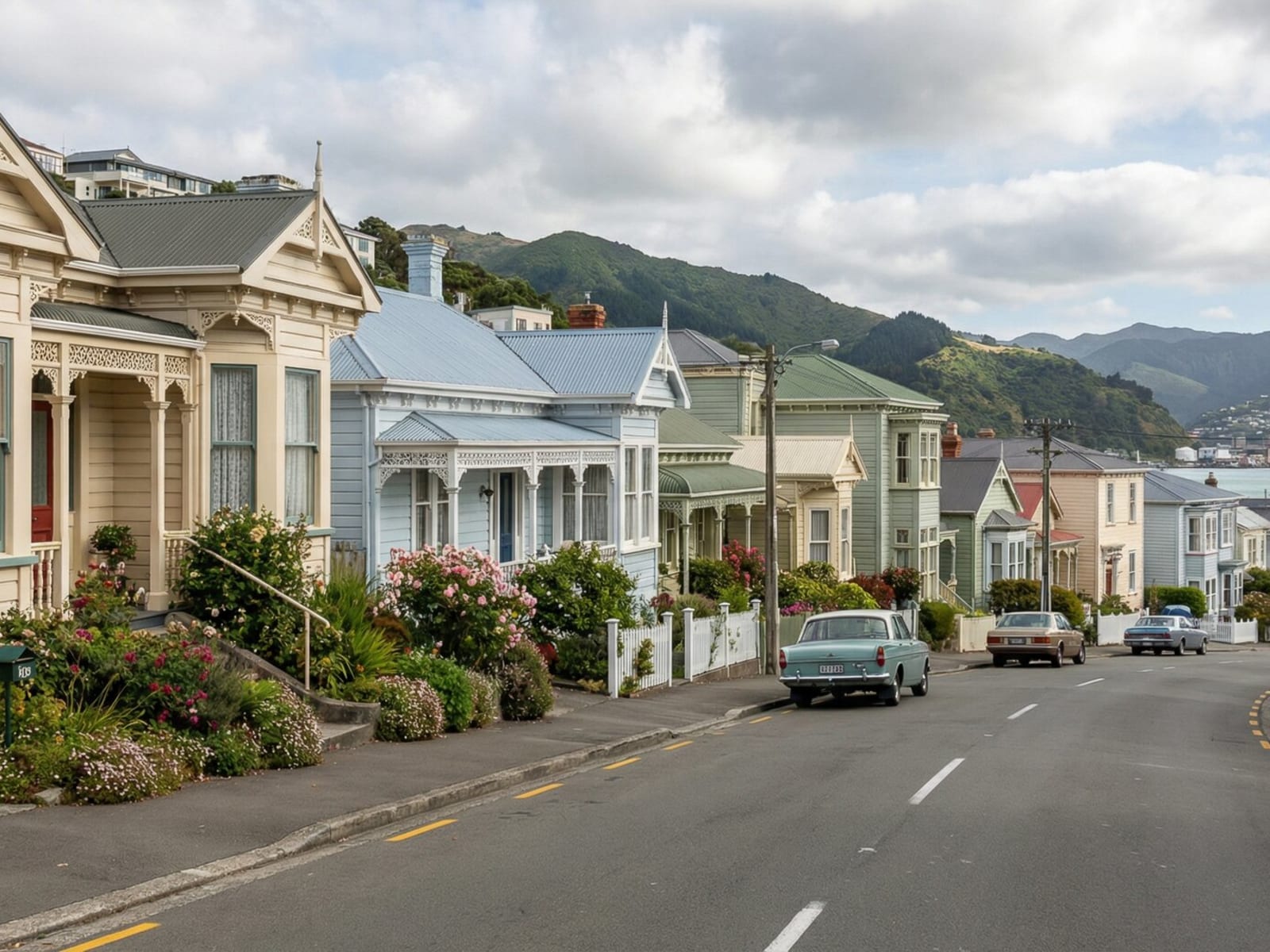
Wellington's heritage villas are architectural treasures. Built between 1880s-1920s, these character homes define our city's streetscapes. Painting them properly requires understanding their construction, respecting their heritage, and choosing appropriate materials.
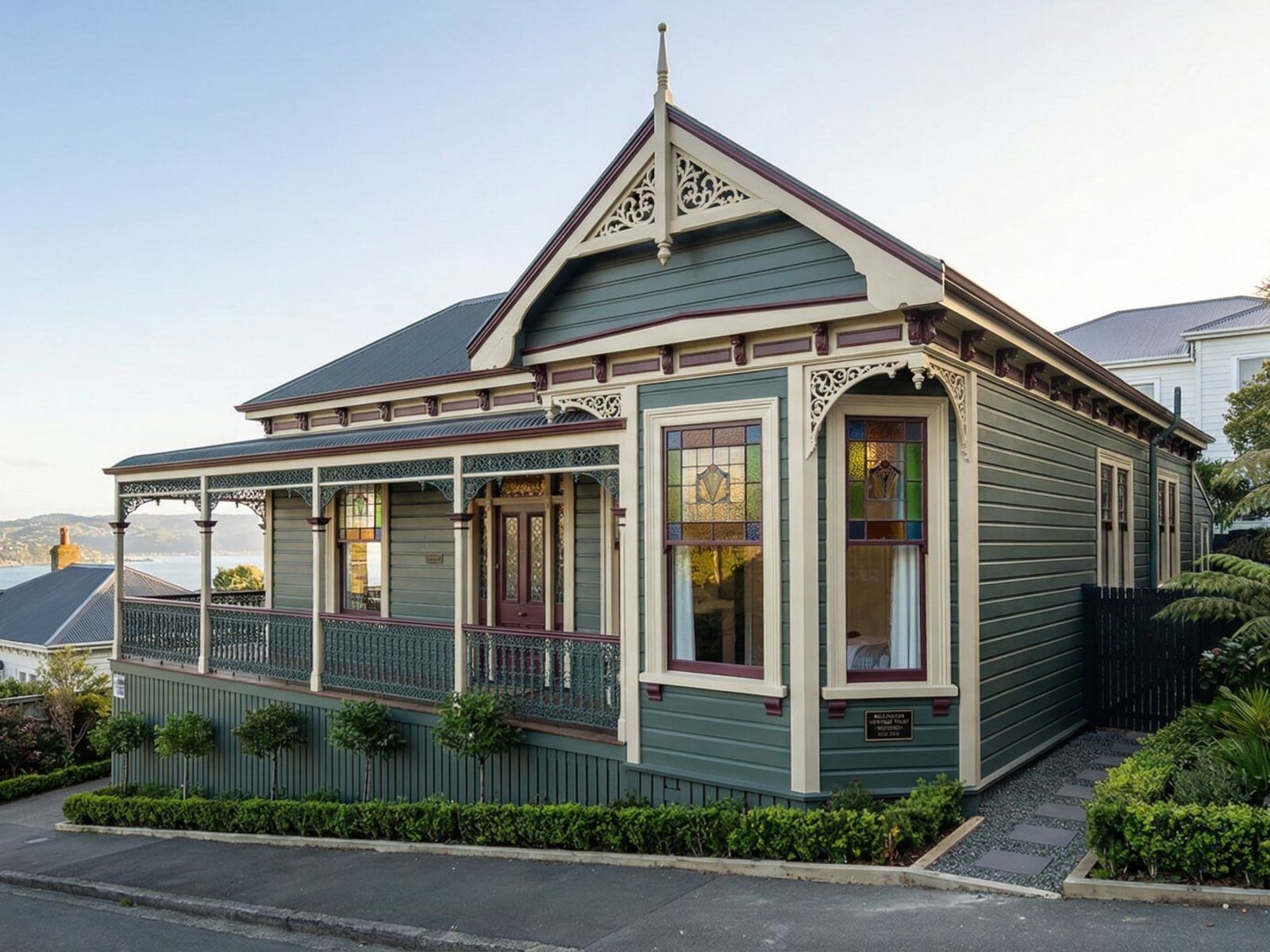
As specialist heritage painters with decades of Wellington villa experience, here's our comprehensive restoration guide.
Understanding Wellington Villa Architecture
Common Villa Types
Bay Villa (1880s-1900s): Prominent bay windows, decorative fretwork and brackets, timber weatherboards, corrugated iron roof, veranda with turned posts.
Italianate Villa (1870s-1890s): Classical proportions, often two-storey, symmetrical facade, ornate plasterwork, rendered masonry or weatherboards.
Villa Cottage (1880s-1910s): Simpler, smaller version, single bay or straight front, less ornamental detail, working-class origins, weatherboard construction.
Construction Characteristics
Weatherboards: Usually native timber (rimu, kauri, matai). Horizontal bevel-back boards nailed directly to framing (no building wrap). 150-180mm face width typical.
Joinery: Timber sash windows (single-glazed), four or six-panel doors, timber architraves and skirting — often original, 140+ years old.
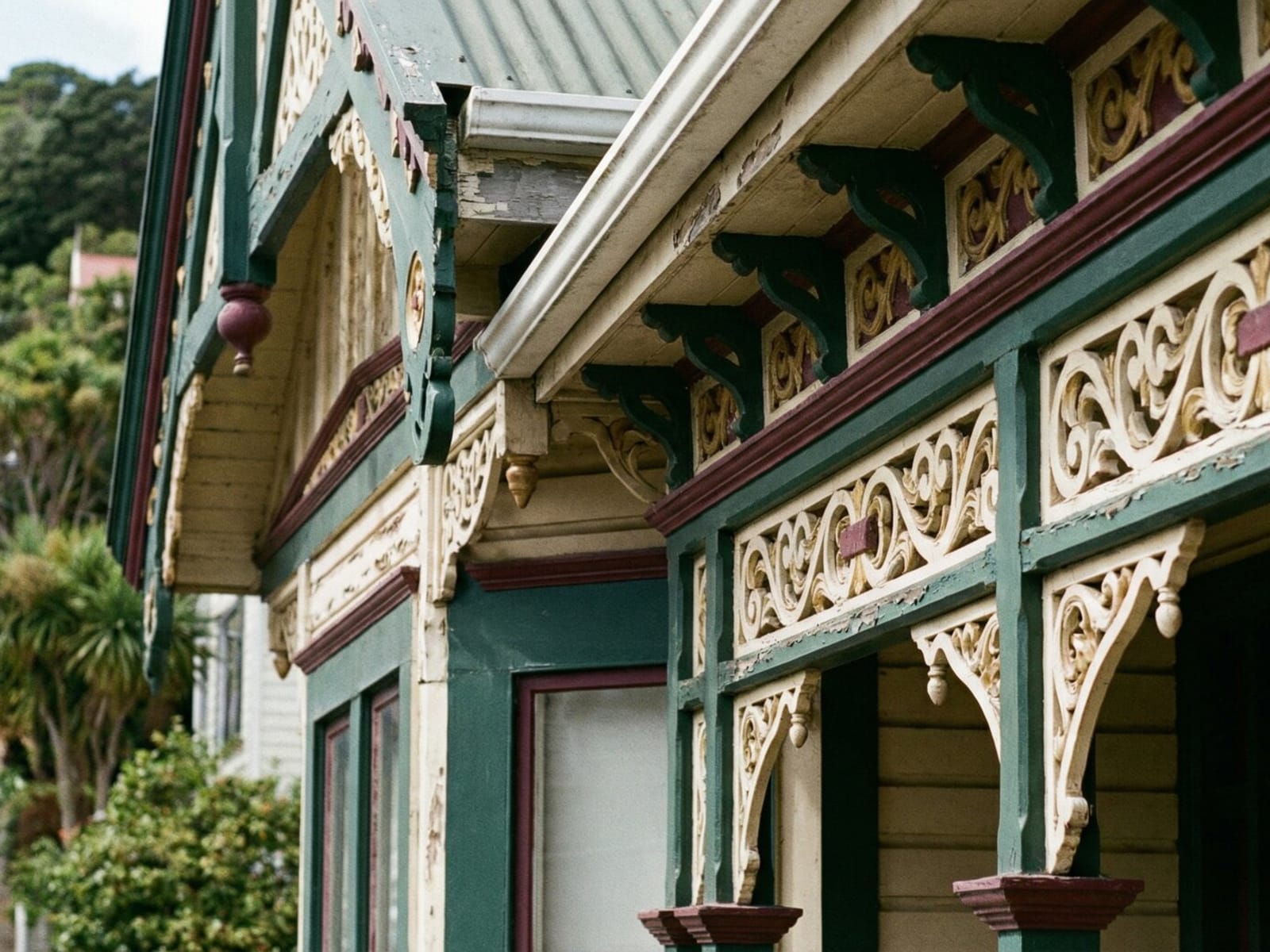
Details: Fretwork (sawn decorative timber), brackets supporting eaves, turned veranda posts, finials on gable peaks. Understanding this construction informs our painting approach.
Heritage-Appropriate Painting Approach
Assessment Phase
1. Condition survey: Weatherboard state (rot, damage, loose boards), paint adhesion (flaking, blistering), water ingress points, deteriorated details (fretwork, brackets), lead paint presence (pre-1970s likely).
2. Heritage status check: Listed building requires resource consents. Heritage area means Council guidelines apply. Protection level determines restrictions on colours and materials.
3. Historical research: Original colour scheme (if determinable), architectural period, authentic palette options.
4. Structural issues: Address before painting — leaks, rot, drainage. Painting won't fix structural problems and may reveal hidden issues during preparation.
Colour Selection for Authenticity
Late Victorian (1880s-1900s): Body: Resene Stonewashed, Eighth Fossil, Double Sea Fog. Trim: Resene Rice Cake, Alabaster. Feature: Resene Deep Brunswick Green, Claret, Aubergine, Oregon. Veranda ceiling: traditional sky blue (Resene Half Sky Blue).
Edwardian (1900s-1910s): Body: Resene Rice Cake, Half Spanish White, pale stone colours. Trim: Resene Alabaster, White. Feature: Resene Oregon, Deep Brunswick Green (restrained accents).
Multi-colour schemes: Victorian villas historically used 3-5 colours — body, trim, sash, door, fretwork each different. Modern simplified approach: 2-3 colours is acceptable and more liveable.
Paint System Selection
Resene Lumbersider (our standard exterior): Formulated for NZ timber weatherboards, flexible (accommodates 140-year-old timber movement), weather-resistant for Wellington coastal conditions, available in full heritage colour range. Apply: prime bare timber (Resene Quick Dry), two coats Lumbersider minimum, three coats on south-facing or weather-exposed areas.
Interior: Walls: Resene SpaceCote (low-VOC, any historic colour). Timber joinery: often stripped and stained or painted Resene Lustacryl. Ceilings: Resene SpaceCote Flat (Alabaster or Half Spanish White).
Preparation: The Critical Phase
Step 1: Lead Paint Management
Pre-1970s paint likely contains lead. Assume present if built pre-1970 — test kits available ($20-30) to confirm.
Safe removal: licensed removalist for extensive lead paint, wet methods minimize dust, proper containment and protective equipment, correct waste disposal. Never dry-sand or waterblast lead paint. We're licensed for lead paint work — safety and compliance is standard practice on every heritage project.
Step 2: Paint Removal (Where Necessary)
When to remove: paint thick or built-up (obscures detail), failing extensively (blistering, flaking), or multiple incompatible layers present.
Chemical stripping: Effective for detailed areas (fretwork, mouldings). Eco-friendly strippers available. Time-consuming but preserves timber.
Heat gun: Faster for flat weatherboards. Care needed (fire risk, lead paint fumes if present). Skilled technique required.
What we don't do: Water blast historic weatherboards. Too aggressive, damages timber, drives moisture into wall cavity.
Step 3: Repairs
Weatherboard replacement: Match profile of existing boards. Source appropriate timber (often need to mill custom). Prime all sides before installation.
Rot repair: Cut out deteriorated timber. Epoxy filler for small areas. Dutchman repairs for larger sections.
Detail restoration: Broken fretwork (replicate pattern), missing brackets (craft or source replacements), damaged sills (splice new timber).
Window putty: Remove failed putty, re-putty with linseed oil putty (traditional, flexible). Essential for weathertightness of original sash windows.
Step 4: Surface Preparation
Washing: remove dirt, salt, mould with sugar soap solution, rinse thoroughly, dry completely (minimum 48 hours in Wellington conditions). Sanding: smooth rough areas, feather edges of sound paint, de-gloss glossy surfaces for adhesion. Priming: all bare timber (Resene Quick Dry Primer), spot-prime repairs, full prime if extensively stripped. Filling: flexible filler for joints to accommodate movement.
Painting Application: Villa-Specific Techniques
Weatherboard Method
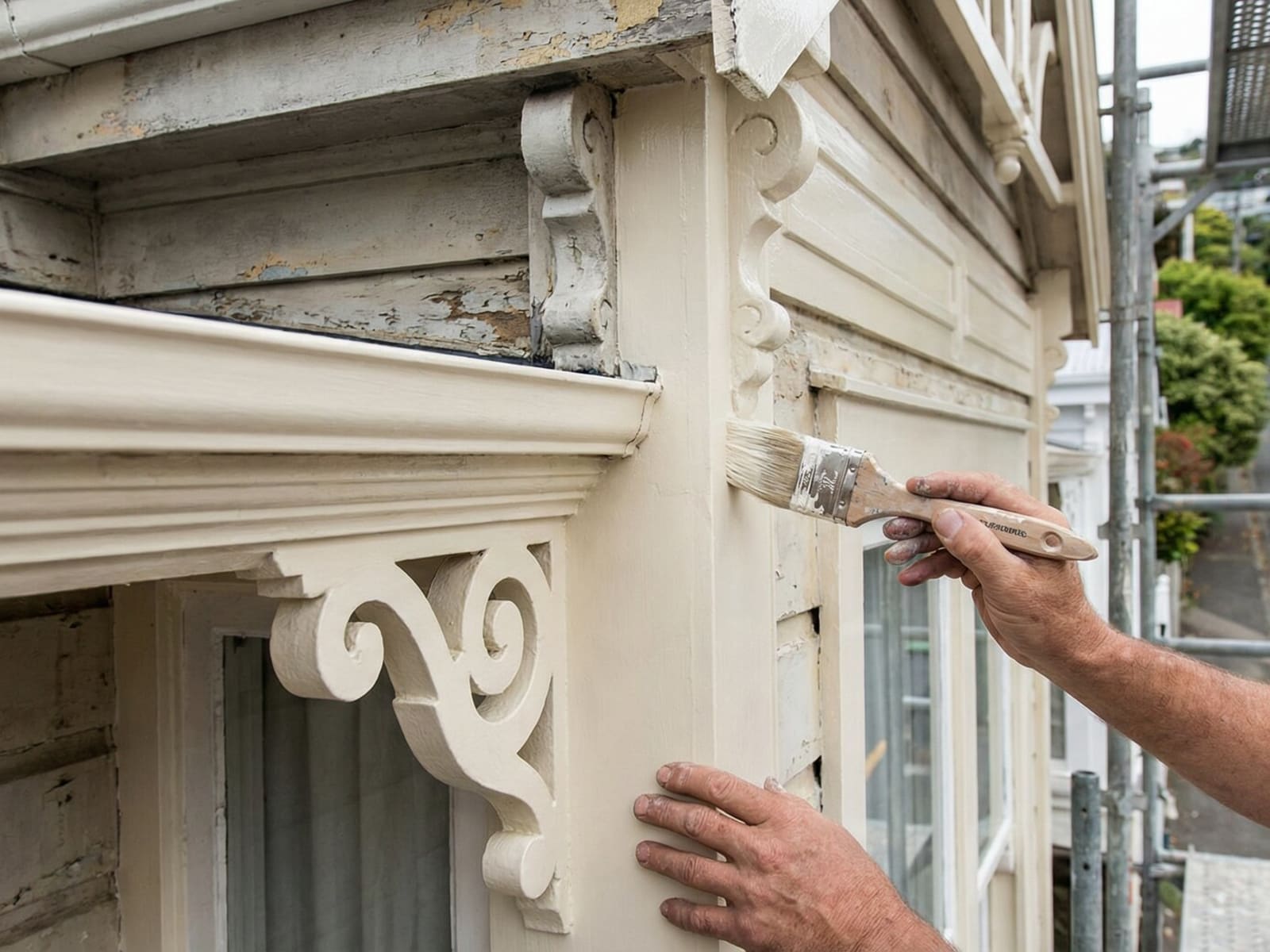
Brush application preferred: better penetration on old porous timber, follows grain and profile, traditional method with superior results on heritage timber.
Technique: paint underside edge first (critical for water shedding), paint face working horizontally, overlap strokes maintaining wet edge, two coats minimum, three for durability. Avoid painting in direct sun (blistering risk) — morning or evening application ideal for Wellington.
Detail Work
Fretwork and brackets: Small brush required. Paint all surfaces including backs. Multiple angles needed. Time-consuming but essential — this is what makes a heritage restoration stand out from a routine repaint.
Windows: Remove sashes if possible for proper painting of all surfaces. Don't paint sash runs (windows won't operate). Replace putty before painting.
Doors: Remove and paint horizontally (prevents runs). Panel doors: paint panels then rails/stiles. Multiple thin coats better than single thick coat.
Veranda Painting
Floors: Resene Decking Oil Stain or Resene Walk-On — must be specifically a decking product, not standard paint. Prepare by sanding and cleaning thoroughly.
Ceilings: Traditional sky blue (Resene Half Sky Blue or similar) or match trim colour. Often neglected — don't skip this; it's a signature element of Wellington villas.
Posts and rails: Same system as weatherboards. Turned posts require careful technique. All sides must be painted for durability.
Common Villa Painting Challenges
Weatherboard movement: 140-year-old timber moves significantly with moisture and temperature. Solution: flexible paint system (Resene Lumbersider), don't over-fill gaps.
Previous bad repairs: Poor-quality past repairs fail quickly. Solution: remove and redo properly — short-term fixes waste money on heritage properties.
Hidden rot: Painted surface looks sound but rot hides underneath. Solution: thorough assessment, probe suspect areas (particularly around windows and bottom weatherboards).
Colour authenticity vs modern taste: Historically accurate colours sometimes not to modern taste. Solution: simplified historic palette (fewer colours, modern interpretation) satisfies both heritage and livability.
Lead paint: Most villas have lead paint, requires safe handling. Solution: licensed removal, proper containment, compliant disposal.
Access: Two-storey villas, complex rooflines, tight sites. Solution: proper scaffolding (not ladders), safety compliance, experienced crew.
Heritage Compliance
Listed Buildings
Resource consent required before colour changes. Colour must be approved — submit samples and historical research. Materials must be appropriate (no uPVC, no modern products). Work must be sympathetic to heritage values.
Process: submit proposal to WCC Heritage team, provide historical research and justification, await approval before purchasing paint, work must match approved scheme. We prepare heritage applications regularly and handle this process on behalf of our clients.
Heritage Areas (Not Listed Buildings)
Less stringent than listed buildings. Generally no formal approval needed. Guidelines available from WCC. Best practice: consult heritage guidelines even if not required — sympathetic colours benefit the whole streetscape and may support future applications for other consents.
Interior Heritage Painting
Formal Rooms
Period-appropriate colours suit character. Feature walls traditional (picture rails divide colours). Ornate ceilings may be picked out in detail. Resene heritage palette often uses richer tones — deep colours acceptable in dining rooms and libraries.
Timber Joinery Options
- Strip and stain — reveals beautiful native timber grain. Our recommendation where feasible: rimu and kauri are stunning unpainted.
- Paint — lighter, brighter, acceptable historically
- Combination — stain some, paint some (doors painted, architraves stained)
Wellington Villa Painting Costs
Villa painting costs more than modern homes — extensive preparation, detail work, lead paint management, repairs, access challenges, and specialist skills all add to cost.
Typical costs (2026):
- Standard 3-bedroom villa exterior: $18,000-$28,000 (includes preparation, moderate repairs, scaffolding, two-coat system)
- Extensive rot or lead removal adds $3,000-$8,000
- Interior heritage restoration: $8,000-$18,000 depending on scope and joinery treatment
Long-term value: Proper restoration adds property value, prevents deterioration (saving future costs), and heritage homes command premium when well-maintained.
Frequently Asked Questions
Do I need a consent to repaint my villa?
If your villa is listed on the Wellington City Council heritage register, yes — colour changes typically require resource consent. If it's in a heritage area but not listed, you're generally free to paint without consent, though sympathetic colours are strongly encouraged.
How do I find out what colours the villa was originally painted?
Paint scraping and micro-analysis by a conservator is most accurate. Cheaper alternatives include checking historic photographs (WCC archives, Alexander Turnbull Library) or using Resene's heritage colour consultation service. Original colours are often richer and deeper than the muted heritage palettes popular today.
How long does a full villa exterior painting take?
A typical 3-bedroom bay villa with moderate preparation takes 3-5 weeks from start to final coat. This includes scaffold erection, lead paint assessment, preparation, repairs, priming, and two topcoats. Never let a painter rush this process on a heritage property — preparation is everything.
Maintenance for Longevity
Annual inspection for paint failure and water ingress. Clean gutters (prevents water damage). Repair small issues immediately (prevent escalation). Full repaint: 10-15 years with proper system and good maintenance. South and west faces may need earlier attention given Wellington's prevailing weather. Annual washing removes salt and dirt.
Related Services:
- Exterior House Painting — Specialist weatherboard villa painting
- Interior House Painting — Heritage interior restoration
- Paint Stripping — Pre-painting lead removal and preparation
Restoring your Wellington villa? Contact us for heritage-specialist assessment and quote. We'll respect your home's character while ensuring lasting protection.
Exterior Painting Services by Suburb
Looking for professional exterior painters in your Wellington suburb? Tawa, Miramar, Thorndon, Newlands. Get a free quote for your project.
Related Articles


Need Help With Your Painting Project?
Wellington Decorators has been transforming homes across the Wellington region since 2023, led by a founder with 18+ years in the trade. As Registered Master Painters, we back every job with a 5-year workmanship guarantee.
Prefer to talk? Call us now 027 458 6465