
Paint dries a different colour from the tin because wet paint and dry paint genuinely look different, and it usually looks lighter while it is wet. On top of that, the sheen of the finish, the size of the wall and the light in the room all change how the dry colour reads, so the tin, the lid and the chart are all only a rough guide.
Most of the time nothing is wrong with the paint. The colour was judged in the wrong conditions.
Why does wet paint look different?
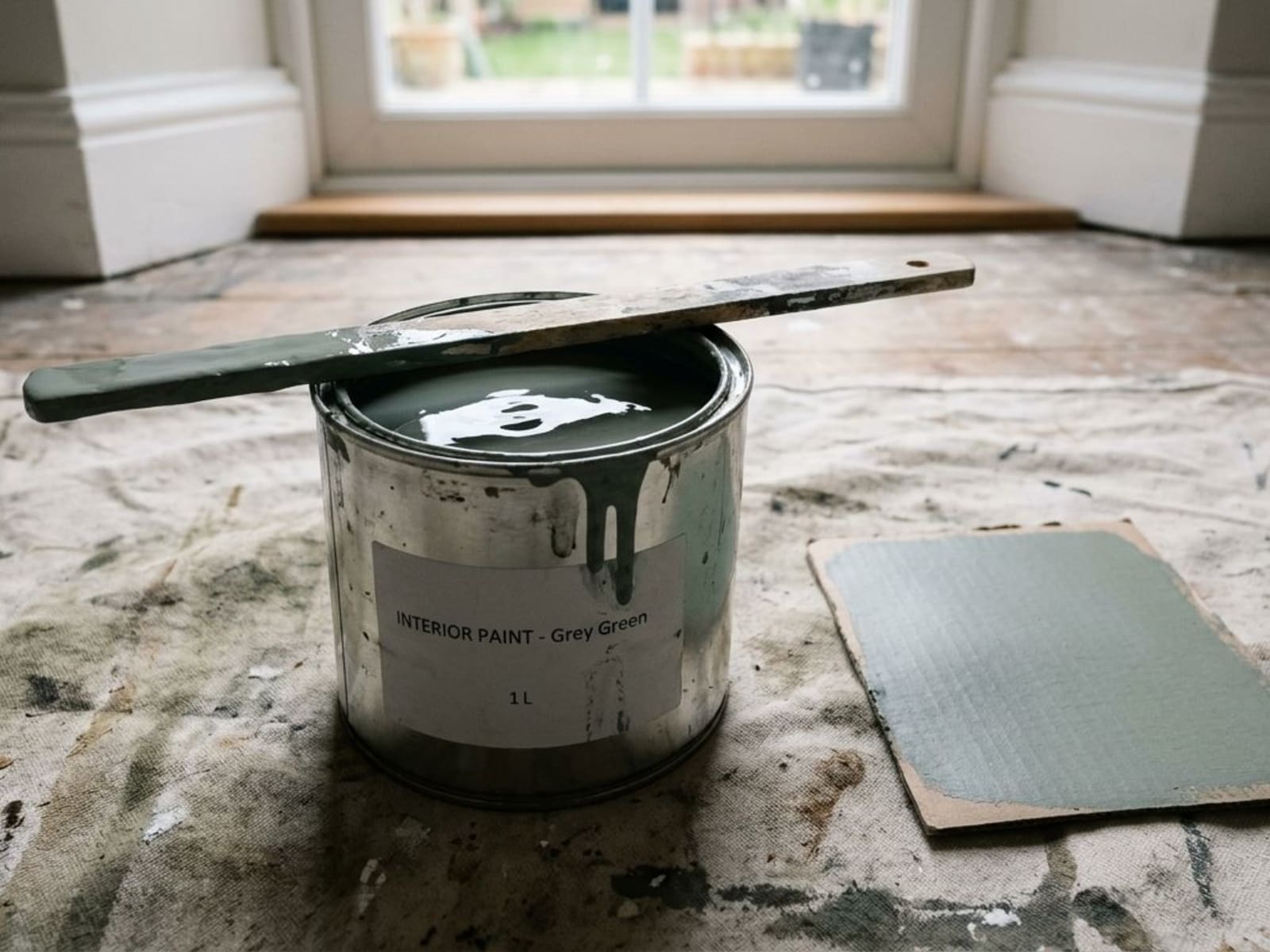
Wet paint is a mix of pigment, binder and water or solvent. While it is wet, that film is glossy and reflects light differently from the dried film, and the particles have not yet settled into their final arrangement. As it dries the water leaves, the film shrinks and settles, and the surface takes on its intended sheen. The colour you see changes with it.
Resene is direct about this. Its guidance on testpots says wet paint does not look identical to dry paint, so the colour seen through the viewing hole in the lid is just a guideline, and the colour may look a little different once dry. Its advice on testing colours goes further and says wet paint usually appears lighter than it does once it dries, so a brushout should be allowed to dry fully before it is used as a colour sample.
That is why the colour in the tin, and the stripe on the stirring stick, are not worth arguing with. Look at nothing until it is dry.
Does the sheen change the colour?
Yes, noticeably. Resene's guidance on gloss levels says colours in high gloss paints appear cleaner and more intense than in flat paints, and that colours appear muddier and darker in a flat finish than in a glossier one.
So the same colour name in a flat ceiling paint, a low sheen wall paint and a semi-gloss enamel on the trim will not look identical, even out of the same colour card. If you chose from a chip or a sample in one sheen and painted in another, expect a difference. Our guide to sheen levels covers which finish suits which room.
| Factor | Effect on the colour you see |
|---|---|
| Wet versus dry | Wet paint usually looks lighter than the dried film |
| Flatter sheen | Colour looks darker and muddier |
| Glossier sheen | Colour looks cleaner and more intense |
| Large area | Deep colours read darker, pale colours can look washed out |
| Light source and time of day | Warm or cool bulbs and changing daylight shift the colour |
| Printed chart | Printed ink cannot exactly match paint |
Why does it look darker on the whole wall?
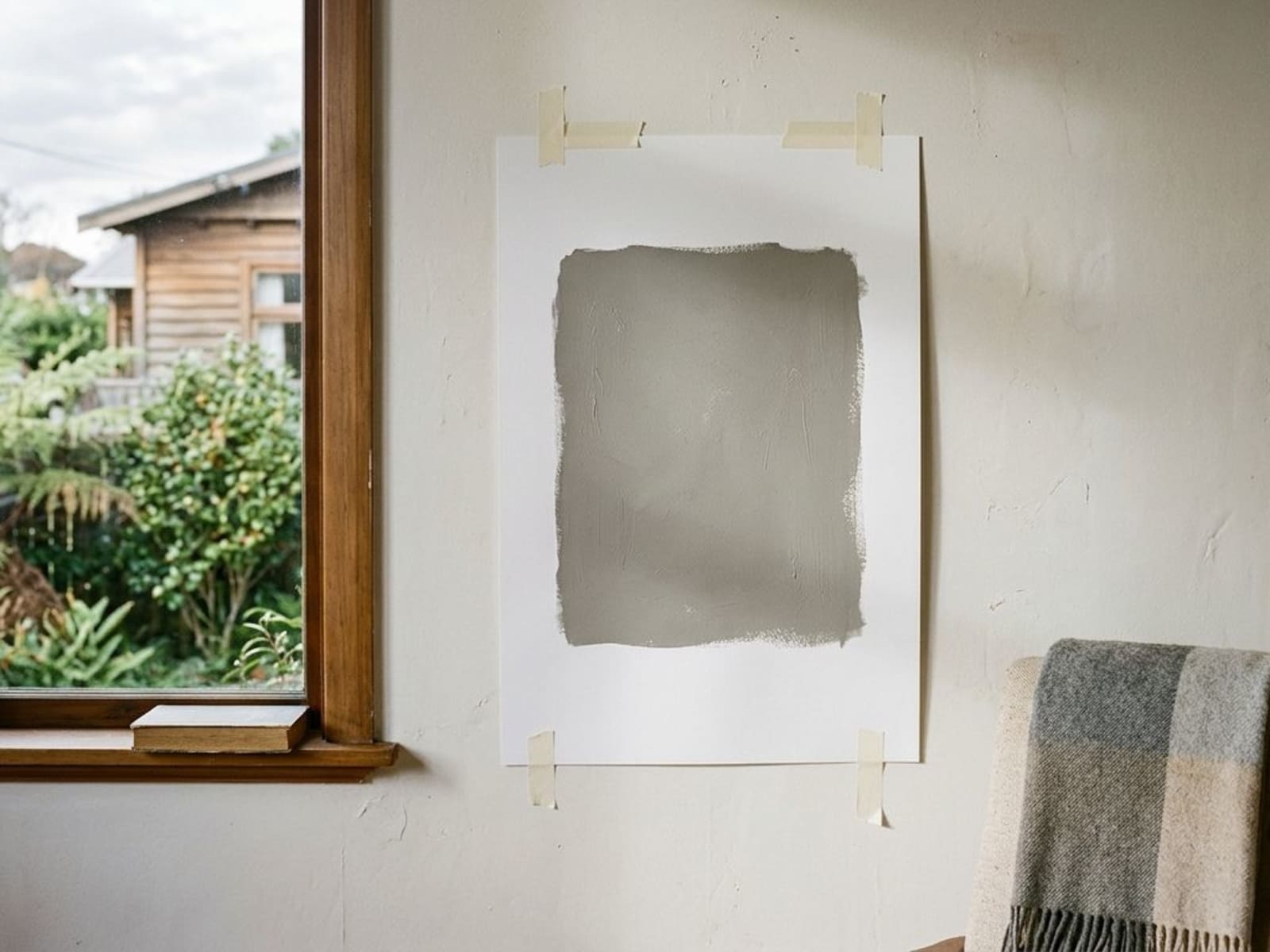
Because a colour behaves differently at scale. A small chip is surrounded by white card and seen at arm's length. A wall is surrounded by more of itself, and the colour reflects back onto the adjacent walls and ceiling.
Resene's article on colour testing gives the example of a deep charcoal that feels balanced in a small rectangle but may appear far darker and more dominating across an entire wall, and notes that pale samples can look unexpectedly washed out at larger scales. Its technical training material makes the same point from the other direction: subtle differences that seem unimportant on colour charts can be glaringly obvious at wall size.
This is also why a chart is only a starting point. That same training material points out that printer's ink can never exactly match actual paint colours, which is why charts carry a disclaimer.
How much does the light change it?
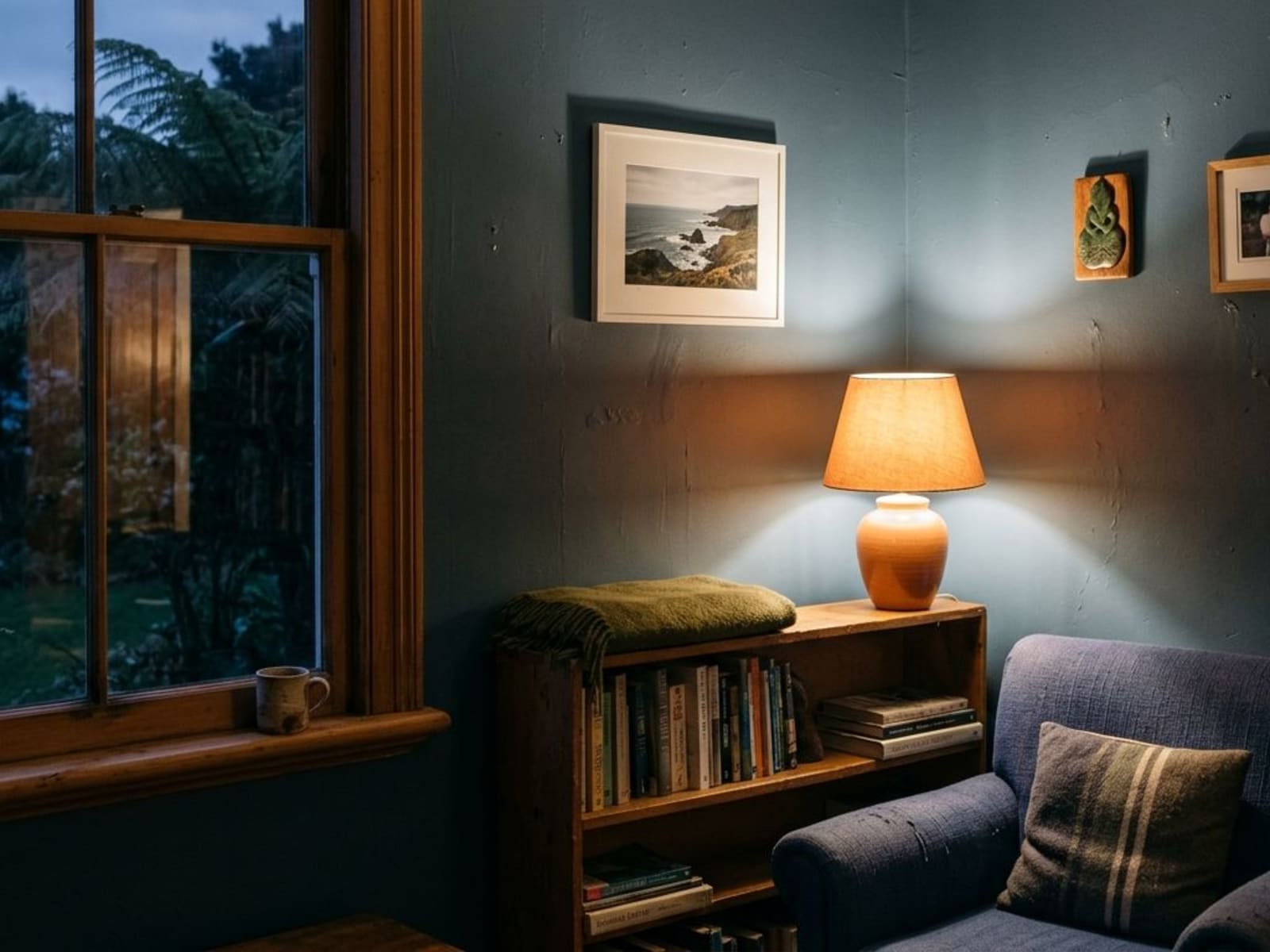
More than most people expect. Resene's article on light and colour notes that different incandescent, fluorescent and LED bulbs emit different colour temperatures, from warm yellow to cool blue, and that the lighting chosen can drastically alter the perceived colour of painted surfaces. Daylight shifts across the day as well, from warm morning and evening light to more saturated colour at midday.
So a colour that looked right under the showroom lights, or on a phone screen, can read quite differently in your lounge on a grey afternoon or under warm lamps at night. The room is the only place the colour has to look right.
How should you judge a colour properly?
Judge it dry, in the sheen you will actually use, and as large as you can manage in the room it is going into. A dried sample the size of a chip, held up under shop lights, tells you very little about a whole wall at home. Look at it in daylight and again at night under your own lights before you commit to the full order.
What if the paint really is a different colour?
Occasionally it is. Tinting is done by machine, and mistakes and variation happen. Resene's training material notes can-to-can variation and advises boxing paint, meaning mixing cans together, so there is enough of one mix for a large wall.
If you think the colour is genuinely wrong, check it properly first: let it dry fully, compare it on a large area against a proper dried sample from the same colour card, in the same light. If it is still off, take the tin and its label back to the store before you put more on. Painting a second coat will not fix a mistinted tin. For touching up an existing wall, our guide to matching paint to an existing wall covers the extra traps.
Where to start
If you are still choosing, our guide on how to choose the right Resene colour walks through the process from charts to samples. If you would like someone to help with the choice and do the painting, get in touch for a quote.
Related Articles


Need Help With Your Painting Project?
Wellington Decorators has been transforming homes across the Wellington region since 2023, led by a founder with 18+ years in the trade. As Registered Master Painters, we back every job with a 5-year workmanship guarantee.
Prefer to talk? Call us now 027 458 6465