
Window sills peel first because they take more sun, more water and more stress on their paint than any other timber on the house. They face the sky at an angle that catches far more UV than a wall, rain sits on them instead of running off, and their sharp front edge and exposed end grain carry a thinner, weaker paint film than a flat board.
That combination means a sill can be flaking while the weatherboards above it still look fine. It does not automatically mean the house needs repainting, and it does not automatically mean the sill is rotten.
Why do sills take so much more punishment?
Four things work against a sill at once.
- Sun angle. Resene's exterior timber notes explain that windowsills are usually the first thing to go because of the angle most sills present to the sun, around 45 degrees. According to Resene, a surface at that angle attracts twice the damaging UV of a vertical or horizontal surface, which is the same reason your nose burns before your cheeks.
- Standing water. Walls shed rain. Sills catch it, along with everything that runs off the glass above. Any dip, crack or open joint lets water sit against the paint and soak into the timber.
- Sharp edges. Paint pulls away from a sharp edge as it dries. Resene puts the film thickness on a sharp edge at roughly half that on a flat surface, and says edges are the site of most premature failures. The front nosing of a sill is exactly that kind of edge.
- End grain. The ends of a sill, where it meets the facings, expose cut timber that absorbs water far faster than the face does. Cracks at those joints are where water gets behind the paint.
Colour adds a fifth. Sills are often painted a strong accent colour, and Resene notes that the extra heat dark colours draw in can destabilise old timber and coatings and cause flaking.

Is it the paint or the sill?
Before deciding on a repaint, find out whether the timber underneath is sound. Scrape the loose paint back and push a screwdriver or a sharp awl into the bare timber, especially at the ends and along the front edge.
| What you find | What it usually means | What to do |
|---|---|---|
| Paint flaking, timber hard and grey underneath | UV-damaged surface, paint failure only | Strip, condition, prime and repaint |
| Cracks at the joints with the facings, timber firm | Water getting in at end grain | Prepare, prime the end grain, seal the joint, repaint |
| A soft patch the size of a coin or a palm, rest firm | Localised rot | Cut out, treat and fill before painting |
| The awl sinks in along much of the sill, or the sill moves | The sill itself has failed | Sill replacement by a joiner or builder, then paint |
Our guide to telling rot from failed paint covers the same test in more detail. It applies to sills just as it does to weatherboards.
How do you fix a peeling sill so it lasts?
The fix is thorough preparation rather than a better topcoat.
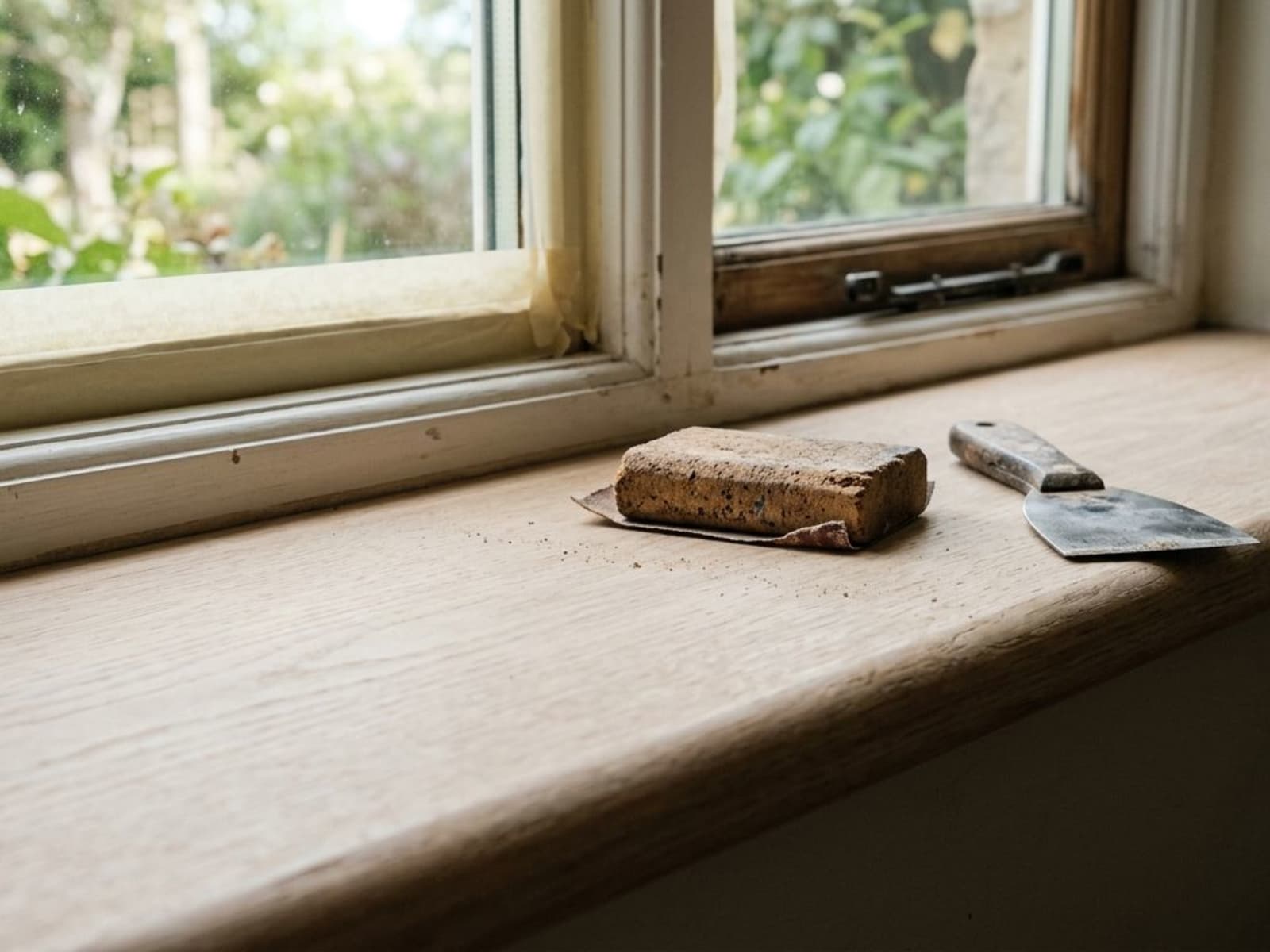
- Strip the unsound paint. Resene's repainting system for wooden windows singles out the windowsill as the part most likely to need perished paint removed. If the house was painted before the 1980s, it may contain lead-based paint, so have it tested before sanding or stripping.
- Condition the bare timber. Resene recommends its TimberLock conditioner where timber is badly deteriorated from age or high UV, and names north-facing windowsills as the example.
- Round the edges. Sand the sharp front edge to a slight radius so the paint film goes on at an even thickness instead of thinning out.
- Repair any rot. Resene's steps for small pockets of rot: remove all rotted timber back to sound wood, saturate with a timber conditioner, prime, fill with an exterior epoxy filler, prime again, then topcoat.
- Prime every bare surface, including the ends and the underside you can reach.
- Seal the joints where the sill meets the facings, so water cannot get into the end grain.
- Topcoat with a joinery paint. Resene recommends two coats of its semi-gloss waterborne enamel for windows, noting that its lower gloss hides imperfections better than full gloss. Where sills are painted dark, Resene suggests a third coat.
If your villa or bungalow has matai or totara joinery, tell whoever supplies your primer. Resene notes that the high resin content of these native timbers can stop traditional oil-based primers drying for days, and it recommends a quick-drying waterborne primer for them.
How often should sills be repainted?
More often than the rest of the house, and that is normal. Resene's own suggestion is that homeowners simply repaint windowsills more frequently, say every four or five years, rather than repainting the whole exterior because the sills look tired.
That is the cheapest honest advice in this article. A sill touch-up between full repaints is a weekend job on a ground-floor window: scrape, sand, spot prime and two coats. It keeps water out of the timber, which is what stops a paint problem turning into a joinery problem.
When should you get someone in?
If the sills are on the upper storey, if several are soft rather than just flaking, or if the rest of the exterior is also due, it is better handled as part of a full job. Sill preparation is slow, detailed work, and it is one of the things that separates a thorough exterior repaint from a quick one.
If you are not sure whether your sills need paint or a joiner, get in touch and we will give you a straight answer.
Related Articles


Need Help With Your Painting Project?
Wellington Decorators has been transforming homes across the Wellington region since 2023, led by a founder with 18+ years in the trade. As Registered Master Painters, we back every job with a 5-year workmanship guarantee.
Prefer to talk? Call us now 027 458 6465