
Waterborne paint dries by giving water up to the air. When the air is already close to saturated the film simply stops drying, and through a Wellington winter the air is close to saturated for most of the day.
That is the reason winter exterior work here runs on a window of a few hours in the middle of the day rather than a full shift, and why a crew that packs up in the early afternoon is usually doing the right thing rather than knocking off early.
Every coating states its own conditions for application, including humidity, dew point and surface temperature, on the product data sheet for that specific product. Those figures differ between products, and between the standard and the cold weather version of the same product, so read the sheet for the paint going on your house or ask the supplier. What follows is the shape of the day those limits produce here.
What actually stops paint drying?
Three conditions, and they work on each other rather than separately.
- Water already on the surface. Dew, overnight rain or salt spray sits on the boards long after the air feels dry, and a coat applied over it is being applied over water.
- Air close to saturated. A waterborne film dries by handing water to the air. If the air will not take any more, the film stays soft for as long as that lasts.
- A cold surface. Cold slows the film forming, and a surface colder than the air around it collects condensation. A shaded wall sits well below the air temperature, which is how water ends up on fresh paint on a day that felt fine. Cold air also holds less moisture, so a falling temperature drives humidity up on its own.
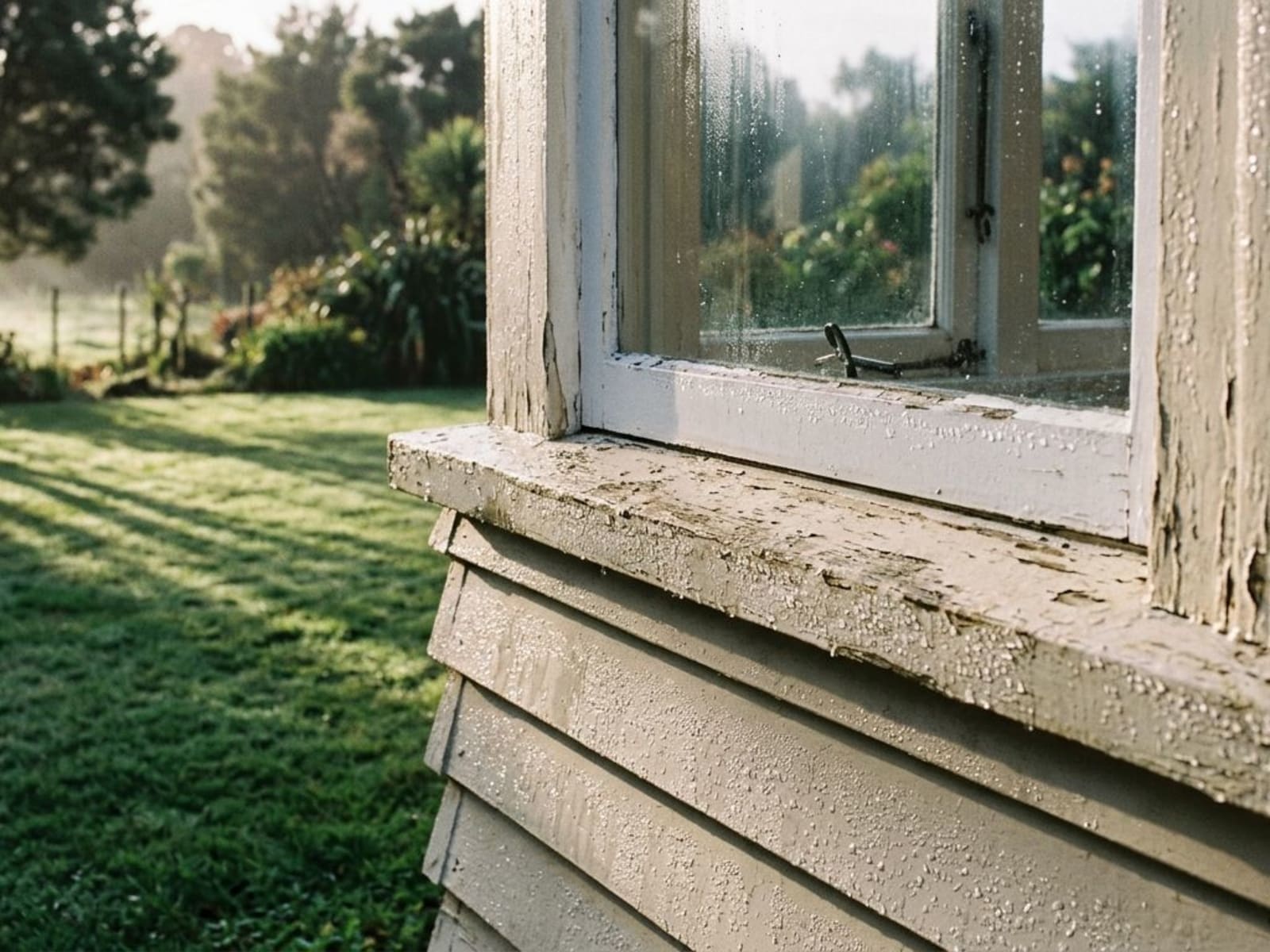
Why does the crew stop in the early afternoon in winter?
Because of what happens at dusk. As the air cools through the afternoon the relative humidity climbs, and on a still winter evening the surface reaches dew point and water condenses onto whatever is on the wall. A coat that went on late has had an hour or two of useful drying before it is asked to cure in the worst conditions of the day.
The result is not always dramatic. Sometimes it is brown surfactant streaking, sometimes a patchy sheen where one section flashed off and another stayed wet, sometimes a film that never quite reaches full hardness. The expensive version is poor adhesion, which does not announce itself for a year or two.
Morning has the same problem in reverse. Dew sits on the wall until the sun or the wind takes it off, and on a shaded southern elevation in July there can be no usable gap at all between the dew clearing and the temperature dropping again.
What does a Wellington day do to the working window?
The conditions move through the day in a fairly predictable order, and that order is what the work is planned around.
| Part of the day | What is working against you | What it means on the wall |
|---|---|---|
| Early morning | Dew sitting on the surface | The boards are wet even when the air feels dry. Nothing goes on until the dew has cleared, and on a shaded elevation that can be late |
| Mid-morning to early afternoon | Usually nothing | The working window. Surface at its warmest, humidity at its daily low, dew point furthest away |
| Mid-afternoon onwards | Falling surface temperature | The wall cools back towards dew point while the last coat is still soft. This is what decides when a crew packs up |
| Evening and overnight | Humidity and dew point together | Cooling air pushes relative humidity up on its own, so anything applied late finishes curing in the worst conditions of the day |
| A still, damp winter day | Cold and wet at once | Shaded and south-facing elevations may never come right at all, and the honest answer is to leave that side alone |
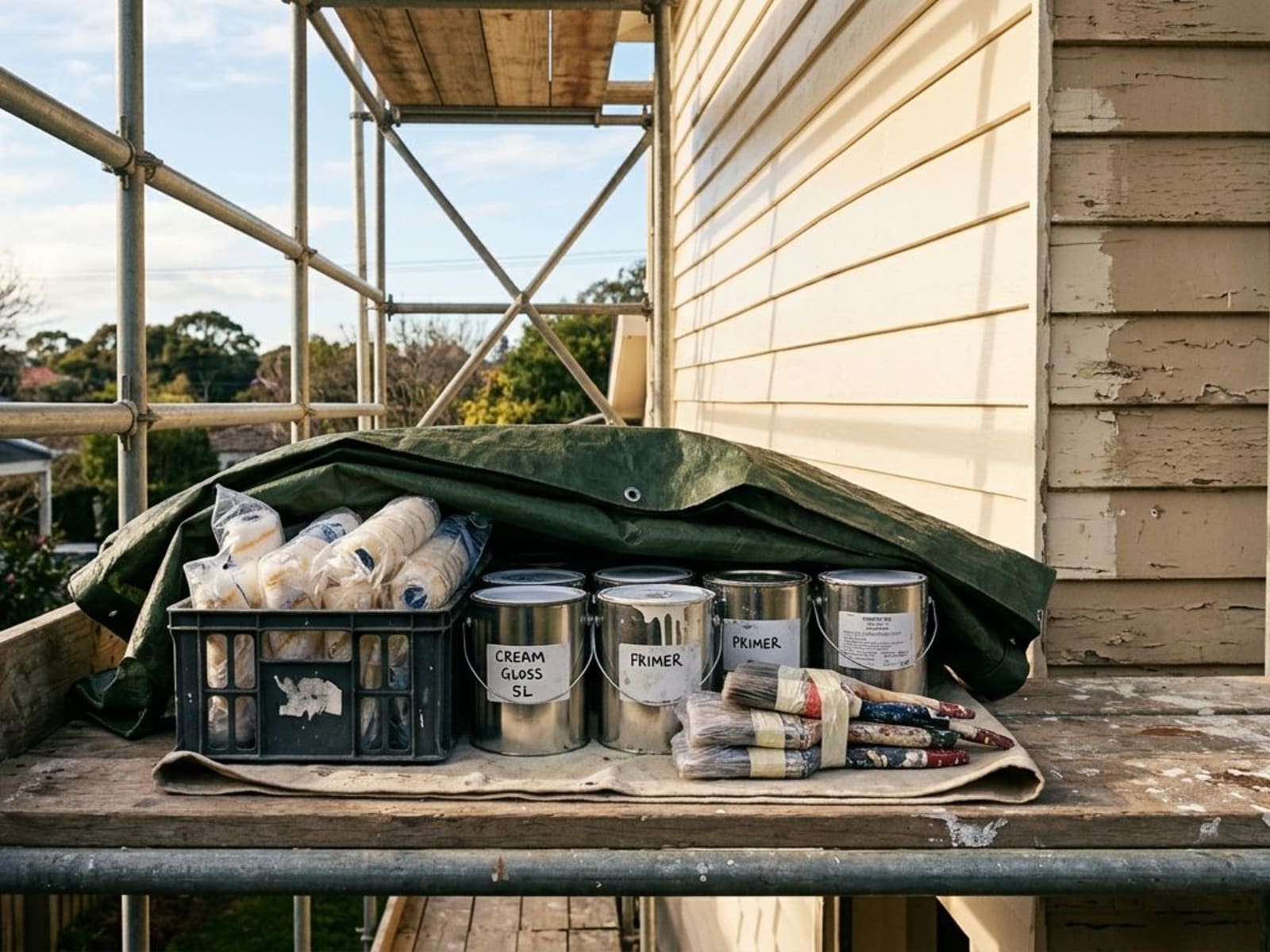
Does the wind help?
Genuinely, yes. Moving air carries evaporated water away from the surface instead of letting it sit there, so a breezy Wellington day dries a wall far faster than a still day at the same humidity. It is one of the few times the local weather is an advantage.
It has limits. Wind carries grit, dust and clippings onto a wet film, and it will drive rain into work you thought was safe. In summer it can dry the leading edge of a wall faster than a painter can keep up with it, which is where lap marks come from. Strong wind also stops spray work outright.
What happens if you paint outside the window anyway?
The paint goes on and looks fine, which is exactly why people do it. Waterborne coatings form a film by particles coalescing as the water leaves, and if that process is interrupted by cold or by moisture the film knits together poorly. You get a coating that is softer, less water resistant and less well bonded than the one you paid for.
Visible signs in the first weeks are streaking after rain, uneven sheen, and paint that stays tacky far longer than the tin suggests. Joinery is the worst case, because a soft enamel film blocks, meaning a freshly painted window sticks to its frame when it is closed. The real cost arrives a couple of years later, when a coating that should have had a long life in it starts letting go.
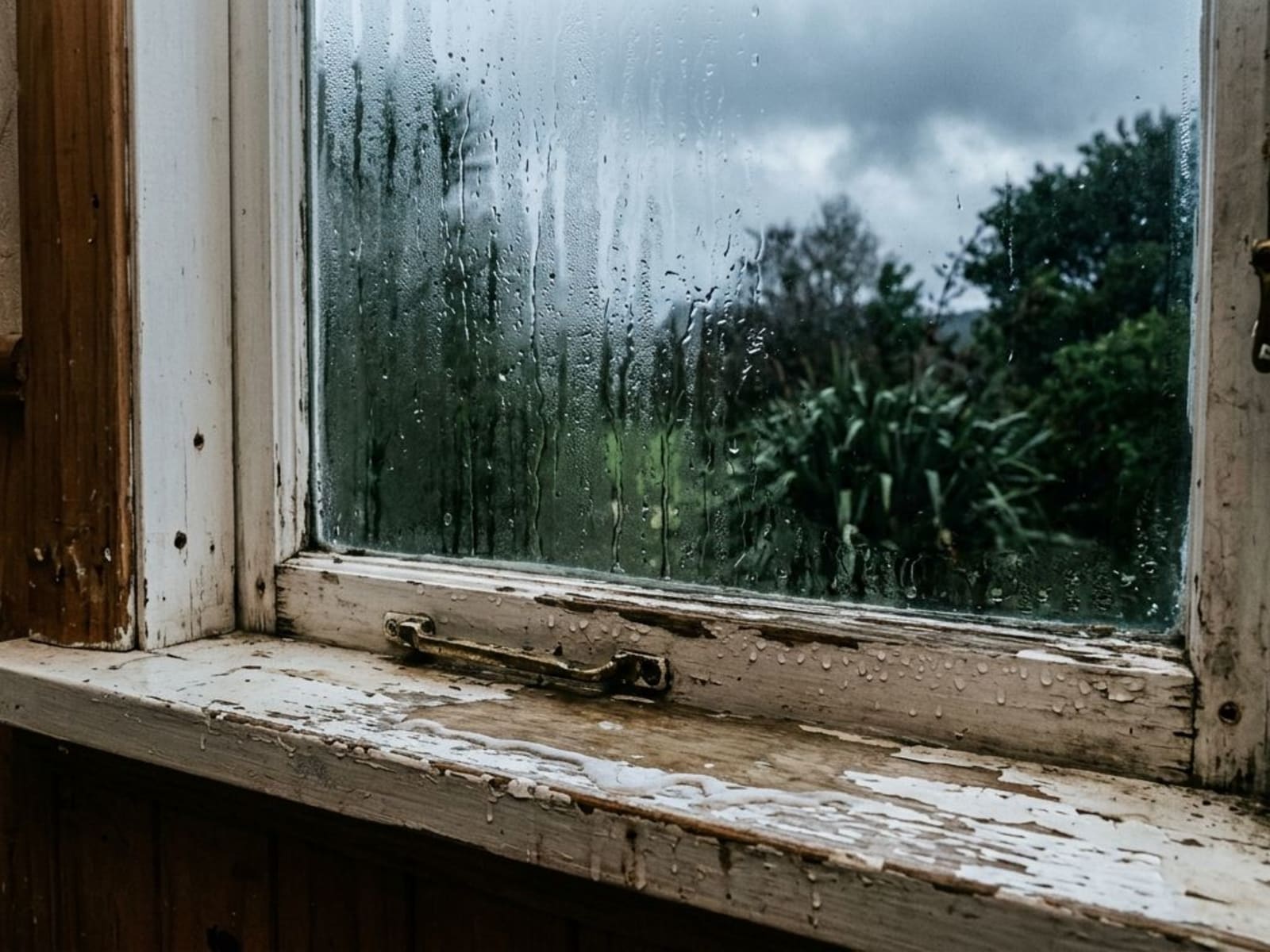
Does humidity matter indoors as well?
It does, and Wellington interiors in winter are worse than people assume. An unheated bedroom with single glazing sits cold and damp, the walls run below dew point overnight, and condensation forms on the very surface you are trying to coat. Bathrooms and laundries are worse again.
The fix is straightforward and it is mostly free. Heat the room and keep it warm overnight rather than only while work is happening, run extraction, open windows during the dry part of the day, and put a dehumidifier in the room if you have one. Done that way, interior work in a Wellington winter is entirely reasonable.
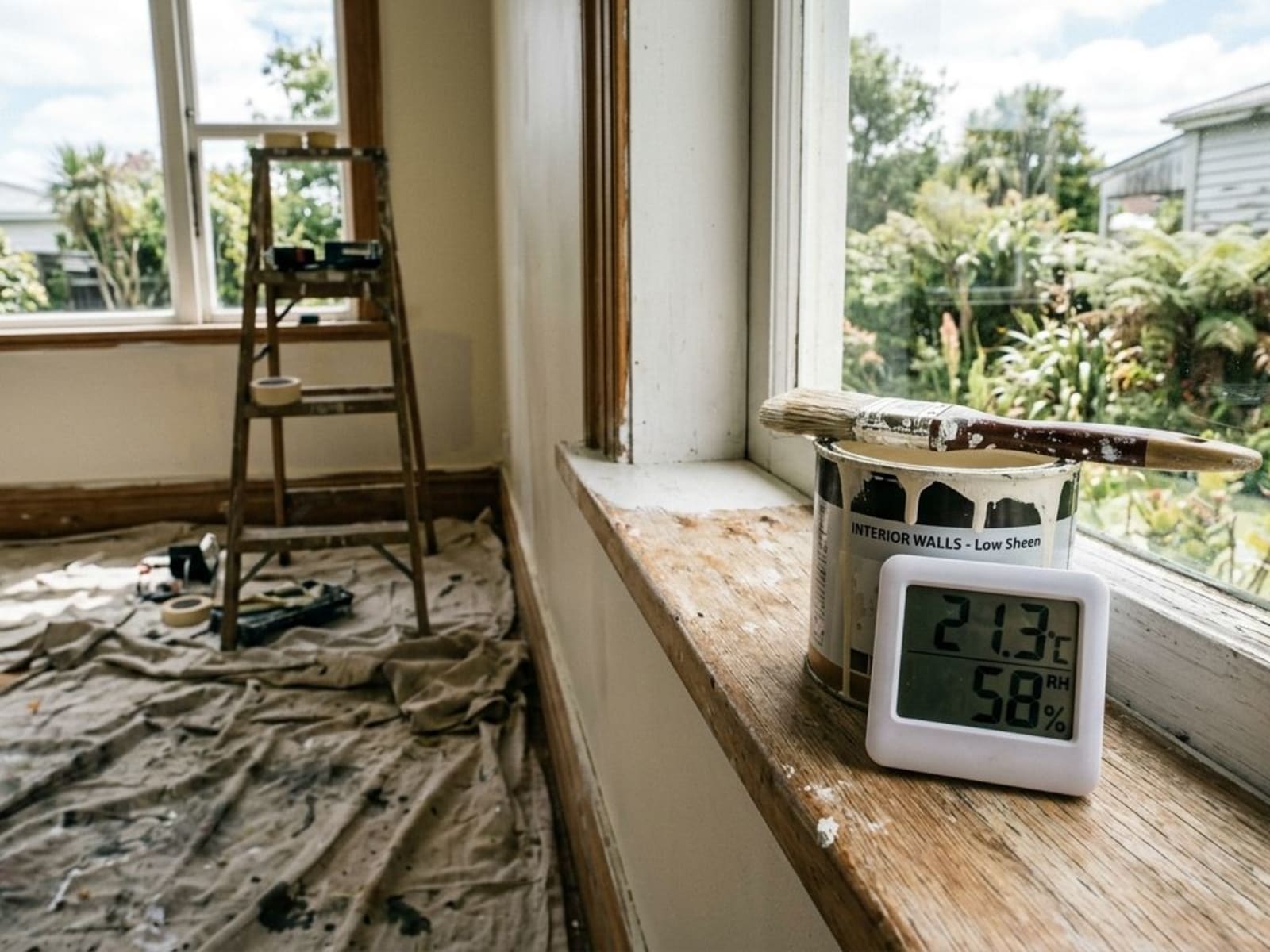
What can you check yourself?
- A cheap digital hygrometer tells you what the air in a room is doing. Take a reading, then heat and ventilate for an hour and take another. If the number barely moves, the room is not ready and neither is the wall.
- Outside, check whether the dew has actually gone. Run the back of your hand along the boards in the shade rather than in the sun, because the shaded side is the one that decides your start time.
- Look at the forecast overnight low, not only the daytime high. That number decides how late in the day you can safely put a coat on.
- Treat the recoat time on the tin as a best case measured in warm, dry conditions. In cold, damp air assume considerably longer and let the surface tell you.
- If you want the conditions your paint is actually rated for, the product data sheet carries them. Ask the supplier for the sheet rather than guessing, and read it for the specific product rather than the brand.
When should you just wait?
When the wall is shaded, the air is damp and there is rain in the forecast, waiting a week costs nothing and paints better. The only real cost of a delay is inconvenience, and the cost of pushing through is a coating that fails early and has to be paid for twice.
If you want exterior work scheduled around conditions rather than around a deadline, get in touch and we will tell you honestly when your house should be painted.
Related Articles


Need Help With Your Painting Project?
Wellington Decorators has been transforming homes across the Wellington region since 2023, led by a founder with 18+ years in the trade. As Registered Master Painters, we back every job with a 5-year workmanship guarantee.
Prefer to talk? Call us now 027 458 6465