
Between the paper-faced gypsum boards, GIB, Elephant and ProRoc, the brand on the sheet makes far less difference to the paint finish than the level of stopping, the lighting in the room and the sealer coat. Fibre-cement sheet is the one that genuinely changes things, because it is jointed with its own compounds and has its own sealing rules, so your painter needs to know which board is on the wall before quoting.
If a room looks patchy or shows its joints after painting, the board is rarely the reason. The stopping specification or a skipped sealer coat usually is.
Are GIB, Elephant and ProRoc different to paint?
Not in any way that matters much to the paint. All three are gypsum plasterboard: a gypsum core with a paper face. MBIE's product substitution guidance for plasterboard lists Elephant and BPB ProRoc boards among the alternatives to GIB, and points to AS/NZS 2588:2018, the gypsum plasterboard standard, as the way a general wall and ceiling lining can be shown to comply.
Where the brand does matter is in the paperwork. Each manufacturer publishes its own installation and finishing instructions, and the stopper should be following the ones for the board actually installed. On a consented build where the specified board was swapped for another, that substitution is the builder's and designer's business to document. Paint will not hide or fix it, but which board is on the wall is the first thing to confirm before any plastering and GIB stopping is priced.
The level of stopping and the light falling across the wall decide how smooth the result looks, on any brand. If you want gloss or semi-gloss walls, or a wall lit hard from one side, agree the finish level with the stopper before the work starts, not after the paint is on.

Why do the paper face and the stopping take paint differently?
On a plasterboard wall the paint sits on two different surfaces: the paper face of the board, and the jointing compound over the joints and screw heads. They do not absorb paint at the same rate. Put a topcoat straight onto new board and the joints can show as dull or shiny stripes, even when they are perfectly flat. Painters call that flashing.
GIB puts it plainly in its advice on finish levels: the Level 5 skim coat is not there to flatten the wall but to remove the difference in porosity between the joints and the board face paper. On an ordinary wall, a proper sealer coat is what evens that difference out enough for the topcoats to look uniform.
The paper face is also easy to damage. GIB lists over-sanding that damages the surface paper among the things to check when a finish is handed over. Scuffed paper goes furry, and furry paper shows through paint as a rough patch. That is a stopping defect, not a paint defect, and it needs sealing and a skim before topcoats will look right.
| Board | What the paint sits on | Sealing before topcoats | Patch repairs |
|---|---|---|---|
| GIB, Elephant, ProRoc (standard gypsum) | paper face plus gypsum jointing compound | a sealer coat over the whole surface to even out the paper and compound | gypsum compound; any torn or scuffed paper sealed before filling |
| Wet-area gypsum board | paper face plus compound, over a water-resistant core | as for standard board, with a paint system chosen for the room | as for standard board; fix the leak or ventilation problem first |
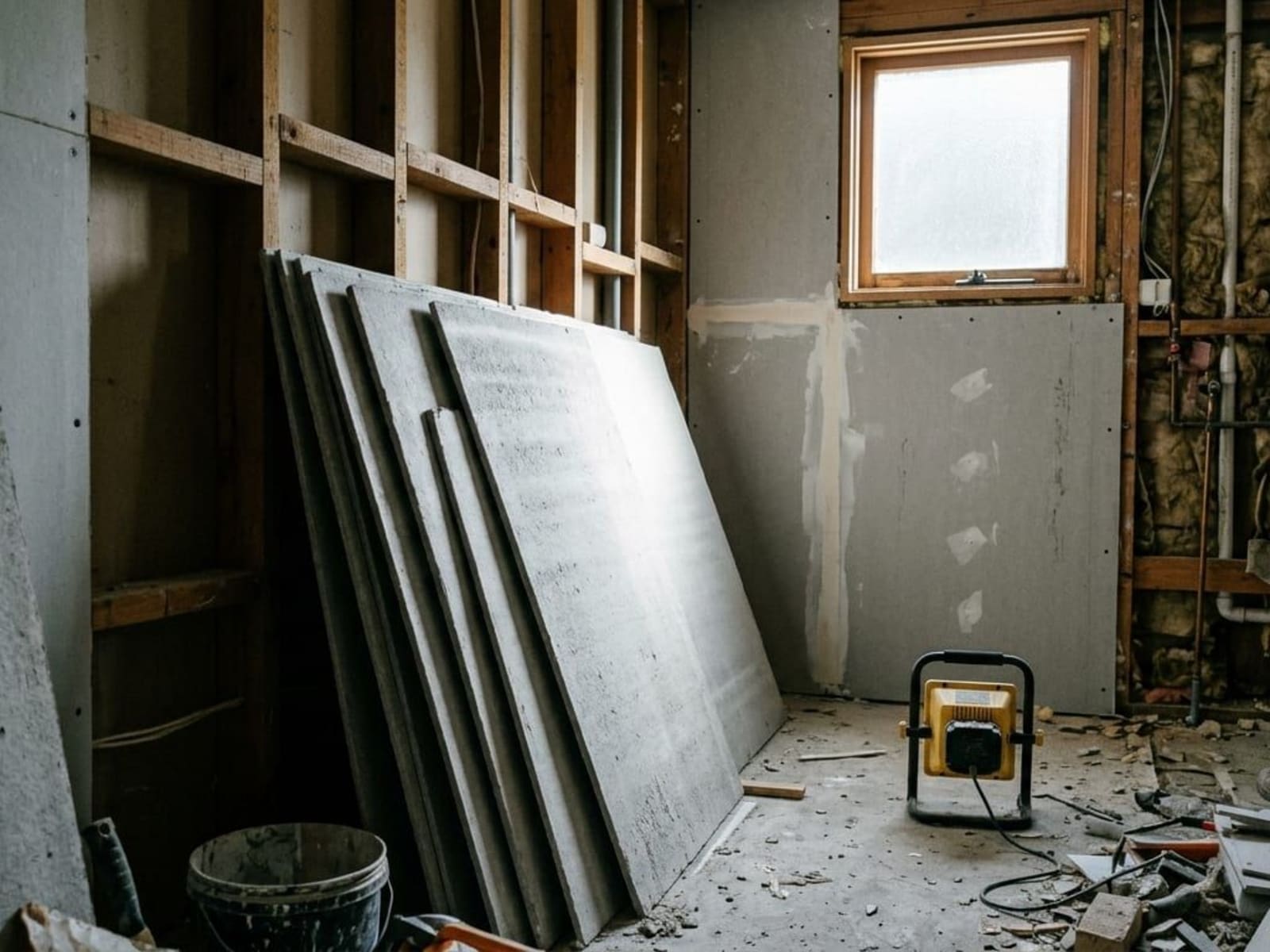
| Fibre-cement lining such as Villaboard | cement-based sheet plus the maker's own jointing compounds | cut edges sealed with an acrylic sealer; a sealer coat or preparation undercoat before paint | the board maker's compounds, not plasterboard compound |
Which sealer goes on gypsum board, and which on fibre cement?
For gypsum board, use the sealer or undercoat that the topcoat's data sheet specifies for new plasterboard, not whatever primer happens to be in the garage.
Fibre cement has its own rules. The James Hardie Villaboard installation manual says site-cut and site-recessed sheet edges must be sealed with an acrylic sealer, and recommends a sealer coat or preparation undercoat before paint, with the paint maker's recommendations followed for suitability and application. It also states that its Hardie Base Coat is not like the plaster-based compounds, which is why the two systems should not be mixed on the same wall.
What about wet-area and moisture-resistant boards?
GIB's wet area systems manual describes its wet-area boards, including GIB Aqualine, as having a water-resistant core, says they are highly desirable wherever there is an increased risk of water or moisture damage, including bathrooms, laundries, toilets and kitchens, and describes them as a proven substrate for paint. From the painter's side they look and paint like ordinary plasterboard, which is why it is worth asking which board went in.
Two points from the manufacturers matter more than the board itself:
- The Villaboard manual states that paints are not suitable for the splash zone of a wet area and must not be relied on for water tightness. In a shower, the waterproofing is the membrane and the tiles or lining, not the paint.
- GIB's manual says areas to be covered by rigid shower linings should not be presealed or painted.
Outside the splash zone, a bathroom or laundry wall needs a paint suited to a steamy room, and the room needs working ventilation. No board type or paint makes up for an extractor fan that does not run.
How do patch repairs differ on each board?
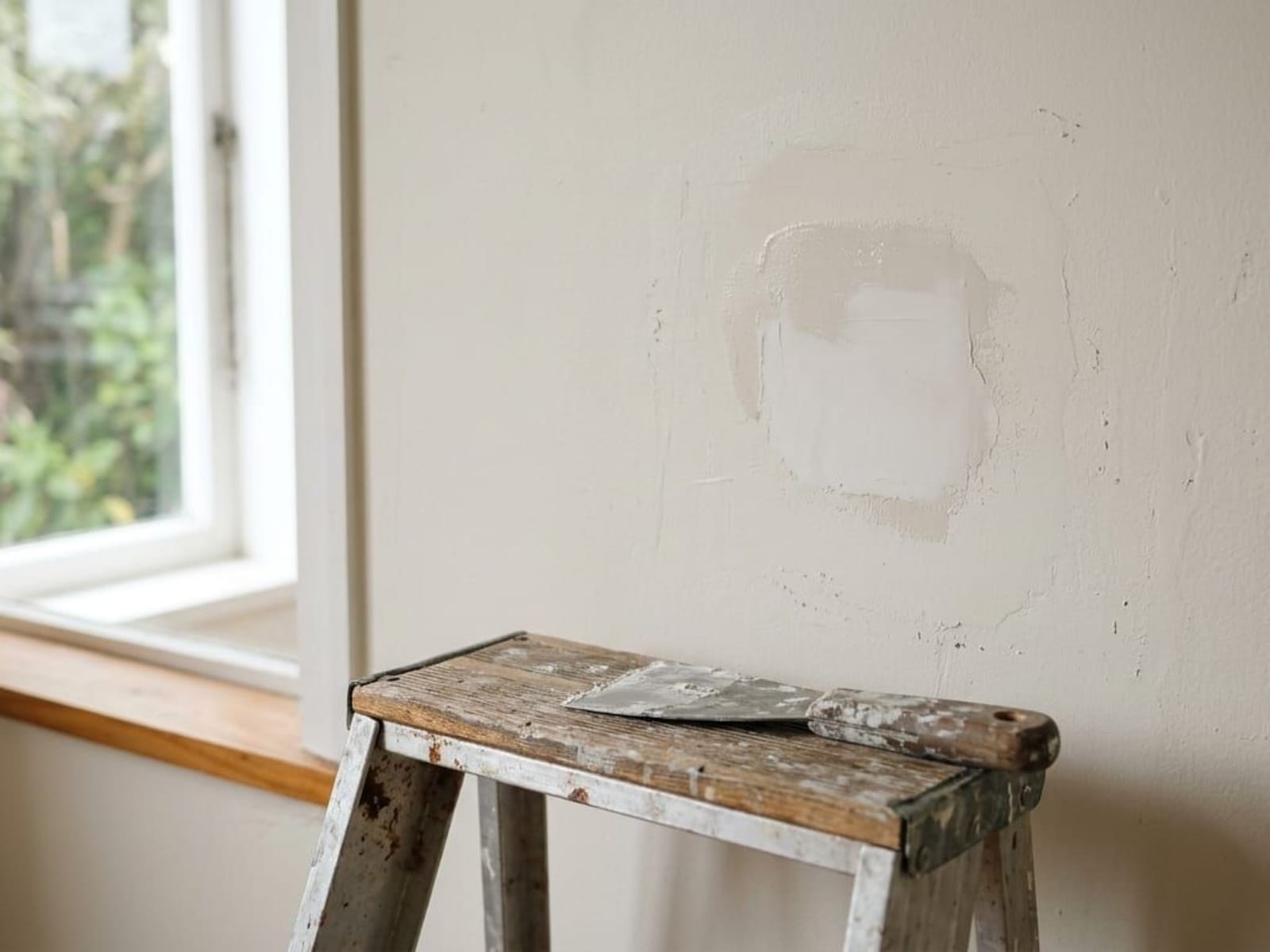
On gypsum board, a small dent or screw pop is filled with plasterboard compound, sanded lightly without scuffing the surrounding paper, and spot-sealed before the wall is painted. Where the paper has torn or lifted, cut away the loose paper and seal what remains before filling, otherwise the compound can raise the paper into a blister. A spot repair that is only topcoated, not sealed first, is the usual reason a patch shows as a dull square on a wall.
On fibre cement, use the board maker's compounds for the repair, and seal any fresh cut edge with an acrylic sealer before filling, as the Villaboard manual requires. A leftover bag of plasterboard compound is the wrong product here.
On either board, a patch that has been wet needs to be dry, and the source of the water fixed, before it is repaired. Painting over damp board does not last.
Exterior fibre-cement cladding and soffit sheets are a separate case again. The painted coating there is part of how the cladding keeps weather out, so the cladding maker's current installation manual and the paint maker's data sheet both need to be followed.
What should you ask before painting new board?
- Which board is on each wall and ceiling, and is any of it fibre cement or a wet-area board?
- What level of finish was specified and paid for, and does it suit the sheen you want?
- Where is the strong light: big windows, downlights, long corridors?
- Which sealer or undercoat is going on first, and is it the one the paint maker specifies for that board?
- Who inspects after the sealer coat, and who fixes what they find?
GIB notes that a coat of sealer can help highlight imperfections while still showing the joint widths, so the sealer coat is the right moment to walk the room, mark defects in pencil and have them fixed before topcoats go on. If you are still choosing board for a renovation, our GIB board price guide covers the cost side.
For new linings, ask us to look at the job before the sealer goes on, which is when advice is cheapest to act on.
Related Articles


Need Help With Your Painting Project?
Wellington Decorators has been transforming homes across the Wellington region since 2023, led by a founder with 18+ years in the trade. As Registered Master Painters, we back every job with a 5-year workmanship guarantee.
Prefer to talk? Call us now 027 458 6465