
A steel roof is past painting once the rust has gone through the sheet. Any hole you can see daylight through, any spot where a screwdriver pushes through under light thumb pressure, and any rust breaking out along the same line across several sheets means the corrosion is structural and a coating will do nothing about it.
Everything short of that, including the widespread orange staining that looks alarming from the driveway, is usually still a paint job. Surface rust is a preparation problem. Perforation is a roofing problem.
What is the difference between surface rust and rust that has gone through?
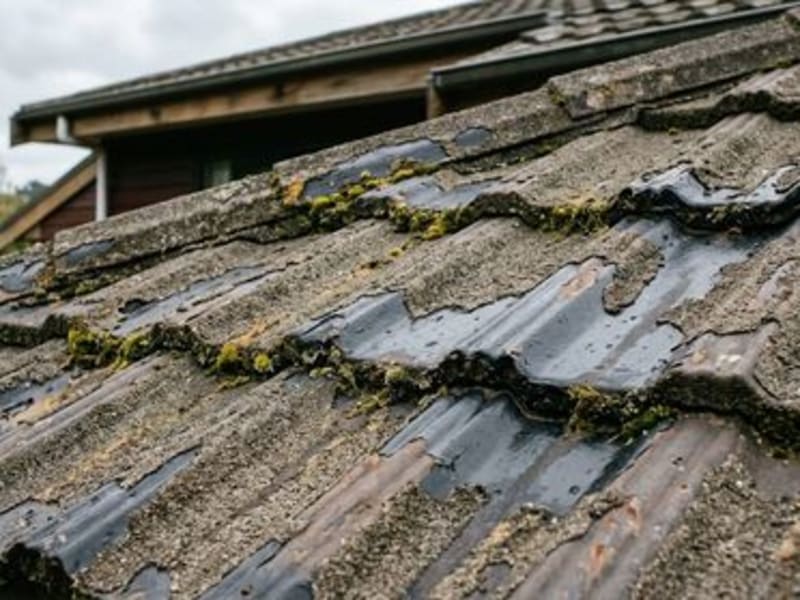
Surface rust sits on top. It is orange to red-brown, it comes off as a fine powder or thin scale under a wire brush, and the metal underneath is still bright and solid once you get to it. It is ugly, it spreads, and it will keep spreading if it is left, but the sheet is intact.
Rust that has gone through is a different creature. It is dark brown to near black, it lifts in thick layers rather than powder, and the metal under it has lost thickness. Press it and it flexes, dents or gives. Where you can, look at the same area from inside the roof space with a torch off, on a bright day. Pinholes of daylight mean the sheet has been eaten through, and no amount of surface work brings that back.

Where does a roof rust first?
Almost never in the middle of an open sheet. Corrosion starts where the protective coating has been broken or where water and salt sit longest:
- Around fixings, where the screw or nail hole cut through the coating.
- Cut edges, particularly at the eaves and around penetrations.
- Sheet laps and side overlaps, where moisture is held by capillary action.
- Under flashings, behind chimneys, and in valleys where debris collects.
- Anywhere sheltered from rain, such as under a carport roof, behind a parapet, or a section shaded by a large tree.
That last one surprises people. Areas the rain never actually washes corrode faster than areas that get soaked regularly, because salt and grime build up and stay there. New Zealand Steel's own guidance for its coated steel products is that areas not naturally washed by rain need periodic washing to reach their expected life.
Does living near the coast change the answer?
Considerably. Salt-laden air along the south coast and the harbour edge accelerates every part of this, and a roof at Island Bay or Lyall Bay will be in worse condition at the same age than an identical roof in a sheltered inland valley. Wind matters too, because the same southerly that drives rain up under laps also carries salt several streets inland.
Roof type matters as well. Older galvanised corrugated iron has a pure zinc coating, while newer Zincalume-type steel uses a zinc and aluminium alloy that generally holds up longer in the same conditions. If your house is from the 1920s to the 1960s and still carries original iron, that is the stock most likely to have reached the end rather than needing a coat.
How do I check without falling off the roof?
Most of this can be done without getting up there, which matters on the steep sections common around Wellington.
- Look from the ground with binoculars, and take photos with a phone at full zoom. Compare the sheltered side with the weather side.
- Check the gutters. Gritty rust sediment and flakes of coating in the gutter tell you the roof is shedding material.
- Get into the ceiling space with the light off on a sunny day and look up for daylight.
- Look at the screws from below. If the heads are corroded and the washers have perished, the fixings need replacing regardless of what you do with the coating.
Do not walk a roof you suspect is corroded, and do not walk any roof in a wind. A rusted sheet can carry weight right up until it does not.

What tells me it is replacement rather than repaint?
| What you find | Repaint or replace |
|---|---|
| Orange surface rust, metal solid underneath | Repaint. Wire brush, treat, prime the bare metal, then coat. |
| Rust at fixings only, sheets sound | Repaint, and replace the fixings as part of the job. |
| One or two bad sheets, the rest sound | Replace those sheets, then coat the whole roof so it matches. |
| Pinholes or daylight visible from inside | Replace. A coating over a perforated sheet buys nothing. |
| Sheet flexes or gives under a screwdriver | Replace. The steel has lost thickness. |
| Rust breaking out along the same line on many sheets | Replace. The whole roof has reached the same age at the same time. |
| Rust plus sagging purlins or water staining in the ceiling | Get a roofer, not a painter. |
What happens if you paint a roof that is too far gone?
You get a tidy-looking roof that leaks in exactly the same places, and you have made the eventual replacement no easier. Worse, a fresh coating hides the evidence, so the next person to look at it, possibly a buyer's inspector, finds the problem later and at a worse moment. Any painter who quotes to coat a perforated roof without telling you is doing you no favours.
Painting is a great deal cheaper than re-roofing, which is exactly why it is worth having someone check properly instead of assuming either way. Plenty of roofs that look finished from the ground are fine, and a few that look tidy are not.
Is it worth painting a roof with only a few years left?
Sometimes, and it is a fair question to ask out loud. If the roof is structurally sound but tired, a coat protects the steel and slows the corrosion, so it genuinely extends the life. If the roof is close to needing replacement anyway, spending on a coating first is money you will not get back, and you would be better putting it toward the new roof. We will tell you which situation you are in.

What to do next
Start with the gutters and the ceiling space, because both are free and both are informative. If you find rust flakes and no daylight, you are probably looking at preparation and a roof coating. If you find daylight, stop and talk to a roofer.
If you would rather someone else climbed up and looked, get in touch and we will assess it and tell you straight, including if the answer is that painting it would be a waste of your money.
Related Articles


Need Help With Your Painting Project?
Wellington Decorators has been transforming homes across the Wellington region since 2023, led by a founder with 18+ years in the trade. As Registered Master Painters, we back every job with a 5-year workmanship guarantee.
Prefer to talk? Call us now 027 458 6465