
All three work on macrocarpa heartwood above the ground, so the choice is really about looks and how often you want to maintain it. Oil keeps the natural colour but needs recoating every year, a pigmented stain protects better and lasts longer between coats, and letting it go grey costs nothing now but means accepting a weathered, uneven silver surface that is hard to reverse.
What none of them change is where macrocarpa should not be used untreated: in the ground.
How durable is untreated macrocarpa outside?
Reasonably durable above ground, and weak in ground contact. Specialty Timbers New Zealand, the farm forestry timber group, describes macrocarpa heartwood as naturally durable but notes that durability is limited in ground contact. For exterior structural use it says the heartwood's durability is equivalent to radiata pine treated to H3.2, but that to meet the Building Code's durability clause the timber must be heartwood, must not be in ground contact, must be easy to replace, must be surface treated with an appropriate preservative, and must have its cut ends capped.
Two practical takeaways. First, if your macrocarpa is holding something up, such as pergola posts and beams, a deck frame or balustrade, the "just let it weather" option is not really open for those members; ask your builder what the consent or the Code requires. Second, posts set in concrete or soil are the weak point. Keep macrocarpa off the ground with post stirrups or a gap, and cap or seal the cut ends.
For cladding, fascias, fences, garden furniture and screens, you have a genuine choice.

What does each option commit you to?
| Option | How it looks | Maintenance | The catch |
|---|---|---|---|
| Clear decking or timber oil | Close to the natural honey-brown colour | Resene describes its clear decking oil as needing more frequent maintenance than a pigmented stain, with annual application | Miss a year or two and it greys anyway, patchily |
| Pigmented penetrating stain | Coloured, grain still visible | Resene notes stains may need maintenance after two summers, lasting longer after that as material builds up | You can only go the same colour or darker without stripping |
| Paint | Solid colour, no grain | A normal exterior repaint cycle | Hides the timber you probably chose for its looks |
| Leave it to grey | Silver-grey, uneven where sheltered | A wash now and then to control mould | The surface is weathered, not protected, and getting back to brown means cleaning and sanding |
Oil or stain: which is better on macrocarpa?
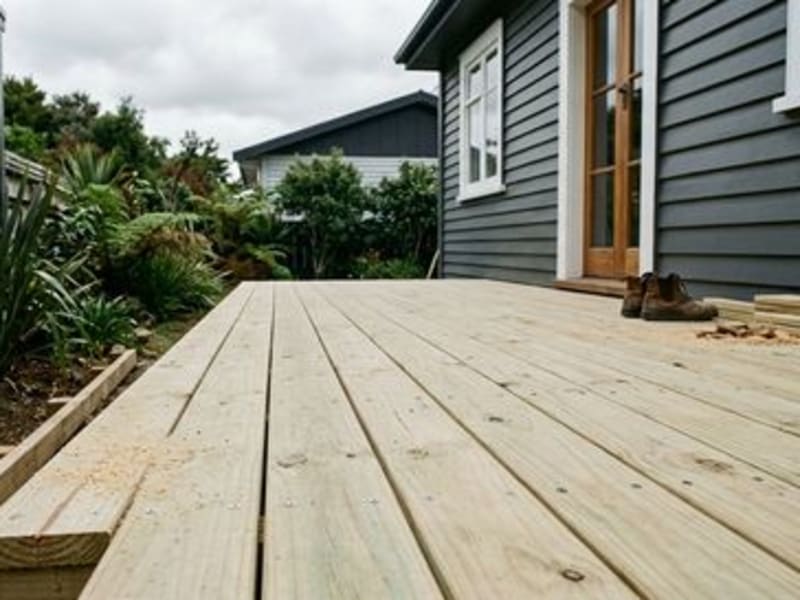
Resene's decking guide groups pine and macrocarpa together and, for new decking, says to wash it with a timber and deck wash to open the fibres, then either use a clear decking oil or apply two coats of a solventborne pigmented stain. It describes the oil as a non film-forming transparent finish with mould and UV protection that does not offer the same level of protection as a pigmented semi-transparent stain.
In practice:
- Choose oil if you want the timber to look like timber and you are happy to recoat every year. It suits outdoor furniture and small areas you can reach easily.
- Choose a stain for cladding, fences and anything high or awkward, where annual recoating is not realistic. The pigment is what slows UV damage.
- Pick the colour carefully. Resene's woodcare notes say you cannot lighten a stain unless you remove the previous coating, so later coats have to be the same or darker. Darker is not free either: Resene notes dark stains increase the likelihood of timber movement such as warping and cupping.
For new boards, Resene's staining steps recommend coating both sides and any cut ends before fixing, which it calls envelope sealing, to improve stability and reduce cupping, warping and splitting. That is far easier to do on the ground than after the boards are up. Our wood stain types explainer covers the difference between oils, penetrating stains and film-forming products in more detail.

What happens if you just let it go grey?
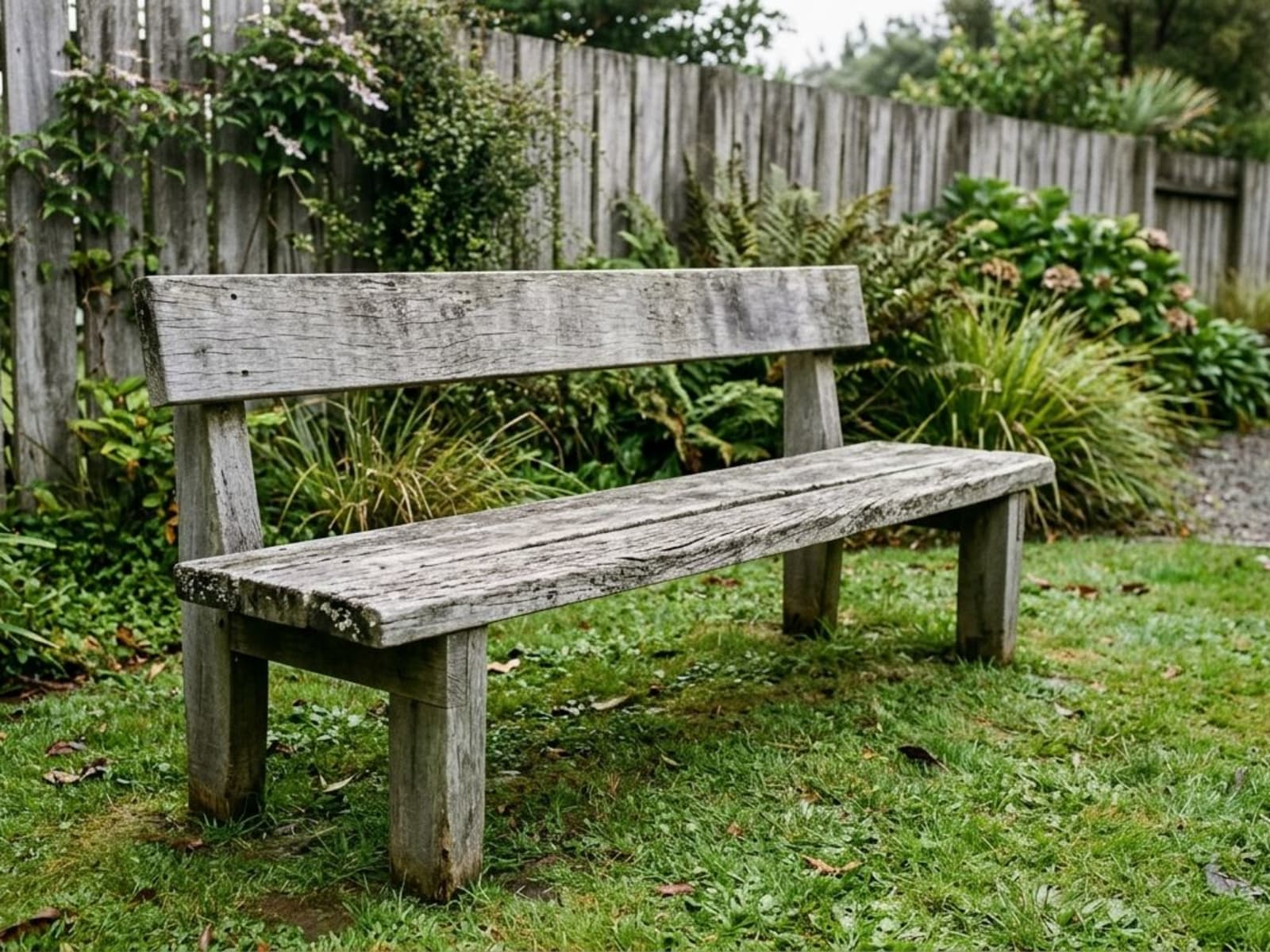
Macrocarpa can be left to weather to silver-grey, and some timber suppliers present that as a finish option in its own right. It is a legitimate choice, and on a fence or a screen in the back garden it can be the sensible one. Just go in knowing what the grey is.
- Grey is surface damage. Resene's staining steps describe greyed timber as UV-damaged and recommend sanding it off before staining. The colour change is the top layer of wood breaking down, not a protective patina.
- It will not be even. Areas under eaves or behind downpipes stay browner for longer, and boards facing the weather grey first.
- Mould moves in. Weathered timber picks up mould and sometimes moss, which is why Resene's steps for weathered timber begin with a moss and mould killer and a scrub.
- Changing your mind costs effort. Getting from grey back to a clean timber colour means killing mould, scrubbing and usually sanding before any oil or stain goes on.
None of that means the timber will fall apart quickly above ground. It means you are trading appearance for zero maintenance spend, and that is a fair trade on the right structure.
What would we actually do?
For macrocarpa cladding or anything on the house itself, a pigmented stain, with the ends sealed. For outdoor furniture you use every summer, oil it and accept the annual job. For a back fence you rarely look at, let it grey and save the money, but keep the posts out of the soil or use treated posts.
If you are weighing macrocarpa against cedar or another timber, our cedar and timber staining guide compares how the common species behave under stain. And if you would rather someone else did the coating, our wood staining service covers macrocarpa cladding, decks and fences.
Not sure which way to go with yours? Ask us for a quote and we will tell you which option suits the job, including when leaving it alone is the right call.
Related Articles


Need Help With Your Painting Project?
Wellington Decorators has been transforming homes across the Wellington region since 2023, led by a founder with 18+ years in the trade. As Registered Master Painters, we back every job with a 5-year workmanship guarantee.
Prefer to talk? Call us now 027 458 6465