
If the lining behind the mess is sound and firmly fixed, and what you dislike is the surface, then a skim coat is the right answer: a thin coat of stopping compound across the whole wall, sanded flat, sealed and painted. If the lining is drummy, water-damaged, badly out of plane, or cracking in a pattern that keeps coming back, replacing it costs less in the end than skimming something that will move again underneath your new finish.
The decision is made by tapping the wall and holding a straightedge against it, not by looking at photos of the finish you want.
What is a skim coat, exactly?
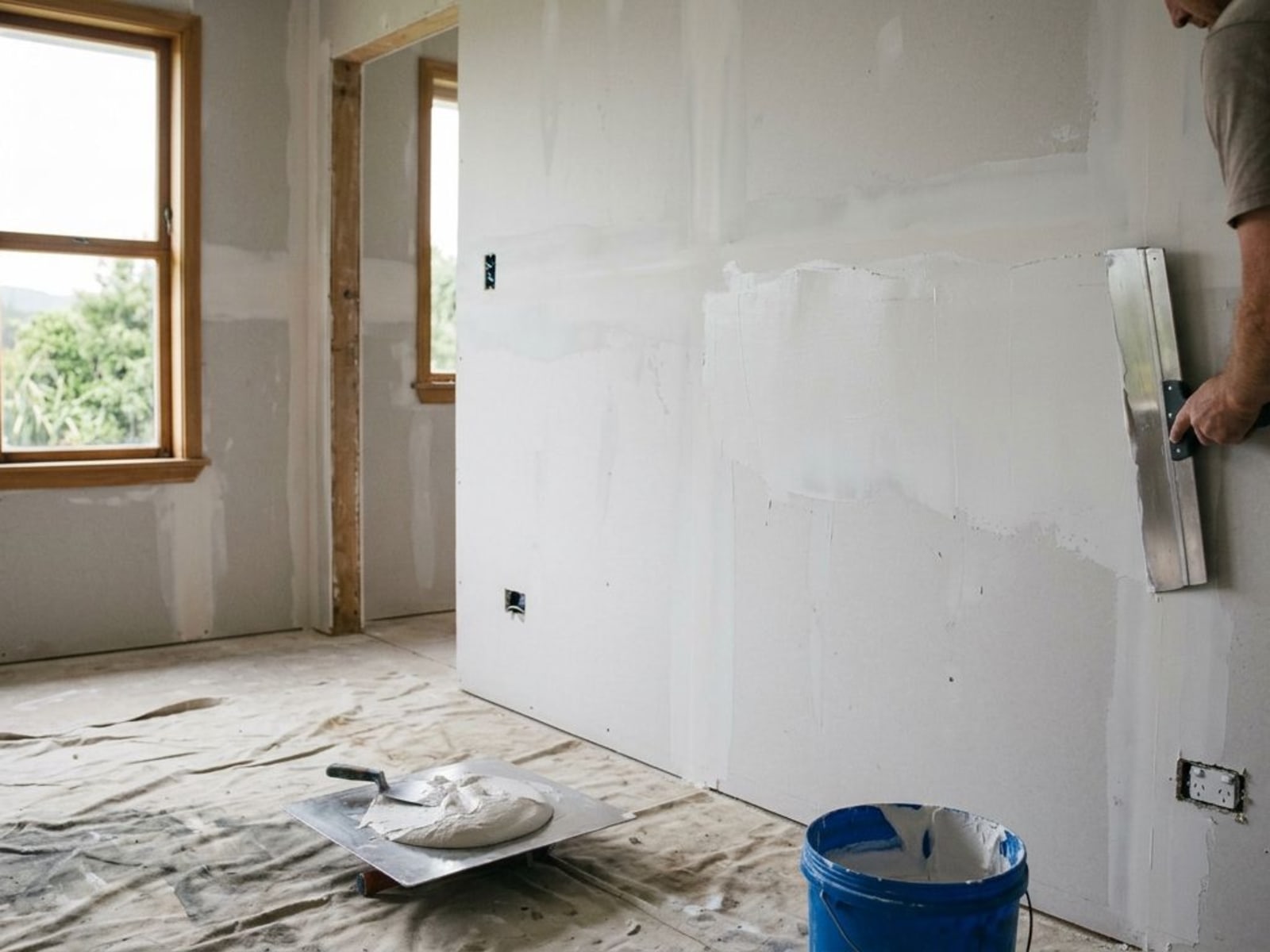
It is not filling. A skim is a thin coat of jointing compound applied across the entire surface with a wide blade, usually in two or three passes with each one thinner than the last, then sanded to a uniform flat face and sealed. What you end up with is a wall where no joints, patches, texture or old repairs read through the paint.
It takes days rather than hours, because each pass has to dry before the next one goes on, and the sanding stage generates fine dust that gets into everything. Anyone quoting a skim as a one-day job on a whole room is quoting something else.
How do you tell whether the wall underneath is sound?
Four checks, all of which you can do yourself in ten minutes with no tools worth mentioning.
- Tap it. Work across the wall with your knuckles. A solid note means the lining is still held to the framing, or in an older house that the plaster is still keyed to the lath. A hollow, drummy note means it has let go, and no amount of surface work fixes that.
- Push it. Press firmly with your palm in a few places. Flex or movement means loose fixings or a soft board.
- Straightedge it. Hold a long level or a straight length of timber flat against the wall in several directions. A skim levels the surface, not the frame. If the straightedge rocks, or you can see daylight under it across a couple of metres, a skim will follow that hollow rather than remove it.
- Check for damp and damage. Brown staining, soft spots, swollen sheet edges or a musty smell all mean the substrate question is already answered.
When is a skim coat the right call?
- Fine crazing across old solid plaster that is still firmly keyed
- Wallpaper scars, torn paper facing and glue marks after stripping
- A textured or stippled finish you want gone, subject to the safety check below
- A wall carrying so many small repairs that patching and painting would leave a visible map
- Old work where the previous stopping has shrunk and every joint now reads through the paint
When is replacing the lining actually cheaper?
- Drummy plaster over lath across large areas of a wall or ceiling
- Water damage, where the lining is soft, swollen or has mould behind it
- Walls significantly out of plane, where the fix belongs at framing stage
- Cracking that returns after proper repairs, because the frame behind it is still moving
- Anywhere you would need serious build to get flat, because that is relining work with a trowel
- When you want to insulate, rewire or move a power point anyway, in which case the lining is coming off regardless
How do the two compare on the things you actually care about?
| Skim coat | Replace the lining | |
|---|---|---|
| What it fixes | Surface condition: texture, crazing, scars, patchwork | Substrate condition: drummy, soft, damaged, out of plane |
| What it needs to work | Sound, dry, firmly fixed lining behind it | Nothing, since you are removing what is there |
| Mess | Very fine sanding dust through the whole house unless sealed off | Demolition rubbish, exposed framing, more disruption |
| Time on one room | Several days, driven by drying between passes | Longer: strip out, reline, stop, then the same finishing work |
| Services and insulation | No opportunity to change anything in the wall | The right moment to do both |
| Main risk | Fails if the substrate moves or was never sound | Finding something unwelcome once the lining is off |
| Finish achievable | Excellent, provided the substrate is already flat | Excellent, and you control flatness from the framing up |
What about textured ceilings and old paint?
Get a sample tested before you sand, scrape or water-blast a textured ceiling. WorkSafe's advice to homeowners is that a home built before 1 January 2000 may contain asbestos materials, and it names textured ceilings as one of the places asbestos was often used. If you are not sure what you are looking at, treat it as though it is asbestos until a test says otherwise.
A positive result changes the decision in this article rather than ending it. Taking the texture off stops being something you would choose to do, and lining over the top becomes the sensible route: a new lining fixed over the existing ceiling, stopped and finished, with the old surface left undisturbed underneath. Price that against the skim you were planning, because it is often closer than people expect once doing removal properly is costed in. Lead is a separate question on a separate date, and paint in homes built in the 1980s or earlier may be lead-based, which matters for any dry sanding of old joinery, plaster and skirtings. Have that tested too.

Does the choice change how the finished paint looks?
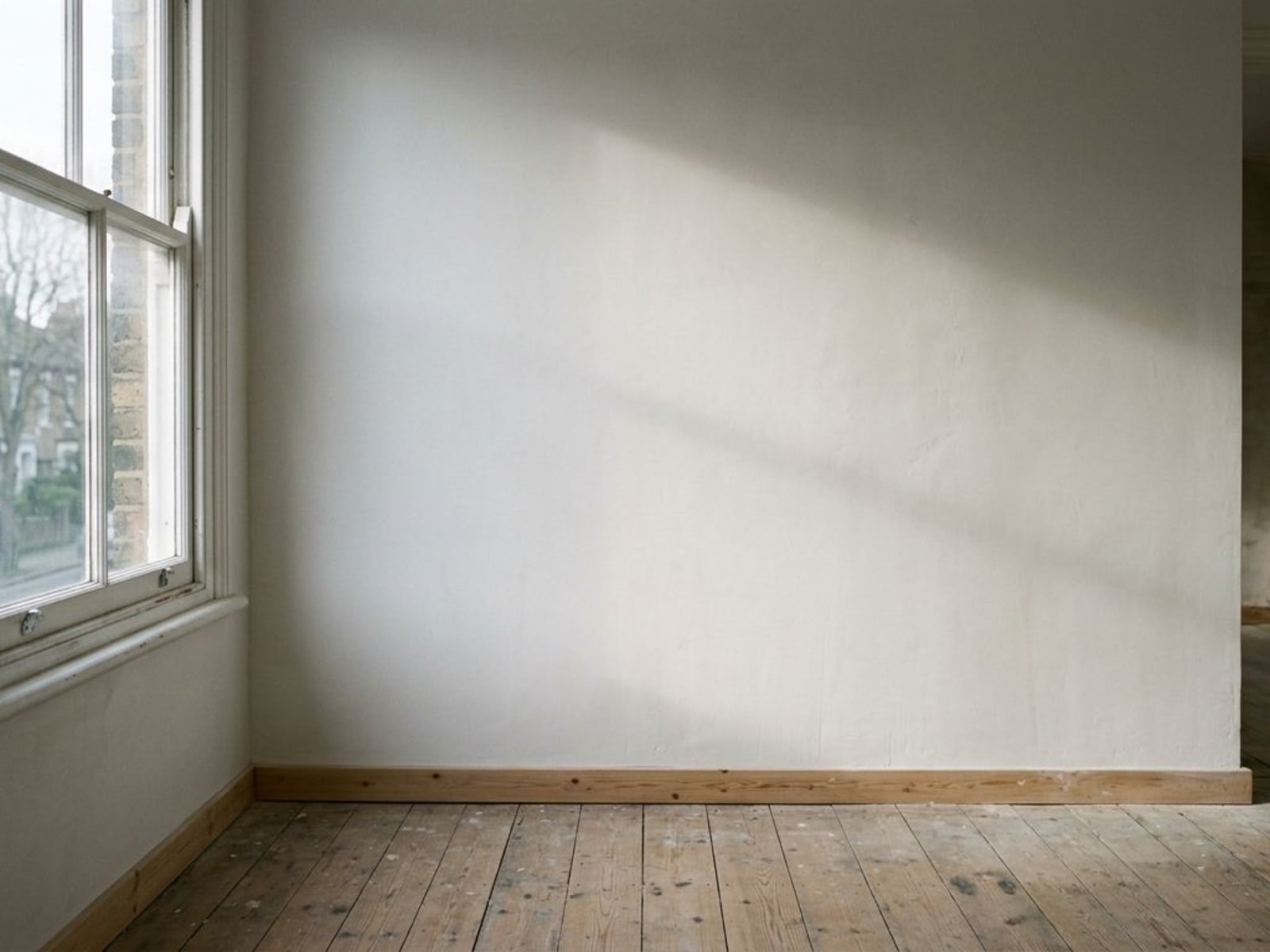
It changes what the paint can hide. Flatness only shows under raking light, so the wall lit sideways from a window is where a compromised skim gets found out, and a hallway lit from one end is the harshest test in most houses.
Sheen makes it better or worse. Flat and low sheen forgive a lot. Semi-gloss and gloss report every ripple honestly. If you have a long wall taking light from one end, either get the substrate genuinely flat or choose a lower sheen and stop fighting the physics. That decision belongs in the conversation before the interior painting is quoted, not after the first coat goes on.
So which one is cheaper?
A skim coat on a wall that qualifies is comfortably the cheaper of the two. A skim coat on a wall that did not qualify is the most expensive option on the list, because you pay for it, watch it crack or lift, and then pay to reline anyway.
Which means the money question is really a substrate question, and it gets answered with a knuckle and a straightedge before anyone writes a number down. If a quote arrives for skimming and nobody tapped the wall, ask why.
If you want someone to check what is behind your walls and give you an honest read on which way to go, our plastering and stopping work starts with exactly that. Get in touch.
Related Articles


Need Help With Your Painting Project?
Wellington Decorators has been transforming homes across the Wellington region since 2023, led by a founder with 18+ years in the trade. As Registered Master Painters, we back every job with a 5-year workmanship guarantee.
Prefer to talk? Call us now 027 458 6465