
Work stops, the crew makes the site safe, and they come back when the surface is dry again. On a fixed-price quote a weather delay does not change what you pay, and the only real question is how long the last coat had on the wall before the rain arrived.
A coat still wet when the rain arrives is probably coming off and going back on. A coat with a full dry day behind it is a non-event. In between is where the streaks come from.
Does rain ruin paint that has already gone on?
It depends entirely on how far the film had got, and the gap between a ruined coat and a cosmetic mark can be very short.
| How far the coat had got | What usually happens | What it needs |
|---|---|---|
| Still wet, not yet touch dry | Film is still soft. Paint runs, washes off in patches, leaves thin streaked areas | Wash the affected area down and recoat it |
| Touch dry, but applied the same day | Not yet rain resistant. Brown or tan streaking, uneven sheen | Usually rinses off, then reassess in dry weather |
| Dry for a full day or more | Normally fine. Streaking still possible in cold or humid conditions | Rinse if streaks appear, nothing else |
| Days or weeks old, still inside the four-week cure | Rain does no harm. The film is still hardening | Nothing. Do not scrub it |
| Past four weeks | Cured. Rain is what the paint is there for | Nothing |
Those stages assume a mild day. In a Wellington July, in single-figure temperatures with damp air, every one of them runs considerably longer. The rain resistance time for the product actually being used is on its data sheet, and that is the number to work to rather than any rule of thumb. It is also why a painter will refuse to start a wall at two in the afternoon in winter with rain forecast for five, whatever the recoat time on the tin looks like it allows.
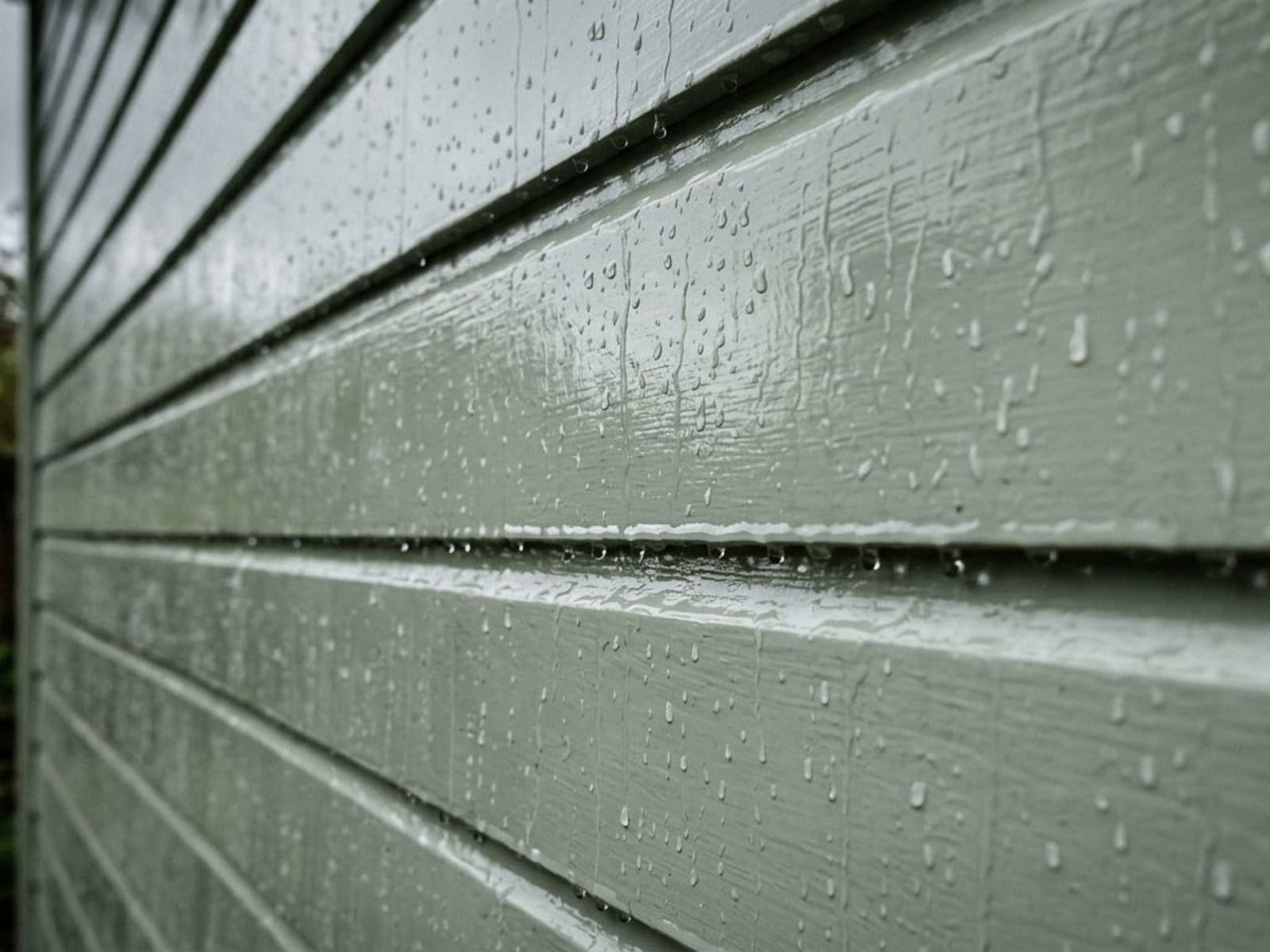
What are the brown streaks that appeared after the rain?
Surfactant leaching. Waterborne paint contains surfactants that hold the pigment and binder dispersed in the tin, and if the film gets wet before those have finished leaving it, they rise to the surface and run. You get white, tan or brown streaks, usually worst under window sills and anywhere the wall sheds water.
It looks alarming and it is cosmetic. The paint underneath is unaffected. Rinse it off with water and a soft brush as soon as you see it, and expect it to reappear once or twice after later rain before it stops for good. Resene's care guidance is that it diminishes over a few months, so judge the wall at the end of that rather than in the first fortnight. It is not a defect and it is not grounds for a repaint.
Two things make it more likely: painting late in the day, so the film sits fresh through a cold night, and dark colours, which carry more tinter and show the residue plainly.
How long after the rain before work restarts?
Longer than most people expect, because the rain stopping is not the same as the house being dry. Paint bonds to the substrate, and a weatherboard that has taken wind-driven rain has water in it, not just on it.
A painter checks that with a moisture meter rather than by eye, and works to the moisture level the coating data sheet asks for rather than to a rule of thumb. Boards that look dry from three metres away often are not. End grain, the underside of board laps and the boards closest to the ground hold water longest.
In practice, after a summer southerly with wind behind it, a north wall can be ready that afternoon. In June, on a south elevation that gets no sun, it can be three or four days. Wind is genuinely useful here, which is one of the few times that sentence is true in this city.
What does a crew do on a wet day?
- Wash down. Rain does not stop a house wash, and the wash has to happen anyway.
- Work under cover: soffits, verandah ceilings, garage interiors, the sheltered elevation.
- Preparation. Scraping, filling, sanding and caulking all continue while the surface is not actively wet.
- Shift to interior work if the same house has any booked.
- Move to another job and come back when the forecast allows.
What they should not do is paint through it to protect the programme. A coat applied onto damp timber or into an oncoming front is a coat that gets stripped and redone later, and somebody pays for that.

Who pays for the lost days?
On a fixed-price quote the labour risk sits with the painter. Weather delay is already priced into any honest Wellington quote, because everyone quoting here has lost days to the southerly.
The item that can genuinely move is scaffolding, because hire is charged by time. A job that runs three weeks over on weather can carry real extra hire cost. Ask before you sign whether the scaffold allowance covers a fixed period or is charged weekly, and who wears an overrun caused by weather. A quote that answers that question in writing was written by someone who has been rained on before.
Charge-up work sits the other way round. You pay for hours worked, so nobody bills you for a day nobody worked, but there is no fixed finish date either.
Does it matter which surface got wet?
Yes. Roof coatings are the most exposed, because a roof sheds water the moment it lands and a coating that has not set will run off into the gutters and leave the sheet patchy. Of everything on a repaint, roof work is the part most often pushed for weather, and that is the right call rather than an excuse.
Fresh enamel on joinery is next. Water sitting on a soft enamel film leaves marks in the surface that do not polish out. Walls are the most forgiving of the three. Interior work carries on regardless, other than everything taking longer to dry in humid air.
What should you do as the owner?
Very little, which is the good news. If surfactant streaks appear, rinse them off gently with water and a soft brush as soon as you notice them. Resene's care guidance is that the deposits lift off easily early on, and that if they are left to sit they can etch the surface and leave a permanent mark, so waiting them out is the one thing not to do. Gentle is the operative word though: no scrubbing, no water blaster and no abrasive cleaner on a film that is still hardening. Turn off irrigation that throws water at the walls, and keep sprinklers, overflow pipes and downpipe splashes away from fresh work for the first day or two. Anything worse than streaking, photograph it and tell the painter before you touch it.
The one thing that actually costs you money is pushing for a finish date. The weather sets the programme on exterior work here, and the houses that look worst five years on are usually the ones that were painted in a hurry.
If you want exterior work quoted by people who plan around the forecast rather than hope for the best, get in touch and we will walk the house with you.

Related Articles


Need Help With Your Painting Project?
Wellington Decorators has been transforming homes across the Wellington region since 2023, led by a founder with 18+ years in the trade. As Registered Master Painters, we back every job with a 5-year workmanship guarantee.
Prefer to talk? Call us now 027 458 6465