
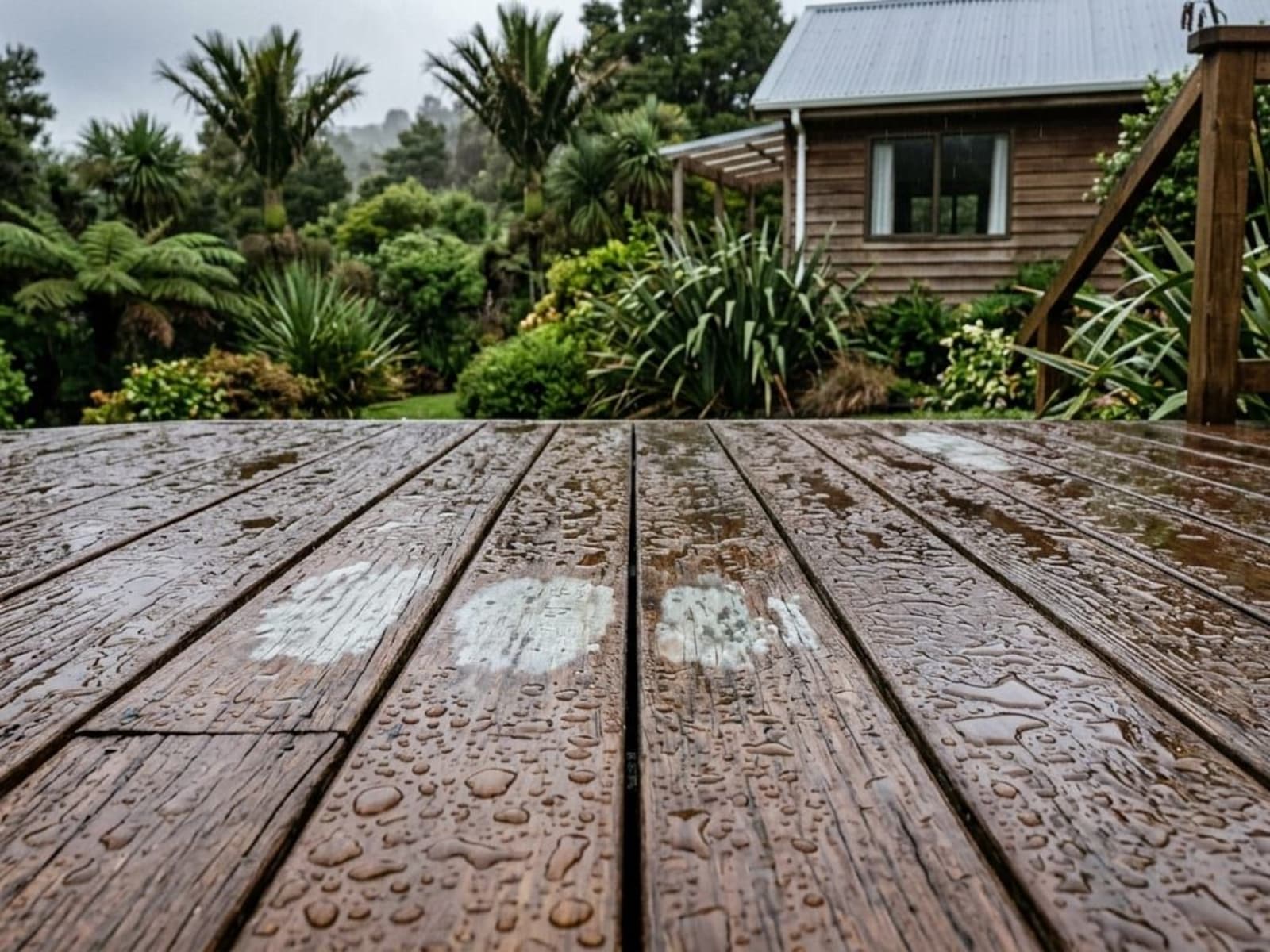
If rain lands on a deck stain before it has dried, the usual result is cosmetic: white or pale spots on a water-based product, or uneven, spotty patches where drops sat on the surface. Most of the time it can be left to dry out and judged a few days later, and only the marked areas need attention, not the whole deck.
The real risk is heavy rain arriving before the stain has even touched dry, which can wash some of the coat off the surface. That is rarer than people fear.
What does rain damage on fresh stain look like?
It depends on what went on the deck.
- Water-based stains and oils. Cabot's explains that white spots can appear on water-based coatings when they come in contact with moisture before they are fully cured. The finish looks milky or blotched where the water sat.
- Solvent or oil-based stains. These stay wet and soft on the surface for longer, so rain tends to leave spotting, dimpled marks and patches where the finish looks thinner or duller than the rest.
- Heavy rain very soon after application. Some of the stain can be washed off the surface before it has soaked in, leaving the board lighter and uneven, and sometimes stain run-off on paths or paving below.
Light drizzle on a coat that is already touch dry usually does little. Most people who think the deck is ruined are looking at it wet, which is the worst possible light to judge it in.
What should you do next?
- Stop, and do not try to fix it wet. Brushing or wiping a rained-on coat just drags the problem around.
- Let it dry completely. Give it at least a full dry day, then look again in daylight.
- Give white spots time. For water-based products, Cabot's says that after a few days of sun the spots should dry out and fade. If they are still there after a couple of weeks, Cabot's recommends scrubbing with its deck cleaner to remove the residue.
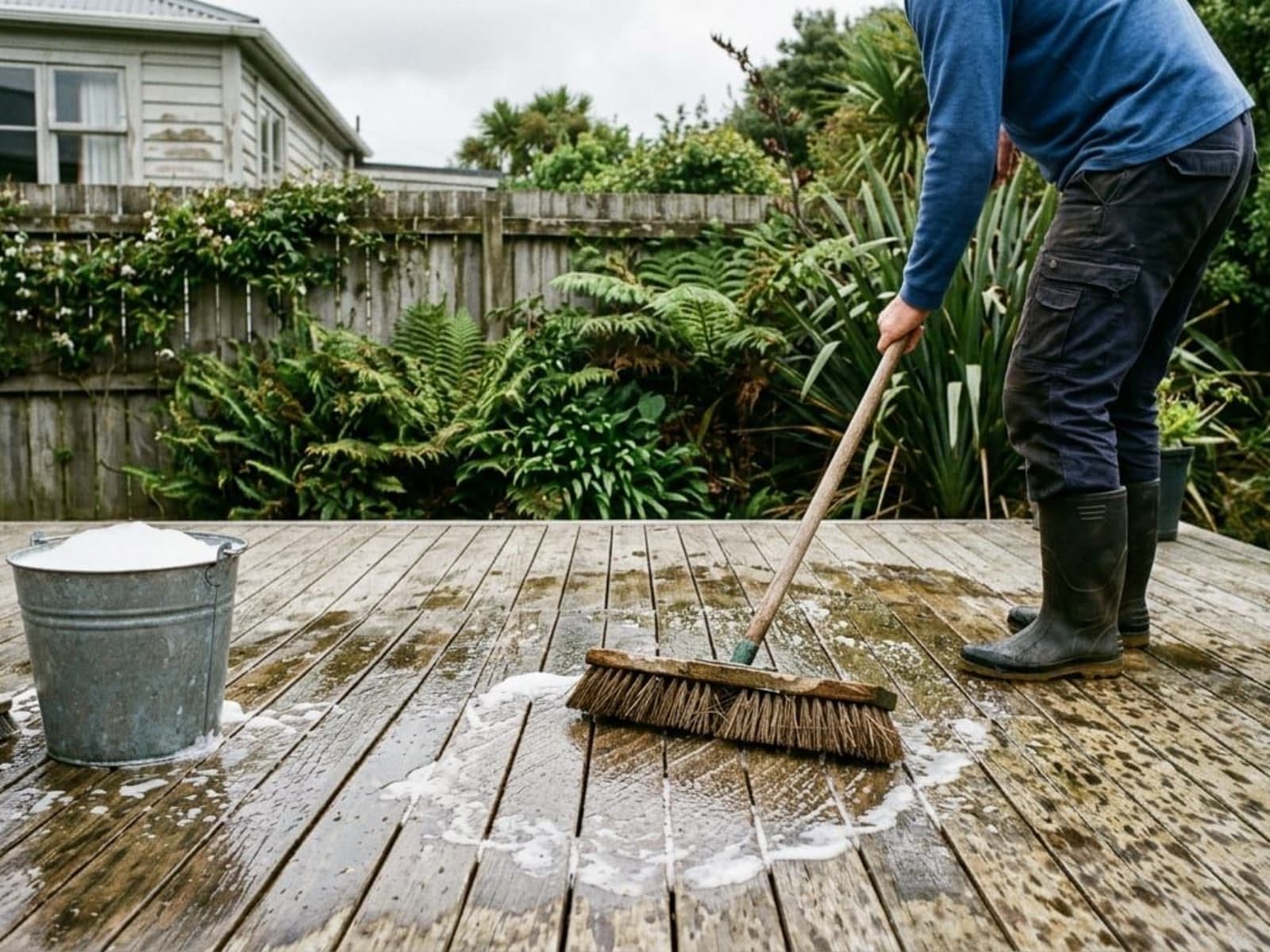
- Clean before you recoat. Resene's trade guide notes that washing with a timber and deck wash removes things like dirt, fingerprints and rain spotting, and helps the stain penetrate. Rinse, let it dry, then apply another coat to the affected boards.
- Recoat whole boards, not patches. Stain touched up in the middle of a board shows lap marks. Work to the ends or natural breaks.
The good news with penetrating stains is that they are designed to be recoated without stripping. A rained-on penetrating stain usually just needs its next coat. A film-forming stain that has spotted is more work, because the damaged film may need sanding before another coat will look even.
How do you read the tin's rain-fast time?
Here is the thing most people do not expect: many deck products do not give a single "rain-fast" number at all. What they give instead is a set of drying times, a set of conditions those times assume, and a warning about weather.
| What the data sheet says | Example from a NZ data sheet | What it means for rain |
|---|---|---|
| Weather warning | Cabot's Aquadeck and Cabot's Deck and Exterior Stain Oil Based: do not apply when rain or heavy dew is expected during the drying period | The whole drying period matters, not just the first hour |
| Test conditions | Aquadeck times quoted at 25°C and 50% humidity, with longer times in cooler or humid conditions | On a cool, damp day, every time on the tin gets longer |
| Touch dry | Aquadeck: 20 minutes. Resene Woodsman Decking Oil Stain: 30 minutes at 18°C | Earliest point a light shower is less likely to mark it |
| Walk on or light traffic | Aquadeck: 8 hours, may stay tacky for several days. Cabot's oil-based stain: 16 hours after the final coat | A better guide to when rain stops being a worry |
| Full use | Resene Woodsman Decking Oil Stain: 48 hours before heavy foot traffic. Aquadeck: full cure up to 7 days | Water can still mark a coating that is not fully cured |
So the practical reading is this. Take the touch dry or walk-on time, stretch it for a cool or humid day, and make sure no rain or heavy dew is forecast inside that window. Dew is the one people forget. A deck stained late on a still autumn afternoon can be caught by dew before it is dry, with the same effect as a light shower.
Cabot's also says not to apply its products below 10°C or above 35°C, and not to apply in direct sunlight in hot temperatures. That rules out some obvious workarounds, like starting at first light to beat afternoon showers while the boards are still cold and damp with dew.
Can you do anything to protect a deck if rain arrives?
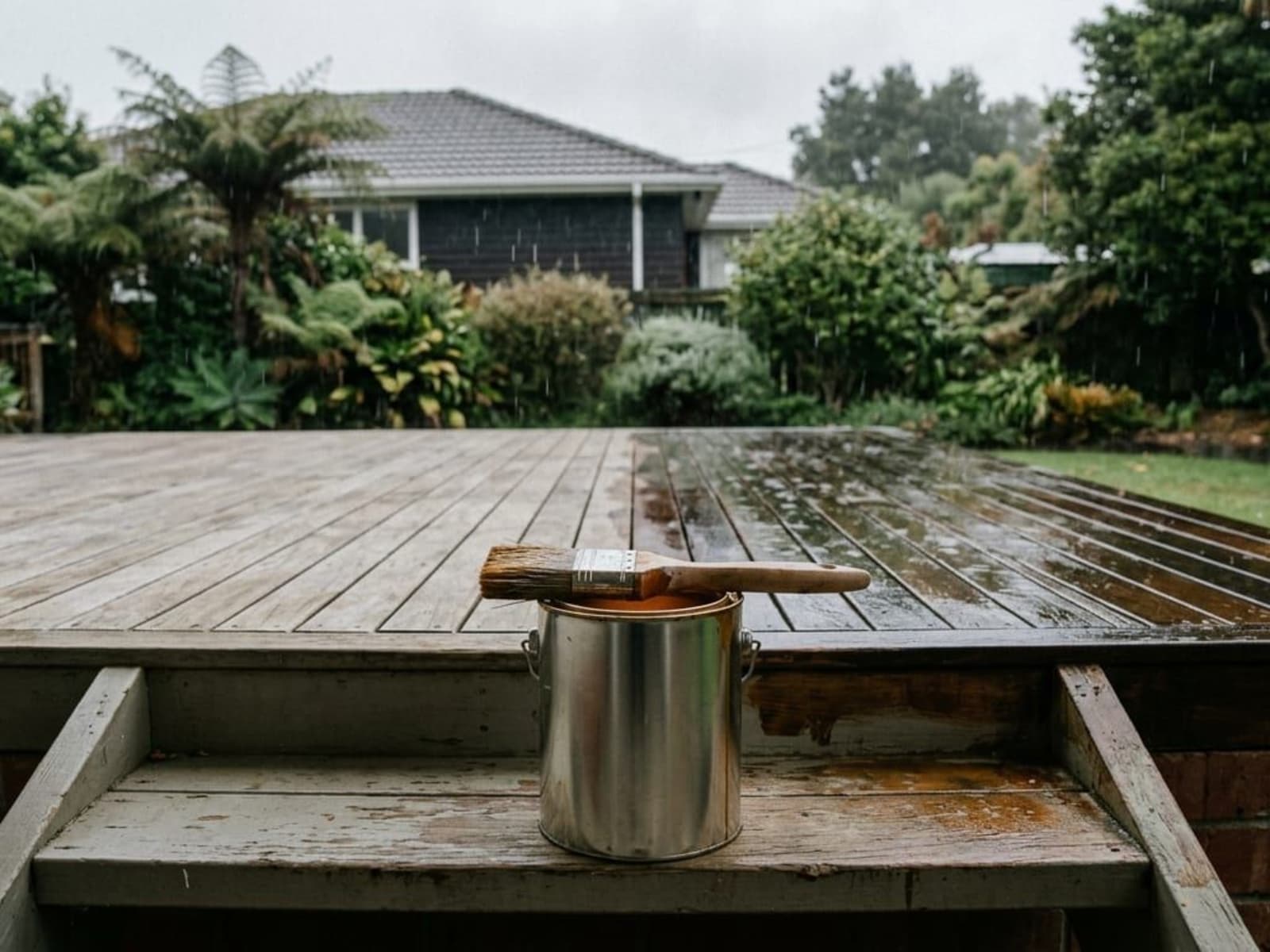
Not much, and some of the things people try make it worse. A tarp laid straight on fresh stain sticks to it and leaves marks worse than rain would. Hosing off rain spots spreads the problem. If a shower is coming and the stain is still wet, the best thing is to stop working, leave what is done alone, and deal with it once it is dry.
Prevention is simpler than repair. In Wellington that means watching the hourly forecast rather than the daily one, starting only when the boards are dry, and finishing early enough in the day for the stain to dry before the evening dew comes down.
When is it worth calling someone?
If the whole deck was hit by heavy rain before it was touch dry and is now streaky from end to end, you are looking at a full clean and recoat of the lot, once the boards have dried out. That is physical work, but not complicated. If it is a few spotted boards, that is an easy DIY fix once dry.
If weather ruins your plans part way through a painting job rather than a deck, the broader answer is in what happens if it rains mid-job.
If you would rather the deck was done by someone who plans around the forecast, that is part of our wood staining service.
To have a rained-on deck looked at, or stained properly next time, ask us for a quote.
Related Articles


Need Help With Your Painting Project?
Wellington Decorators has been transforming homes across the Wellington region since 2023, led by a founder with 18+ years in the trade. As Registered Master Painters, we back every job with a 5-year workmanship guarantee.
Prefer to talk? Call us now 027 458 6465