
Back-rolling means rolling over sprayed paint immediately, while it is still wet, and Dulux's trade guidance says it should be standard practice, especially on new plasterboard. It works the paint into the surface for better adhesion, leaves a soft even texture that hides small imperfections, flattens raised paper fibres, and makes later touch-ups blend in.
A sprayer puts paint on fast. The roller behind it is what makes the result look and behave like a properly painted wall.
What does back-rolling actually do?
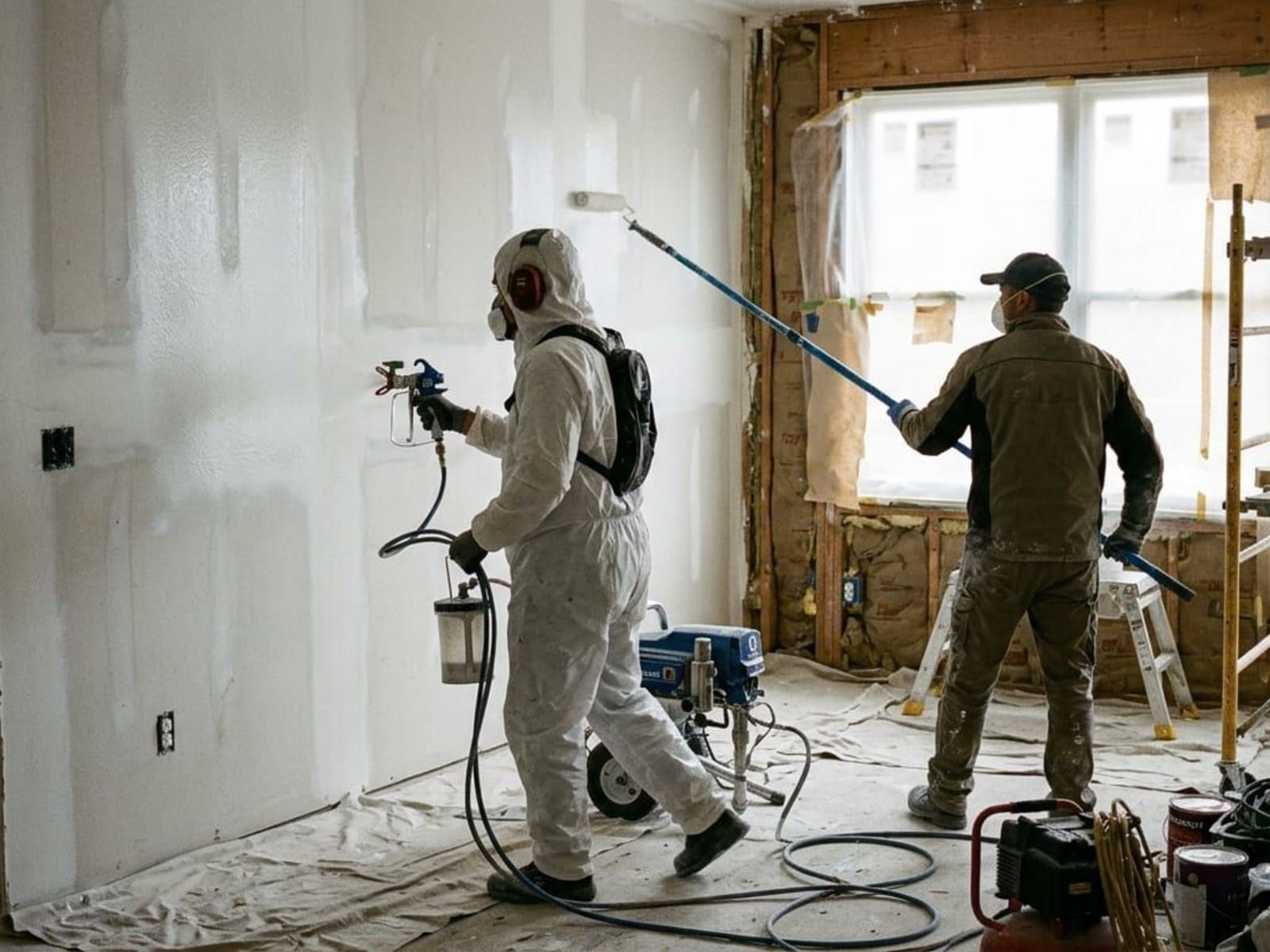
Dulux's technical advice on spray painting and back-rolling describes it as dry-rolling the freshly sprayed surface with a short to medium nap synthetic roller, straight after spraying waterborne paint onto walls and ceilings, while the paint is still wet. It gives three reasons for doing it:
- Texture. The roller leaves a uniform soft texture that scatters light, which helps disguise small variations in flatness and minor blemishes left after preparation.
- Adhesion. The roller works the paint into the surface, helping each coat bond to the one beneath.
- Surface fibres. On new plasterboard, rolling flattens raised nap or paper fibres lifted when the stopper sanded the joints.
The same page notes that plasterboard manufacturers have advocated back-rolling since spray application became common.
Why not just spray it?
Because spray on its own leaves a very smooth finish. Dulux's guidance says a spray-only finish tends to reflect more light, which accentuates variations in the substrate and highlights imperfections. On a wall that has had perfect Level 5 stopping and sits in soft light, that may be acceptable. On a normal wall in a normal house, it shows every joint and hollow.
The bigger cost comes later. Dulux warns that an indistinguishable touch-up is difficult on a smooth, non-textured surface that was not back-rolled, and that on low-sheen or satin finishes touch-ups are so difficult that it is normally recommended to recoat the whole area. In practice, a small scuff in the hallway two years after the job becomes a full wall repaint.
Which surfaces need it?
| Surface or coat | Back-roll? | Why |
|---|---|---|
| First coat on new plasterboard ceilings | yes, unless the ceiling is going to be sanded | Dulux says the first coat on ceilings should always be back-rolled in that case |
| Sprayed prepcoat that will not be sanded (often ceilings; Dulux says walls should always be lightly sanded before topcoating) | yes, while wet | sets the uniform texture everything else sits on |
| Coats after a sanded prep coat | best practice | Dulux describes back-rolling each subsequent coat as the way to a uniform appearance |
| Sprayed finish coats on walls and ceilings | recommended | best overall appearance, and touch-ups that blend |
| Doors, cabinetry and joinery sprayed for a smooth enamel finish | no | a roller texture is the opposite of what is wanted; this is a different kind of spray work |
The Dulux guidance is written for waterborne paints on interior walls and ceilings, which is where most back-rolling argument happens. On exterior work, rough-sawn timber and textured surfaces, many painters also roll or brush behind the gun to work paint into the texture, but check the product's data sheet for how it should be applied.

Does back-rolling slow the job down?
A little, and that is why it gets skipped. Back-rolling works best with one person spraying and another rolling close behind, keeping a wet edge. It adds labour to every sprayed coat. What it does not do is throw away the speed of spraying, because the paint is already on the wall; the roller is only redistributing it.
It is also not a substitute for anything. Back-rolling will not fix poor stopping, and it will not stop a sheen from exposing joints that needed a higher level of finish. It improves a good job; it does not rescue a bad one.
How can you tell whether a wall was back-rolled?
Look along the wall rather than straight at it, ideally with daylight coming from the side. A back-rolled wall has a fine, even stipple across the whole surface, the same in the middle of the wall as at the edges. A spray-only wall looks smoother and slightly shinier for the same paint, and under raking light you can sometimes pick out faint bands where the spray passes overlapped.
The other giveaway is at the edges. Where a painter has cut in by brush and then sprayed the field without rolling, the brushed band around the ceiling line and corners can read differently from the rest. A roller pass over everything evens that out, which is why Dulux suggests back-rolling cut-in areas with a touch-up roller to remove brush marks.
What should you ask a painter who sprays?
- Will you back-roll the first coat on new board, and the finish coats?
- If not, what will touch-ups look like, and would a repair mean repainting the whole wall?
- Is there a second person rolling, or is one person switching between gun and roller?
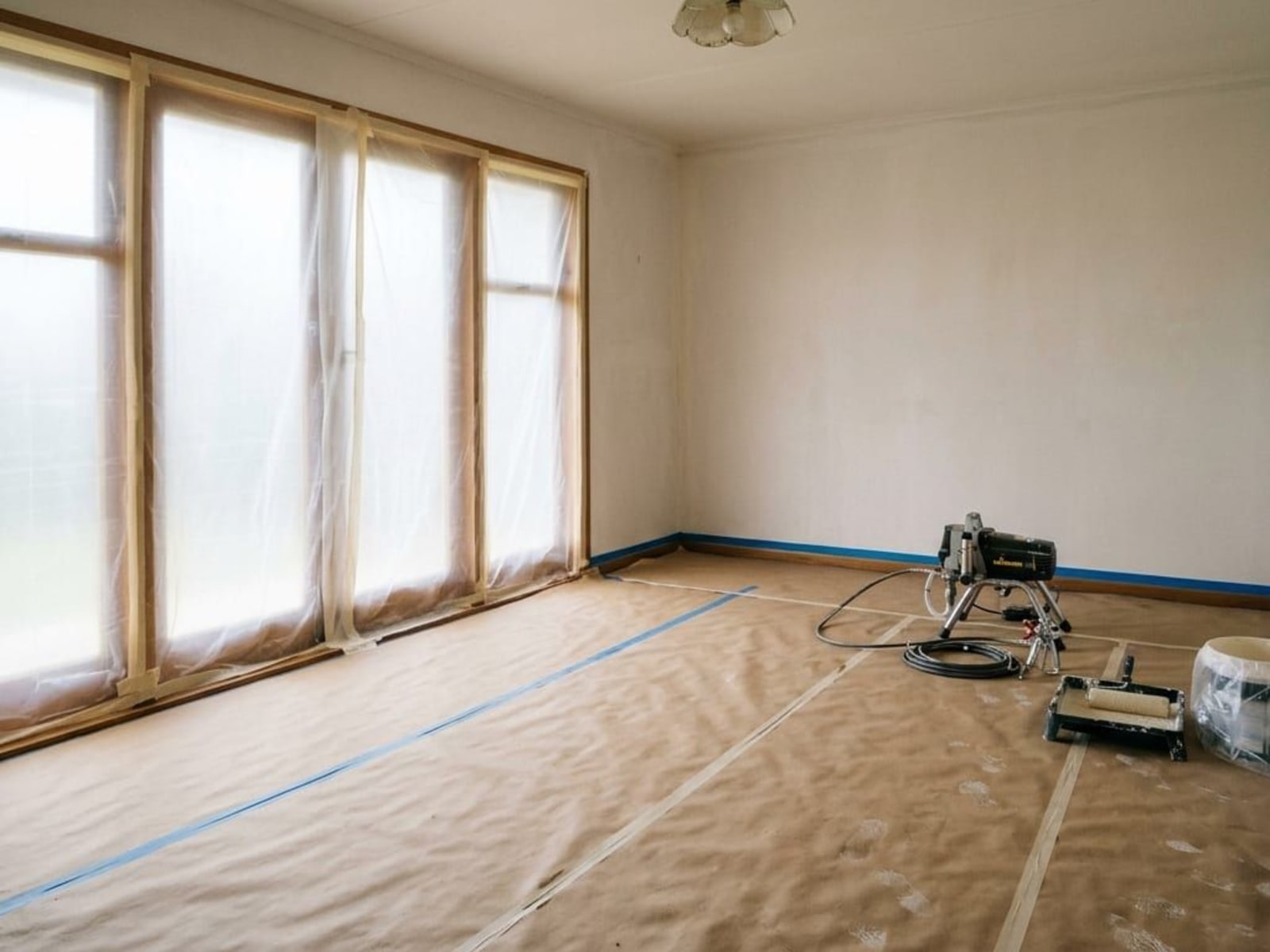
- How are the rooms masked, and what is covered against overspray inside and out?
- Which sheen are you using, and is the stopping level suited to it?
A painter who back-rolls as a matter of course will answer these without hesitation. A quote that looks cheap for a spray job sometimes has no back-rolling in it, so ask rather than assume.
Is a spray-only finish ever fine?
Sometimes. Garages, storage rooms, the inside of cupboards and areas where appearance is not important are reasonable places to accept a spray-only finish to save labour. Smooth enamel work on joinery and cabinetry is a separate skill where spray alone is the point.
For the living areas of a home, especially new plasterboard in rooms with strong daylight, back-rolling is the part of interior painting worth paying for.
For the broader question of when spraying, rolling or brushing suits each surface, see our guide to spray, roll or brush.
If you are planning a repaint, ask us for a quote and we will tell you how each coat goes on.
Related Articles


Need Help With Your Painting Project?
Wellington Decorators has been transforming homes across the Wellington region since 2023, led by a founder with 18+ years in the trade. As Registered Master Painters, we back every job with a 5-year workmanship guarantee.
Prefer to talk? Call us now 027 458 6465