
Paint Stripping in Tawa - Solid Work for Solid Homes
Tawa is a straightforward suburb in the best sense - good rail connection to the city, flat terrain, practical housing stock, and a community that takes care of its properties. The homes built here from the 1950s through the 1970s were largely state housing and private builds from the same era: weatherboard construction, sound framing, and paint systems that have now been layered up over decades of maintenance.
That accumulated paint history is exactly where we spend most of our time when working in this area. A house repainted every ten to fifteen years from 1955 to now has potentially accumulated six or more distinct paint layers. At that point, the total paint thickness starts causing its own problems - edges become pronounced, fine joinery detail gets filled in, and the paint system as a whole becomes brittle and prone to widespread failure.

Why Paint Stripping Matters in Tawa
The practical case for stripping in this suburb comes down to the age of the housing stock and what was standard in the industry when these homes were first painted and repainted. Lead-based paints were widely used until 1978, and homes built or repainted before that date are likely to have lead somewhere in their paint system. This is a straightforward fact of the era, not a unique problem - but it does mean stripping needs to be done carefully and responsibly.
The flat terrain and relatively sheltered position in Tawa is actually a mixed blessing for paint longevity. The reduced wind exposure means moisture doesn't dry as quickly from shaded walls and soffits. Over time, that slower drying creates conditions where paint adhesion breaks down from behind - you'll see the paint looking intact on the surface right up until it starts peeling in sheets.
Good paint stripping gives the surface a proper reset. New primer applied directly to prepared bare timber bonds in a way that paint applied over multiple old layers simply cannot. For homeowners here investing in a quality repaint, proper stripping is what makes that investment last.

Our Process for Tawa Homes
The housing stock in this area is mostly practical, no-nonsense weatherboard - which suits our approach. We work efficiently without cutting corners on preparation.
The starting point is always an honest assessment of what the existing paint system looks like. How many layers, what condition, any signs of lead paint, any areas where moisture has already got in behind the surface. For homes from the state housing era, we test for lead as standard - it's not worth guessing. Once we know what we're dealing with, we can plan the right method and give you an accurate price.
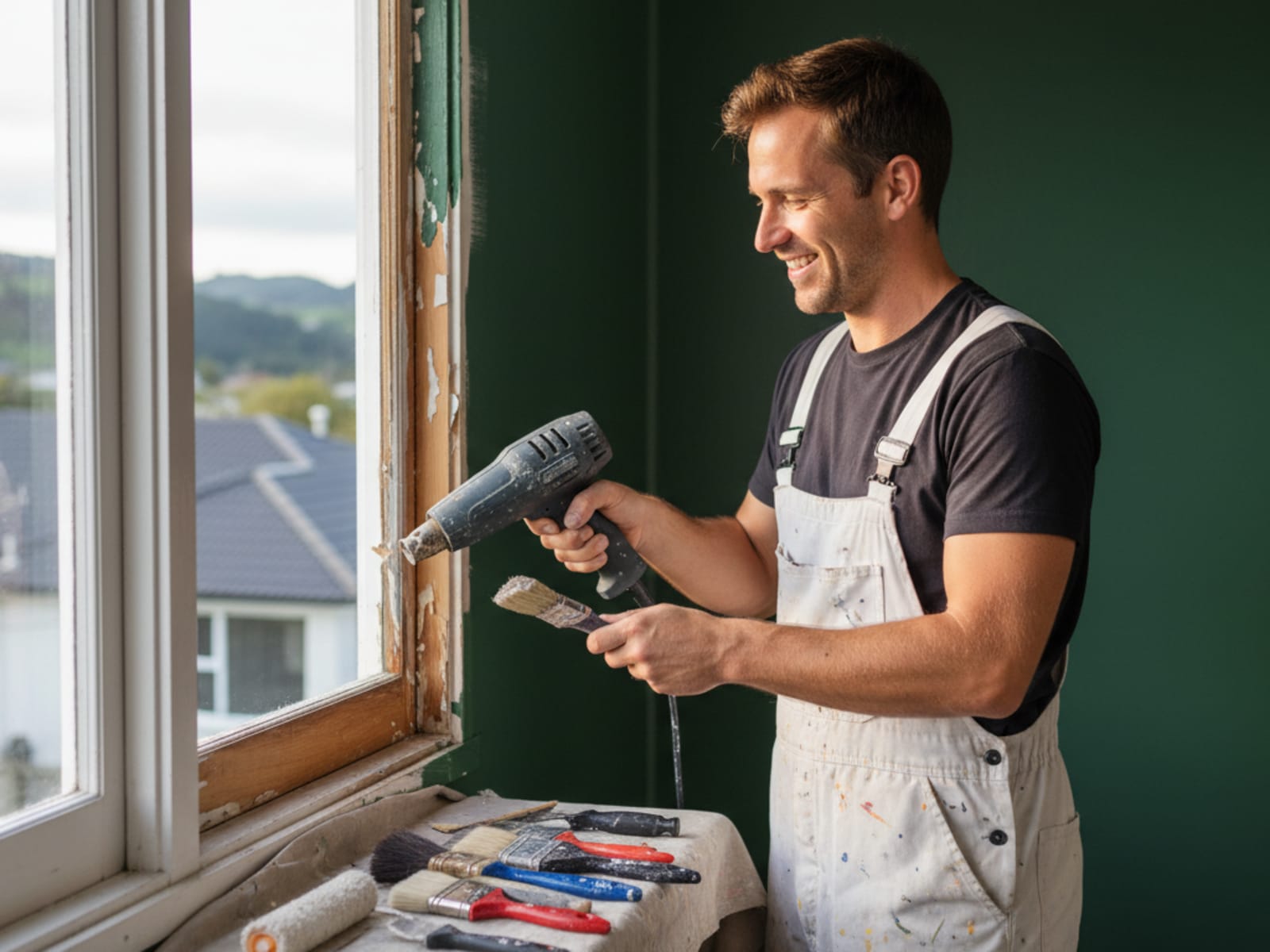
For typical weatherboard homes in Tawa, chemical stripping is effective and efficient on large flat surfaces. We apply stripper, allow it to penetrate the layers, then remove the softened paint cleanly. Heat methods are useful for heavier build-up on trims and soffits where paint has become almost wood-hard over decades. Where lead is confirmed, we follow safe work practice throughout - containment, appropriate PPE, and correct disposal.
After stripping, we inspect the bare timber for any rot or damage that needs addressing before painting. It's not unusual to find some bottom weatherboard damage or window sill rot on homes this age - better to deal with it now than have it continue behind a new paint job. Wellington Decorators handles those repairs as part of the overall job, so you're not coordinating separate trades.
Pricing Guide for Tawa Paint Stripping
The housing here is predominantly practical weatherboard, which keeps stripping work relatively straightforward. Here's a realistic guide:
- Weatherboard stripping: $40 - $80 per m²
- Interior trim stripping: $15 - $35 per linear metre
- Window frame stripping: $80 - $150 per window
- Full exterior strip (complete house): $6,000 - $18,000
A single-storey weatherboard home with straightforward access will generally come in at the lower end of these ranges. Two-storey homes, confirmed lead paint, and heavier paint build-up push costs up. We'll walk you through the quote so you understand exactly what you're paying for.

Frequently Asked Questions
My Tawa house was built in 1962. Should I assume there's lead paint?
It's a reasonable assumption for a home of that age. Lead was a standard ingredient in house paint primers and undercoats right through the 1960s and into the late 70s. The safest approach is to test before we start stripping - it's a straightforward process and means we know exactly what precautions are needed. We include testing in our assessment for all homes built before 1980.
The paint on my Tawa home is peeling in big sections. Is that a sign I need full stripping?
Large-scale peeling usually indicates the paint system has failed at an adhesion layer - often where water got in at some point and broke the bond between coats. When you see widespread peeling rather than localised spots, stripping back to bare timber is typically more cost-effective than trying to patch and paint over the problem. We'll assess and give you an honest recommendation.
Can stripping be done in sections, or do you need to do the whole house at once?
It can be staged. Some homeowners prefer to do one elevation at a time for budget reasons, or prioritise the worst-affected sides first. The main consideration is making sure the junction between stripped and unstripped sections is handled cleanly so the final paint job looks consistent. We've done plenty of staged jobs and can plan the sequence to work with your budget.
How much disruption is there during stripping work?
Less than most people expect. We contain the work area to minimise mess and typically work from one side of the house at a time. You can stay in the home throughout. With lead paint work there are some additional precautions - we'll talk you through those specifically if it applies to your job.
Related Articles


Need Help With Your Painting Project?
Wellington Decorators has been transforming homes across the Wellington region since 2023, led by a founder with 18+ years in the trade. As Registered Master Painters, we back every job with a 5-year workmanship guarantee.
Prefer to talk? Call us now 027 458 6465