
Paint Stripping in Thorndon - Heritage Work Done Right
Thorndon is Wellington's oldest suburb, and the homes here are unlike anywhere else in the city. Victorian villas from the 1880s. Edwardian townhouses from the early 1900s. Grand weatherboard homes with ornate timber cornices, sash windows, and verandah detailing that took skilled tradesmen weeks to build. Many are heritage-listed. All of them carry paint histories that go back further than most people's grandparents.
Working on Thorndon homes is a different proposition from standard residential painting work. The stakes are higher, the material is irreplaceable, and the margin for cutting corners is zero. When we take on a paint stripping job in Thorndon, we treat it with that level of seriousness.

Why Paint Stripping Matters in Thorndon
For any Thorndon home built or repainted before 1978 - which is essentially every pre-war property in the suburb, and most of the post-war stock too - lead paint is not a possibility, it's a near-certainty. Homes from the Victorian and Edwardian era have had that original paint system recoated, touched up, and painted over through the oil paint era, the alkyd era, and into modern acrylics. The result is often a paint build-up of remarkable thickness, containing multiple generations of lead-based layers beneath more recent coats.
That accumulated paint system creates specific problems for heritage properties. On intricate ornate cornices and mouldings, thick paint obscures the fine detail that defines the character of these homes. Sash windows that were designed to slide freely become immovable under layers of paint. Timber joinery that was once crisp and precise looks blurred and heavy.
There's also the practical side: paint applied over compromised earlier layers on a 1900 Thorndon villa is not going to last. Proper paint stripping is the only way to get back to a surface that will hold a new paint system for fifteen years or more. Done correctly, it also lets you assess and restore the original timber in a way that's genuinely worth preserving.

Our Process for Thorndon Heritage Homes
Heritage stripping work requires a methodical, unhurried approach. We don't take shortcuts on Thorndon properties, and we won't tell you the job will go faster than it actually will.
Every Thorndon job starts with a thorough assessment. We document the existing paint condition, test for lead across multiple surfaces and layers (lead content often varies between different parts of the same home - exterior vs interior, timber vs masonry), and assess the condition of the underlying substrate. For heritage-listed properties, we're also mindful of any specific requirements or restrictions that may apply to the way work is carried out.
Chemical stripping is the primary method we use on Thorndon's fine heritage joinery. It's the approach least likely to damage intricate profiles - no mechanical force, no risk of heat damage to thin timber sections. We apply a gel-based stripper that clings to vertical surfaces, allow it to do the work through the layers, then remove the softened material carefully with appropriate tools. For heavier build-up on flat weatherboard surfaces, we may combine chemical and heat methods. On all surfaces containing confirmed lead, we maintain full containment and safe work practice from start to finish.
Restoring the fine detail on Victorian cornices and Edwardian joinery once paint is stripped is skilled work. Wellington Decorators has the experience to do this carefully - cleaning out profiles with fine tools, assessing what's sound versus what needs repair, and preparing surfaces so the finished paint job does justice to the original craftsmanship.
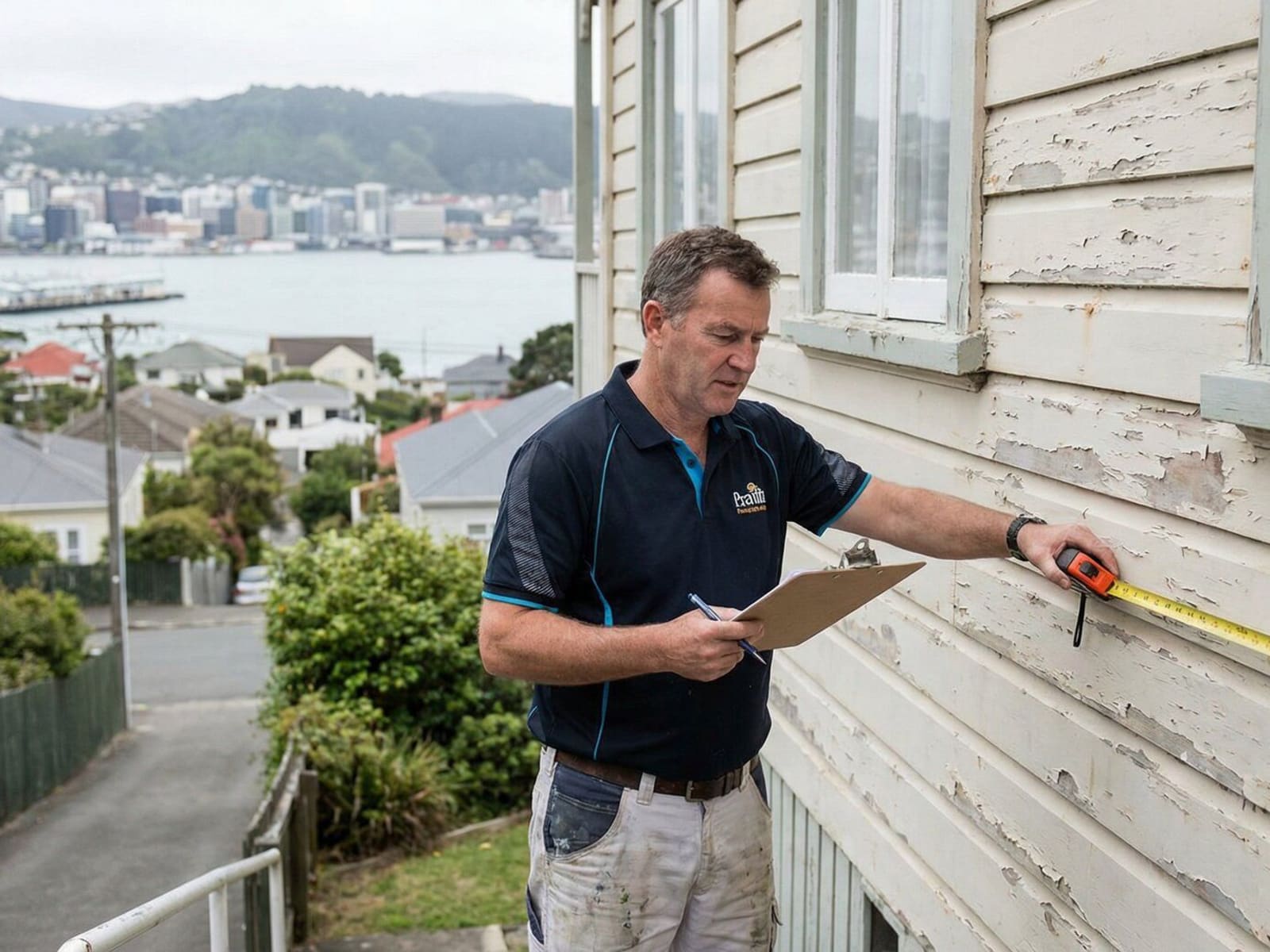
Pricing Guide for Thorndon Paint Stripping
Heritage properties with complex profiles, confirmed lead paint, and multi-layer paint systems require more time and care than standard residential work. The pricing reflects that reality:
- Weatherboard stripping: $40 - $80 per m²
- Interior trim stripping: $15 - $35 per linear metre
- Window frame stripping: $80 - $150 per window
- Full exterior strip (complete house): $6,000 - $18,000
Thorndon heritage properties typically sit in the upper half of these ranges, and for good reason. Sash windows with multiple layers of lead paint take significantly longer to strip properly than a modern window frame. Original ornate cornices require hand tool work that can't be rushed. We price honestly and explain what drives the cost on your specific property.

Frequently Asked Questions
My Thorndon villa is heritage-listed. Does that affect what I can do with the paint?
Heritage listing typically governs what you can change about the exterior appearance, not the maintenance methods you use. Stripping and repainting in appropriate colours and finishes is generally fine. If your property is on the Wellington City Council heritage list or is a Category 1 or 2 Historic Place, it's worth checking the specific conditions that apply. We can advise on this from experience working on heritage properties in the suburb, and we're familiar with the documentation requirements.
Lead paint is definitely present in my 1890s Thorndon home. How do you manage that safely?
Carefully and systematically. For homes with confirmed lead paint we use full containment - sheeting below work areas to catch all debris, appropriate respiratory protection, and designated decontamination procedures. All lead paint waste is disposed of correctly. We don't cut corners on this. The risk to your family, our crew, and neighbours is real if it's not managed properly.
My sash windows have been painted shut for years. Can they be restored?
Usually yes. Sash windows that have been painted shut are almost always the result of accumulated paint layers bridging the frame and sash. Once that paint is properly stripped, the window mechanism can be cleaned, adjusted, and freed. It's one of the most satisfying parts of heritage restoration work - giving a 120-year-old window back its original function.
How do you handle the fine detail on ornate cornices and mouldings?
By hand, with appropriate tools and patience. Chemical stripper is applied to soften the paint, then we work through the profiles carefully with fine tools that follow the timber contour without gouging. It's slow work but it's the only way to do it properly. We won't use a wire brush or power tools on fine heritage detail - the damage isn't worth the time saved.
Related Articles


Need Help With Your Painting Project?
Wellington Decorators has been transforming homes across the Wellington region since 2023, led by a founder with 18+ years in the trade. As Registered Master Painters, we back every job with a 5-year workmanship guarantee.
Prefer to talk? Call us now 027 458 6465