
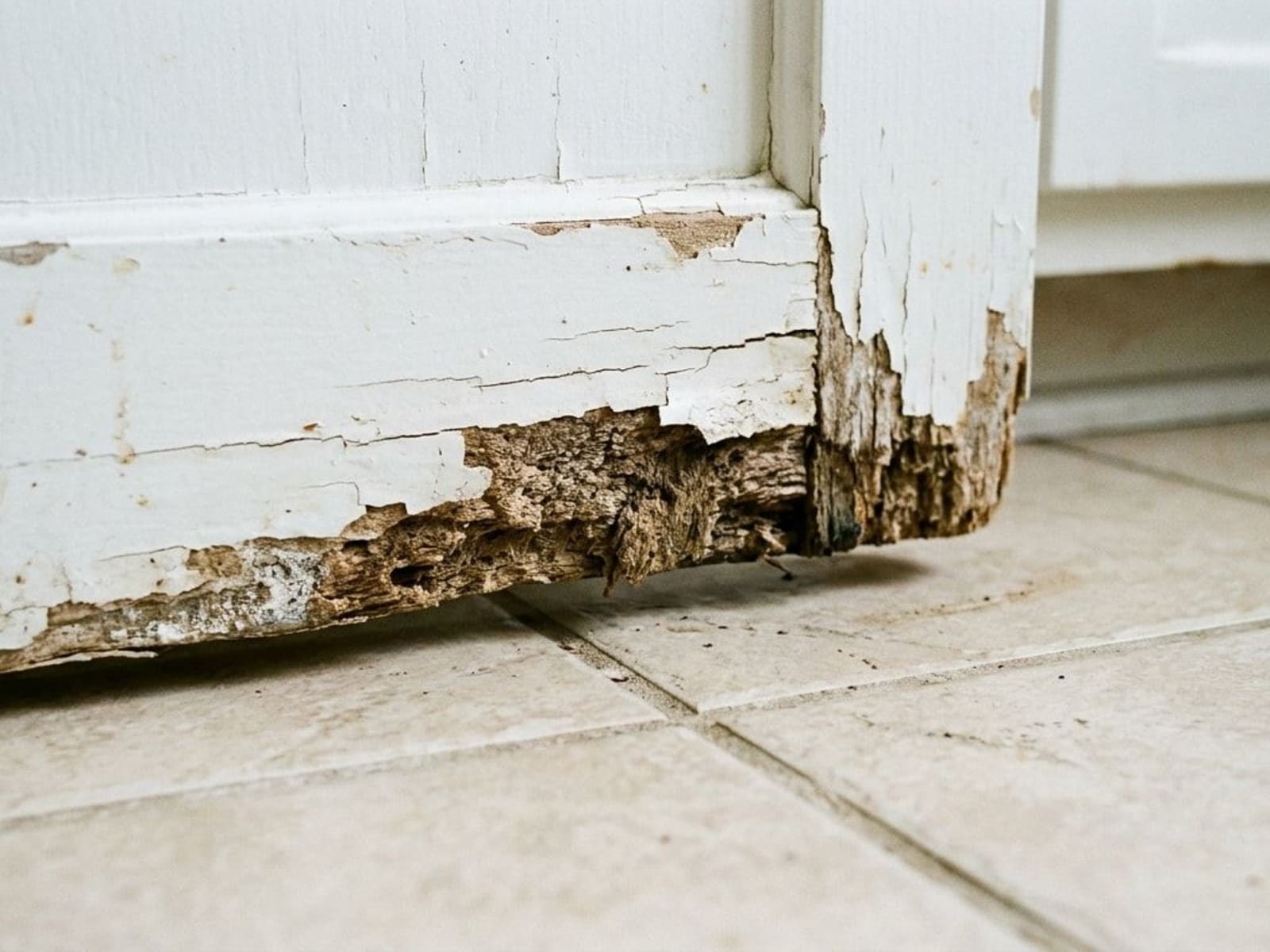
Painted MDF swells at the edges because a cut edge is exposed fibre with none of the dense, smooth skin the faces have, so it soaks up water like a sponge wherever the paint film is thin, cracked or missing. The fix is to seal and prime every cut edge before the topcoat goes on, and to keep water off the edge afterwards, because once the fibres have swollen they do not shrink back flat.
This is the most common failure on MDF skirting, window reveals, vanity doors and built-in shelving, and it is almost always the edge that goes first.
Why the edge and not the face?
MDF is wood fibre pressed together with resin and wax. The pressing leaves the two faces hard and smooth. A cut edge exposes the loose, open fibre in the middle of the board, and those fibres take up water much faster than the face does.
Water gets in two ways. The first is the paint itself: a waterborne primer or topcoat brushed onto a bare cut edge raises the fibres, which is why unprimed MDF edges go furry after the first coat. The second is later, in service: a skirting that gets the mop every week, a vanity door next to a wet basin, or a window reveal with condensation running down it. Paint on an edge is usually thinner than paint on a face, especially on a sharp arris, so that is where it cracks or wears through first. Once water reaches the fibre, the board thickens at the edge and the paint on top splits.
How should MDF edges be primed?
With a primer the manufacturer says is suitable for MDF, applied to every face and every cut edge before any topcoat.
Resene's recommended paint systems list Resene Quick Dry, a waterborne primer undercoat, for both new and aged MDF. Its data sheet describes it as a successful primer undercoat for HDF and MDF that seals the waxes used in the board, and says to apply one to two coats and sand lightly between coats. The Resene SpaceCote Low Sheen data sheet goes further for fibre and particle board, saying that because of the waxes in these boards it is essential that Quick Dry is the first coat. Other paint makers have their own MDF primers; whichever you use, read its data sheet for how it should be used on edges.
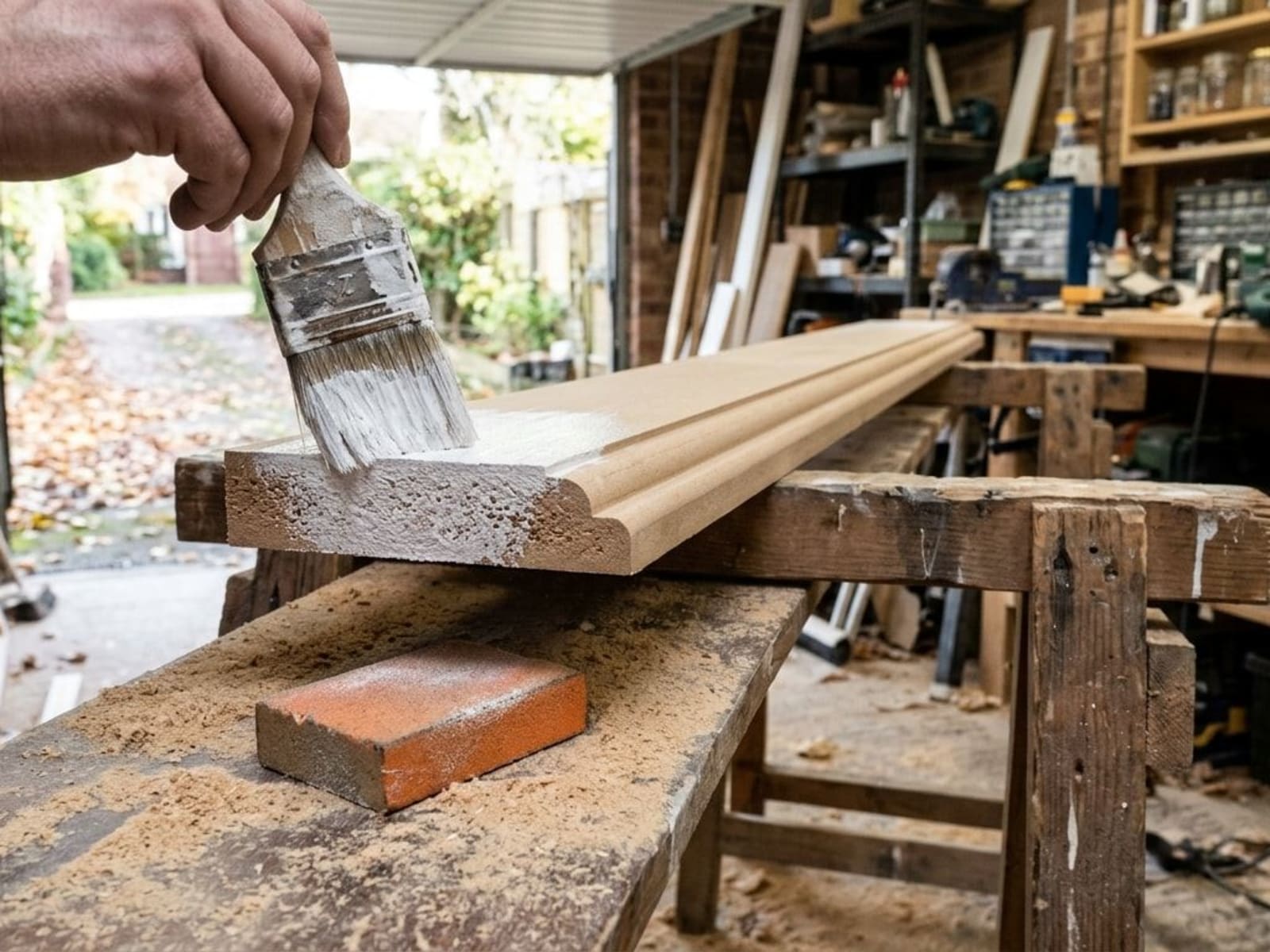
In practice, edges need more work than faces:
- Sand the cut edge smooth and remove the dust.
- Prime the edge generously and let it dry. Expect the fibres to lift.
- Sand the lifted fibres back lightly and prime again. Two coats on the edge is normal even where one coat is enough on the face.
- Fill any remaining roughness, sand, and spot prime the filler.
- Apply the topcoat over the whole piece, faces and edges together.
Factory pre-primed MDF mouldings save time on the faces, but any end you cut on site is raw again. Every cut end and mitre needs priming before it is fixed and painted.
Does the topcoat matter?
Less than the primer, but it matters. Joinery and trim that get handled, knocked and wiped need a harder-wearing finish than a wall paint, which is why enamels are used on skirtings and doors. Our page on waterborne enamel on joinery covers that choice. The point for MDF is simply that no topcoat, however tough, protects an edge that was left unsealed underneath it.
Can a swollen edge be fixed?
Sometimes. It depends on how far the swelling has gone and whether the water is still getting in.
| What you find | What to do |
|---|---|
| Paint split along the edge, slight raised lip, board still firm | Let it dry out fully, sand the lip back flat, prime the bare fibre, fill, prime again and repaint |
| Edge noticeably thicker, fibre soft or crumbly when pressed | Cut or sand back to firm board if you can, rebuild with a filler suited to the job, then prime and paint; a patch rarely stays invisible |
| Swelling spread well into the face, or the board has lost strength | Replace the piece; repainting will not last |
| Swelling keeps coming back in the same place | Find and stop the water source first, whether a leaking seal, a basin splash or condensation, then repair or replace |
Swollen MDF does not go back to its original thickness when it dries. Sanding the lip flat can make it look right, but the fibre underneath is weaker than it was, so sealing it properly after the repair matters even more than on new board.
Is moisture-resistant MDF the answer?
It helps in wet areas and is worth using for anything built near a sink, bath or shower. It is not waterproof, though, and its cut edges still need to be sealed and primed like standard board. Ask the supplier what the board is rated for and whether they have edge-sealing guidance for it.
For window reveals that get condensation every winter, the better long-term fix is dealing with the condensation, whether that is ventilation, heating or the window itself. Paint slows the damage down. It does not stop water sitting on an edge for months.

Is this a DIY job?
Priming new MDF edges properly is absolutely a DIY job, and doing it before installation is the single most useful thing you can do. It is tedious rather than difficult.
Repairing swollen edges on a run of skirting, or on a vanity that still gets wet, is a judgement call about what to save and what to replace. If you want someone to make that call, and to prime and paint new or repaired MDF so it lasts, that is part of our interior painting work.
Get in touch for a quote.
Related Articles


Need Help With Your Painting Project?
Wellington Decorators has been transforming homes across the Wellington region since 2023, led by a founder with 18+ years in the trade. As Registered Master Painters, we back every job with a 5-year workmanship guarantee.
Prefer to talk? Call us now 027 458 6465