
Waterborne enamel now does everything oil-based enamel used to do on doors, skirtings, architraves and window joinery, and it does one thing oil cannot: it stays the colour you painted it. Oil-based enamel ambers with age, worst in rooms that get little daylight and inside cupboards, and that yellowing is the main reason New Zealand joinery moved across.
The practical consequences are about timing rather than quality. Waterborne enamel goes on faster, recoats sooner and hardens later.
What actually changed?
Early water-based enamels were acrylics with a bit of gloss in them. They stayed soft, they marked easily, and doors stuck to their stops through the first warm summer, which is why a generation of painters distrusted them. Modern waterborne enamels use urethane-modified and alkyd-modified resins that keep reacting after the water has left, so they end up genuinely hard rather than merely dry.
Two other things pushed the change. Solvent content came under pressure, and most interior joinery is repainted in an occupied house where nobody wants to sleep in the smell of white spirit for three nights.
How do the two compare in practice?
| Property | Oil-based enamel | Waterborne enamel |
|---|---|---|
| Colour over time | Ambers noticeably, worst in low light | Stays close to the applied colour |
| Odour | Strong solvent smell for days | Low, room usable the same day |
| Recoat time | Usually overnight | Same day in good conditions, but check the tin |
| Open time | Long and forgiving, flows out on its own | Short, skins quickly, less forgiving |
| Finish off the brush | Levels flatter with less effort | Needs better technique to match it |
| Hardness the day after | Reasonably hard | Still soft, marks easily |
| Hardness once cured | Hard, and keeps getting more brittle | Hard, stays flexible |
| Resistance to sticking | Good early | Poor early, good once it has cured |
| Cleanup | Solvent | Water |
| Exterior joinery | Cracks at moving joints as it ages | Follows timber movement better |
What does the shorter open time mean on the job?
It means you cannot go back over it. On a long run of skirting or the flat of a flush door, waterborne enamel starts to skin within a couple of minutes. Brushing back into a section that has begun to set drags the film and leaves marks that are still there when it dries.
Working method matters more than product choice. Lay it on quickly, work in sections that finish at a natural break, keep a wet edge and then leave it alone. Do not thin it heavily to buy yourself time; use the manufacturer's own extender if you need one, and use it sparingly.
Conditions matter too. An open window with a northerly coming through it will skin a door faster than you can coat it, so painting joinery with the house shut up is usually the better call in summer. Winter brings the opposite problem: high humidity keeps the film open, the cure slows, and the recoat window stretches out. If the room feels cold and damp, the times on the tin are optimistic.
How long before I can shut the door or load the shelf?
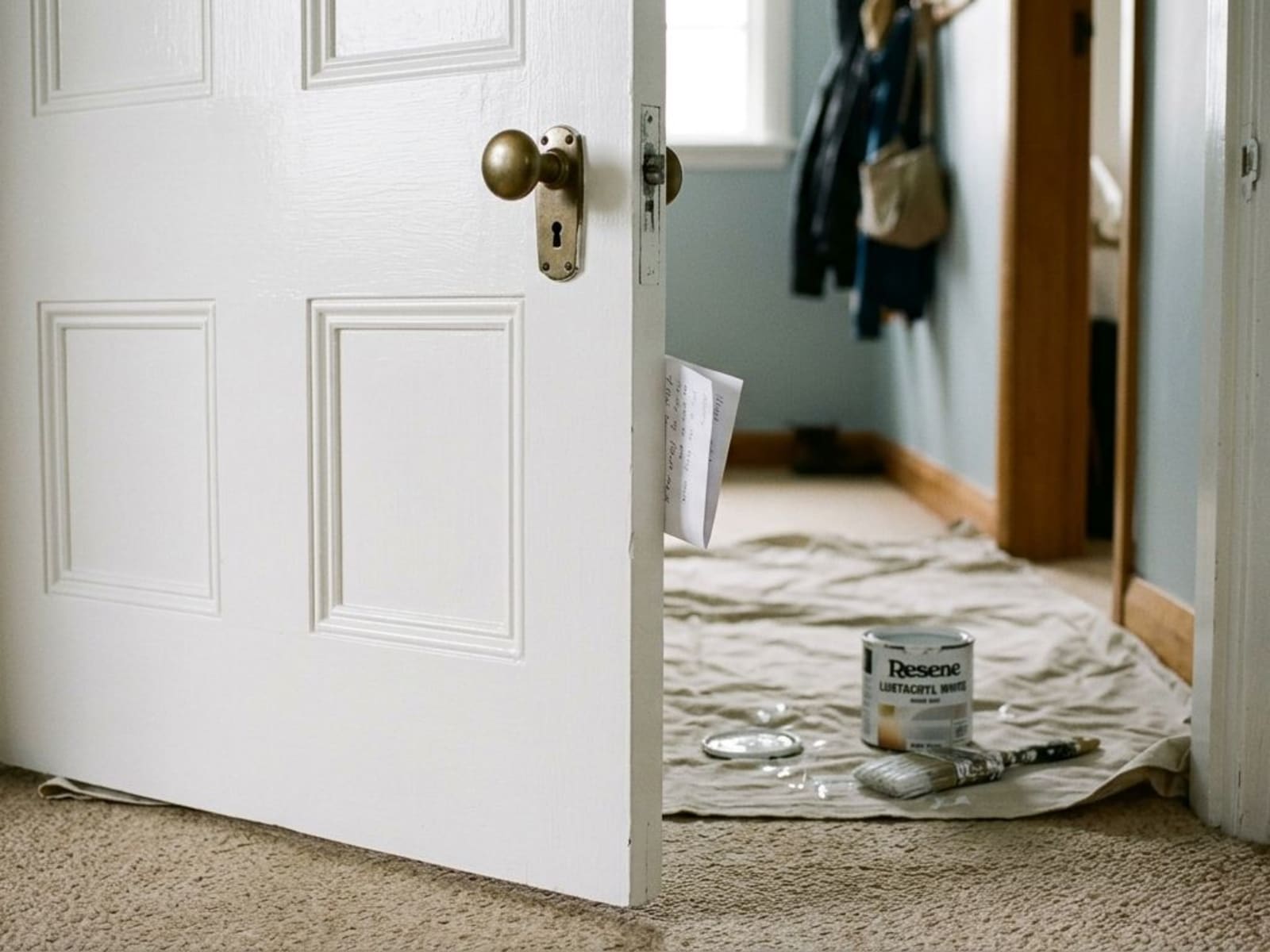
Touch dry, and ready for the next coat the same day, does not mean cured. Waterborne enamel keeps hardening for weeks after it feels dry, and until it has, anything pressed against it can bond to the film and pull it off when the two are separated. That is blocking, and it is the complaint we hear most often about waterborne enamel. It is almost always caused by closing or loading something too early.
Practical rules. Leave painted doors ajar overnight and preferably longer. If a door has to be closed, fold a piece of paper over the stop first. Keep books, appliances and anything heavy off freshly painted shelving for a week at the very least, and four weeks before you let anything heavy sit pressing against it. Do not tape anything to a new finish. In cold damp conditions, double whatever you were planning to wait.
Can waterborne go over old oil-based enamel?
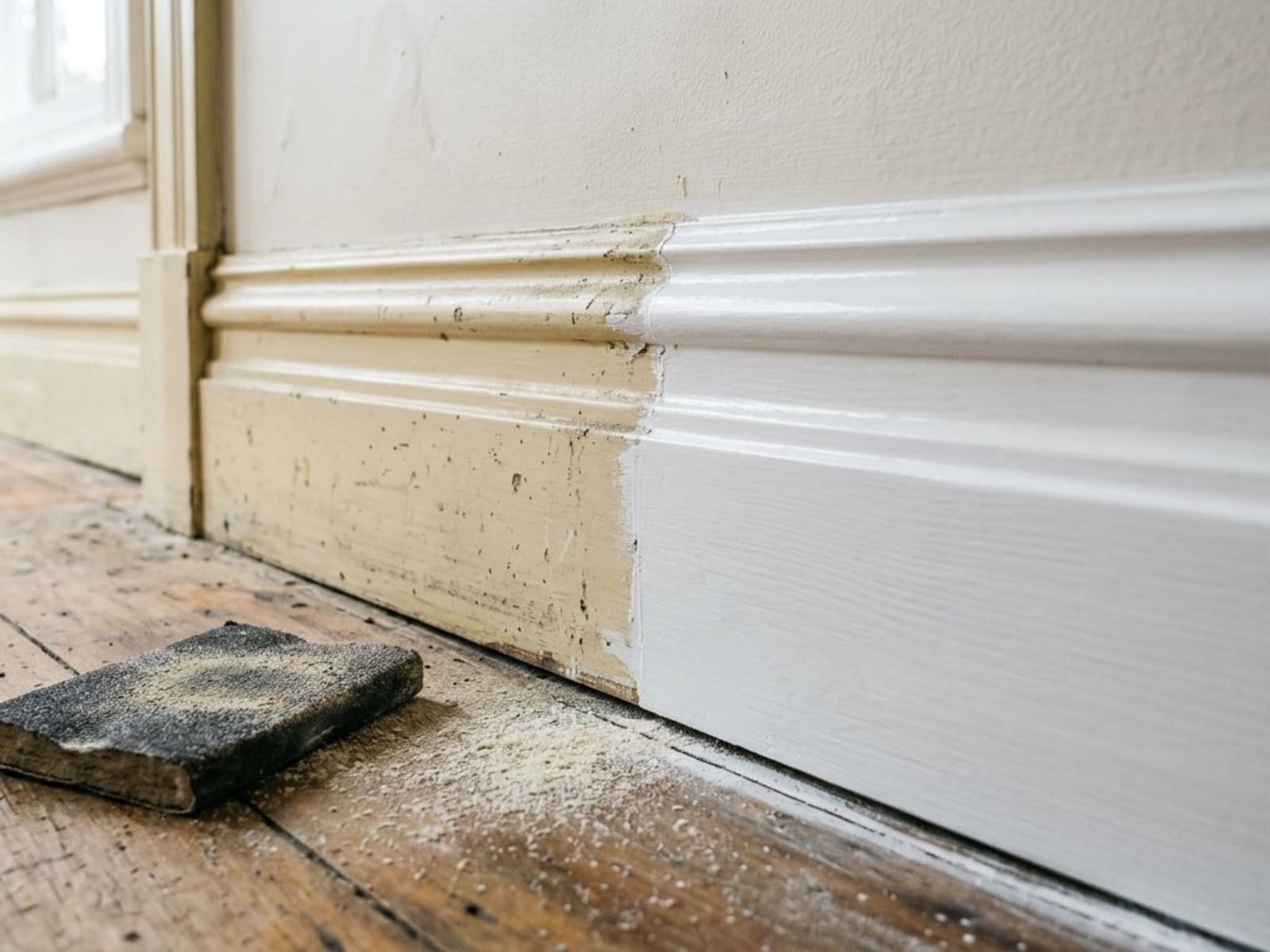
Yes, and most joinery in an older Wellington villa or bungalow is exactly that job. The preparation is what makes it hold.
- Wash it. Old joinery carries cooking grease, hand oils and furniture polish, and in a kitchen or a rental it carries more than you would like.
- Sand the gloss off. Not back to bare timber, just enough to kill the shine everywhere. Any glossy patch you miss is where it peels later.
- Spot prime bare timber, knots and filler.
- Where sanding is impractical, on carved mouldings or fine architraves, use an adhesion primer rather than hoping.
One caution specific to older houses. Joinery in a home built in the 1980s or earlier may have lead-based paint under the top coats, which changes how it can be sanded, so have it tested. Wet sanding, containment and proper disposal are not optional on those, and dry sanding a villa architrave is a genuinely bad idea. If you do not know the age of the coatings, treat them as lead until proven otherwise. That applies to any interior repaint in the older parts of the city.
Is there still a reason to use oil?
For a white or light finish inside a house, almost never. If someone specifies oil-based enamel for interior joinery, ask what problem it is solving.
Solvent-based products still earn their place in specific roles: sealing knots and tannin-rich timber, blocking heavy water or smoke staining, and priming a chalked or contaminated substrate. Those are primer and sealer jobs. The finish coat over the top can still be waterborne, and usually should be.
Does it hold up outside?
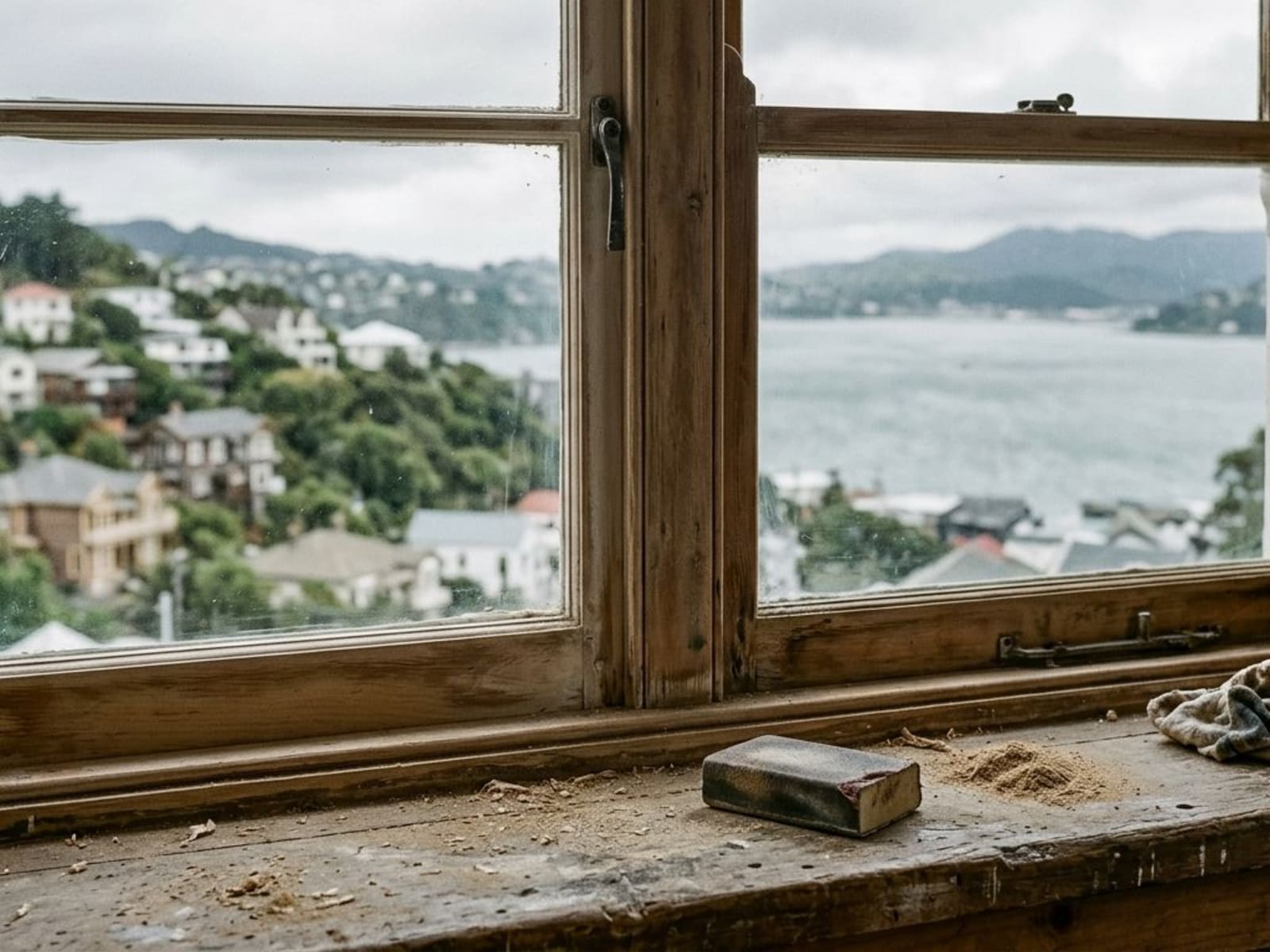
Better than oil, for the reason that matters here. Exterior joinery moves. Timber swells and shrinks with moisture, and a window sash flexes every time it is opened. Oil enamel keeps hardening for its whole life and eventually becomes brittle enough to crack at the joints of a sash. Waterborne stays flexible enough to follow that movement.
That matters more on a coast where wind-driven rain is forced into anything that has opened up. A hairline crack at the bottom corner of a sash is how water gets into the joint, and the joint is where rot starts. Exterior joinery is worth a look every year for that one thing, and it should be part of any exterior painting conversation rather than an afterthought.
What should a quote say?
It should name the system: what the surface is washed with, whether it is sanded or primed with an adhesion primer, what the primer is, and how many finish coats. Two coats of enamel over unspecified preparation is where problems start.
Sound joinery, properly prepared and finished in waterborne enamel, holds its colour and its edges for years. The same paint over an unsanded gloss surface will be peeling in strips long before that. The difference is entirely in the day of work nobody sees.
If your doors, skirtings or window joinery have yellowed, chipped or started sticking, we will look at them and tell you what they need. Ask for a quote.
Related Articles


Need Help With Your Painting Project?
Wellington Decorators has been transforming homes across the Wellington region since 2023, led by a founder with 18+ years in the trade. As Registered Master Painters, we back every job with a 5-year workmanship guarantee.
Prefer to talk? Call us now 027 458 6465