
Warwick Street
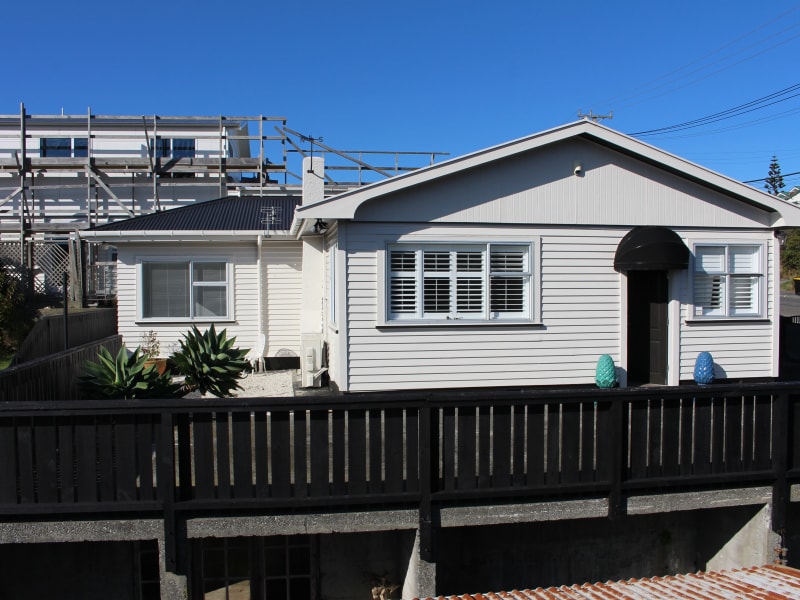
This Warwick Street property presented an interesting challenge with its mix of weatherboard and fibre-cement cladding, requiring different preparation and painting approaches for optimal results. The home had been neglected for some years, with significant paint failure, mould growth in sheltered areas, and minor damage to cladding in several locations that needed repair before painting could commence.
Mixed-cladding homes need careful thought before you open a tin of paint. Weatherboard and fibre-cement behave differently — one is a natural timber product that moves with humidity and temperature, the other is a rigid cement-based sheet that doesn't flex. Using the wrong primer or the wrong application technique on either surface can cause premature failure regardless of how good the topcoat is. We assessed each surface section individually and planned the product schedule accordingly before any preparation work began.
Our project began with coordinating carpenter repairs to damaged cladding sections, followed by comprehensive cleaning and treatment. We used specialist products to kill and remove mould, then water-blasted all surfaces to remove old, failing paint and surface contaminants. The mould treatment involved applying a biocide wash, allowing appropriate dwell time, then rinsing thoroughly — simply blasting mould off a surface without treating it means you're painting over live spores that will reappear through the topcoat within months. Each surface type received appropriate treatment: weatherboards were hand-scraped and sanded where necessary, whilst fibre-cement panels were filled and smoothed. We applied a comprehensive Resene paint system, using Quick Dry primer on all prepared timber and Broadwall primer on fibre-cement areas, followed by two full coats of Resene Sonyx 101 topcoat throughout for consistency.
Achieving a consistent colour result across two different substrate types is something many homeowners worry about. In practice, when both surfaces are correctly primed and receive the same topcoat, the result is visually cohesive. The slight texture difference between smooth fibre-cement and the more pronounced grain of weatherboard actually adds character rather than detracting from the overall finish.
The completed project has completely revitalised this property, transforming it from neglected to pristine. The homeowners were particularly pleased with how we addressed the various surface conditions professionally and achieved a consistent, high-quality finish across all materials. For similar restorative exterior painting work, we bring experience in handling diverse surface types and conditions.




Want a Similar Transformation?
Contact us for a free consultation and quote