
Paint new linseed oil putty once it is firm to the touch and has formed a skin, which Resene's guidance for new windows says will usually take 10 days, unless a synthetic fast-drying putty has been used. In cold, damp weather it can take much longer, so the calendar is only a starting point and a fingertip test on the putty itself is what decides it.
Paint too early and the paint cracks. Leave it too long and the putty weathers before it is ever protected. The window you want is in between.
Why does putty need to skin before it is painted?
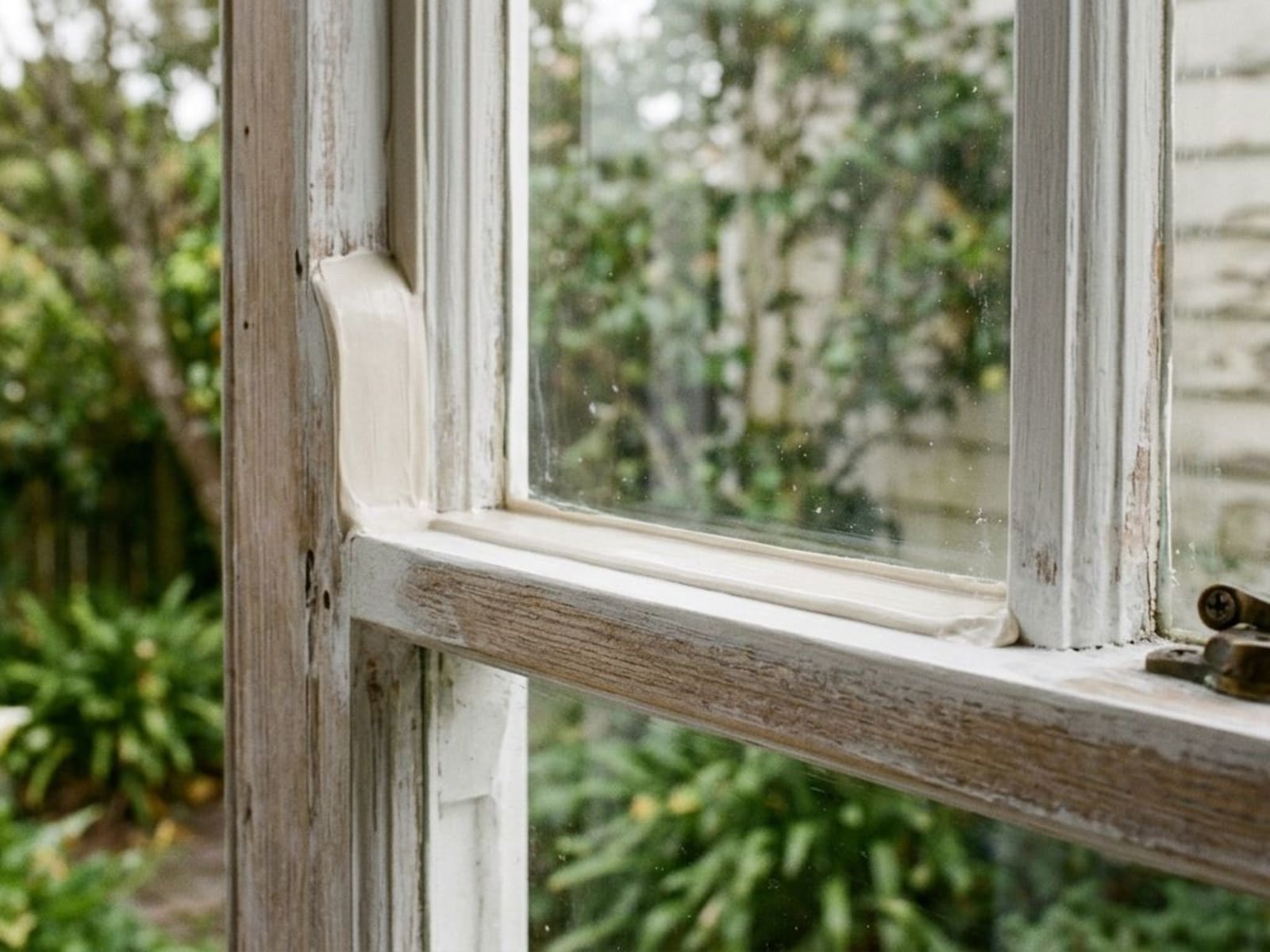
Traditional glazing putty is a filler bound with linseed oil. It does not dry by evaporation the way water-based paint does. The oil reacts with air, so the putty firms up from the outside in, forming a skin over a core that stays soft for a long time.
That soft core is the point. It is what lets putty move with the timber and the glass for decades. But paint put onto putty that has not yet skinned is sitting on something that is still moving and still giving off oil, and the paint film is not designed for that.
Check the tin of the putty you used. Synthetic and fast-drying glazing compounds exist, they are handled differently, and their own label is the authority on when they can be painted.
How do you check that it is ready?
Resene's technical team suggests a simple test: press a finger firmly into the putty, and if it leaves only a light fingermark, it is usually ready to paint. If your finger sinks in, or comes away oily, wait.
Test in a few places, and test the side of the house that gets the least sun. Putty on a shaded south-facing sash will lag behind the same putty on a sunny north face, and on a villa with windows on every elevation that can mean painting the house in two rounds.
What goes wrong if you paint it too early?
Cracking. One of the questions answered in Resene's window joinery Q&A comes from a homeowner who waited three weeks, painted, and found the paint cracking over the putty. The answer put it down to the putty not being skinned enough underneath, and the likely fix was stripping back to the putty and starting again with longer drying times.
The same Q&A describes a long wet winter in which putty did not dry hard enough for painting after months, and paint put on it cracked. That is the real risk in this climate. Putty done in late autumn on a Wellington villa may not be ready until spring, and no product on the shelf changes that.
What goes wrong if you leave it too long?
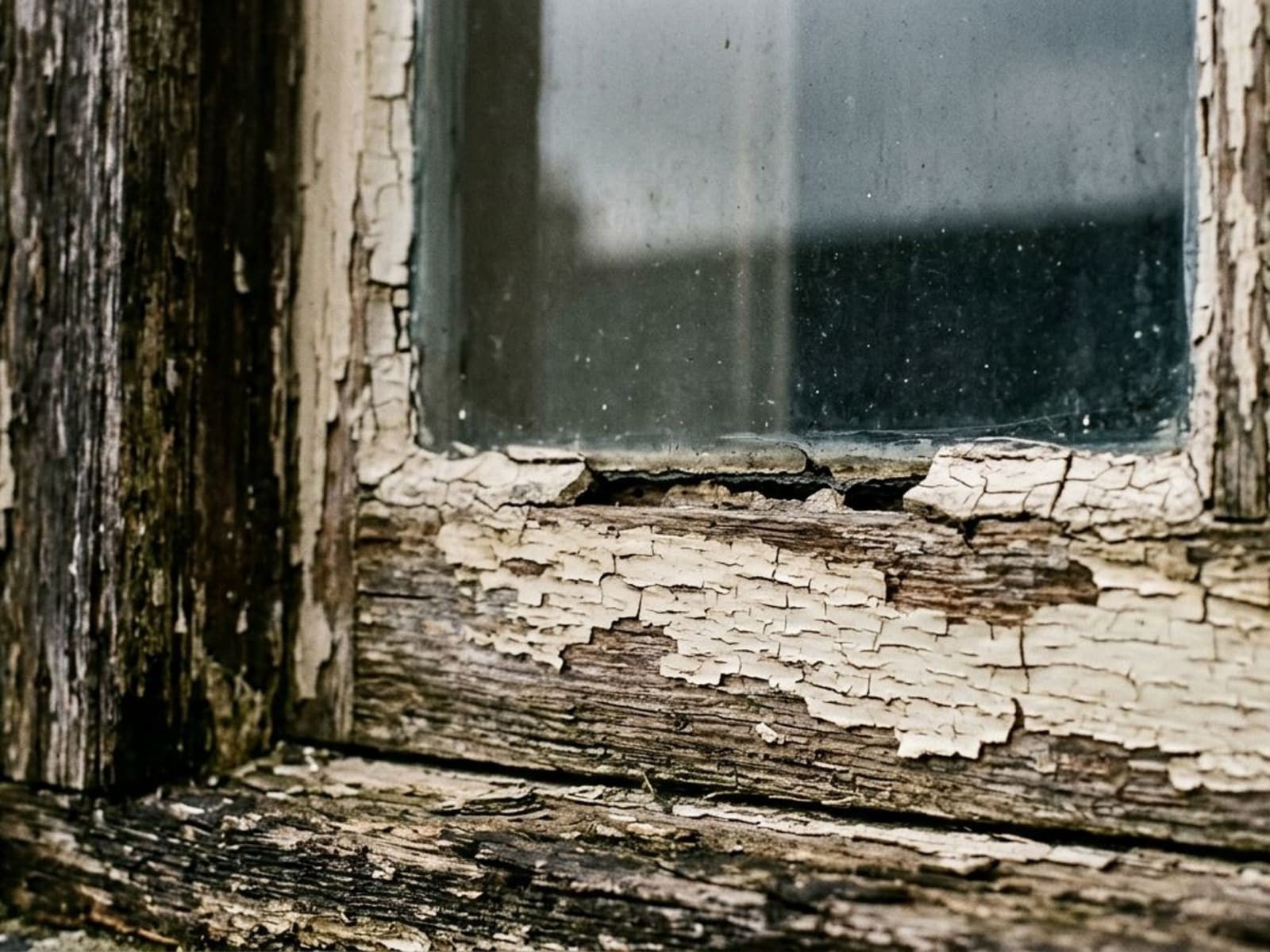
Unpainted putty is not meant to face the weather on its own indefinitely. Left bare for a whole season, the surface dries out, the skin hardens and can start to crack, and rain has a way in along the glass line. You then have to deal with that before painting instead of simply priming.
So the goal is not to wait as long as possible. It is to paint soon after the putty passes the finger test, in a spell of settled weather.
What should go on first?
This is where many DIY sash jobs go wrong. The standard system Resene gives for painting over putty is one coat of Resene Enamel Undercoat, which is oil based, followed by two waterborne enamel topcoats. Its Q&A also notes that Resene Quick Dry, a waterborne primer undercoat, cannot be used to prime skinned putty, although it can go on over the enamel undercoat once that has cured.
If you are using a different brand, the principle is the same. Read the primer's data sheet and check that it names linseed oil putty as a suitable surface. Do not assume the primer that suits the bare timber on the sash also suits the putty.
| Step | What it involves | Why |
|---|---|---|
| Wait | Until the finger test leaves only a light mark | Paint over soft putty cracks |
| Prime the putty | A primer or undercoat whose data sheet names oil putty | Not every primer bonds to oily putty |
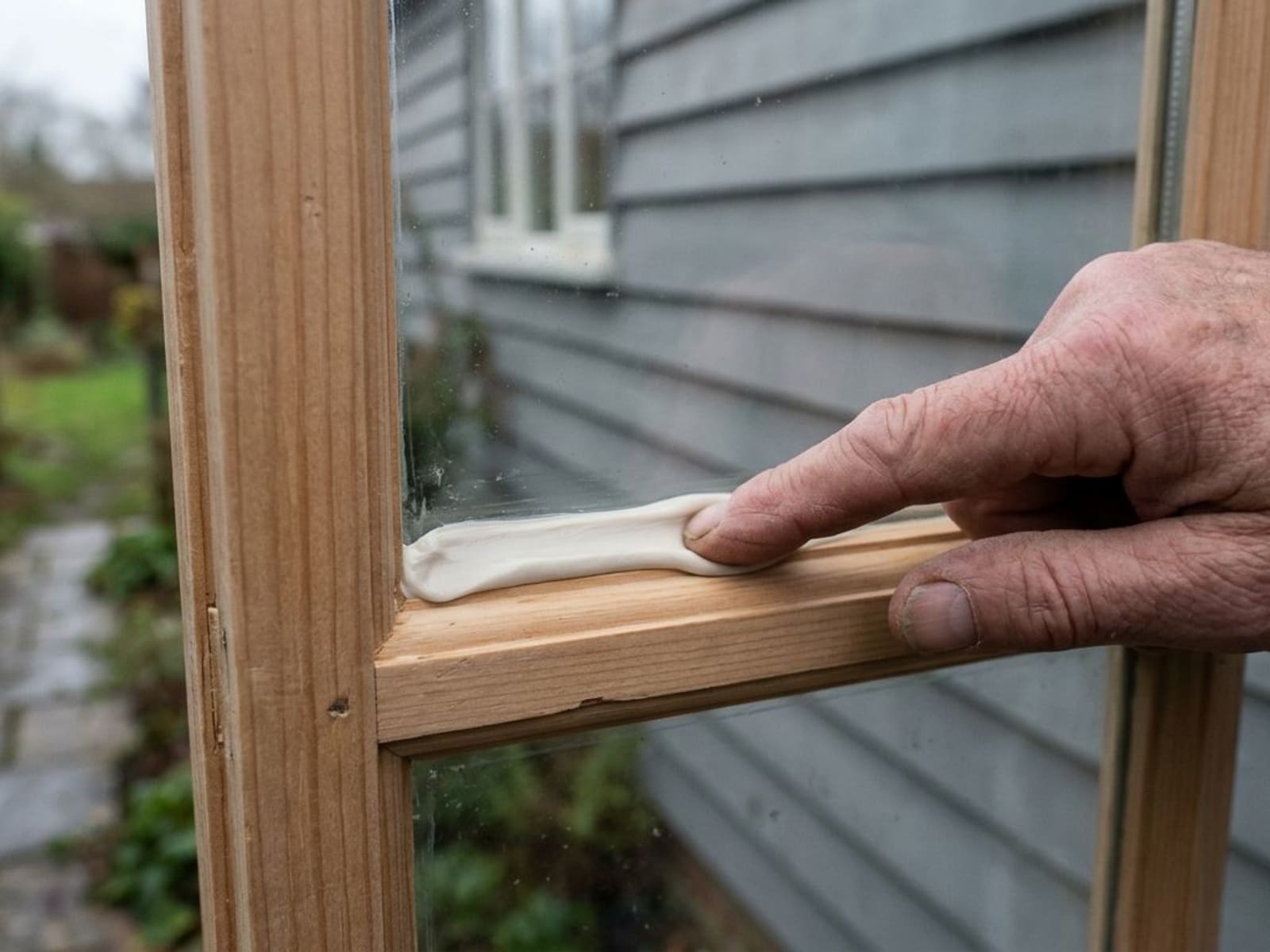
| Lap onto the glass | Carry the paint a couple of millimetres past the putty onto the glass | Seals the joint between putty and glass |
| Topcoats | Two coats of exterior enamel over the primed putty and sash | The weather protection |
Why does the paint go onto the glass?
Because the weak point of a puttied window is the thin line where the putty meets the glass. Resene's answer is to lap the paintwork onto the glass a minimum of 2 to 3 millimetres so that a weather seal is formed. Stop the paint short of the glass, or scrape it back to a perfectly clean line, and water gets in along the edge of the putty and works behind it.
The same Q&A suggests letting the enamel undercoat cure for at least 24 hours and then gently wiping the primed glass line with a cloth dampened with turps to remove any residual linseed oil before the next coats. It is a small step that helps the topcoats hold on the glass.
If you are painting in cooler months and the paint on the glass lifts after rain, that is usually weather rather than technique. Resene's own answer to exactly that complaint was that it is hard to find settled enough weather in the colder months for putty and paint to dry and cure properly, and that results improve once conditions warm up.
Anything to check on an old villa before the putty comes out?
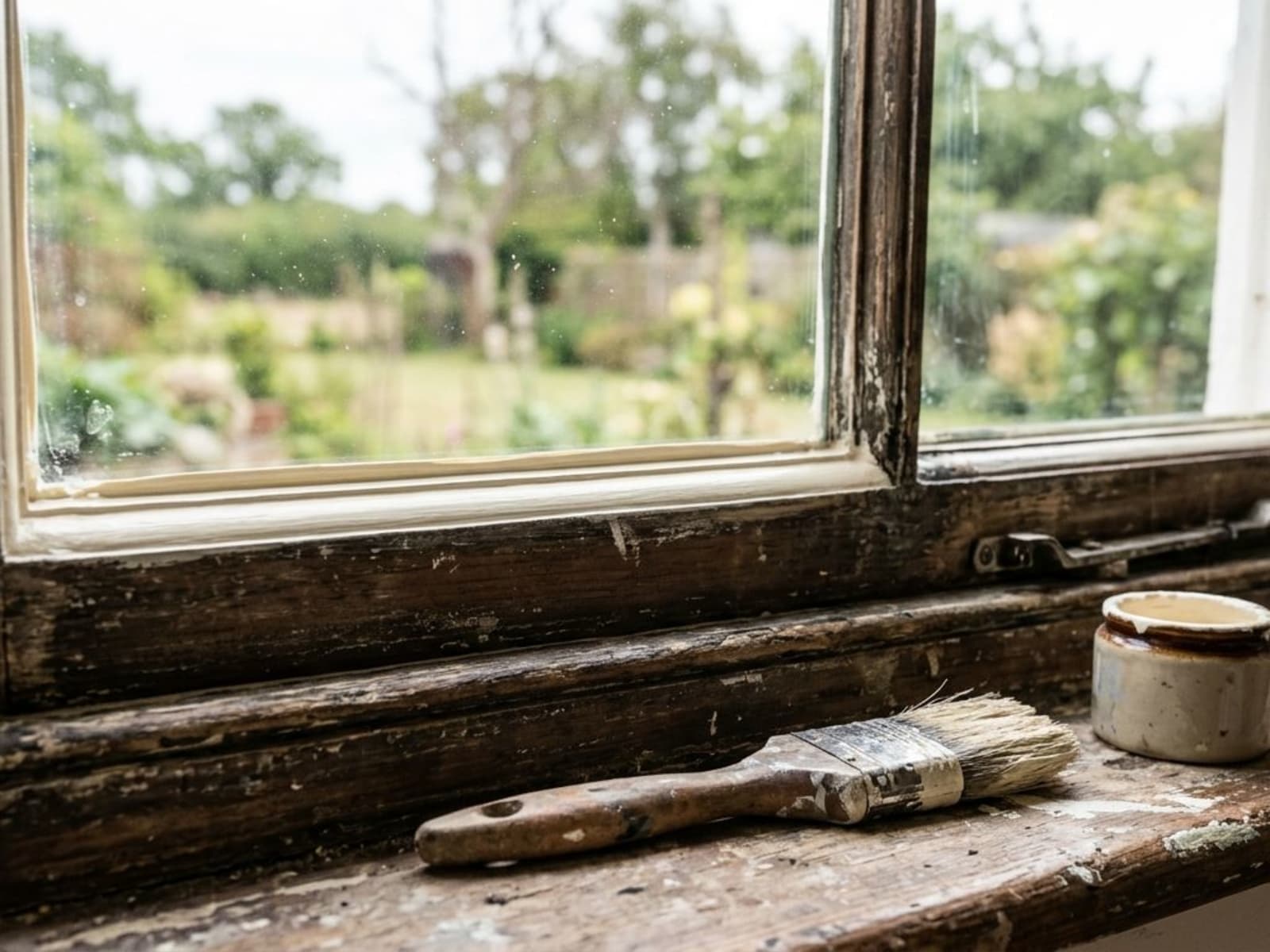
Yes, and it comes before any of the above. Homes painted before the 1980s may contain lead-based paint, and old sash windows are among the places it turns up. Have the paint tested before you sand, scrape or strip the sashes or dig out old putty.
After that, reputtying is careful, slow work rather than difficult work, and many handy owners do it well. The part people underestimate is the waiting, and the temptation to paint a few days early so the job can be finished on a weekend.
Should you do it yourself or get it done?
A handful of reputtied panes is a reasonable DIY job if you respect the drying time. A whole villa's worth of sashes, often on a steep section, is where the scheduling matters as much as the skill, and where the windows are usually part of a larger job anyway. Our guide to painting heritage villas covers how windows fit into that, and our note on waterborne enamel on joinery explains the topcoat side.
If you would like sashes reputtied and painted on a timetable the putty can live with, ask us for a quote.
Related Articles


Need Help With Your Painting Project?
Wellington Decorators has been transforming homes across the Wellington region since 2023, led by a founder with 18+ years in the trade. As Registered Master Painters, we back every job with a 5-year workmanship guarantee.
Prefer to talk? Call us now 027 458 6465