
Kill it first, every time. Paint applied over moss or lichen sticks to the growth rather than the roof, so when the growth dies and lets go, the new paint comes away with it.
The sequence is treat, wait, wash and scrape, then prime and paint. The step people rush is the wait: a moss and mould treatment needs a few hours on the surface, but lichen can take a week or two to loosen its grip.
Why does painting over moss and lichen fail?
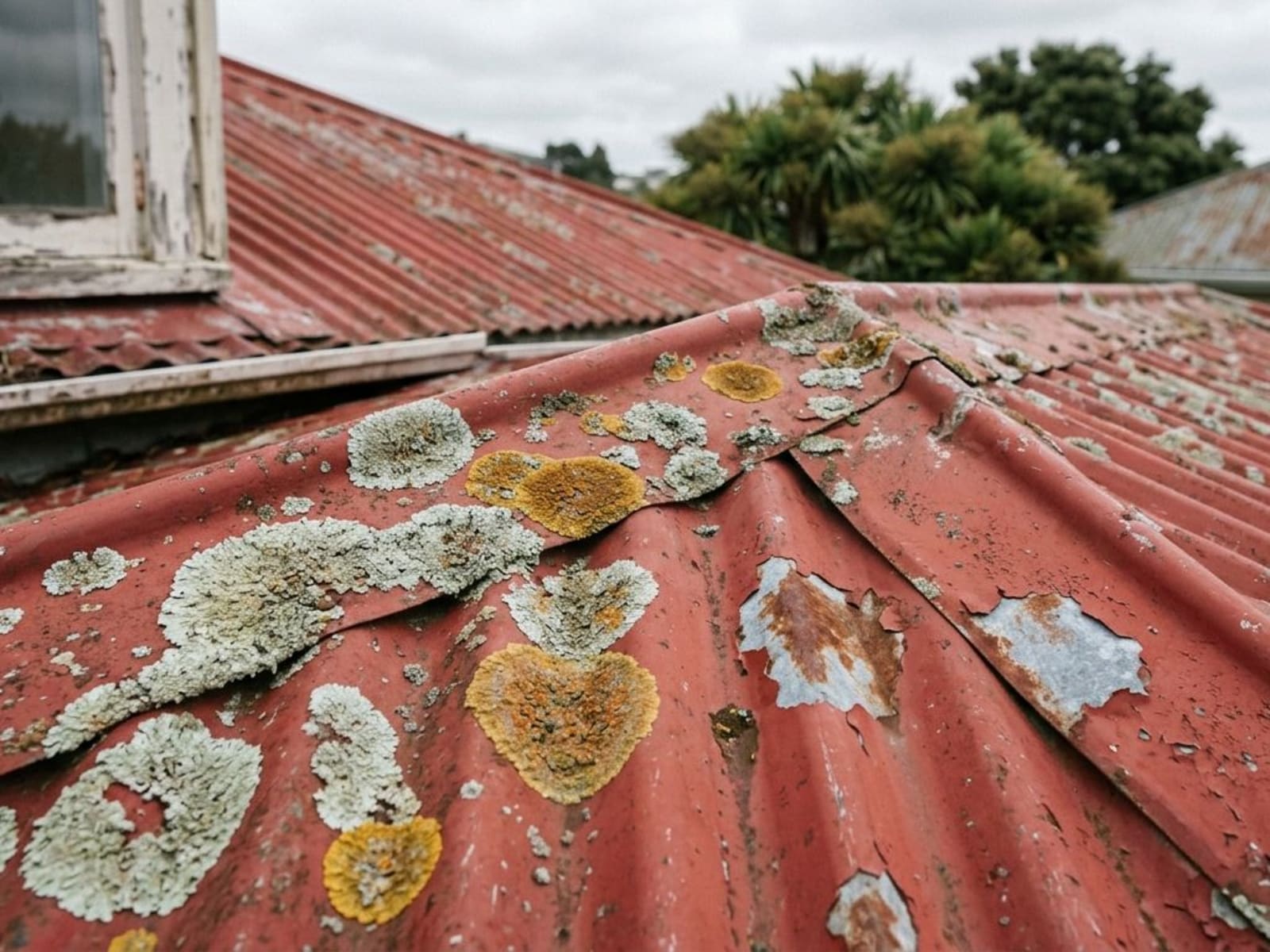
Moss, mould and lichen are living things attached to the roof surface, not dirt sitting on it. They hold water against the coating, and lichen in particular anchors itself firmly into the surface it grows on. Roll paint over the top and you have bonded your new coating to a layer that is still alive, still wet underneath, and will eventually shrink, die and flake off.
There is a second problem. Growth hides the state of the roof beneath it. It is common for the paint under a lichen patch to be worn thin or gone entirely, and on a metal roof that bare spot needs priming before it is painted. You cannot see or prime what is still covered.
Both of the roof repainting systems in Resene's guidance start the same way: treat moss and mould with a moss and mould killer first, then wash. For lichen, Resene's roof notes say it will need to be scraped off.
What is the right order of work?
- Treat. Apply a moss and mould killer to all growth. Resene's Moss & Mould Killer data sheet recommends spot application for lichen.
- Wait. Leave it for the contact time the product needs. For lichen that means days, not hours (see the table below).
- Wash and scrape. Scrub the roof with a roof wash to remove dead growth, chalking, dirt and salt deposits, then scrape off any lichen still attached. Rinse thoroughly.
- Check the surface. Look for bare metal, rust or cracked tiles that were hidden under the growth.
- Spot prime any bare areas with a primer that suits the roof.
- Two topcoats of roof paint.
Two details from Resene's roof guidance are worth following. If you collect rainwater from the roof, disconnect the spouting before you start washing. And where a metal roof has rust, keep hard wire brushing to the rusted areas only, because abrading sound areas damages the galvanised layer and leads to more rust.
How long does dead growth take to release?
This depends on what is growing and how bad it is. The figures below come from the current Resene Moss & Mould Killer technical data sheet, which grades its mixes by severity (mild, moderate, heavy, severe or lichen) rather than by type of growth, so judging how bad your roof is falls to you. Other brands will have their own instructions, so follow the label on whatever you buy.
| Condition (data sheet grading) | Mix (concentrate : water) | Before removal |
|---|---|---|
| Mild | 1 : 4 | Leave on for 2-4 hours, then scrub and rinse |
| Moderate | 1 : 3 | Leave on for 2-4 hours, then scrub and rinse |
| Heavy | 1 : 2 | Leave on for 2-4 hours; heavy infestations may need a second treatment |
| Severe / lichen | 1 : 1, spot applied for lichen | Lichen may take several days to treat effectively; remove dead growth once it physically changes, typically after 1-2 weeks |
The practical signal with lichen is that it changes: it discolours and starts to loosen instead of looking firmly attached. Trying to scrape it before then is hard work, damages the surface, and leaves fragments behind that grow back. That one to two week gap is why a properly prepared roof takes longer from first visit to finished coat than people expect.

Can you just waterblast it off instead?
Waterblasting removes loose dead growth well, but it does not replace the treatment step. In our experience, blasting live lichen off tends to leave its base behind, and on older painted metal roofs a high-pressure jet can lift sound paint along with the growth. Resene's guidance for metal roofs in poor condition prefers scrubbing with a roof wash and a hard bristled brush over waterblasting, because you have to balance removing unsound paint against damaging the roof.
Use waterblasting, if at all, after the growth has been killed and has had time to release.
What should you watch out for with the chemicals?
Resene's Moss & Mould Killer is a hypochlorite-based solution, the bleach family of chemicals. Its data sheet says to avoid runoff into gardens and lawns and warns that it will irreversibly damage fabrics. On a roof that means thinking about where the washdown water goes: down the spouting, over the edge onto plants, or into a rainwater tank. Protect gardens below, keep it off washing lines and outdoor furniture, and wear eye and skin protection when spraying.
Pick a dry, still day. Spray drift on a windy day goes everywhere except where you pointed it.

Is this a DIY job?
Treating growth on a low, single-storey roof you can safely reach is something plenty of homeowners do themselves as ongoing maintenance, and doing it every so often between repaints keeps the problem small. Moss and mould tend to be worst where trees overhang a roof, so trimming branches back helps as much as any product.
Preparing a whole roof for painting is a different job. It means working on a wet, slippery surface with chemicals, often over two visits a week or two apart, and on steep sections that usually means edge protection or scaffolding. Our roof painting safety guide explains where that line sits. For how treatment fits into the rest of the preparation, see our roof painting preparation process, and our roof painting service covers the whole job from treatment to topcoat.
If your roof is green, grey or blotched with lichen and you are wondering whether it is ready to paint, ask for a quote and we will tell you what it needs first.
Related Articles


Need Help With Your Painting Project?
Wellington Decorators has been transforming homes across the Wellington region since 2023, led by a founder with 18+ years in the trade. As Registered Master Painters, we back every job with a 5-year workmanship guarantee.
Prefer to talk? Call us now 027 458 6465