
Brown streaks on painted cedar are tannin bleed. Cedar holds water-soluble tannins, and when water reaches the timber those tannins dissolve, travel to the surface and dry as tea-coloured stains straight through the paint film.
The fix is not a better topcoat. It is sealing the timber with a solvent-borne primer before any paint goes on, and then keeping water away from the wood.
Why does cedar do this when other timbers do not?
Western red cedar is naturally durable because of the extractives it contains, and tannins are part of that chemistry. The same compounds that make cedar resist rot are the ones that dissolve in water and stain paint. It is a property of the timber, not a fault in the boards you bought.
The trouble is that waterborne paints and waterborne primers are, by definition, water. Resene is explicit that cedar tannins bleed through waterborne primers and topcoats, including quick-dry acrylic undercoats. Putting an acrylic undercoat on bare cedar and expecting it to hold the tannins back is the single most common cause of the streaking people ask us about.
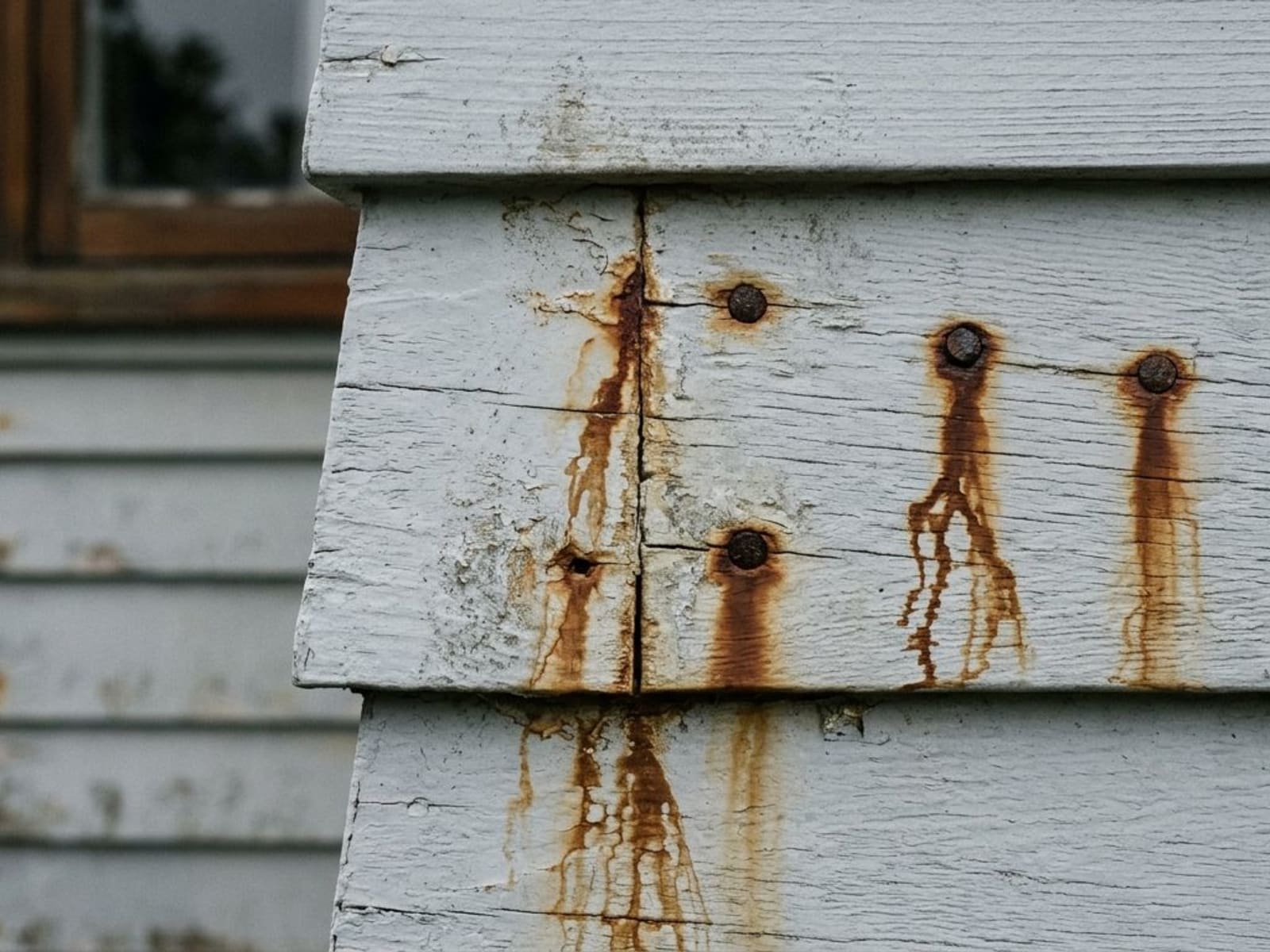
Where does the staining show up first?
Follow the water. Tannin bleed appears wherever water gets into or sits on the timber:
- End grain at board ends and cut edges, which drinks water many times faster than the face
- Around nail and screw holes
- The bottom edge of each board, where water runs off
- Scarf joints and butt joints between boards
- Junctions with joinery, corner boxing and flashings
- Anywhere sanded through to bare timber during preparation
In Wellington the pattern is usually lopsided. Wind-driven rain is pushed sideways into board laps on exposed walls, so the south and west faces of a house streak while the sheltered north face looks untouched. That is not a coincidence and it tells you exactly where the water is getting in.
How do you stop it on bare cedar?
- Get the timber clean and dry. Wash off dirt and surface greying, then let it dry properly. Sealing damp cedar traps the moisture that drives the bleed.
- Prime with a solvent-borne wood primer, not a waterborne one. Resene Wood Primer is an oil-modified alkyd made for this job.
- Prime end grain twice, and prime it before the board is fixed where you can. Cut ends on site should be sealed as they are cut, not at the end of the day.
- If the cedar has weathered to grey, condition it first. Resene recommends a coat of TimberLock on aged grey cedar before priming and painting, because a weathered cedar surface is friable and will not hold a coating on its own.
- Then topcoat as normal. Once the primer has locked the tannins in, the topcoat choice is an ordinary paint decision.
Do not skip the primer to save a day on site. Redoing a bled cedar wall costs several times what that primer coat did.
What if it is already painted and bleeding?
Then water is reaching the timber from somewhere and that needs finding before you touch the paint. Check for gaps at joinery, failed sealant at flashings, unsealed cut ends, splits in boards, and gutters overflowing down the wall.
Once the water is dealt with, wash the wall down. That clears anything sitting on the surface. If the stain survives the wash it is in the film rather than on it, and the only way through is to seal the affected area with an enamel primer or a solvent-borne stain-blocking system and then recoat. Another coat of the same acrylic will not cover it. The tannin comes straight back through.

Would staining instead of painting avoid the problem?
Largely, yes, and it is worth thinking about honestly before you commit to paint.
| Consideration | Paint on cedar | Penetrating stain on cedar |
|---|---|---|
| Tannin bleed risk | high unless correctly primed | very low, since stains are not affected by resin bleed |
| Appearance | solid colour, hides the grain | shows the grain, colours limited to timber tones |
| First application | wash, solvent-borne primer, two topcoats | wash and apply, no priming stage |
| Maintenance rhythm | longer between repaints, bigger job when it arrives | shorter intervals, but a wash and recoat rather than a strip |
| How it fails | flakes and peels, needs stripping back | fades and thins, does not peel |
| Changing your mind later | painted cedar is hard to return to a stained finish | stained cedar can be painted later |
If you like the look of the timber and want the least fuss, a penetrating stain is the lower-risk path, and most of our wood staining work on cedar is people who reached that conclusion. If you want a solid colour, paint it properly rather than cheaply.
Does the colour you pick make a difference?
Only to how visible the problem is, not to whether it happens. Off-whites, pale greys and creams show tannin bleed clearly. Mid and dark tones hide it. That is a fair thing to weigh up on an older cedar wall where you cannot be certain every square metre was properly sealed, but it is a cosmetic hedge rather than a fix, and dark colours bring their own trade-offs on a wall that gets sun.

Is this a DIY job?
Priming and painting a small area of new cedar, a gate, a section of boxing, a single wall you can reach from the ground, is well within reach for a careful DIYer. The technical content comes down to one decision: use a solvent-borne primer. Get that right and the rest is ordinary painting.
Where it stops being sensible is a fully cedar-clad house. Cedar cladding tends to appear on architecturally designed homes with height to them, and a steep Wellington section adds more, so you are into scaffolding before you are into paint. Preparation on cedar is unforgiving as well: sand through the primer in one spot on a pale colour and it will announce itself in the first heavy rain.
If your cedar is streaking and you want it sorted rather than covered up, get in touch. We look at where the water is entering first, because that is the part that decides whether the repaint lasts.
Related Articles


Need Help With Your Painting Project?
Wellington Decorators has been transforming homes across the Wellington region since 2023, led by a founder with 18+ years in the trade. As Registered Master Painters, we back every job with a 5-year workmanship guarantee.
Prefer to talk? Call us now 027 458 6465