
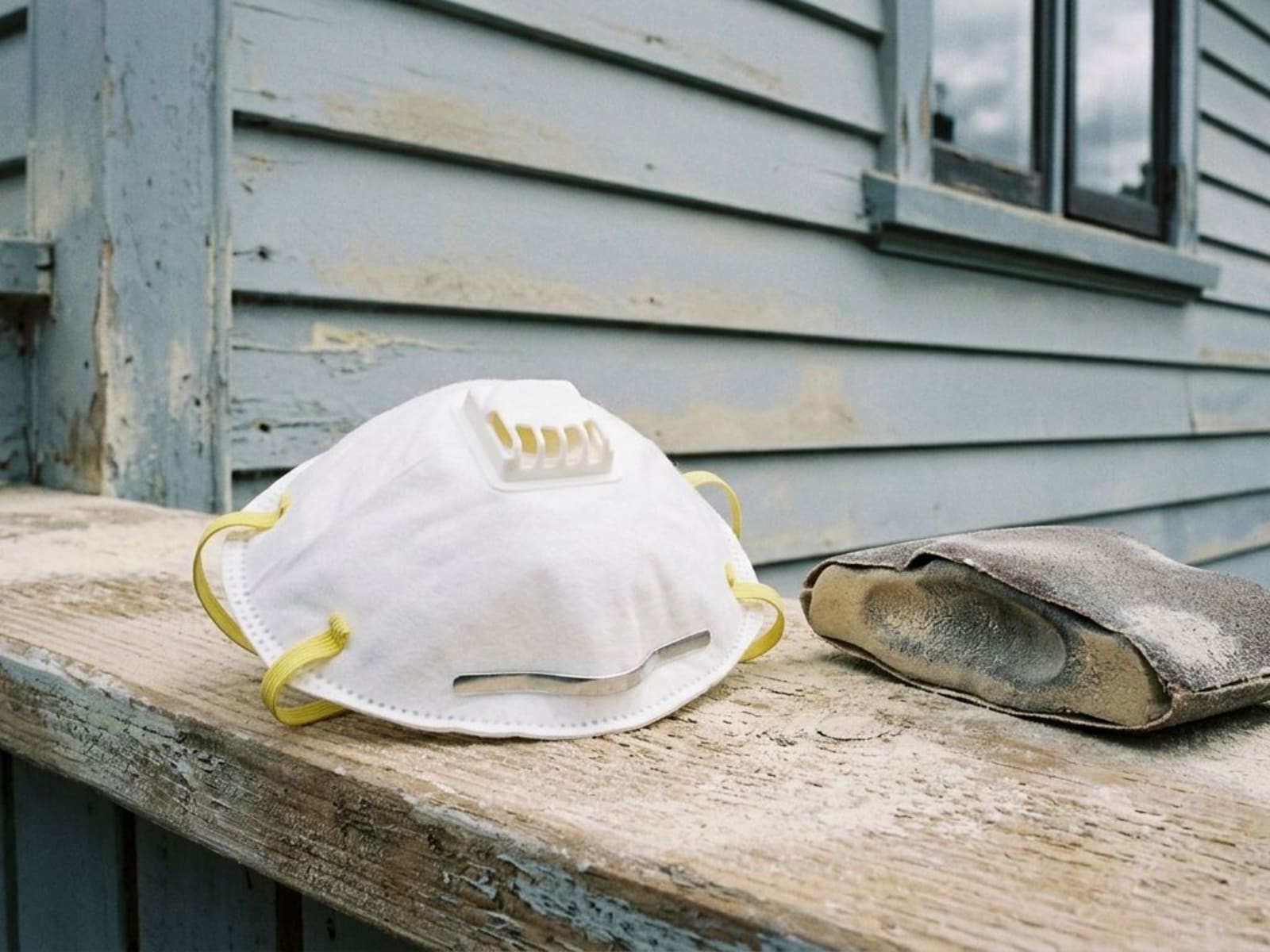
No. A disposable dust mask filters particles, such as sanding dust, and does nothing about the solvent vapour that makes up the smell of paint and paint stripper. WorkSafe's advice for workers says it plainly: particulate filters don't provide protection against gases.
So the mask you bought for sanding the weatherboards is the right tool for sanding and the wrong tool for a room full of stripper fumes. The two hazards need different equipment, and the tin usually tells you which one you are dealing with.
What is the difference between dust and fumes?
Dust is solid. Sanding, scraping and cutting throw tiny bits of old paint, filler and timber into the air, and a filter can physically catch them, the same way a sieve catches sand.
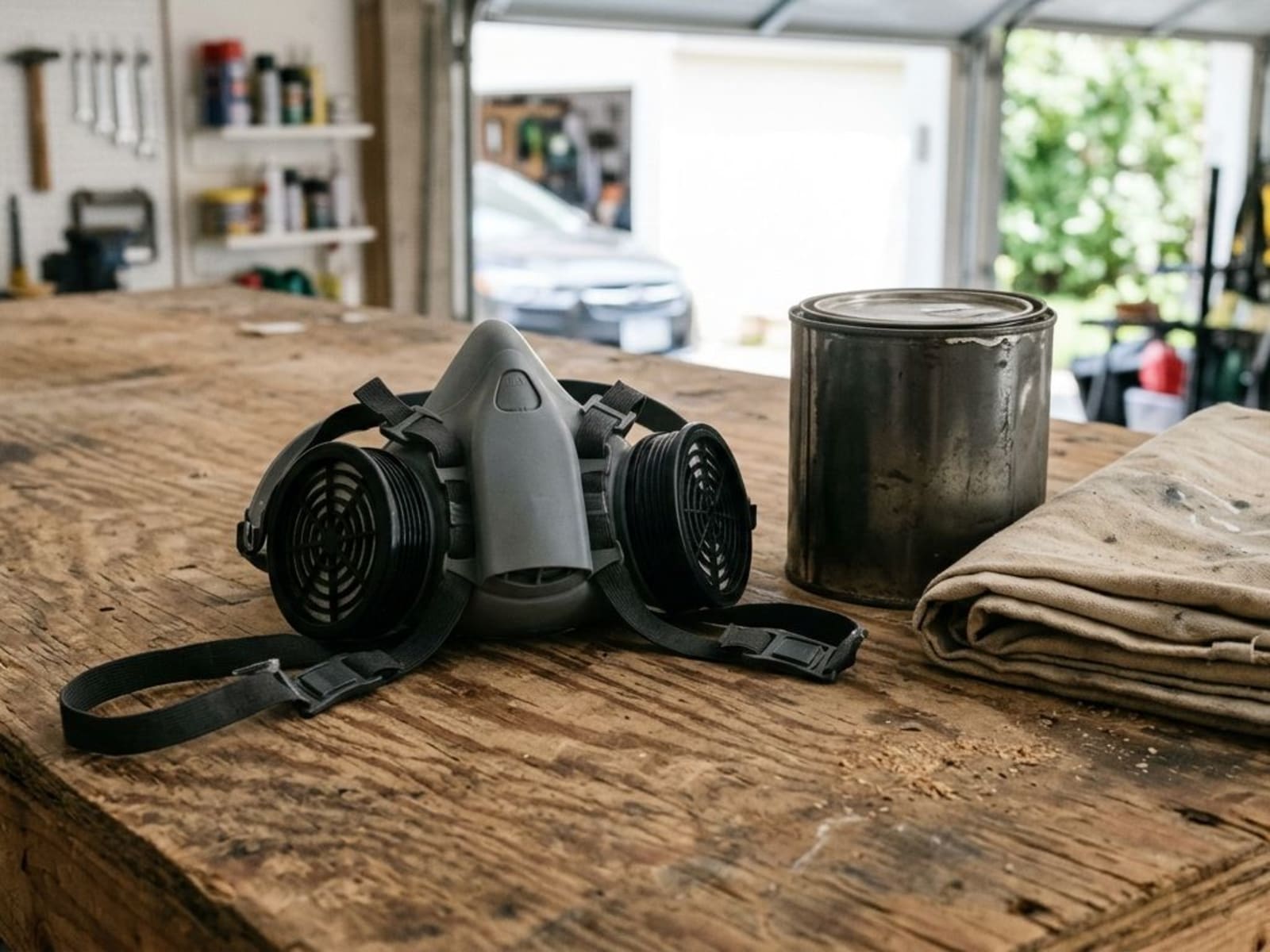
Vapour is a gas. When a solvent evaporates out of paint, primer or stripper, it becomes individual molecules mixed into the air you breathe. They pass straight through a particle filter because there is nothing solid to catch. Stopping them takes a cartridge that absorbs the chemical, which is a different piece of equipment altogether.
The confusing part is the word "fume". WorkSafe describes disposable masks as protecting against "harmful particles such as dust, fume and fibres". In safety language, fume on that list means fine airborne particles. It does not mean the smell coming off a freshly opened tin.
What is a dust mask actually for?
Sanding and scraping. That is the job it is built for, and for that job it is worth wearing every time.
WorkSafe says disposable masks are designed for short-term or one-off use and protect against particles only. A WorkSafe safety alert adds that disposable respirators covering the nose and mouth should comply with AS/NZS 1716:2012 and be clearly labelled with the filter classification, P1 or P2. WorkSafe also treats some certified international ratings as equivalent, including NIOSH-approved N95 and FFP2 masks compliant with EN 149. If the mask in your hand has no P1 or P2 marking, or a recognised equivalent such as N95 or FFP2, it is a nuisance mask and not rated protection for anything.
Which mask for which painting job?
| Equipment | What it filters | What it does not filter | Painting jobs it suits |
|---|---|---|---|
| Unrated nuisance or paper mask | Nothing it is rated for | Fine dust, vapour | None, really |
| Disposable respirator marked P1 or P2, or an equivalent such as N95 or FFP2 | Particles: P1 for dust from sanding and cutting; P2 also covers fine fume | Solvent vapour and gases | Sanding, scraping, cutting |
| Reusable half-face respirator with a gas and vapour cartridge | The vapour type the cartridge is rated for | Particles, unless a particle filter is fitted as well | Solvent-based products and strippers where the label calls for it |
| Reusable respirator with combined particle and vapour filters | Both, within the cartridge rating | Anything outside the rating on the cartridge | Jobs that produce dust and vapour together, such as spraying |
Buy the cartridge the product label asks for, not the one on special. WorkSafe notes that reusable respirators take different cartridges for different contaminants, so match the cartridge to what the label names, and ask the supplier if you are unsure.
When do you need a vapour respirator?
When the product tells you to. The precautions section on the label, and the safety data sheet behind it, is where the manufacturer states what protection that exact product needs.
Here is a real example. Resene's data sheet for its laminate and melamine adhesion primer, a waterborne product, says to avoid breathing vapour and to "ensure adequate ventilation or wear a face mask fitted with an organic cartridge", because it gives off a chemical odour while it cures. That is a label telling you a dust mask is not the answer. Check the label of any solvent-based product or stripper for similar wording before you open it.
If you cannot find the safety data sheet, ask the shop that sold you the product. They can print it, and it takes two minutes.
Can a respirator fail even when it is the right type?
Yes, and usually for one of three reasons.
- A poor seal. WorkSafe notes that respirators where you suck air through a filter cartridge must seal tightly around your face to work. Air takes the easy path round the edge rather than through the filter.
- Facial hair. WorkSafe's words are that facial hair and stubble, even one day's growth, make it almost impossible to get a good seal. A bearded painter in a half-face respirator is not getting the protection the cartridge is rated for.
- A spent cartridge. Vapour cartridges fill up. WorkSafe's guidance is to replace them when scheduled and immediately if you can smell or taste the chemical through the mask.
For workers, WorkSafe also says negative pressure respirators need a facial fit test at least annually and when new equipment is bought. A homeowner is not bound by that, but it shows how much the seal matters.
What about ordinary wall paint?
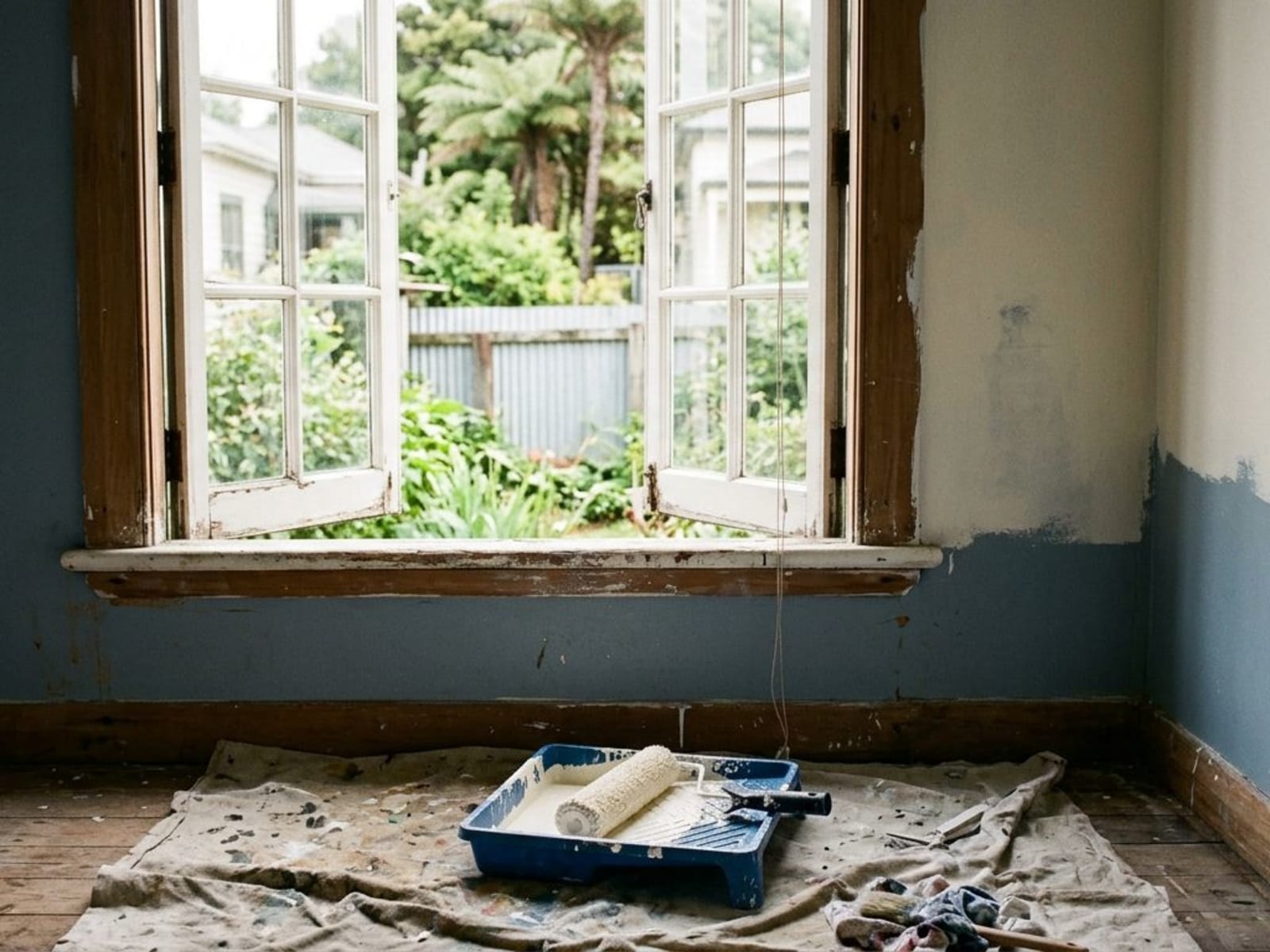
Read its label before assuming anything. For a lot of interior repainting with waterborne wall paint, the practical protection is fresh air: open windows, a door propped open, breaks outside, and no sleeping in the room while it is wet. A dust mask still earns its place when you sand the filler.
If fresh air is not possible, such as in a small windowless room or a cupboard, stop and check the safety data sheet before carrying on. WorkSafe lists headaches, drowsiness and feeling dizzy and sick among the short-term effects of breathing hazardous substances such as solvent vapours. If you notice any of those, get outside into fresh air rather than pushing through.
Where does lead paint come into it?
When old lead paint is sanded or scraped, the hazard is dust, not vapour, which is exactly why a proper particle respirator matters on older houses. Health NZ advises presuming that any building built in the 1980s or earlier has been painted with lead-based paint, and lead is released when that paint is sanded, scraped or stripped. For that work it advises a properly fitted toxic dust respirator, and if it is a disposable type, only one with double head-straps. Have the paint tested before you start, and read our guide to stripping paint safely before choosing a method.
A respirator is only one layer of lead protection. It does nothing for dust settling on floors, in the garden or on clothes that go into the house wash. If the test comes back positive, it is worth reading how we handle lead paint removal before deciding whether to do it yourself.
So what should you actually wear?
- Sanding or scraping: a disposable respirator marked P1 or P2, or a recognised equivalent, fitted properly, changed when it gets clogged or damp.
- Solvent products or strippers: whatever the label and safety data sheet specify, usually a reusable respirator with the stated vapour cartridge, plus as much ventilation as you can get.
- Waterborne wall paint in a well-aired room: usually ventilation, with the label as the final word.
- Paint of unknown makeup on a home built in the 1980s or earlier: nothing until it has been tested.
If the prep on your house involves stripping, old paint or products you would rather not breathe, we can take that part of the job off your hands. Get in touch for a quote and we will tell you what the surface needs before any work starts.
Related Articles
Need Help With Your Painting Project?
Wellington Decorators has been transforming homes across the Wellington region since 2023, led by a founder with 18+ years in the trade. As Registered Master Painters, we back every job with a 5-year workmanship guarantee.
Prefer to talk? Call us now 027 458 6465