
Painted kitchen cabinets that are still tacky weeks later are usually suffering from one of three things: the wrong paint for doors, coats put on too thick, or a kitchen too cold and damp for the film to harden. Resene states that standard waterborne paints have poor block resistance, meaning they stick to themselves under pressure, which is exactly what a cupboard door does to its frame all day.
The good news is that some of these fix themselves with time and warmth. The bad news is that one of them is a product problem, and waiting does not change the product.
Is tacky the same as not dry yet?
Not quite. Paint goes through two stages: it dries as the water or solvent leaves, then it cures as the film hardens. A cabinet can be dry to a light touch and still soft enough to grab a thumb, a plate or the door beside it. We explain the two clocks in drying time versus curing time.
For a sense of scale, Resene's data sheet for its Lustacryl semi-gloss waterborne enamel says it is serviceable within 12 to 48 hours, depending on film thickness, tinter levels and drying conditions. Full hardness takes much longer, and Resene's care advice is to avoid bumping or cleaning a new finish for at least four weeks. A door that is still soft after four weeks has a problem beyond patience.
Why would cabinet paint stay sticky?
| Cause | What you notice | Does time fix it? |
|---|---|---|
| Wall paint used on doors | Doors grab the frame and each other where they press together | No. Wall paint will keep sticking to itself where doors press on frames, because it has poor block resistance |
| Coats too thick | Tacky in the thickest spots: edges, panel recesses, drips at the bottom of doors | Usually, but slowly |
| Cold or damp kitchen | Whole job slow, worse in winter, worse on the coldest wall | Usually, once conditions improve |
| Heat near the oven, kettle or dishwasher | Tacky only beside heat sources | Partly. Heat keeps softening the film |
| Deep or strong colour | Dark cabinets slower than white ones painted the same day | Usually, given longer |
The wrong product
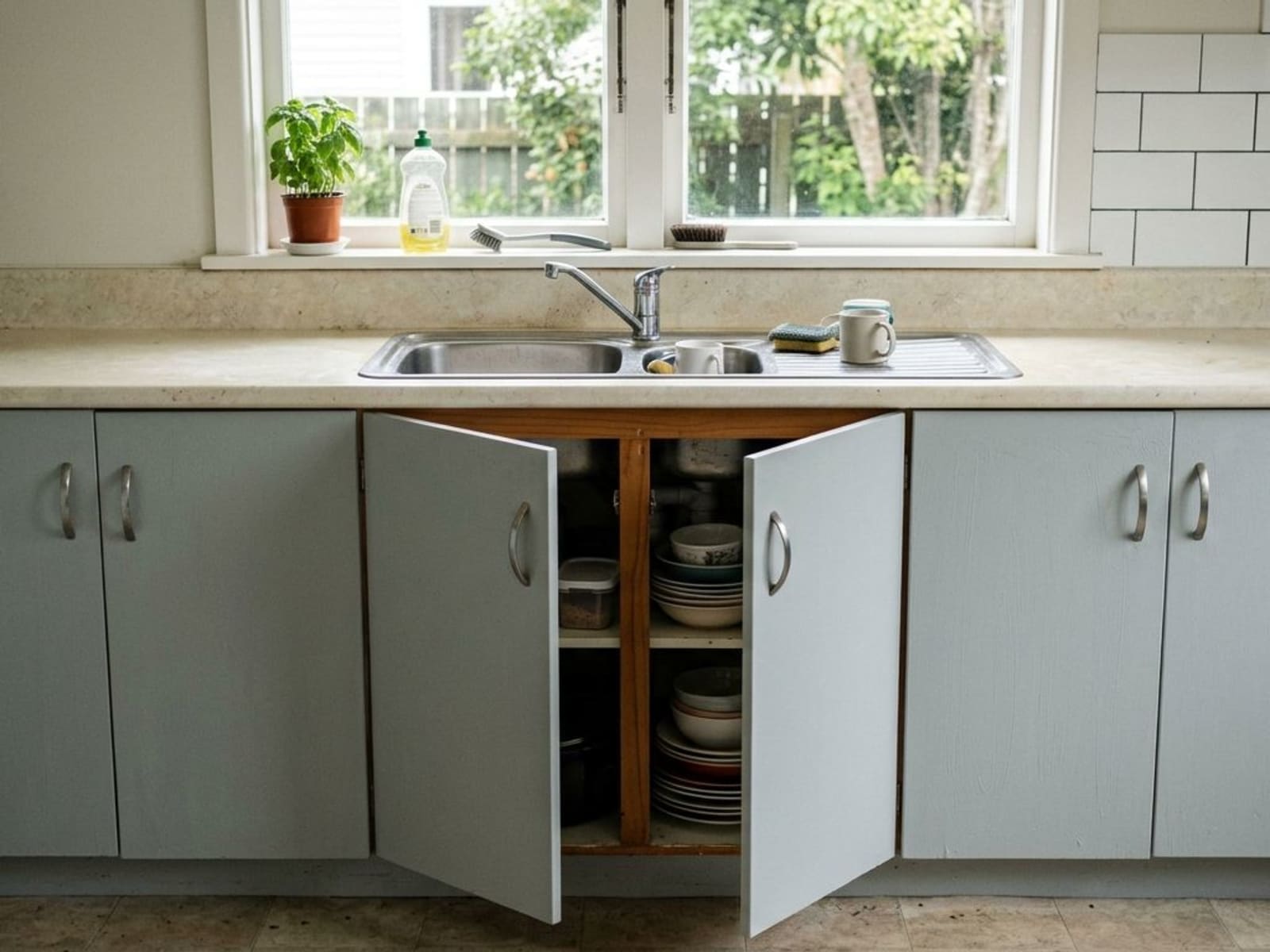
This is the one time does not solve. Resene's block resistance guidance says standard waterborne paints have poor block resistance, and says to always use a waterborne enamel for working joinery, naming its gloss, semi-gloss and low sheen enamel lines. If someone rolled leftover wall paint on the cupboards, or picked a matt wall finish because it looked nice on the colour card, the doors will keep sticking where they press against frames and each other, because that is a property of the paint rather than a stage of drying. We cover the product side in waterborne enamel on joinery.
Thick coats
Enamel laid on heavily, to get coverage in one pass, dries on top and stays soft underneath for a long time. The Lustacryl data sheet lists film thickness as one of the factors that stretch its serviceable time. Look at where the tack is. If it is worst in the routed grooves of Shaker doors and along bottom edges, where paint pools, thickness is the likely cause.
Cold, damp and heat
The same data sheet says not to apply it below 10°C, or when the temperature is liable to drop below 10°C during drying. A winter kitchen that cools right down overnight can sit below that, and humidity from cooking and dishwashing slows drying further. Heat works the other way round: Resene notes that most waterborne paints are thermoplastic, so they soften with heat and can stick to themselves. Doors above a dishwasher that vents steam, or beside the oven, can stay tacky well after the rest have hardened.
How do you tell which one you have?
Check the tin first. If you still have it, read the product name and the intended uses on the label. A wall paint or ceiling paint on cabinetry answers the question straight away.
If it is an enamel, look at where the tack is. Soft only in grooves, drips or near heat points to thickness or heat, and those usually improve. If it is an enamel, went on thinly, has had a warm kitchen, and is still tacky everywhere after four weeks, take the tin back to the supplier and ask; they can check the product and conditions against the data sheet.
What actually fixes it?
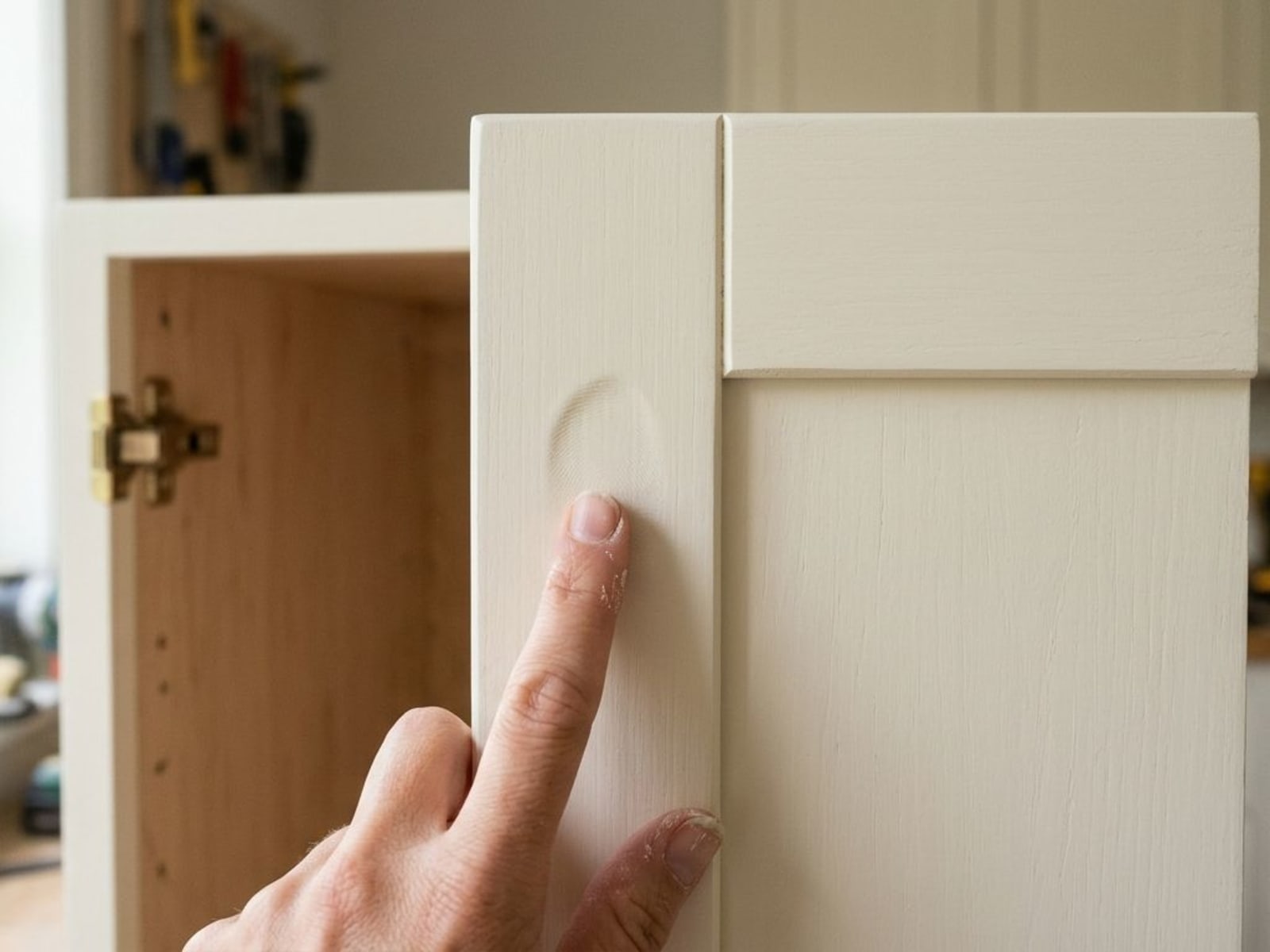
If it is the right product
- Give it warmth and air. Heat the kitchen gently, open a window on dry days, and run the rangehood when cooking.
- Stop doors closing hard on each other. Leave them slightly open where you can, and check that the door bumpers are in place so painted face does not rest on painted frame.
- Keep vinyl-covered things off the paint. Resene advises against storing vinyl-covered objects on freshly painted surfaces because the film can stick to them, so leave shelf liners and similar items out for now.
- Wait before cleaning, for the four weeks Resene's care advice suggests, and then clean gently.
If it is the wrong product
Waiting will not change what is on the doors. The fix is to let it firm up as far as it will, sand back to a sound, dull surface, and repaint with an enamel intended for joinery in thin, even coats, allowing the full recoat time between them. Where the paint is thick and rubbery, stripping the doors back is often less work than trying to sand a gummy film. It is a nuisance, but it is a one-off, and done properly the doors will stop fighting you. The same fix applies to enamel that went on so heavily it is still soft long after the rest of the job has hardened.
Do not try to seal a tacky film under a coat of clear varnish. That buries the soft layer rather than fixing it, and the soft layer is still what everything above it is stuck to.
How do you avoid it next time?
- Use an enamel made for joinery, not wall paint.
- Apply two thin coats rather than one heavy one, and brush out the pools in panel grooves.
- Paint when the kitchen can stay warm through the drying period.
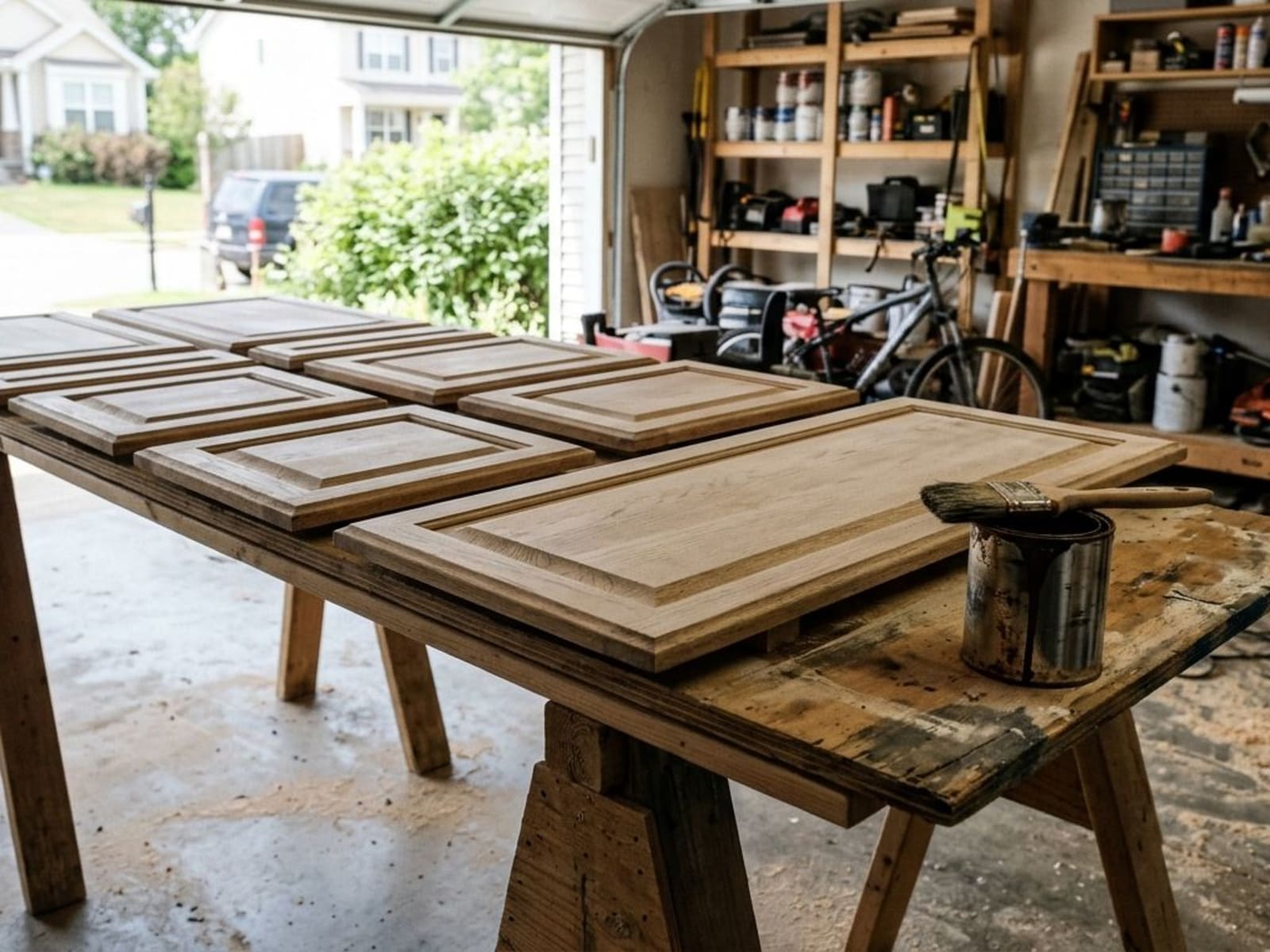
- Take the doors off and paint them flat in a warm room if you can, then leave them longer than you think before rehanging.
- Read the data sheet for the recoat and serviceable times of the exact product you use.
Cabinet painting is where finish quality shows most, which is why we treat it as a separate job from the walls. Our kitchen painting page covers how we approach the whole room.
If your cabinets have already gone sticky and you want them sorted properly, ask us for a quote.
Related Articles

Need Help With Your Painting Project?
Wellington Decorators has been transforming homes across the Wellington region since 2023, led by a founder with 18+ years in the trade. As Registered Master Painters, we back every job with a 5-year workmanship guarantee.
Prefer to talk? Call us now 027 458 6465