
Mould comes back after a bathroom repaint for one of two reasons: it was painted over rather than killed, or the room still gets wet enough to grow new mould on the fresh paint. The first is a preparation failure and shows up fast, in the same spots; the second is a ventilation problem, and no paint on its own can fix it.
It helps to work out which one you have before spending anything, because the fixes are completely different and repainting again only solves the first.
Why does mould grow straight back through new paint?
Because it was never dead. Resene's guidance on mould explains that unless mould is removed within a few months of appearing, it penetrates the body of the existing paint film, and that it will then grow through subsequent coatings, spoiling both adhesion and appearance.
A quick wipe with a household spray cleans the surface but leaves what has grown into the old paint. Roll two fresh coats over that and it looks perfect for a few weeks, then the same shapes show through in the same places. If your new mould appeared in the exact patches you painted over, this is almost certainly what happened.
Paint manufacturers are consistent on this. The data sheet for Resene's Lustacryl Kitchen & Bathroom enamel, for example, tells you to ensure the surface is free from mould and, where mould is present, to treat it with the company's moss and mould killer before painting. Kill, clean, dry, then paint. We go through telling mould from mildew, and what each needs, in mould or mildew before painting.
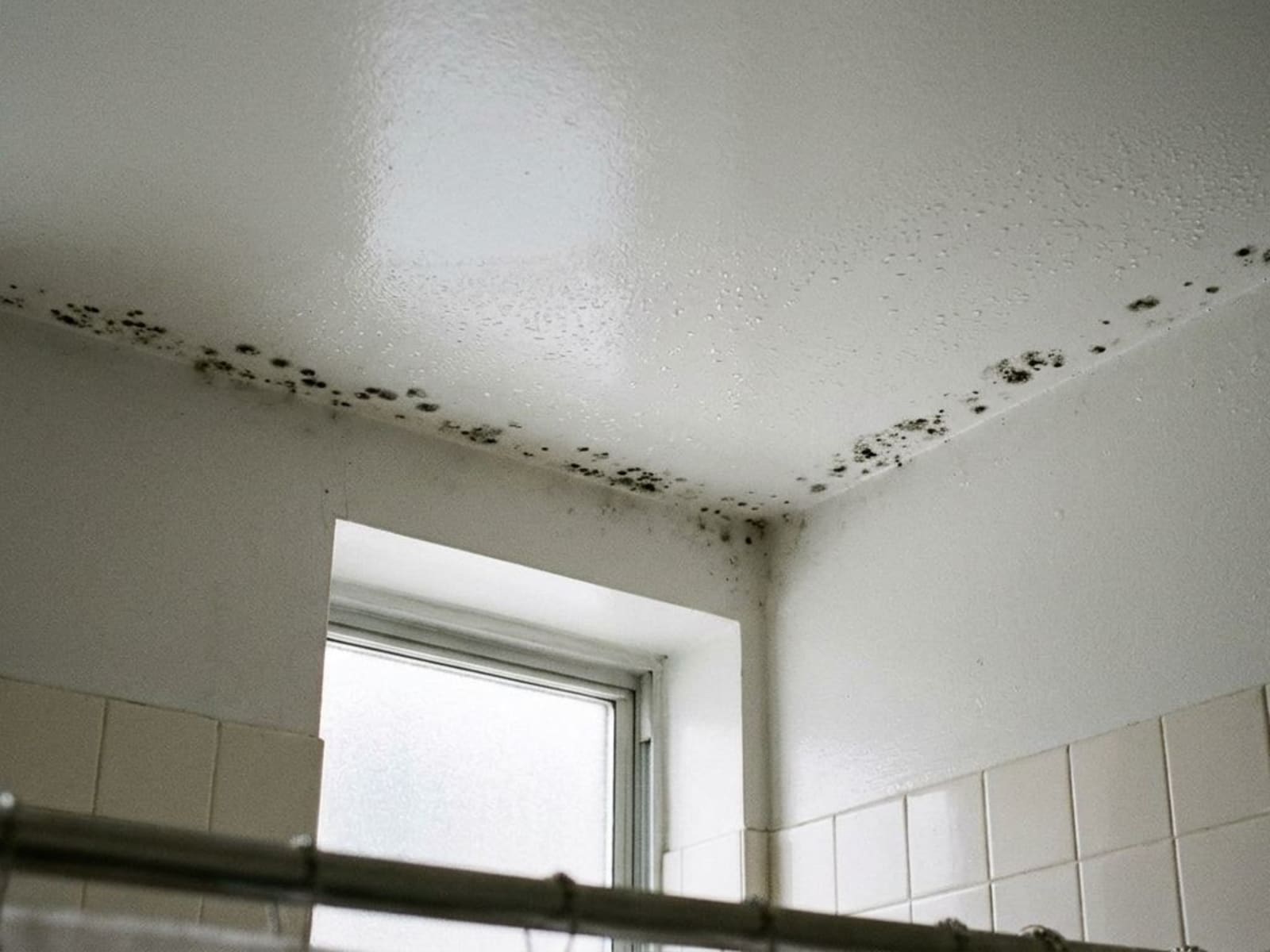
Or is it new mould on sound paint?
If the old patches stayed clear but spots appeared somewhere new, usually on the ceiling above the shower, in corners, behind the door or along the top of the wall, the paint job may have been fine. The room is growing mould because it is staying damp.
Mould needs moisture, and a bathroom supplies plenty. Every shower puts steam into the air, and when that air meets a cold ceiling or an outside wall it condenses into water on the paint. If that water dries off quickly, mould has a hard time. If it sits there for hours every day, especially through a Wellington winter in a house with little insulation, mould will return on any surface, freshly painted or not.
Which problem have you got?
| What you see | Likely cause | What fixes it |
|---|---|---|
| Same patches return within weeks, same shapes as before | Mould painted over, not killed | Strip back or treat thoroughly, then repaint |
| New spots in corners and above the shower after a few months | Condensation from poor ventilation | Ventilation first; paint second |
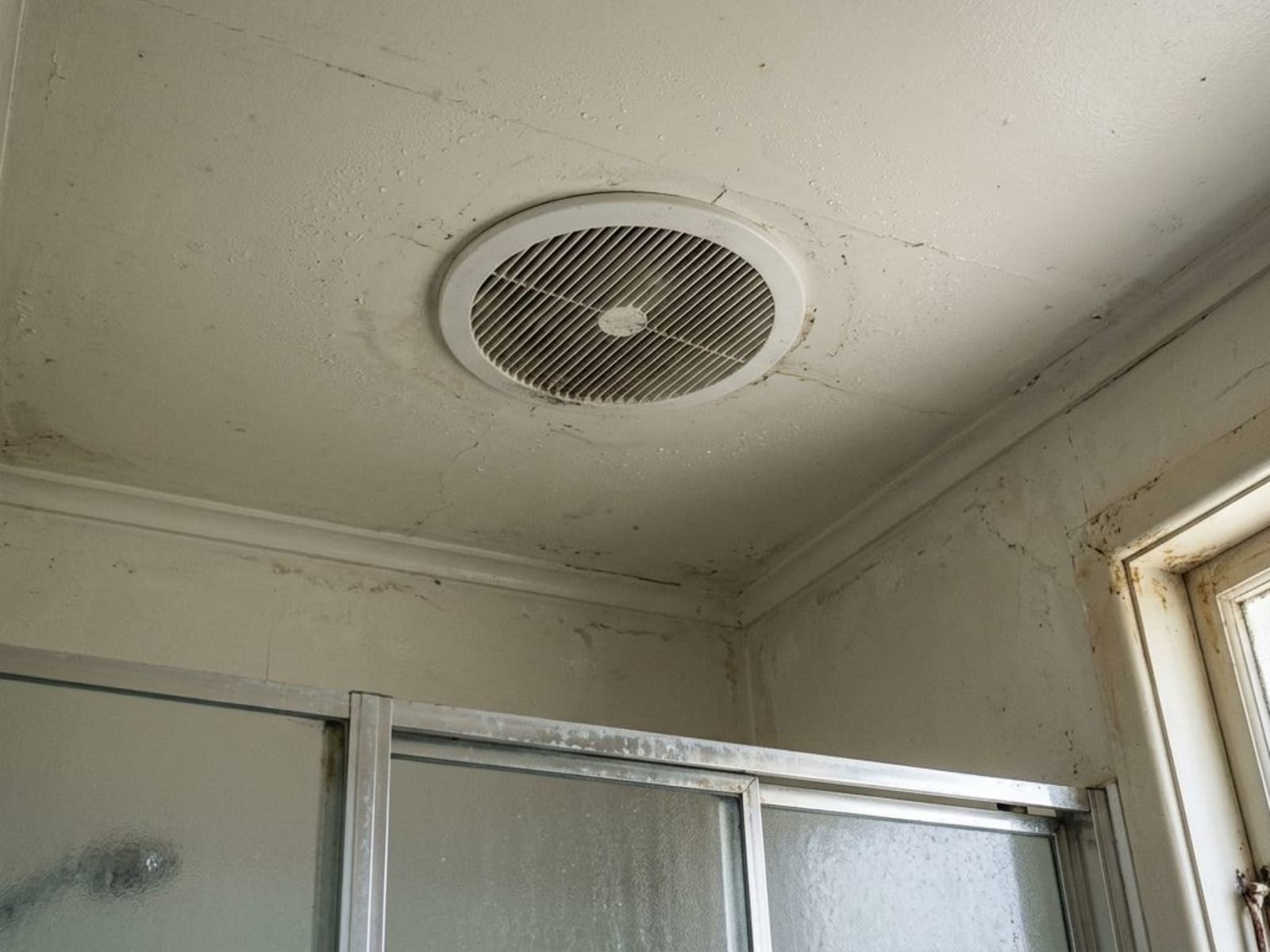
| Ceiling wet with droplets after every shower | Fan too weak, not used, or venting into the ceiling space | Fix the extraction |
| Paint bubbling or peeling as well as mould | Moisture getting behind the paint, or poor adhesion over old mould | Find the water source, then prepare and repaint properly |
| Mould only on one outside wall or behind furniture | Cold surface with little airflow | Airflow and heating; paint alone will not hold |
If you have bubbling as well, our piece on bathroom ceiling paint bubbling covers that failure.
What can painting fix, and what can it not?
Painting can fix a surface. Done properly, with the mould killed, the area washed and allowed to dry, and a paint system suited to wet areas, you get a sound film that resists mould better than a tired, porous one. Some bathroom paints are formulated for this: Resene's data sheet describes its Lustacryl Kitchen & Bathroom as protecting against mould with an additive it calls MoulDefender.
Painting cannot remove water from the room. A mould-resistant paint is a surface that is harder for mould to establish on, not a replacement for getting the steam out. If the ceiling is dripping after every shower, the most expensive bathroom paint in the shop will still end up spotted, just later.
That is also the honest answer on when not to spend money. If your repaint was done properly and the mould is new growth from condensation, repainting again is money wasted until the ventilation is sorted.
How do you get the moisture out?
- Check the fan vents outside. EECA's advice is that bathroom and kitchen extractor fans should vent to the outside of the house, not into roof spaces or other cavities. A fan blowing into the ceiling space just moves the damp somewhere you cannot see it.
- Check the fan is big enough. EECA's advice for homeowners is ducting at least 150mm in diameter. The legal minimum for rentals is lower: Tenancy Services' healthy homes ventilation standard says new fans installed after 1 July 2019 in a room with a shower or bath need a minimum diameter, including ducting, of 120mm or an exhaust capacity of at least 25 litres per second. That rental figure is a floor for landlords, not a target.
- Actually run it. Turn it on before the shower and leave it running afterwards until the mirror clears.
- Contain the steam. EECA suggests a shower dome to stop steam escaping into the room.
- Stop adding water. EECA notes that drying a load of washing indoors can release up to 5 litres of water into your home. A clothes horse in the bathroom works against everything above.
- Open the window after showering when the weather allows, and keep the door open so the room can dry out.
Whether an extractor needs upgrading or rewiring is an electrician's call, not a painter's.
What does a proper redo look like?
- Sort the ventilation first, if that is part of the problem.
- Kill the mould with a product made for the job, diluted as the label says.
- Wash the surface down and let it dry fully.
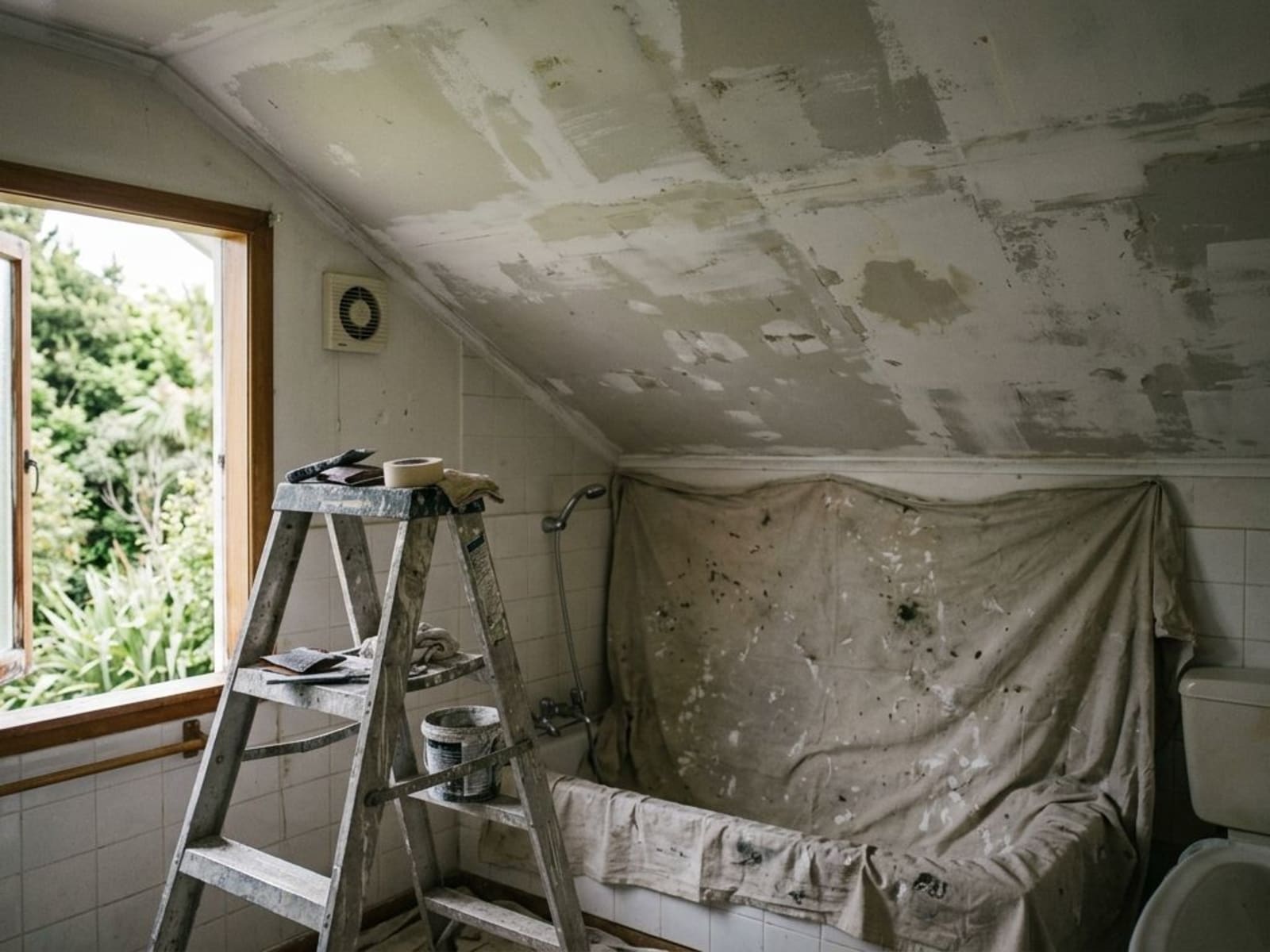
- Where mould has grown through the old film or the paint is loose, sand or strip back to a sound surface.
- Prime where the data sheet calls for it, then apply a paint system suited to bathrooms.
- Give it the full drying and curing time before showers steam the room up again.
If you want the job done once rather than twice, we prepare bathrooms this way as standard and will tell you honestly if the ventilation needs fixing before painting is worth it. Get in touch for a quote.
Related Articles


Need Help With Your Painting Project?
Wellington Decorators has been transforming homes across the Wellington region since 2023, led by a founder with 18+ years in the trade. As Registered Master Painters, we back every job with a 5-year workmanship guarantee.
Prefer to talk? Call us now 027 458 6465