
Wellington's challenging climate—strong winds, high UV exposure, and coastal moisture—makes proper wood staining essential for protecting your outdoor timber investments. Whether you're staining a new deck, refreshing weathered fencing, or protecting other timber structures, understanding the process and products suited to Wellington conditions ensures lasting results.
Understanding Wood Staining vs Painting
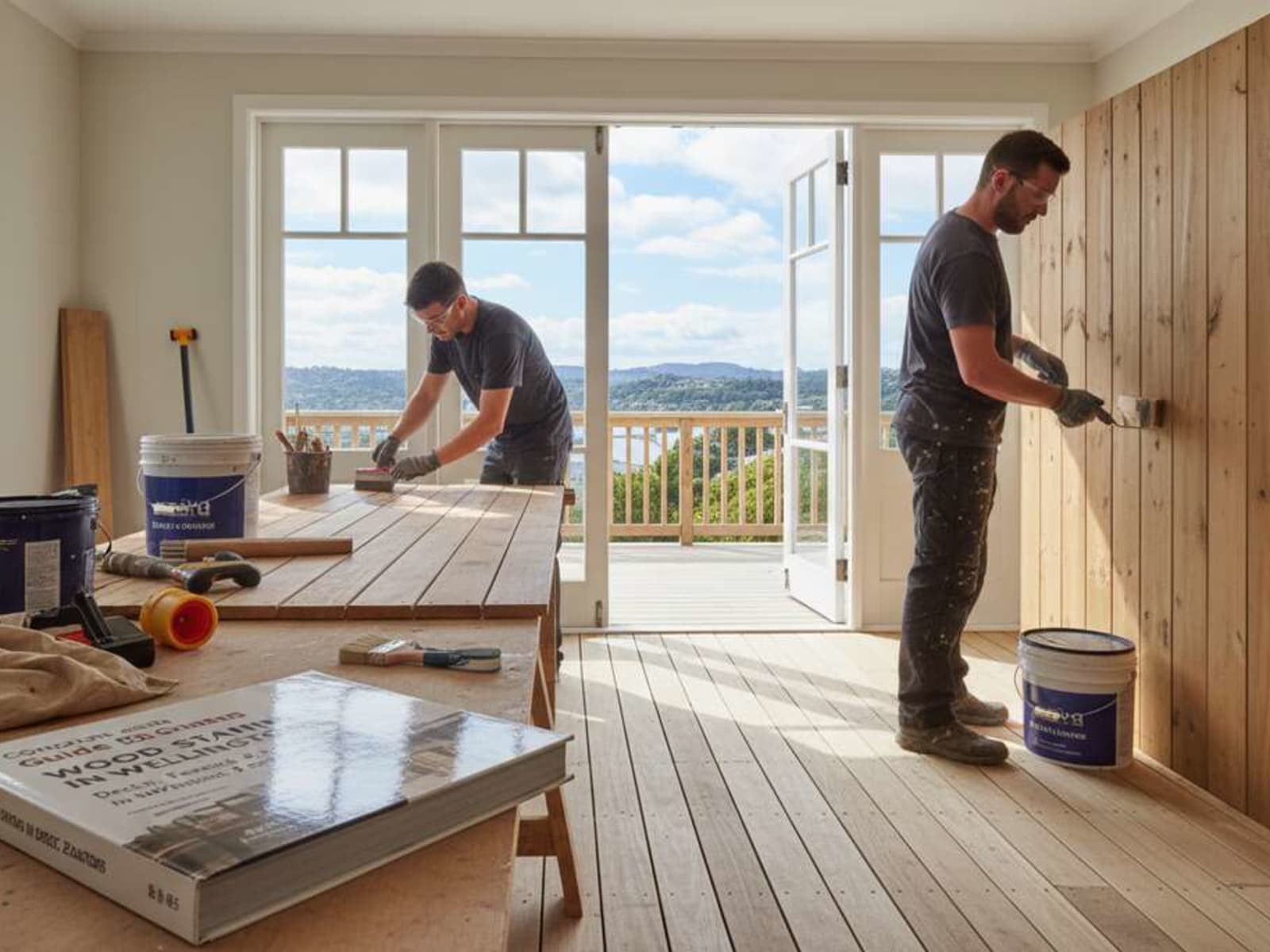
Wood staining differs fundamentally from painting. While paint creates a surface film, stain penetrates timber fibres, enhancing natural grain while providing weather protection. This penetration allows timber to breathe and move naturally—crucial in Wellington's variable conditions where moisture and temperature fluctuations cause expansion and contraction.
Key differences:
- Appearance: Stain showcases natural wood grain; paint covers it completely
- Durability: Stain penetrates for longer-lasting protection; paint can peel or bubble
- Maintenance: Stained timber requires periodic recoating; painted timber needs scraping and repainting
- Application: Stain soaks in requiring less surface prep; paint needs perfect preparation
- Weathering: Stain fades gradually and evenly; paint deterioration is more obvious
For Wellington's outdoor timber, staining typically offers better performance and easier maintenance than paint.
Types of Wood Stain for Wellington Conditions
Oil-Based Stains
Oil-based stains like Resene Woodsman penetrate deeply into timber, providing excellent moisture resistance and UV protection. They're ideal for Wellington's wet climate and work particularly well on dense hardwoods like kwila and macrocarpa.
Advantages:
- Superior moisture repellency
- Deep penetration for long-lasting protection
- Better UV resistance than water-based options
- Ideal for horizontal surfaces (decks, table tops)
- Maintains flexibility as timber moves
Disadvantages:
- Longer drying times (24-48 hours)
- Stronger odour during application
- Requires mineral turps for cleanup
- Takes longer to fully cure
Water-Based Stains
Water-based timber stains offer faster drying times and low odour, making them convenient for DIY projects. They work well on vertical surfaces like fencing where moisture penetration is less critical.
Advantages:
- Quick drying (2-4 hours)
- Low odour and VOC content
- Easy water cleanup
- More eco-friendly formulation
- Good for vertical surfaces
Disadvantages:
- Less moisture resistance than oil-based
- Can raise timber grain requiring sanding
- May not penetrate as deeply on dense hardwoods
- Typically requires more frequent recoating
Transparent vs Semi-Transparent vs Solid Stains
Transparent stains showcase natural wood grain with minimal colour change, providing UV protection while keeping timber looking natural. They require more frequent recoating (every 1-2 years) but are perfect when you want to highlight beautiful timber grain.
Semi-transparent stains add subtle colour while still showing wood grain texture. They offer better UV protection than transparent options and typically last 2-3 years in Wellington conditions. This is the most popular choice for decks and fences.

Solid stains provide maximum colour coverage and UV protection, almost like paint but still allowing timber texture to show through. They last 3-5 years but completely obscure natural wood grain. Best for older, weathered timber you want to refresh with colour.
Popular Timber Types in Wellington & Staining Requirements
Pine (Radiata Pine)
Wellington's most common fencing and deck timber. Untreated pine is affordable but requires proper staining for weather protection. H3.2 treated pine has preservative treatment but still benefits from staining for appearance and UV protection.
Staining considerations:
- Accepts stain readily due to soft, porous nature
- Requires thorough drying after treatment (6-8 weeks)
- Benefits from oil-based stain for moisture protection
- May need annual recoating in exposed positions
Cedar
Premium decking and fencing choice that weathers to attractive silver-grey if left untreated. Many Wellington homeowners prefer to stain cedar to maintain its warm reddish-brown colour.
Staining considerations:
- Accepts semi-transparent stains beautifully
- Natural oils mean less frequent recoating needed
- Water-based stains work well due to vertical grain
- Can be left to weather naturally if desired
Kwila
Dense, oily hardwood popular for decking. Its natural oils provide some weather resistance, but staining prevents weathering to grey and protects against UV damage.
Staining considerations:
- Requires degreasing before first stain application
- Oil-based stains penetrate better through natural oils
- More resistant to weathering than softwoods
- Initial staining within 6 months prevents tannin bleeding
Macrocarpa
New Zealand native timber with excellent natural durability. Common in older Wellington decks and increasingly popular for new construction.
Staining considerations:
- Dense grain requires good-quality penetrating stain
- Oil-based products provide best results
- Natural durability means longer intervals between recoating
- Stain enhances golden tones and prevents silvering
The Wood Staining Process
Surface Preparation
Proper preparation is crucial for stain penetration and longevity. Start by cleaning timber thoroughly with a deck wash or water blasting to remove dirt, algae, and previous coatings. For new timber, allow 6-8 weeks weathering for treated pine or kiln-dried timber to ensure it's dry enough to accept stain.
Sand any rough areas, splinters, or raised grain using 80-120 grit sandpaper. Check moisture content—timber should be below 18% moisture (ideally 12-15%) before staining. Repair any damaged boards, secure loose boards, and countersink protruding nails or screws.
Weather Conditions for Application
Wellington's variable weather requires careful timing. Apply stain when:
- Temperature is 10-25°C for best penetration
- No rain forecast for 24-48 hours (oil-based) or 6-8 hours (water-based)
- Wind is moderate (not strong which causes rapid drying)
- Timber surface is completely dry
- Direct sun is not beating down on surface (apply in shade or overcast conditions)
Autumn and spring typically offer the best conditions. Avoid mid-winter (too cold, timber stays damp) and high summer (too hot, stain dries before penetrating).
Application Techniques
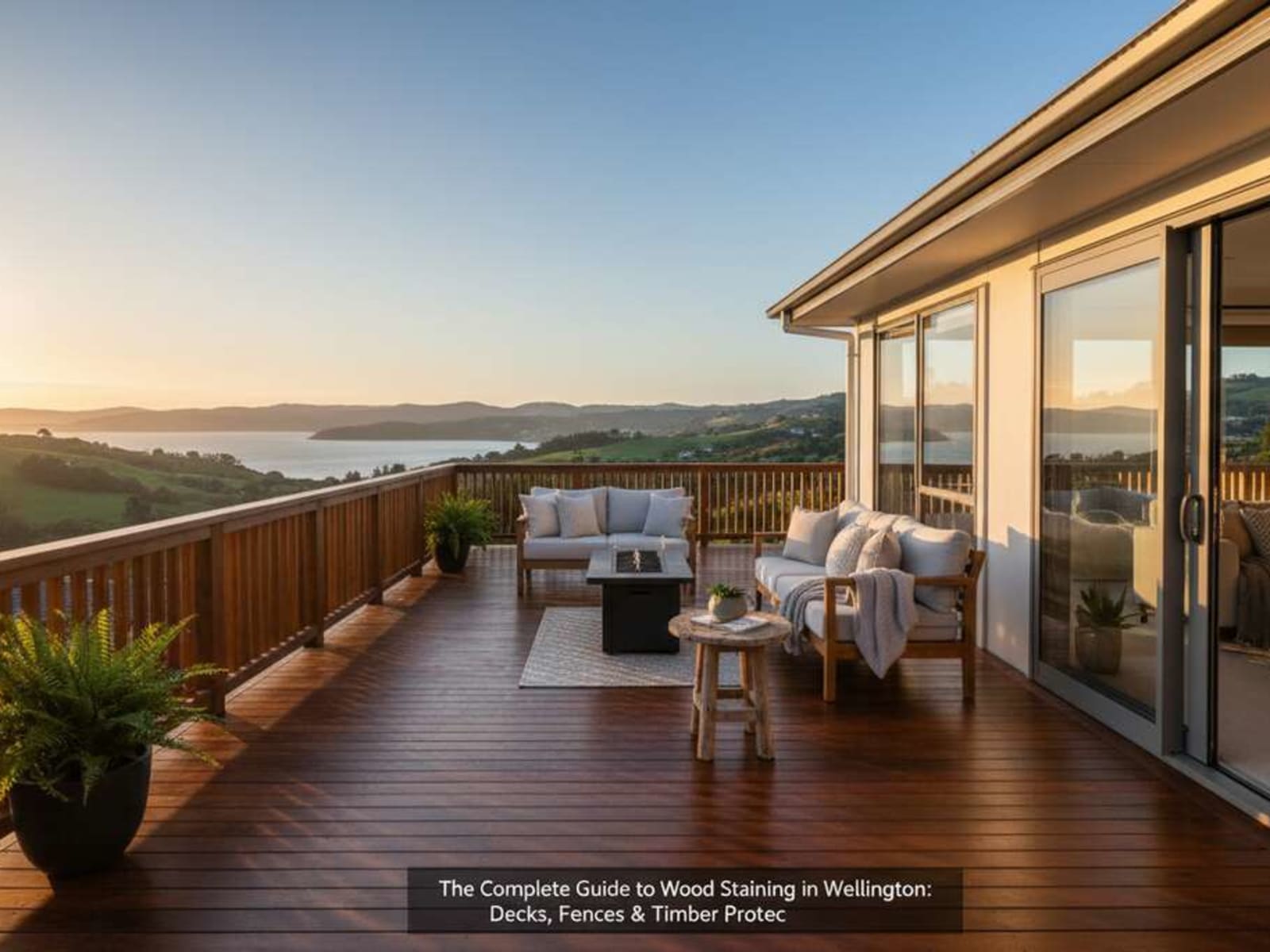
For horizontal surfaces like decks, use a brush to work stain into end grains, joints, and between boards, then back-roll or back-brush to ensure even penetration. For vertical surfaces like fences, spray or brush application works well, always working stain in thoroughly.
Application tips:
- Apply generous coat allowing full penetration (don't skimp)
- Work with the grain
- Wipe excess that doesn't absorb within 15-20 minutes
- For dense hardwoods, apply multiple thin coats rather than one thick coat
- Pay extra attention to horizontal surfaces and end grain (most vulnerable)
- Ensure complete coverage under deck boards and fence bottom rails
Second Coat Timing
Most timber requires two coats for optimal protection. Apply the second coat once the first has fully dried but before it's been exposed to weather for more than a few days. For oil-based stains, this typically means 24-48 hours between coats. Water-based stains may be ready for a second coat in 2-4 hours.
Maintenance and Recoating Schedule
Wellington conditions accelerate weathering. North and west-facing timber receives maximum sun and wind exposure, requiring more frequent maintenance than sheltered areas.
Typical recoating schedule:
- High-exposure areas (full sun, weather): every 12-18 months
- Moderate exposure (partial sun/shade): every 2-3 years
- Sheltered areas: every 3-4 years
- Vertical surfaces (fences): every 2-3 years
- Horizontal surfaces (decks): every 1-2 years
Indicators it's time to restain:
- Water no longer beads on surface (soaks in instead)
- Timber starting to grey or fade
- Surface feels rough or fuzzy
- Loss of colour in high-traffic areas
- Checking or minor splitting appearing
Choosing the Right Stain Product
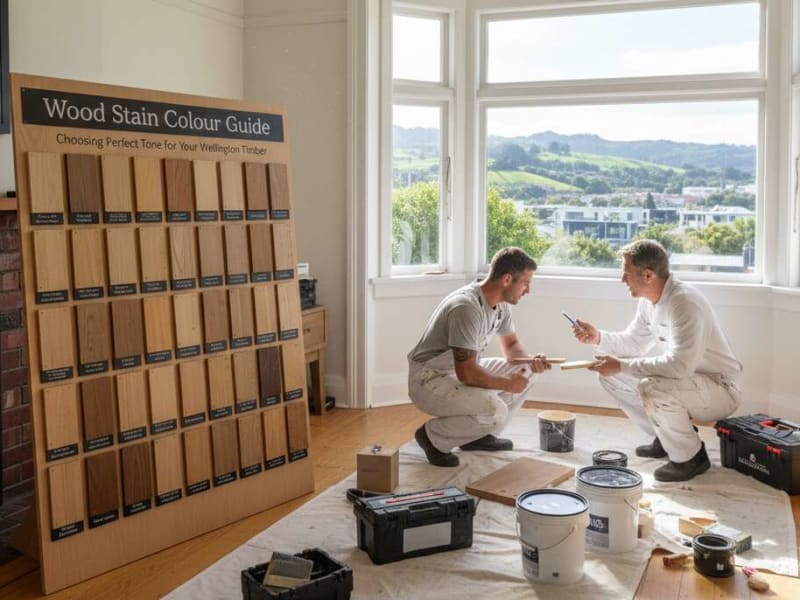
For Wellington conditions, we recommend the Resene Woodsman range—formulated specifically for New Zealand's climate. Key products include:
Resene Woodsman Natural: Oil-based transparent stain that maintains natural timber appearance while providing UV and moisture protection. Ideal for premium decks where you want to showcase timber grain.

Resene Woodsman Stain: Semi-transparent oil-based stain available in various colours. Our most popular choice for decks and fences, offering excellent protection with subtle colour enhancement.
Resene Woodsman Decking Oil: Specifically formulated for horizontal deck surfaces with enhanced moisture resistance and anti-slip properties.
Resene Woodsman Ulti-Shield: Premium exterior timber finish with advanced UV absorbers for maximum longevity.
All Resene Woodsman products are low-VOC and environmentally responsible—important for Wellington's water catchment areas and eco-conscious homeowners.
Common Wood Staining Mistakes to Avoid
Staining wet or damp timber: Moisture prevents stain penetration and causes premature failure. Always check timber is dry before starting.
Not cleaning properly: Dirt, algae, and old coatings prevent new stain from penetrating. Clean thoroughly before application.
Wrong weather conditions: Applying stain just before rain or in extreme temperatures leads to poor results. Check the extended forecast.
Insufficient product: Skimping on stain means inadequate protection. Always apply manufacturer-recommended coverage rates.
Neglecting end grain: Board ends absorb most moisture and need extra attention. Apply multiple coats to cut ends.
Uneven application: Lap marks and streaks result from inconsistent application. Work systematically and maintain wet edges.
Ready to Protect Your Timber?
Professional wood staining ensures proper surface preparation, product selection for Wellington conditions, and application techniques that maximise longevity. Our Registered Master Painters have extensive experience with all timber types and staining products.
Whether you're staining a new deck, refreshing weathered fencing, or protecting other timber structures, we deliver quality results backed by our Master Painters guarantee.
Get your free quote | Explore wood staining services | View our Resene Eco Decorator credentials
Wellington Decorators Limited — Registered Master Painters | Resene Eco Decorator
Wood Staining Services
Local Wood Staining Services
Need wood staining in your area? We provide professional wood staining services across Wellington suburbs including Newlands, Ngaio, Hataitai, Island Bay. Get a free quote for your project today.
Related Articles


Need Help With Your Painting Project?
Wellington Decorators has been transforming homes across the Wellington region since 2023, led by a founder with 18+ years in the trade. As Registered Master Painters, we back every job with a 5-year workmanship guarantee.
Prefer to talk? Call us now 027 458 6465